Why Cats Sit on the Garden Trellis Base
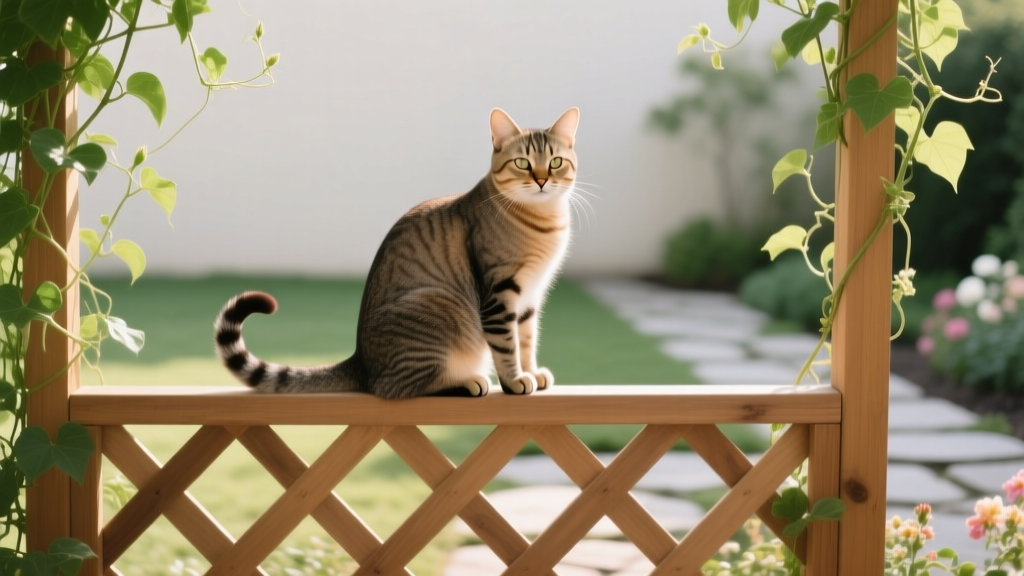
You open the back door with a cup of coffee, expecting your cat to be zooming through the grass or batting at a leaf like it’s the world’s most suspicious enemy. Instead, there they are: sitting very neatly at the base of the garden trellis. Not on the soft flowerbed. Not on the patio chair you bought “for them.” Right on that narrow strip of wood or metal at the bottom, like they’ve been assigned as the trellis’s tiny security guard.
If you’ve ever wondered why your cat chooses that oddly specific spot—especially when there are a dozen other places to lounge—you’re not alone. Cats have a talent for turning ordinary objects into meaningful little “stations” in their world. The base of a trellis isn’t random to them; it’s a strategic perch, a scent checkpoint, and sometimes a comfort zone all in one.
1) The Scientific (and Slightly Sneaky) Reason Cats Love Trellis Bases
Cats are small predators and potential prey—an evolutionary combo that makes them obsessed with positioning. Even a confident house cat still has ancient instincts humming under the hood: stay safe, stay informed, control your space, and keep options open.
A garden trellis base ticks several instinctive boxes:
- Cover + visibility: A trellis is partial cover. Cats love “see without being seen.” The open lattice lets them monitor the yard while feeling tucked in.
- Boundary management: Vertical structures often mark territory lines. A trellis can act like a fence post, and the base becomes a natural “checkpoint.”
- Scent and information hub: Outdoor structures collect smells—plants, insects, other animals, fertilizer, damp soil, even the neighbor’s cat. Cats interpret scent like a newsfeed.
- Thermal comfort: The base may be warmer (sun-heated wood/metal) or cooler (shade line) depending on time of day.
In short: your cat isn’t “just sitting.” They’re doing feline surveillance, environmental reading, and comfort-seeking all at once—efficient, as always.
2) What’s Going On Behaviorally? Contexts That Change the Meaning
The same behavior—sitting at the base of a trellis—can mean different things depending on what else is happening. Here are the most common “versions” of this behavior, with real-life cat-owner scenarios you’ll recognize.
They’re on “Bird TV” Duty
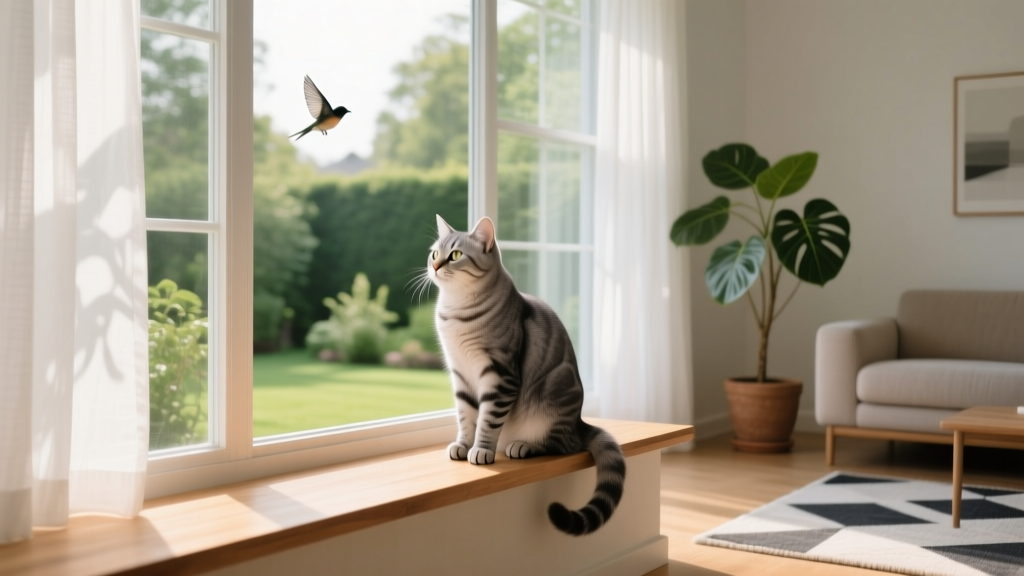
If the trellis is near a feeder, shrubs, or an area where sparrows hop around, your cat may be using the base as a hunting observation post. You’ll see a still body, forward-facing ears, and that intense, unblinking stare. Sometimes the tail tip twitches like a metronome. This is focused predatory interest, not aggression—more like watching a sports match where they’re imagining the highlight reel.
They’re Waiting for Something (or Someone)
Many cats choose a “meet you here” spot. If you often come through the garden gate, water plants nearby, or let them out from that door, the trellis base can become a predictive place. Cats are routine detectives. If sitting there has preceded good things—fresh air, attention, a snack afterward—they’ll repeat it.
They’re Using It as a Safe Pause Point
Some cats treat the outdoors like a series of stepping-stones: patio → trellis base → shrub line → next location. The base can be a decompression zone where they pause, check for danger, and decide what to do next. This is especially common in cautious cats or those adjusting to a new yard.
They’re Marking a Boundary
If neighborhood cats roam nearby, your cat may sit there to claim space without needing to fight. It’s a subtle “I’m here, this matters” behavior. You might also notice cheek rubbing on the trellis post or a slow, deliberate sniffing of the base.
They’re Enjoying the Microclimate
The base might be exactly where the sun hits at 10 a.m., or where a cool draft slips through at dusk. Cats are connoisseurs of tiny temperature differences. One paw-length to the left could be “too warm,” one paw-length to the right could be “annoyingly breezy.” Your cat has performed the math and found the sweet spot.
3) What Sitting There Can Tell You About Your Cat’s Mood
The body language around the trellis base is your best translator. Here’s what common posture choices often indicate:
- Loaf position (paws tucked, relaxed): Comfortable, secure, mildly interested in the environment.
- Upright sit, tall posture, ears rotating: Alert curiosity—your cat is “on duty” listening and scanning.
- Crouched low, tail close, pupils larger: Cautious vigilance. They may have heard something, spotted movement, or feel uncertain.
- Slow blinks in your direction: Social comfort. They’re relaxed enough to communicate affection.
- Tail tip twitching + intense stare: Predatory focus or excitement (often at birds, bugs, or leaves).
- Over-grooming while sitting there: Sometimes normal relaxation, sometimes a displacement behavior if mildly stressed.
Most of the time, trellis sitting is a “content but observant” state—a very cat-like combination.
4) Related Quirky Behaviors You Might Notice Nearby
If your cat loves the trellis base, you may see a few companion behaviors that fit the same instincts:
- Cheek rubbing on the trellis posts: Cats deposit friendly facial pheromones (their version of labeling something as familiar and safe).
- Sniffing the base intensely: Reading scent messages left by insects, other cats, or wildlife.
- Scratching near the trellis: Visual marking + scent marking from paw glands. It’s a “this is mine” bulletin board.
- Chattering at birds: That adorable clicking sound often happens when prey is visible but unreachable.
- Sudden statue-still freezing: A classic predator-prey response—gathering info before deciding to retreat or stalk.
- Rolling nearby: Could be relaxation, scent exchange, or sometimes an attempt to pick up interesting smells.
5) When Trellis Sitting Is Normal… and When It Might Be a Concern
Normal trellis sitting looks like a cat who chooses that spot, rests, watches, and can be redirected or called inside without panic.
It may be worth a closer look if you notice any of the following patterns:
- Sudden obsession with the trellis base paired with skittishness or hiding more than usual (possible stress trigger outdoors, like a new roaming cat).
- Vocalizing, pacing, or agitation at that spot (could indicate territorial tension or frustration at seeing another animal).
- Guarding behavior—hissing when you approach, swatting, or refusing to move (territorial anxiety or pain, especially if this is new).
- Frequent scratching, head shaking, or skin irritation after sitting there (possible contact with plant irritants, bugs, or allergens).
- Stiff posture, reluctance to jump, or difficulty standing up (could signal discomfort or joint pain—sometimes cats pick a “safe” spot when they don’t feel their best).
If you’re seeing pain signals, escalating aggression, or a major behavior change, a vet check and a quick look at outdoor stressors is a smart move.
6) How to Respond (and How to Encourage the Good Parts)
If your cat’s trellis base habit is harmless, you can treat it as a window into what they value: security, routine, and observation. Here are practical ways to support it while strengthening your relationship.
Make It a Safe Observation Spot
- Check for hazards: Sharp edges, loose wire, splinters, hot metal in summer, pesticides or slug pellets nearby.
- Add comfort subtly: A small outdoor-safe mat or flat stone can make it more comfortable without “ruining the vibe.” Some cats prefer a firm surface—so don’t assume they want a plush bed.
Use It as a Positive Routine
- Practice recall: Call your cat from the trellis base and reward with a treat. This builds a pleasant “coming when called” habit outdoors (or in a catio).
- Offer interactive play afterward: If they’re watching birds, follow with a wand-toy session indoors so the hunting sequence has a satisfying ending.
Reduce Outdoor Stress If Territorial Tension Is Suspected
- Block visual triggers: If another cat is visible through gaps, consider garden screening or moving planters to break sightlines.
- Increase enrichment indoors: More vertical perches and puzzle feeders can reduce the need to “patrol” outside.
Respect the “Do Not Disturb” Signal
If your cat is in full surveillance mode—ears forward, body still—avoid scooping them up. Approaching slowly, speaking softly, and offering a treat tossed nearby preserves trust. Cats remember when their favorite lookout spot gets disrupted.
7) Fun Facts and Research-Flavored Nuggets
- Cats map spaces in “zones” more than rooms. A trellis base can be a zone marker—like a doorway in the garden.
- They’re drawn to edges. In behavior terms, edges and boundaries (where one surface meets another) are information-rich. The base of a structure is literally an edge: ground meets vertical surface, scent collects, and movement passes by.
- Partial cover is peak cat comfort. Many cats prefer “semi-hidden” resting spots over wide open lounging areas. It’s the best of both worlds: safety plus a view.
- Cats are environmental connoisseurs. Tiny shifts—sun angle, humidity, insect activity—can make one spot feel “right” at certain times. Your cat notices details you’d never think to measure.
8) FAQ: Common Questions About Cats and Trellis Sitting
Is my cat guarding the garden?
Sometimes, yes—though “guarding” is more like monitoring. If your cat sits upright, scans the yard, and returns to that spot repeatedly, they may see it as a patrol point. It’s usually normal unless it comes with aggression or constant agitation.
Why not sit on the soft soil or the patio furniture instead?
Comfort for cats isn’t only softness. The trellis base may offer a better view, better scent information, or a preferred temperature. Cats also like consistent surfaces that feel stable under them.
Could there be something under the trellis attracting them?
Absolutely. Bugs, lizards, mice, or even just interesting scents can draw them in. If your cat is intensely focused—staring, crouching, tail twitching—do a quick check (safely) around the base and behind nearby pots.
My cat only does this at certain times of day—why?
Sun and shade lines shift, bird activity peaks, and neighborhood cats tend to patrol at predictable times (often dawn and dusk). Your cat may be syncing with the yard’s daily schedule.
Should I stop my cat from doing it?
If the area is safe and your cat is relaxed, there’s usually no reason to stop it. If the spot is near chemicals, sharp edges, or frequent animal conflicts, redirect to a safer observation station (like a catio perch or a different sheltered corner).
What if my cat seems “stuck” there and won’t come inside?
If it’s occasional, they may simply be deeply engaged. If it’s new and persistent—especially with pacing, yowling, or refusal to eat—consider stress triggers (outdoor cats nearby) or discomfort, and consult your vet if it continues.
9) The Takeaway: Your Cat’s Trellis Base Is a Tiny World of Meaning
To us, the base of a garden trellis is just… the bottom of a garden decoration. To your cat, it’s a lookout point, a scent bulletin board, a boundary marker, and a comfort zone with excellent “yard reception.” The more you pay attention to the body language around it, the more you’ll see what your cat is really saying: “I feel safe enough to sit, curious enough to watch, and in control enough to relax.”
Does your cat have a specific outdoor “post” they always return to—a trellis base, a step, a particular rock like it’s their throne? Share your funniest and sweetest garden-sitting stories with fellow cat people on catloversbase.com.