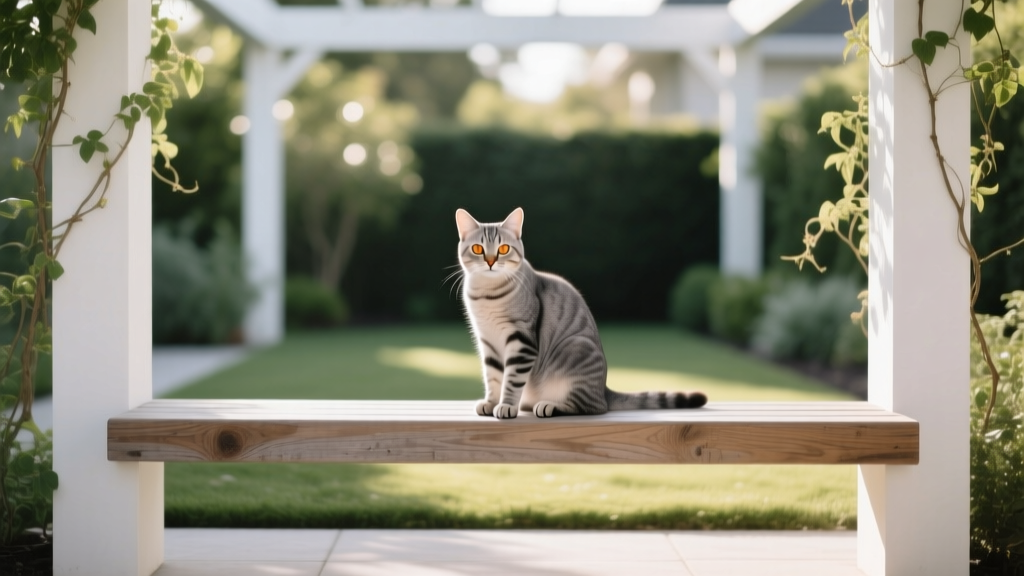
Why Cats Sit on the Garden Arbor Bench
You step outside with your coffee, still half in “morning brain,” and there’s your cat—perched like royalty on the garden arbor bench. Not in the grass where the sun is warm. Not on the patio chair you actually set out for them. The bench. The specific bench. The one you sit on when you deadhead roses or pretend you’re going to read a book before life interrupts.
Maybe your cat blinks slowly at you from their leafy throne. Maybe they tuck their paws in and become a perfect loaf. Maybe they sit upright and alert, watching the yard as if they’re on security duty. It can look adorable, smug, or mildly suspicious—like they’re waiting for you to provide snacks and a weather report.
As quirky as it seems, “bench-sitting” is a wonderfully logical cat choice. Cats don’t do random. They do efficient. The garden arbor bench is often a jackpot of comfort, safety, scent, and surveillance—all in one tidy package.
1) The scientific (and slightly wild) reason: a bench is the perfect observation post
Domestic cats may be living-room connoisseurs, but their brains still run on a blend of hunter instincts and survival math. In the wild (and in your backyard), the animals that do best are the ones that can:
- See without being seen (or at least see first)
- Rest in a protected spot without giving up awareness
- Control access to their personal space
- Mark and re-check territory using scent
A garden arbor bench delivers on all four. It’s typically slightly elevated, often backed by a trellis or arbor that acts like a “wall,” and positioned in a place that gives a wide view of the yard. Cats love edges, boundaries, and vantage points because those features help them feel secure. Elevated perches are also linked to confidence and stress reduction in many cats—one reason behaviorists recommend cat trees indoors.
There’s also a practical physics angle: benches and wooden slats warm up in the sun and hold heat differently than grass or soil. Cats are heat-seekers with fur coats that make them efficient at staying warm—but they still prefer cozy, stable temperatures for resting. A bench often hits that sweet spot.
2) A detailed breakdown: what the bench “means” in different contexts
Not all bench-sits are the same. The context—the time of day, your cat’s posture, what else is happening—tells you which need your cat is meeting.
The “Sun Manager” sit
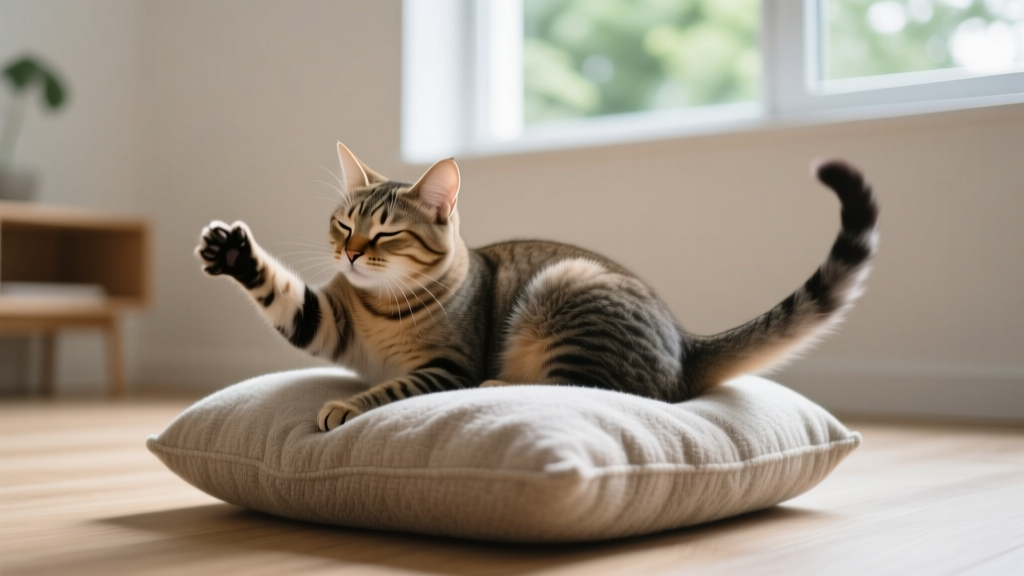
Scenario: Late morning. The sun lands on the bench in a perfect rectangle. Your cat sprawls, rolls, or switches sides every so often like they’re rotating on a solar panel.
What it’s about: Heat + comfort. Many cats choose surfaces that are slightly warm, dry, and free of poky things (twigs, damp patches, ants). The bench is a premium lounge chair compared to grass.
The “Back-to-the-wall” sit
Scenario: Your cat sits upright with the arbor behind them, ears rotating like satellite dishes. They’re relaxed but clearly “on.”
What it’s about: Security. Cats often prefer resting spots that protect their back and give them a forward view. That arbor acts like a shield. Feeling secure helps cats truly relax.
The “Neighborhood Watch” sit
Scenario: Your cat sits like a statue and tracks birds, squirrels, or the neighbor’s dog. Tail tip flicking. Whiskers forward. Tiny jaw tremble if they’re really excited (you may even hear chirps).
What it’s about: Hunting drive and mental stimulation. Even well-fed cats are motivated to watch prey. Observation is part of the predatory sequence, and “safe hunting” from a bench is highly satisfying.
The “Social hub” sit
Scenario: Your cat chooses the bench when you’re outside gardening, chatting, or grilling. They settle nearby and occasionally slow-blink at you.
What it’s about: Bonding on cat terms. Many cats like to be near their people without being touched the whole time. The bench creates a comfortable “together but not smothered” distance.
The “Scent claim” sit
Scenario: Your cat rubs their cheek on the bench edge, kneads the cushion (if you have one), or repeatedly returns to the same spot day after day.
What it’s about: Territory and familiarity. Cats have scent glands in their cheeks, paws, and body. Sitting, rubbing, and kneading can deposit scent, making the bench feel like a safe, known outpost.
The “Avoidance” sit
Scenario: A new pet is indoors, guests are over, construction noises are happening, or the vacuum has recently committed its usual crimes. Your cat heads outside and chooses the bench as a “safe station.”
What it’s about: Stress management. Cats seek predictable, controllable spaces when they feel uncertain. The bench may be a reliable retreat where they can watch from a distance.
3) What it says about your cat’s mood (read the body language)
Your cat’s bench choice is interesting, but their posture is the real message. Here’s a practical mood guide:
- Loafed paws, soft eyes, slow blinks: Content, comfortable, and feels safe in that spot.
- Side-lying or belly partly exposed: High relaxation (not always a request for belly rubs—often just a comfort flex).
- Upright sit, ears forward, whiskers forward: Curious and engaged—watching something that matters.
- Tail tip flicking while staring: Excited or mildly frustrated (common when watching birds they can’t catch).
- Ears sideways or back, crouched body, tense shoulders: Uneasy—something in the environment feels off.
- Dilated pupils in daylight, frequent scanning: Heightened arousal or anxiety; they’re trying to gather information fast.
In many homes, the arbor bench becomes a kind of “emotional regulation station.” It’s familiar, it offers an overview, and it has predictable escape routes (under the bench, behind the arbor, into shrubs). Cats love options. Options equal safety.
4) Related behaviors you might notice (and why they connect)
If your cat loves the arbor bench, you may also notice these classic “vantage point” habits:
- Sitting on the back of outdoor chairs (narrow perches feel secure and give height)
- Perching on windowsills or the top of the sofa (indoor version of the same strategy)
- Choosing the same spot when guests arrive (distance + observation)
- Rubbing cheeks on bench edges or table legs (scent marking a safe zone)
- Chattering at birds (predatory excitement and frustration)
- Following you outside, then “ignoring” you nearby (social companionship without direct interaction)
Seen together, these behaviors paint a clear picture: your cat values safe surveillance, comfort, and gentle social proximity.
5) When sitting on the bench is normal… and when it might be a concern
Normal (and generally delightful):
- Your cat sits on the bench at predictable times (sunny hours, when you garden)
- They look relaxed or calmly alert
- They return indoors normally, eat and drink as usual, and have normal litter box habits
- They occasionally shift positions, groom, or nap
Potential concern (worth investigating):
- Sudden, intense hiding or refusal to come inside after being social before (possible stressor, pain, or fear)
- Restlessness, yowling, or agitation while perched (could be anxiety, territorial tension, or outdoor threat)
- Guarding the bench aggressively from people or other pets (resource guarding, stress, or negative associations)
- Stiff movement, reluctance to jump up/down (possible arthritis or injury—benches can become “easier perches” than higher spots)
- Excessive panting, drooling, or lethargy in warm weather (heat stress—especially if the bench is in full sun)
If your cat’s bench habit changes abruptly or comes with physical symptoms, a veterinary check is the safest first step. Behavior changes are often the earliest clue that something isn’t right.
6) How to respond (and how to encourage the healthy version of this behavior)
If your cat loves the arbor bench, you can support it in ways that strengthen your relationship and keep them safe.
- Make it comfortable: Add a breathable outdoor cushion or a folded towel in cooler months. In hot months, skip thick fabrics that trap heat.
- Provide choice: Place a second resting option nearby—like a low table, a waterproof mat, or a covered cat bed—so your cat doesn’t feel “stuck” to one spot.
- Respect the perch: If your cat is perched and relaxed, avoid reaching straight over their head (predator-style). Approach from the side and offer a hand to sniff first.
- Join them in parallel: Sit on the bench with a small gap between you and your cat. Many cats adore calm companionship more than constant petting.
- Reinforce calm behavior: Quiet praise, a slow blink, or a treat dropped gently nearby can teach your cat that sharing space is safe and rewarding.
- Keep it safe: If your cat goes outdoors unsupervised, consider a catio, enclosed garden, or harness time. Outdoor perches can attract other animals, and conflicts can happen quickly.
- Watch the weather: Ensure shade and access to water. Benches can get surprisingly hot or cold depending on material and sun exposure.
A simple but powerful tip: if your cat chooses the bench when you garden, try narrating softly and moving slowly. Cats often bond through predictable routines. Your calm presence can turn the bench into a shared ritual instead of just a cat spot.
7) Fun facts and research-flavored tidbits
- Cats are “edge specialists”: They frequently prefer spaces bordered by something solid (a wall, hedge, fence, or arbor) because it reduces the directions they need to monitor.
- Height equals information: Even a small elevation change—like a bench versus ground level—can improve a cat’s view and sense of control. Control is a big deal in feline stress reduction.
- Scent is part of the furniture: When your cat sits and rubs on the bench, they’re adding familiar chemical signals that can make the environment feel more predictable and safe.
- Sunbathing isn’t just laziness: Warmth supports muscle relaxation and can be especially appealing for older cats or cats with mild joint stiffness.
If you’ve ever joked that your cat is “guarding the garden,” you’re not far off. From a cat’s perspective, a bench under an arbor is a strategic command center.
FAQ: Common questions about cats and garden benches
1) Why does my cat choose the bench instead of the soft grass?
Grass can be damp, prickly, buggy, or unpredictable. A bench is dry, stable, often warmer, and gives a better view. Cats tend to choose comfort plus control over “softness” the way humans define it.
2) Is my cat claiming the bench as territory?
Often, yes—gently. Sitting in a spot repeatedly, rubbing cheeks on edges, or kneading are normal ways cats make an area smell familiar. It’s less “mine, human, get out” and more “this is a safe outpost.”
3) My cat stares from the bench and chatters at birds. Are they frustrated?
They can be excited and a bit frustrated—both can be true. Chattering is commonly seen when cats watch prey they can’t access. It’s normal. If your cat seems overstimulated, redirect with a short play session afterward.
4) Why does my cat sit on the bench only when I’m outside?
That’s a social choice. Many cats prefer “parallel time”—being near you while doing their own thing. The bench is a way to participate without demanding constant touch.
5) Should I worry if my cat suddenly starts spending much more time on the bench?
If it’s a mild increase during good weather, it’s probably seasonal. If it’s sudden and paired with hiding, irritability, reduced appetite, litter box changes, or reluctance to jump, check with your vet and consider whether anything in the home environment has changed (new pet, noise, visitors).
6) How can I safely let my indoor cat enjoy the arbor bench?
Supervised harness time, a secure catio, or an enclosed garden run are the safest options. You’ll get the enrichment benefits without the risks of roaming, fights, parasites, or traffic.
Your cat sitting on the garden arbor bench is one of those small behaviors that reveals a lot: their love of comfort, their need for security, their fascination with tiny moving creatures, and—often—their quiet desire to share space with you.
Does your cat have a “special” outdoor seat, or do they rotate through the yard like a tiny property manager? Share your cat’s garden bench stories (and any funny rituals that come with them) on catloversbase.com—cat people live for this kind of mystery.