How to Read Cat Behavior
Why Understanding How to Read Cat Behavior Is the Single Most Important Skill You’ll Ever Learn as a Cat Guardian
If you’ve ever wondered why your cat suddenly swats at your hand mid-petting, bolts from the room when you open a cupboard, or stares intently at an empty corner — you’re not alone. In fact, how to read cat behavior is the foundational skill that separates reactive pet ownership from truly compassionate, proactive care. Cats don’t speak our language — but they communicate constantly, precisely, and urgently through posture, ear position, tail movement, pupil dilation, vocal tone, and even micro-expressions. Yet over 68% of cat owners misinterpret key stress signals, according to a 2023 Cornell Feline Health Center survey — leading to avoidable conflicts, anxiety-driven urinary issues, redirected aggression, and premature surrender to shelters. This isn’t about ‘training’ your cat; it’s about becoming fluent in their native dialect so you can meet their needs *before* they escalate to scratching, hiding, or overgrooming.
Your Cat’s Body Language Is a Real-Time Emotional Dashboard
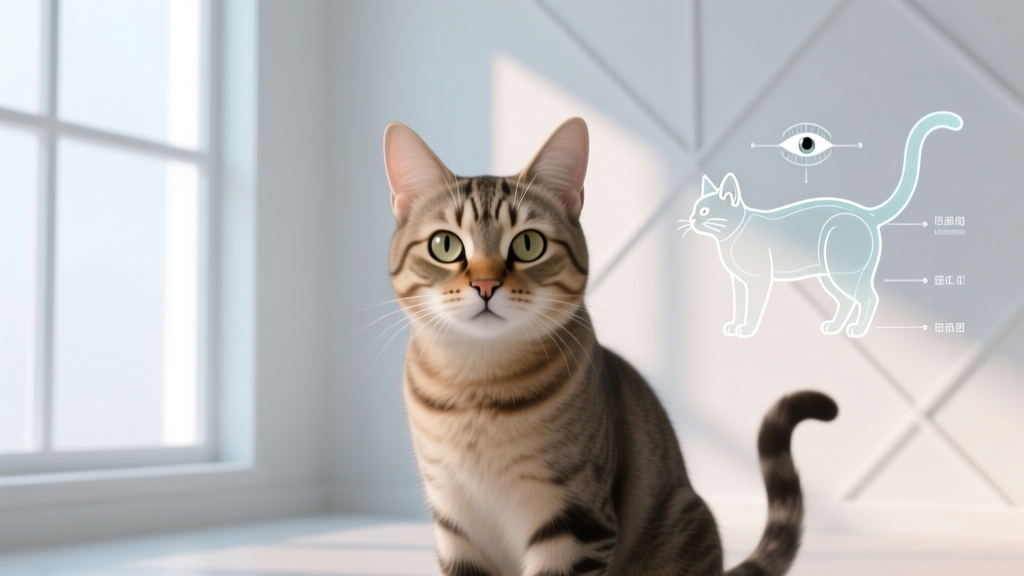
Cats evolved as both predators and prey — a duality that makes their communication incredibly nuanced and context-dependent. Unlike dogs, who often broadcast emotions openly, cats prioritize subtlety and self-preservation. A flick of the tail isn’t just ‘annoyance’ — its speed, base tension, and height reveal whether your cat is mildly distracted, intensely focused on a bird outside, or seconds from defensive aggression. Likewise, slow blinking isn’t just ‘sleepiness’ — it’s a deliberate, vulnerable gesture equivalent to saying ‘I trust you enough to close my eyes.’
Dr. Sarah Wooten, DVM and certified feline behavior consultant, explains: “Cats use over 16 distinct ear positions, 9 tail configurations, and 5 types of purring — each tied to specific neurophysiological states. Ignoring these isn’t neglectful; it’s like trying to navigate a foreign city using only one street sign.”
Start by observing your cat in low-stakes moments: while eating, napping, or watching birds. Note how their ears rotate forward when curious versus flatten sideways when anxious. Watch how their tail wraps around your leg (a greeting) versus puffs up (fear). Keep a simple journal — even three days of notes reveals powerful patterns.
Vocalizations: What Each Meow, Chirp, and Growl Really Means
Contrary to popular belief, adult cats rarely meow at each other — they reserve this sound almost exclusively for humans. That means every meow is tailored *to you*, shaped by years of reinforcement. But tone, duration, and context transform meaning entirely:
- Short, high-pitched ‘mew’ — greeting or request (e.g., ‘feed me’ or ‘open the door’)
- Long, drawn-out ‘meooooow’ — frustration or protest (e.g., ‘you ignored my first five meows’)
- Low-pitched, guttural growl or hiss — clear boundary warning (not ‘angry’ — ‘I feel unsafe and will defend myself’)
- Chirping/chattering — excitement + predatory arousal (often at birds or squirrels behind glass — a sign of healthy instinct, not distress)
- Purring — not always contentment. Veterinary studies confirm cats purr during labor, injury recovery, and terminal illness — likely for self-soothing and tissue regeneration via 25–150 Hz vibrations.
Real-world example: Luna, a 4-year-old rescue tabby, began yowling loudly at 3 a.m. Her owner assumed attention-seeking — until a veterinary behaviorist observed the yowl was lower-pitched, repetitive, and occurred only after her senior companion passed. It was grief-induced disorientation — resolved with environmental enrichment and scheduled interaction, not ignoring or punishment.
Environmental Cues: The Silent Signals in Your Home
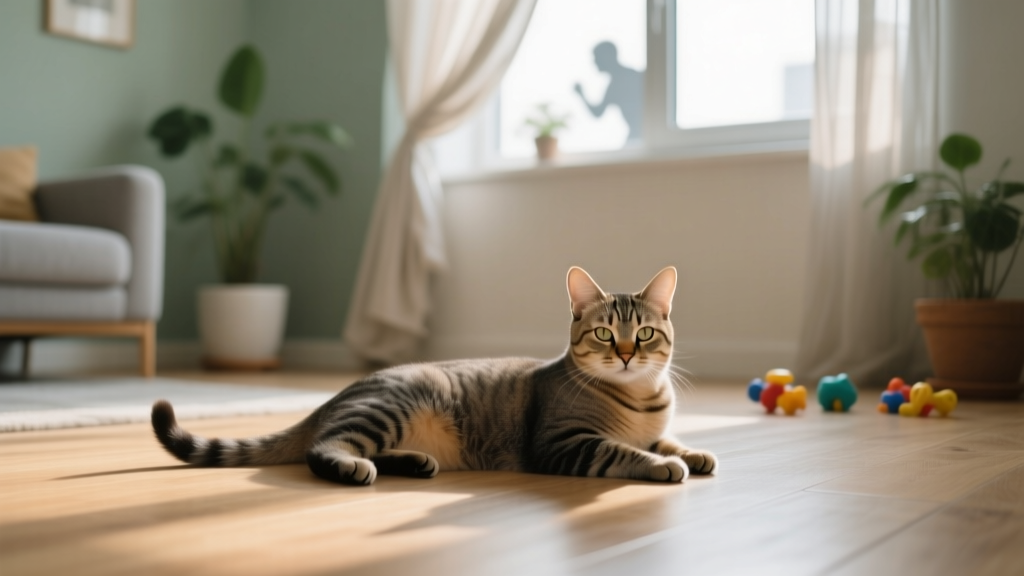
Your cat’s behavior doesn’t exist in a vacuum — it’s a direct response to their physical and social environment. A cat who suddenly stops using the litter box may not be ‘spiteful’; they could be signaling pain (arthritis makes squatting painful), aversion (clumping litter tracked onto hardwood floors), or territorial stress (a new cat next door visible through the window).
Look beyond the act itself and ask: What changed? Did you switch detergents? Add a new piece of furniture? Start working from home? Cats notice shifts in routine down to the minute — and respond with subtle stress behaviors long before full-blown issues appear.
A landmark 2022 study published in Journal of Feline Medicine and Surgery tracked 127 indoor cats over six months and found that 73% exhibited at least one ‘silent stressor’ (e.g., avoiding certain rooms, excessive licking of one paw, sleeping in elevated but isolated spots) *before* developing clinical signs like cystitis or alopecia. Early detection hinges on reading these quiet cues — not waiting for vomiting or aggression.
Action step: Conduct a ‘cat audit’ this week. Walk through each room asking: Is there a safe high perch? Are litter boxes placed away from noisy appliances and food bowls? Is there visual access to outdoor stimuli *without* triggering overstimulation (use frosted film on windows if needed)? Does your cat have at least one escape route in multi-pet homes?
The Stress-to-Symptom Timeline: From Tense Ears to Urinary Crises
Chronic, unaddressed stress doesn’t just make cats ‘grumpy’ — it triggers measurable physiological cascades. Cortisol suppresses immune function, alters gut microbiota, and increases bladder wall permeability — directly contributing to feline idiopathic cystitis (FIC), the #1 cause of emergency vet visits for young cats.
Below is a clinically validated progression chart used by veterinary behaviorists to help owners recognize early intervention windows:
| Stage | Behavioral Signs | Physiological Impact | Recommended Intervention Window |
|---|---|---|---|
| Stage 1: Subtle Shifts | Slightly dilated pupils indoors, reduced grooming, brief hiding after visitors, tail held low but not tucked | Minimal cortisol elevation; reversible with environmental tweaks | Optimal: Act now — 90% resolve with simple changes |
| Stage 2: Moderate Indicators | Overgrooming (especially belly/inner thighs), increased vocalization at night, avoidance of shared spaces, flattened ears >5 min/day | Elevated resting heart rate; mild immune suppression | Urgent: Add enrichment + vet consult within 7 days |
| Stage 3: Escalated Signals | Urinating outside box, sudden aggression toward familiar people/pets, chronic vomiting, refusal to eat for >24 hrs | Significant cortisol dysregulation; risk of FIC, IBD flare-ups, or weight loss | Critical: Vet visit + certified behaviorist referral required |
Frequently Asked Questions
Do cats really hold grudges if I scold them?
No — cats don’t process punishment the way humans or dogs do. Scolding triggers fear or confusion, not guilt or remorse. What looks like ‘holding a grudge’ (avoiding you for hours) is actually acute stress recovery. Their memory prioritizes safety associations — so if you yell near their food bowl once, they may avoid that spot for weeks. Positive reinforcement (treats, play, calm praise) builds trust far more effectively than correction.
My cat rubs against my legs — is that affection or marking?
It’s both — and neither is negative. Cats have scent glands on their cheeks, forehead, and base of tail. Rubbing deposits ‘friendly pheromones’ that mark you as safe and familiar. It’s a social bonding behavior, not territory claiming in the possessive sense. If your cat rubs then head-butts you, that’s a high-trust gesture — they’re inviting reciprocal scent exchange.
Why does my cat stare at me without blinking?
Unbroken eye contact is a low-level threat signal in cat society — but when paired with slow blinks, it becomes affectionate. If your cat stares *without* blinking, they’re likely assessing your intentions (especially if you’re holding something unfamiliar like nail clippers). Gently break eye contact, then offer a slow blink yourself. If they return it? That’s your cat’s ‘I love you’ in feline.
Is it normal for my cat to sleep 16–20 hours a day?
Yes — but quality matters more than quantity. Deep, restorative sleep requires safety. If your cat sleeps in exposed, ground-level spots (like your pillow), that signals high security. If they only nap in closets or under beds — especially with tense muscles or twitching — it may indicate unresolved anxiety. Monitor sleep *location*, *posture*, and *responsiveness* (a truly relaxed cat wakes easily to soft calls).
Can I train my cat to understand commands like ‘no’ or ‘come’?
You can condition responses using positive reinforcement — but avoid command-based language. Cats respond to consistent cues paired with rewards (e.g., a click + treat for coming when called), not obedience. ‘No’ is meaningless without context; instead, redirect to desired behavior (e.g., ‘off!’ + lure with toy when jumping on counters). Certified cat trainer Mieshelle Nagelschneider notes: ‘Cats don’t follow orders — they negotiate partnerships.’
Common Myths About Cat Behavior
Myth #1: “If my cat purrs, they must be happy.”
False. While purring often signals contentment, it’s also a self-soothing mechanism used during pain, fear, or labor. Always assess purring alongside body language: Is the tail rigid? Are ears pinned back? Is breathing shallow? Those indicate distress — not comfort.
Myth #2: “Cats are solitary animals who don’t need companionship.”
Outdated. Modern ethology confirms cats are facultatively social — meaning they *choose* bonds based on early experience and environment. Many thrive with compatible feline friends (especially littermates or kittens raised together) and show clear separation anxiety when left alone for long periods. Loneliness manifests as destructive scratching, excessive vocalization, or inappropriate elimination.
Related Topics (Internal Link Suggestions)
- Understanding Cat Body Language — suggested anchor text: "cat body language decoder"
- Feline Stress Reduction Techniques — suggested anchor text: "how to calm a stressed cat naturally"
- Litter Box Troubleshooting Guide — suggested anchor text: "why is my cat peeing outside the litter box"
- Introducing Cats to New Pets or People — suggested anchor text: "how to introduce a cat to a dog safely"
- Enrichment Ideas for Indoor Cats — suggested anchor text: "best cat toys for mental stimulation"
Conclusion & Next Step
Learning how to read cat behavior isn’t about achieving perfection — it’s about cultivating presence, patience, and partnership. Every flick of an ear, pause in a blink, or shift in tail angle is an invitation to listen more deeply. You don’t need a degree in ethology to start: choose *one* signal this week — maybe ear orientation or tail base movement — and observe it daily for five minutes. Jot down what precedes and follows it. Within days, you’ll spot patterns no app or book can teach you: your cat’s unique dialect. Ready to go deeper? Download our free Cat Behavior Signal Tracker (PDF checklist with photos and recording prompts) — designed with input from the American College of Veterinary Behaviorists — and take your first confident step toward a calmer, more connected life with your feline companion.