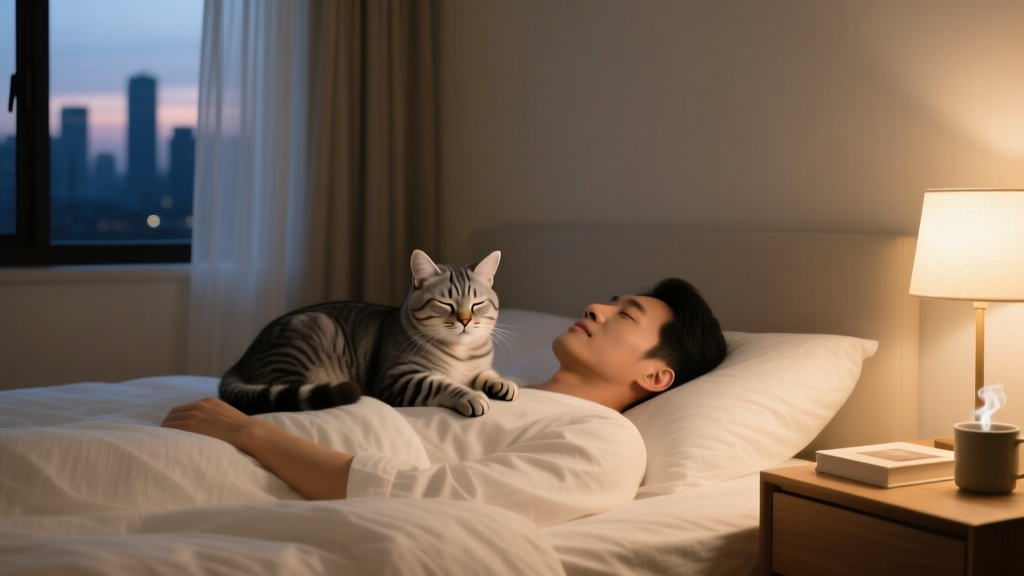
Why Cats Sit on Your Chest While You Sleep
You’re drifting in and out of sleep when you feel it: a soft thump, a careful knead, and then… the full, undeniable weight of your cat settling right on your chest like a furry paperweight. Your breathing gets a little shallower. Your arms are trapped. Your cat purrs as if they’ve just solved a complex puzzle—because, in their mind, they have. The best bed in the house is warm, familiar, and currently breathing.
If you’ve ever woken up to whiskers in your face or a cat loaf perched proudly on your sternum, you’re not alone. Chest-sitting is one of those behaviors that feels simultaneously adorable and slightly rude. The good news: it’s usually a sign of comfort, attachment, and classic cat logic. The more nuanced news: the “why” can change depending on your cat’s personality, your routine, and what’s going on in their environment.
The Science (and Evolution) Behind Chest-Sitting
Cats are a fascinating blend of predator and prey. Even the sweetest housecat still runs on ancient software: seek warmth, seek safety, conserve energy, and keep tabs on the environment. Sitting on your chest can tick all of those boxes at once.
- Warmth-seeking: Your torso is a reliable heat source. Cats naturally gravitate toward warm spots because warmth helps them conserve energy. In the wild, conserving energy means more fuel for hunting and staying safe.
- Safety and vantage point: Cats like to sleep in locations where they feel secure and can detect movement. Being on top of you elevates them slightly and gives them a “home base” they trust.
- Social bonding: Cats are not pack animals like dogs, but they do form strong social bonds. In cat social groups, friendly cats rest near each other, touch, and even pile together for warmth and security. Your chest is basically the deluxe version of “sleeping next to you.”
- Scent and familiarity: Cats are scent-driven. They use scent to categorize “safe,” “known,” and “mine.” Your bedding and your body smell like you—predictable and comforting.
- Attention and control: Cats learn patterns quickly. If sitting on you leads to petting, soothing talk, or you waking up to feed them, the behavior can become a reliable strategy.
From a feline perspective, your chest is warm, stable, smells right, and has a heartbeat. If cats wrote reviews, you’d get five stars for “excellent amenities.”
Different Contexts: What Chest-Sitting Looks Like in Real Life
Not all chest-sits are created equal. Here are common variations and what they often mean.
1) The Purring Loaf
Your cat climbs up, tucks their paws, and purrs like a tiny engine. This is typically pure comfort and bonding. They’ve chosen you as their safe resting spot. Many cats do this more during colder months or in early morning when your body heat feels especially tempting.
2) The Biscuit-Maker
The chest-sit starts with kneading—tiny paws pressing rhythmically into your pajama top. Kneading is a kitten behavior linked to nursing and comfort. When adults knead, it’s often a sign they’re relaxed and self-soothing. If it’s sweet but painfully pointy, you’re not imagining it. Those paws are small, but they mean business.
3) The Face-Inspector
This cat sits on your chest and then leans in close. You may get a nose boop, whisker tickle, or gentle paw on the cheek. This can be affection, curiosity, or a not-so-subtle attempt to wake you up. If it happens near breakfast time, your cat might be running a very effective schedule-management program.
4) The Night Watch
Some cats perch on your chest while staying alert—ears swiveling, eyes half-open. This can happen in a new home, after a change (new roommate, baby, pet), or when outdoor noises are common. Your cat may feel safer being close to you while monitoring the environment.
5) The “You Moved, So I Moved” Repeat Offender
If your cat relocates to your chest every time you roll over, they may be seeking stability and proximity. Chest-sitting can be a “reset to safety” behavior when the bed shifts and the world becomes briefly unpredictable.
What It Says About Your Cat’s Mood and Feelings
Cats don’t sit on just anyone’s chest. It’s a vulnerable position for them too—close contact means they’re trusting you not to suddenly grab or startle them. Here’s what chest-sitting commonly communicates:
- “I trust you.” Your cat feels safe enough to sleep deeply on you, sometimes even turning their head away or closing their eyes fully.
- “You’re part of my safe territory.” Cats bond through proximity. Choosing your chest is a strong “you’re my person” signal.
- “I’m seeking comfort.” After a stressful day (guests, vet visit, loud thunder), a cat may seek extra closeness at night.
- “I want attention.” If your cat sits upright, stares, or taps your face, the message may be less sentimental and more practical: wake up, human.
- “I’m regulating myself.” Purring and kneading can help cats calm down. Your warmth and heartbeat may help them settle.
Pay attention to the whole picture: body posture, ear position, tail movement, and whether your cat seems relaxed or keyed up.
Related Behaviors You Might Also Notice
Chest-sitting often comes with a supporting cast of classic cat behaviors:
- Sleeping on your pillow: Close to your face means more of your scent, warmth, and gentle breath.
- Following you to bed: Some cats treat bedtime as a social ritual and will escort you like a tiny bedtime supervisor.
- Head bunting and cheek rubbing: Friendly scent-marking that says “you’re mine” in the nicest way.
- Slow blinking at night: A relaxed, affectionate signal—cat body language for “I feel safe with you.”
- Sleeping on your clothes or laundry: Your scent is soothing; your hoodie becomes a comfort object.
- Gentle pawing or tapping your face: Sometimes affectionate, sometimes motivational, often timed suspiciously close to breakfast.
When It’s Normal (and When It Might Be a Concern)
Most of the time, a cat sitting on your chest is perfectly normal—sweet, even. But there are a few situations where it’s worth paying closer attention.
Normal and harmless when:
- Your cat appears relaxed (soft body, slow blinks, calm purring).
- The behavior is occasional or consistent with their personality.
- They settle quickly and don’t seem distressed.
Potential concern when:
- It’s a sudden new behavior: If your independent cat abruptly becomes clingy and insists on sleeping on your chest nightly, consider what changed. Stress, pain, or illness can make cats seek extra comfort.
- Your cat seems restless or anxious: Frequent repositioning, wide eyes, over-grooming, or vocalizing could indicate stress.
- Your cat is interfering with breathing or sleep: If you have asthma, sleep apnea, anxiety, or simply can’t sleep, it’s okay to set boundaries.
- Your cat is showing other symptoms: Appetite changes, litter box issues, hiding, aggression, or lethargy warrant a vet check.
Also consider your safety and comfort. A 13-pound cat on your chest can feel like a weighted blanket with opinions. If you’re pregnant, have respiratory issues, or are a very light sleeper, chest-sitting may not be a great fit every night.
How to Respond (and How to Encourage It Without Creating a 4 A.M. Alarm)
If you love the chest cuddles, you can encourage them—just strategically, so you don’t accidentally train your cat to wake you up on purpose.
If you want to encourage chest-sitting:
- Reinforce calm, not demands: Pet and praise when your cat settles quietly. Avoid rewarding face-tapping or meowing by immediately getting up.
- Create a “second best” cuddle spot: Place a soft blanket or heated cat pad near your pillow or beside you. Many cats will alternate between you and the cozy spot.
- Keep nails trimmed: If kneading hurts, a trim can turn “ow” into “aww.” Soft nail caps are an option for chronic biscuit-makers.
- Build a bedtime routine: Play for 10–15 minutes in the evening, followed by a small meal. This taps into the natural hunt-eat-groom-sleep cycle and makes nighttime cuddles more likely.
If you need to discourage it (kindly):
- Gently relocate without drama: Move your cat to a nearby bed or blanket each time. Consistency matters more than force.
- Reward the alternative spot: Treats or petting happen when they settle where you want them, not on your chest.
- Close the door only if necessary: Some cats find closed doors stressful. If you do close the door, offer enrichment outside—food puzzles, comfy beds, and a predictable routine.
- Don’t turn it into a game: Pushing, wiggling, laughing, or talking excitedly can accidentally reinforce chest time as “fun attention time.”
The goal isn’t to “win” against your cat. It’s to shape the behavior so both of you sleep well and still enjoy affection.
Fun Facts and Research-Backed Tidbits
- Cats synchronize with human routines: Many cats learn their person’s schedule surprisingly well. If you wake at 6 a.m., your cat may start “checking in” at 5:45 like a tiny, furry timekeeper.
- Purring may be self-soothing: Purring often shows contentment, but cats also purr when stressed or healing. The vibration range of purring has been studied for potential links to tissue and bone healing, though it’s not a replacement for veterinary care.
- Warmth is a powerful motivator: Cats have a higher preferred ambient temperature than humans. Your body heat is basically prime real estate.
- Your heartbeat can be calming: Many animals relax with steady rhythmic sounds. For some cats, a chest perch may provide a comforting “metronome.”
FAQ: Common Questions About Cats Sitting on Your Chest
1) Is my cat trying to dominate me by sitting on my chest?
Usually, no. Most chest-sitting is about warmth, comfort, and closeness. Some cats do enjoy being “on top” for a better view, but it’s rarely a power play in the way people imagine. Look for relaxed body language rather than stiff, confrontational signals.
2) Why does my cat sit on my chest and stare at me?
It can be affection, curiosity, or a request. If it happens at a consistent time (especially near morning), your cat may have learned that staring (or a gentle paw) works to wake you. If it’s paired with slow blinks, that’s a friendly sign.
3) Why does my cat only do this with me and not my partner?
Cats have preferences based on scent, warmth, sleep stillness, and history. If you’re the one who feeds them, plays with them most, or stays calmer during cuddles, you may be the chosen mattress. Some cats also prefer a particular sleeping style—back sleepers are often prime targets.
4) My cat is purring on my chest—does that mean they’re always happy?
Purring often means contentment, but it can also be a self-calming behavior. Check the context: relaxed posture and soft eyes suggest happiness; tense body, hiding, or other stress signals suggest they may be seeking comfort.
5) Should I worry if my cat suddenly becomes clingy at night?
If it’s a noticeable change—especially paired with changes in appetite, litter box habits, energy, or grooming—it’s worth a vet visit. Cats can become extra attached when they don’t feel well or when something in the environment is stressing them.
6) How can I stop my cat from sitting on my chest without hurting our bond?
Offer a nearby alternative (a cozy bed, blanket, or heated pad), gently redirect consistently, and reward your cat for settling in the new spot. You can maintain closeness with daytime cuddles and interactive play so your cat still feels connected.
The Takeaway: A Chest-Sit Is Usually a Compliment (With Paws)
When your cat chooses your chest, they’re often choosing warmth, safety, and the comfort of your presence—plus a front-row seat to the soothing soundtrack of your breathing and heartbeat. It’s one of the more intense forms of feline closeness, equal parts trust exercise and cuddle demand.
Whether you adore it, tolerate it, or need to gently redirect it, understanding the motivation behind chest-sitting helps you respond in a way that respects your cat’s needs and your own sleep. The best cat-human relationships are built on noticing patterns, honoring boundaries, and appreciating the weird little love languages cats invent.
Does your cat sleep on your chest like a tiny weighted blanket—or do they prefer your pillow, your legs, or the exact spot you need to turn over? Share your stories (and your funniest midnight wake-ups) with the Cat Lovers Base community at catloversbase.com.