Why Cats Prefer Cardboard Boxes Over Expensive Beds
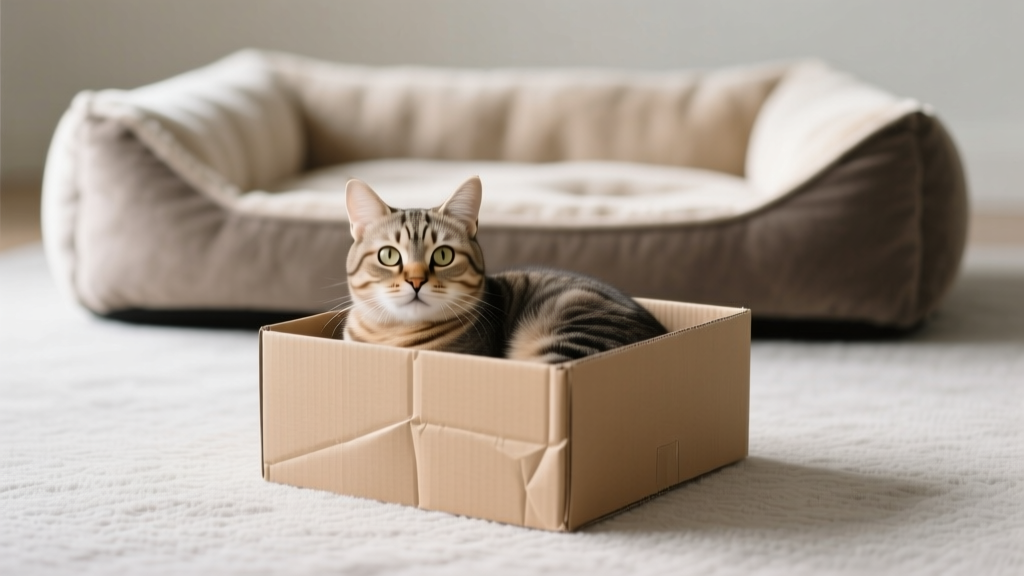
You bring home the deluxe cat bed: plush sherpa lining, orthopedic foam, maybe even a little hood like a tiny feline igloo. You place it in the “best spot” in the living room, step back proudly… and your cat marches past it like it’s an insulting suggestion. Ten minutes later, where is your cat?
Curled up in the shipping box. Not just near the box. In it. Possibly wedged into it like a cinnamon roll with whiskers. You’re left holding the receipt and wondering if your cat is trolling you.
They’re not. They’re being a cat—an animal with instincts shaped by thousands of years of survival, even if their biggest daily “hunt” is a rogue dust bunny. Cardboard boxes push a lot of ancient cat buttons all at once, and once you know which ones, the whole box obsession starts to make perfect sense.
The science and evolution behind the box obsession
Cats are both predators and prey. That mix creates a very particular survival strategy: “Stay hidden, stay safe, stay in control.” Cardboard boxes deliver on that strategy in a way many open, fluffy beds simply don’t.
1) Security through enclosure
Small, enclosed spaces reduce a cat’s need to constantly scan for threats. If your cat’s sides and back are protected, they can relax faster and more deeply. A box provides solid “walls” and a clear doorway—perfect for a species that likes to observe without being observed.
2) Warmth and energy conservation
Cats love warmth because it conserves energy. A box traps body heat and blocks drafts. Many cats prefer ambient temperatures warmer than most humans do (think “sunbeam-level cozy”). Cardboard is also a decent insulator, which helps explain why a plain box can win against a fancy bed placed in a cooler or more exposed area.
3) Stress reduction and coping
There’s research suggesting boxes can reduce stress in cats, especially in unfamiliar environments. A box is a ready-made “hideout,” and hiding is a normal feline coping strategy. When cats feel they have a safe refuge, they often adapt faster to change.
4) A hunting advantage: the ambush zone
Cats are ambush hunters. A box turns your living room into a mini savanna where your cat can lie in wait and pounce on passing feet, toy mice, or unsuspecting siblings. The box isn’t just a bed—it’s a blind.
Different contexts: what “box love” looks like in real life
Not all box behavior is the same. The context matters, and it can tell you what need your cat is meeting.
The “I just moved in” box
New home, new people, new smells—your cat disappears into a box and only emerges for food and cautious exploration. This is classic adjustment behavior. The box becomes a home base: a spot that smells like them, where they can watch the world at a safe distance.
The “busy household” box
If your home is lively—kids, guests, a dog that believes everything is a group activity—your cat may treat boxes as quiet rooms. They’re not being antisocial; they’re regulating their stress. A box is a polite way of saying, “I love you, but I need a break.”
The “I’m cold” box
You’ll notice box use increases in winter, in air-conditioned rooms, or when the box is placed near a warm appliance (cat logic: the closer to heat, the better). If your cat seeks boxes more when the temperature drops, comfort is the main driver.
The “I’m playing” box
This is the cat who springs out when you walk by, does a dramatic sideways hop, then dives back in like a magician. Here, the box is a toy, a stage, and an ambush spot all rolled into one.
The “I don’t like that bed” box
Sometimes the expensive bed isn’t rejected because it’s expensive—it’s rejected because it’s placed in the wrong location, smells odd, is too open, or has a texture your cat doesn’t enjoy. Some beds also crinkle or shift under a cat’s weight, which can feel unstable.
What it says about your cat’s mood and feelings
A cat in a box isn’t automatically “happy” or “anxious.” The body language tells the story.
- Relaxed and content: Loose body, slow blinks, paws tucked, ears neutral, maybe gentle purring. This is “safe, cozy, satisfied.”
- Playful and energized: Wide eyes, quick head movements, wiggly rear end, sudden pounces. This is “I’m hunting.”
- Overstimulated or needing space: Tense posture, tail flicking, ears slightly turned sideways, quick retreat when approached. This is “not now.”
- Worried or stressed: Crouched low, ears flattened, dilated pupils, hiding for long periods, reluctant to come out for normal activities. This is “I don’t feel secure.”
In many cases, box-sitting is your cat practicing self-care. They’re choosing a spot that makes them feel protected and in control—two ingredients cats crave.
Related behaviors you might also notice
If your cat loves boxes, you’ll likely recognize a few box-adjacent quirks:
- Bag fascination: Paper bags offer that same “hide and observe” vibe (with more crinkly fun). Handle caution is important—more on that later.
- Laundry basket lounging: High sides plus your scent equals cat paradise.
- Under-the-bed camping: A bigger “cave” with multiple escape routes.
- Closet creeping: Dark, quiet, smells like you, and nobody bothers them… until you need that sweater.
- “If I fits, I sits” squeezing: A tight space can feel more secure because it provides full-body contact and clear boundaries.
When it’s normal vs. when it might be a concern
Most box behavior is perfectly normal—even charming. But pay attention to changes in intensity, duration, and your cat’s overall routine.
Normal box love
- Uses boxes for naps, play, or occasional downtime
- Still eats, drinks, uses the litter box normally
- Still interacts with you in their usual way
- Comes out when they feel safe or curious
Potential concern signals
- Sudden hiding that’s new for your cat (especially if paired with reduced appetite or unusual lethargy)
- Staying in the box almost all day and avoiding normal activities
- Signs of pain (hunched posture, reluctance to jump, growling when touched, changes in grooming)
- Stress triggers such as a new pet, new baby, construction noise, or moving—box hiding can be expected, but prolonged withdrawal may need support
If your cat’s box use is paired with appetite changes, litter box changes, or a noticeable personality shift, a vet check is a smart first step. Cats are experts at hiding discomfort, and “hiding more” can be one of the few clues you get.
How to respond (and how to make it work for both of you)
You don’t need to defeat the box. You can recruit it.
1) Offer “approved” boxes
Choose sturdy boxes with clean interiors. Remove staples, packing tape strips, and anything your cat could chew off and swallow. If the box gets soggy, dirty, or starts shedding lots of cardboard, replace it.
2) Improve the box experience
- Add a soft towel or fleece blanket that smells like home
- Cut a second exit hole (some cats relax more when they have two escape routes)
- Place the box in a quiet corner where your cat can watch the room
- Try a box on a slightly elevated surface (many cats feel safer with a vantage point)
3) Make the expensive bed more “cat logical”
- Location is everything: Put it where your cat already naps (near a window, in a sunny patch, beside your desk)
- Add your scent: Rub a clean sock you’ve worn on the bed, or place a blanket your cat likes inside it
- Create walls: Some cats dislike wide-open beds. Try placing the bed next to a wall or inside a low-sided crate to make it feel more enclosed
- Check the material: Some cats avoid fluffy beds that cling to claws or feel static-y
4) Use boxes as enrichment
Turn a box into a low-effort cat playground: toss treats inside for a “foraging” game, cut peek holes, or connect two boxes with a paper-towel-tube tunnel. You’ll get more play, less boredom, and fewer “surprise ankle attacks.”
5) Safety notes worth knowing
- Remove handles from paper bags to prevent entanglement
- Avoid boxes with chemical residue, heavy inks, or strong odors
- If your cat eats cardboard (not just chews it), discuss pica with your vet
Fun facts and research-y tidbits about cats and boxes
- Boxes can help cats cope with change. Studies in shelter settings have found that cats with access to hiding boxes show lower stress-related behaviors and may adjust more quickly.
- Enclosure beats luxury. Many cats prioritize “protected sides” over softness. That’s why a slightly scratchy box can beat a cloud-like bed in an open area.
- Cardboard is a multisensory win. It’s warm, slightly textured (good for kneading and scent-marking), and it dampens noise more than you’d expect.
- Your cat is leaving a message. When cats rub or knead in a box, they’re depositing scent from glands in their cheeks and paws—basically labeling it “mine.”
FAQ: Common questions about cats and cardboard boxes
Why does my cat ignore their bed but sleep in a box?
Most often, the bed is too open, in a high-traffic area, or doesn’t feel secure. Boxes provide walls, warmth, and a sense of control. Try moving the bed to a quieter spot and making it feel more enclosed by placing it against a wall or adding a blanket your cat already loves.
Do cats like boxes because they’re stressed?
Sometimes—but not always. Boxes can be stress-relief tools, but they’re also great for naps and play. Look at your cat’s body language and routine. A relaxed, purring cat in a box is usually just enjoying their favorite “cave.”
Is it okay to let my cat play in shipping boxes?
Yes, with basic safety checks. Remove tape, plastic packing materials, staples, and anything your cat could ingest. Replace boxes when they get dirty, damp, or start breaking down into chewable bits.
Why does my cat choose the smallest box possible?
Tight spaces give full-body contact and clear boundaries, which can feel extra secure. It’s also a cat’s way of testing limits—if they can fit, it’s a valid resting spot in their mind.
Can I train my cat to use the bed instead of the box?
You can influence preferences, but “train” is a strong word for cats. You’ll have better luck making the bed meet the same needs: privacy, warmth, and a good vantage point. Reward bed use with treats or gentle praise, and avoid forcing your cat out of a box—forced removal can make the box even more valuable.
My cat suddenly started hiding in boxes a lot—should I worry?
If it’s a big change, especially with appetite changes, litter box changes, or reduced social behavior, check in with your vet. Sudden increased hiding can be a stress response, but it can also be a sign your cat doesn’t feel well.
Cats don’t choose boxes to reject your gifts—they choose them because boxes satisfy real feline needs: safety, warmth, control, and play. Once you see it that way, the cardboard “throne” becomes less of an insult and more of a window into how your cat experiences the world.
Does your cat have a favorite box spot, a specific “I fits” triumph, or a hilarious box ambush routine? Share your stories (and the funniest box photos) with the Cat Lovers Base community at catloversbase.com—we’d love to hear what your little cardboard connoisseur is up to.