Why Cats Sit on the Top Shelf of Bookcases
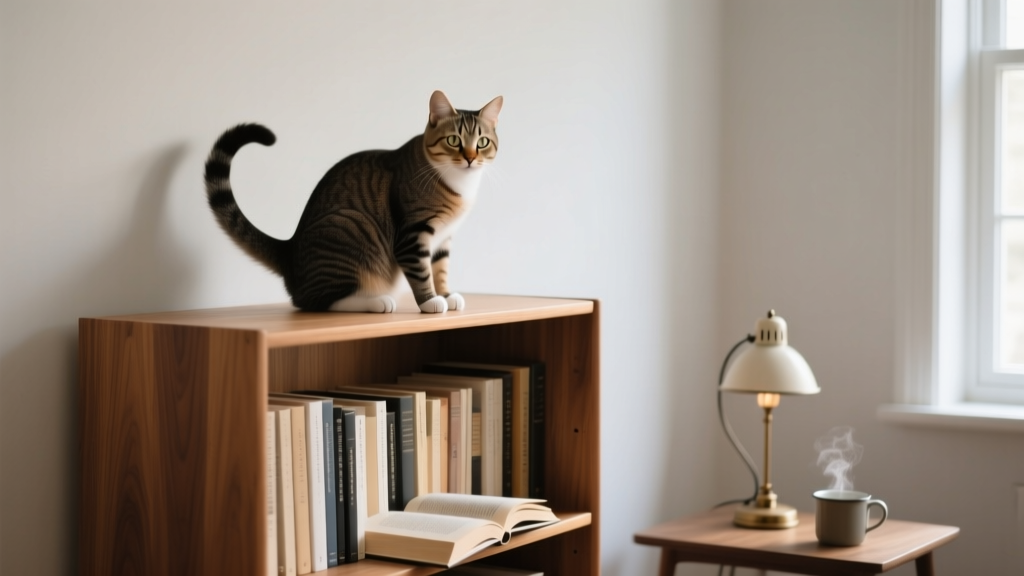
You walk into the living room with a cup of tea, ready to relax… and there’s your cat. Not on the couch. Not in the sunbeam. Not even on their expensive, thoughtfully purchased cat tree. Instead, they’re perched like a tiny, judgmental librarian on the top shelf of your bookcase—tail wrapped neatly, eyes half-lidded, surveying the room as if they own the place (and, honestly, they kind of do).
If you’ve ever wondered why your cat insists on sitting up high—especially on something as oddly specific as a bookcase—this behavior makes a lot of sense once you look at it through a cat’s eyes: part instinct, part strategy, part comfort, and part “I do what I want.”
The Scientific (and Evolutionary) Reason Cats Love High Places
Cats are both predators and prey in the wild. That combination shapes almost everything about their behavior. A high perch offers two big survival benefits:
- Better visibility for hunting and monitoring: From above, a cat can track movement—whether it’s a bird outside the window, a dog in the home, or a human heading toward the treat cupboard.
- Safety and control: Elevation creates distance. Distance means a cat can relax because fewer things can sneak up on them.
This is why even indoor cats—who have never met an actual predator—still crave vertical space. Their brains are running ancient software. A bookcase top is a modern substitute for a rock ledge, tree branch, or sturdy fence line.
There’s also a social component: cats are not pack animals, but they do care deeply about access and resources. Vertical territory is a resource. In multi-cat households, the ability to move up and away can reduce stress and prevent conflict without a single hiss.
A Detailed Breakdown: Different Contexts for “Top Shelf Cat”
Not every “cat on the bookcase” means the same thing. Context matters. Here are the most common scenarios cat behaviorists see, and what your cat may be doing up there.
1) The Lookout Post
Your cat sits tall, ears rotating like radar dishes, eyes bright. They’re watching everything—hallway, windows, you, the ceiling fan. This is pure surveillance. Some cats do this during busy household times: guests arriving, kids running around, dinner prep chaos. A high shelf helps them feel informed and in control.
2) The “Do Not Disturb” Zone
If your cat is sleeping up there, paws tucked, slow blinking when they wake, they may be seeking peace. Elevated spots are great for naps because dogs, toddlers, and overly affectionate humans can’t easily reach them. Many cats learn quickly: “Up here, no one tries to pick me up.”
3) Temperature and Comfort Seeking
Warm air rises. The top of a bookcase can be slightly warmer, especially in winter or in homes with drafty floors. Add to that the fact that bookcases are often against interior walls (less chilly) and you’ve got a cozy microclimate. Your cat may also like the texture—steady footing, a familiar scent, maybe even a slightly dusty “old paper” smell that’s oddly comforting.
4) The Social Anchor Spot
Sometimes the top shelf isn’t about avoiding you—it’s about staying near you in a way that feels safe. Cats often choose a perch in the same room where their favorite human hangs out. They’re present, but they get to control the distance. Think of it as a cat version of sitting at the edge of the party where they can people-watch.
5) The “I Own This Territory” Statement
In multi-cat homes, the top shelf can be prime real estate. A confident cat may claim it as a preferred resting site. This isn’t always bullying—sometimes it’s simply habit and preference. But if one cat consistently blocks access to vertical space, it can become a stress issue for others.
6) The Best Route in a Vertical Highway
Some cats don’t just sit on bookcases—they use them as part of a climbing circuit. Shelf to cabinet to fridge to curtain rod (yes, really). Cats love predictable pathways. A bookcase top might be a “checkpoint” along their route.
What This Behavior Says About Your Cat’s Mood and Feelings
Here’s the fun part: your cat’s body language up there can tell you a lot.
- Relaxed and content: Loose posture, paws tucked, slow blinks, tail resting quietly, soft eyes. This is a cat who feels safe.
- Curious and engaged: Upright posture, ears forward, head tracking sounds, tail tip flicking gently. They’re interested—not stressed.
- Overstimulated or unsure: Wide eyes, ears swiveling or flattening, crouched posture, tense tail, sudden darting movements. A high spot can be a coping strategy when the environment feels “too much.”
- Avoiding interaction: Turning away when you approach, moving farther back, staying very still. This usually means they want space. (Respecting that choice builds trust fast.)
Many cats use height as an emotional reset button. If life at floor-level feels unpredictable, the top shelf is their calm balcony.
Related Behaviors You Might Also Notice
If your cat loves the top shelf, you may recognize a few neighboring “vertical cat” quirks:
- Sitting on top of the fridge (the classic warm, high perch)
- Choosing the highest cat tree platform and ignoring the lower beds
- Perching on door tops or narrow ledges like a tiny acrobat
- Climbing wardrobes or kitchen cabinets whenever they get the chance
- Watching the room from stairs or landings (built-in lookout points)
- “Escaping” upward during vacuuming or guests instead of hiding under furniture
All of these are variations on the same theme: cats feel better when they can choose height, distance, and visibility.
When It’s Normal (and When It Might Be a Concern)
Most of the time, bookcase perching is completely normal—and even healthy—because it gives your cat enrichment and a sense of control. Still, there are a few situations where it’s worth paying closer attention.
Normal and Positive
- Your cat perches occasionally, naps peacefully, and comes down for meals, play, and social time.
- They choose high spots more during busy times (delivery people, visitors, loud TV) and relax afterward.
- They can get up and down easily, without hesitation or discomfort.
Potential Concern
- Sudden change: A cat who never sought height suddenly lives on the bookcase. This can indicate stress (new pet, construction, neighborhood cats outside) or a medical issue affecting their desire for safety.
- Hiding up high all day: If your cat is avoiding food, litter box trips, or interaction, stress or illness could be involved.
- Vocalizing or acting “stuck”: Some cats can climb up but feel uncertain climbing down, especially kittens, seniors, or cats with pain.
- Balance issues: Wobbling, misjudging jumps, or falling should prompt a vet call.
- Aggression guarding the shelf: If one cat is using height to intimidate another, you may need to adjust resources and layout.
If the behavior change is abrupt or paired with appetite, litter box, mobility, or personality changes, check in with your veterinarian. Behavior is often a window into health.
How to Respond (and How to Encourage It Safely)
You don’t need to banish your cat from the bookcase—height is a legitimate feline need. The goal is to make it safe and intentional.
- Stabilize the furniture: Anchor the bookcase to the wall. A jumping cat can shift weight fast, and tip-overs are more common than most people think.
- Create a safe “landing pad”: Add a non-slip mat, a folded blanket, or a purpose-made cat shelf liner on top. This improves traction and makes the perch more inviting.
- Provide an easier route up and down: Place a cat tree, sturdy chair, or step-like shelves nearby so your cat isn’t making one dramatic leap.
- Offer alternative high perches: Wall shelves, window hammocks, or tall cat trees reduce pressure on the bookcase (and on your novels).
- Respect the perch as “their space”: Avoid reaching up to grab them. If they’re up there, let them choose to come down. You’ll often see more affectionate behavior overall when cats feel they can opt out.
- Reinforce calm behavior: If your cat uses the perch to relax, quietly reward with gentle praise, a slow blink, or a treat delivered after they come down (so you don’t teach “scream for snacks from the shelf”).
If your cat is climbing the bookcase and knocking items down, it usually means one of two things: the perch isn’t stable enough to settle, or your cat needs a better vertical setup. Give them a “yes” spot that’s safer than the “no” spot.
Fun Facts and Research-Backed Nuggets About Cats and Height
- Cats cope with stress by increasing their control over access and distance. Vertical space gives both—control over who can approach, and distance from whatever feels unpredictable.
- In multi-cat homes, adding vertical territory can reduce conflict. Behavior and shelter research consistently supports that more environmental complexity (including vertical options) improves welfare and decreases tension.
- Slow blinking from a high perch is a social signal. If your cat slow-blinks at you from the bookcase, they’re not plotting your downfall—they’re signaling comfort and friendly intent.
- Warmth matters. Cats generally prefer warmer resting spots than humans do, which is one reason they seek sun patches, blankets… and sometimes the slightly warmer air higher up.
FAQ: Common Questions About Cats Sitting on Bookcases
1) Is my cat trying to dominate me by sitting above my head?
Usually no. Cats don’t think in human “power ranking” terms. Height is more about safety, visibility, comfort, and preference. That said, in a multi-cat home, access to high-value spots can reflect social confidence.
2) Why does my cat only go to the top shelf when guests come over?
That’s a classic coping strategy. Guests change the sound, smell, and movement patterns in a home. The top shelf offers distance and a full view, which helps many cats feel less vulnerable.
3) Should I stop my cat from sitting on my bookcase?
If it’s stable and safe, there’s no need to stop it. If it’s dangerous (wobbly furniture, fragile items, risk of falling), redirect to a safer high perch and make the bookcase less accessible or less rewarding.
4) My cat can jump up but meows until I “rescue” them. Why?
Some cats feel uncertain about climbing down, especially if the landing area is slippery, cluttered, or too far away. Add a step (chair, ottoman, cat tree) and improve traction. If this is new, consider a vet check for pain or mobility changes.
5) Why does my cat knock books or objects off from up there?
Sometimes it’s play (gravity is fascinating), sometimes it’s frustration (not enough enrichment), and sometimes it’s simply that the space is too cramped to turn around comfortably. Make a clear, cozy perch and increase daily play to reduce “shelf chaos.”
6) What if I have two cats and only one uses the high spots?
Make sure you have multiple elevated options in different rooms and at different heights, plus more than one route up and down. This reduces “bottlenecks” where one cat can block another. If tension persists, a cat behavior consultant can help you fine-tune the setup.
One Last Look at Your Tiny Bookcase Guardian
When your cat chooses the top shelf, they’re not being weird for the sake of it (though cats do enjoy a little flair). They’re meeting a real instinctive need: to feel safe, to see what’s happening, to rest without being interrupted, and to manage their social world from a comfortable distance.
With a few simple tweaks—stable furniture, safe access, and alternative perches—you can turn that “Why are you up there?” moment into a better environment and a happier relationship.
Does your cat have a favorite “high throne” in your home? Share your funniest top-shelf stories (and any creative cat-perch setups) with the Cat Lovers Base community at catloversbase.com.