Why Cats Sit on the Staircase Middle Step
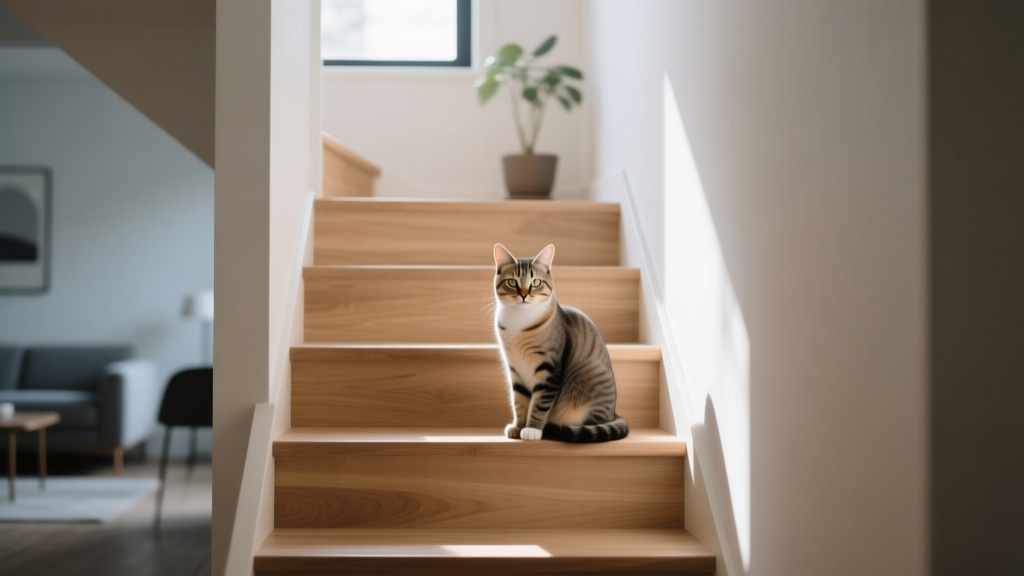
You’re carrying laundry upstairs, and there it is again: your cat, planted on the exact middle step like a tiny, furry toll booth. You pause. Your cat blinks slowly, tail curled neatly around paws, as if to say, “Oh, were you going somewhere?” If you try to step around, they shift just enough to remain perfectly in the way—yet somehow still look innocent.
If this sounds familiar, you’re not alone. The staircase middle step is prime cat real estate, and cats choose it for reasons that make a lot of sense once you look at the world the way a cat does. This behavior can be funny, mildly inconvenient, and surprisingly revealing about your cat’s instincts, feelings, and daily strategy.
1) The scientific (and evolutionary) “why” behind the middle step
Cats are both predators and prey in evolutionary terms. Even our pampered indoor cats carry a mental toolkit built for survival: seek vantage points, control traffic lanes, monitor the environment, and choose locations that feel safe but offer quick escape routes.
Stairs are a cat’s dream structure because they naturally create:
- Elevation changes (great for surveying)
- Narrow pathways (easy to control and observe)
- Multiple exits (up, down, and often adjacent rooms)
- Predictable “traffic” (humans and other pets have to pass through)
And the middle step is often the sweet spot: not too close to the bottom (where “things happen” and doors open), not too close to the top (where you might get surprised by someone appearing), but centrally placed for maximum information. Think of it as your cat’s control room.
From a behavior perspective, cats are drawn to places that combine security and visibility. A mid-stair perch can offer both. They can watch the lower level, listen to the upper level, and react quickly if needed—all while looking like they’re doing absolutely nothing.
2) A detailed breakdown: different contexts for the “middle step sit”
Not all staircase sits are created equal. The same spot can mean different things depending on what’s happening in your home and how your cat’s body language looks.
They’re supervising the household
Many cats choose the middle step during busy household moments: dinner prep, kids moving around, guests arriving, or that time you’re trying to leave the house quickly. The staircase becomes a quiet observation deck. Your cat gets to “be present” without being in the center of the chaos.
What it looks like: upright posture, ears forward or swiveling, eyes tracking movement, relaxed tail.
They’re controlling a valuable pathway
Stairs can function like a hallway in vertical form—one route that connects key resources. If your cat wants to keep tabs on who goes where (another cat, a dog, a toddler), sitting in the middle can be a gentle form of “traffic management.”
This doesn’t automatically mean dominance in a dramatic sense. It’s often simply an instinct to monitor access to important zones: sleeping areas, litter boxes upstairs, favorite windows, or your bedroom.
What it looks like: still posture, intense watchfulness, minimal blinking, occasional slow tail flicks.
They’re seeking a temperature or texture sweet spot
Some staircases have subtle microclimates. Heat rises, drafts move, sunlight lands at certain angles, and materials matter. Carpeted steps can feel cozy and grip-friendly. Wooden steps might be cooler in summer. The middle step may be where the sunbeam hits at 3 p.m. with perfect accuracy—cats notice these things like tiny interior designers.
What it looks like: loaf position, half-closed eyes, relaxed whiskers, occasional nap.
They’re asking for attention (without “asking”)
Cats are masters of indirect communication. Sitting in the middle step can be a strategic way to increase the odds you’ll interact. You have to pass them. You have to acknowledge them. And if you pause, they might even reward you with a slow blink as payment.
What it looks like: looking toward you, soft meow or chirp, tail up when you approach, rolling slightly to one side.
They feel safer there than on the floor
Elevation can reduce anxiety. If your cat is unsure about a dog, a new roommate, visiting children, or even a noisy appliance, the stairs can serve as a “safe middle ground.” They can retreat up or down depending on what’s happening.
What it looks like: crouched body, ears angled sideways or back, pupils larger than usual, quick scanning.
3) What it means about your cat’s mood and feelings
To interpret the middle-step sit, don’t focus only on the location—focus on the whole cat.
- Relaxed and content: soft eyes, slow blinks, loose posture, tail resting calmly. This is a cat enjoying a favorite perch.
- Curious and engaged: ears forward, head turning, alert but calm. Your cat is gathering information.
- Slightly irritated or overstimulated: tail flicking, tense shoulders, staring. They may want space, or they may be guarding a route.
- Anxious or unsure: crouched low, ears back, large pupils, ready-to-bolt stance. The stairs may be a coping strategy.
- Playful/ambushy: wiggly butt, focused eyes, hiding partially behind the stair edge. They may be planning a “surprise” ankle pounce.
One of the most common “middle step moods” is what I call peaceful vigilance: your cat is calm, but they’re also monitoring their environment. It’s a very feline way to relax.
4) Related behaviors you might also notice
If your cat loves the staircase middle step, you may see other behaviors from the same instinct package:
- Blocking doorways (especially bedroom doors or hallways)
- Perching on stair landings like a sentry
- Sitting on your path when you’re walking with purpose
- “Escorting” you halfway up or down the stairs
- Hanging out at corners where they can see multiple rooms
- Ambush play from behind furniture edges or banisters
All of these are variations on the same themes: visibility, control of movement, and social connection on their terms.
5) When the middle-step sit is normal vs. a concern
Most of the time, this is completely normal and even healthy. It can be a sign your cat feels secure enough to lounge in a high-traffic zone.
It may be worth a closer look if you notice any of the following:
- Sudden change: Your cat never sat on the stairs before and now does it constantly, especially if they seem tense.
- Mobility issues: Hesitation, stiffness, slipping, or avoiding jumping—stairs can reveal arthritis or pain.
- Guarding that escalates: Hissing, swatting, or blocking other pets from accessing resources (food, water, litter box, resting areas).
- Hiding in plain sight: Sitting frozen on the stairs for long periods with wide pupils and low posture may signal stress.
- Vocalizing or restlessness: Repeated meowing on the stairs, pacing up and down, or seeming unable to settle can point to anxiety or medical discomfort.
If you suspect pain (especially in older cats), a vet check is a smart move. Cats are experts at masking discomfort, and stairs can become the place where subtle struggles show up.
6) Tips for responding to (or encouraging) the behavior
You don’t need to “fix” a harmless staircase sit, but you can make it safer, more comfortable, and less inconvenient for human ankles.
Create an approved perch alternative
If your cat always chooses the exact step you need, try placing a small cat bed or non-slip mat on a nearby step or landing. Some cats will happily relocate if the new spot feels equally prime.
Reinforce polite positioning
If your cat moves aside when you approach, reward that with gentle praise, a slow blink, or a treat tossed to a safe spot. Cats repeat behaviors that work.
Use toys to redirect “ankle ambush” energy
If the middle step is a launchpad for surprise attacks, add a short play session before peak zoomie times (often morning and evening). Wand toys at the bottom of the stairs can redirect the hunting instinct away from your feet.
Improve traction and safety
For cats that love stairs (especially seniors), consider stair treads or runners to reduce slipping. Good footing makes stair-hanging less risky and can reduce stress.
Reduce resource bottlenecks in multi-pet homes
If the staircase becomes a “checkpoint” between cats, make sure resources are distributed on both levels: multiple litter boxes, water, resting spots, and escape routes. This prevents the stairs from becoming a strategic choke point.
Respect the “do not disturb” version
If your cat is perched tensely and seems overwhelmed, don’t force interaction. Give them space, lower household intensity if possible, and observe what might be stressing them.
7) Fun facts and research-friendly nuggets
- Cats love edges and transitions: Stairs are packed with boundaries—each step is an edge, and edges feel informative and secure to many cats.
- Height is emotionally meaningful: In multi-cat households, access to vertical space is strongly associated with reduced conflict. A staircase is built-in vertical territory.
- “Blocking” can be social, not hostile: Cats often position themselves where interactions are likely. Your cat may simply be increasing the chances you’ll talk to them, pet them, or acknowledge them.
- They’re mapping your routine: Cats are pattern learners. If you pass the middle step at predictable times (work, meals, bedtime), that spot becomes a reliable social checkpoint.
FAQ: Why cats sit on the staircase middle step
Is my cat trying to trip me on purpose?
Not in the “villain plotting” sense (even if it feels that way when you’re holding a laundry basket). Cats choose the middle step because it’s a high-value observation and interaction point. That said, they don’t understand human tripping risk well—so it’s on us to encourage safer positioning.
Why the middle step specifically and not the top or bottom?
The middle step often balances visibility and safety. The bottom can be busy and unpredictable (doors, shoes, comings and goings). The top can feel exposed to sudden appearances. The middle is a stable “information hub.”
My cat sits there and stares at me. What does that mean?
It’s often attention-seeking, anticipation (dinner? playtime?), or social monitoring. Check the body language: relaxed eyes and a soft posture suggest friendly engagement; tense body and fixed stare can suggest overstimulation or mild guarding.
Should I move my cat when I need to use the stairs?
Yes—gently. Use a cheerful cue, toss a treat to a nearby step, or lure them to a landing. Avoid pushing with your foot or stepping over them. You want the stairs to remain a safe, positive space.
Does this mean my cat is anxious?
Not necessarily. Many confident cats choose stair perches. It may indicate anxiety if the behavior is new, paired with crouching/large pupils, or your cat seems unable to relax. If you’re unsure, consider what changed recently in the home.
My two cats clash on the stairs—what should I do?
Stairs can become a bottleneck. Add resources on both floors, provide alternative routes or vertical options (cat trees, shelves), and avoid forcing them to pass each other in tight spaces. If conflict persists, a cat behavior professional can help with a step-by-step plan.
A final thought
When your cat parks themselves on the staircase middle step, they’re not just being quirky—they’re being a cat: strategically placed, quietly observant, and very invested in the daily rhythm of your home. Once you start noticing how often cats choose “in-between” spaces (between rooms, between floors, between busy and calm), their logic becomes oddly charming.
Does your cat have a favorite staircase step—or another “why there?” spot in your house? Share your story (and your best “cat traffic cone” moments) with the Cat Lovers Base community at catloversbase.com.