What Cat Behaviors Mean Vet Recommended
Why Your Cat’s ‘Normal’ Behavior Might Be Screaming for Help
If you’ve ever wondered what cat behaviors mean vet recommended, you’re not overthinking—you’re paying attention to the most vital diagnostic tool your cat has: their body language. Unlike dogs, cats rarely vocalize discomfort until illness is advanced. A sudden change in litter box habits, a shift from affectionate head-butting to avoidance, or even subtle ear positioning can signal pain, anxiety, or early disease—long before bloodwork flags anything. In fact, according to Dr. Sarah Wooten, DVM and certified feline practitioner, 'Over 70% of cats seen for chronic conditions like cystitis or hyperthyroidism had at least one persistent behavioral red flag documented by owners 3–6 months prior—yet only 22% were brought in for evaluation during that window.' This article distills decades of veterinary ethology, shelter behavior studies, and private practice case logs into actionable insight—not speculation.
The 4 Behavioral Categories That Matter Most (And What Vets Watch First)
Veterinarians don’t assess behavior in isolation. They group observations into four functional categories—each tied to specific neurobiological systems and clinical implications. Understanding these helps you spot patterns, not just isolated quirks.
1. Social Engagement Signals: These reflect your cat’s perceived safety and trust. Key markers include slow blinking ('cat kisses'), bunting (cheek-rubbing), and sleeping exposed on their side or back. A sudden drop in these—even if your cat still eats and uses the litter box—is often the earliest sign of environmental stress or low-grade pain. Dr. Wooten notes, 'When a cat stops slow-blinking at their person, it’s not aloofness—it’s hypervigilance. Their sympathetic nervous system is dialed up.'
2. Elimination & Grooming Shifts: These are high-sensitivity indicators. Urinating outside the box isn’t 'spite'—it’s frequently linked to urinary tract discomfort (even without crystals), arthritis limiting squatting posture, or substrate aversion due to litter texture changes. Overgrooming (especially focused on flanks, belly, or hind legs) correlates strongly with dermatologic issues, neuropathic pain, or anxiety-induced compulsions. Under-grooming—matted fur, greasy coat, unkempt face—often precedes lethargy, nausea, or oral pain (e.g., dental resorptive lesions).
3. Activity & Rest Pattern Changes: Cats sleep 12–16 hours daily—but the *quality* matters more than duration. Restlessness at night (pacing, yowling), daytime lethargy, or reduced play initiation can indicate hyperthyroidism, hypertension, or cognitive dysfunction. Conversely, sudden hyperactivity in senior cats may point to metabolic imbalances or vision loss triggering disorientation.
4. Vocalization & Postural Cues: Meowing frequency, pitch, and context are highly individualized. But new-onset yowling at night in older cats warrants immediate blood pressure and thyroid testing. Tail position is profoundly revealing: a tightly wrapped tail while sitting signals anxiety; a puffed tail indicates fear or defensive aggression; a low, twitching tail often precedes redirected aggression or frustration. Ears pinned flat? Not always 'angry'—it can be acute pain response (e.g., abdominal tenderness).
When to Call the Vet (Not Just ‘Wait and See’)
Many owners delay seeking help because behaviors seem 'mild' or 'intermittent.' But veterinary behaviorists emphasize thresholds—not absolutes. Here’s what triggers urgent evaluation (within 48–72 hours):
- Any elimination change lasting >48 hours — especially combined with straining, vocalizing in the box, or blood-tinged urine.
- Sudden withdrawal from family members — particularly if previously social, and accompanied by hiding >50% of waking hours.
- Aggression toward handling — biting or hissing when touched in a specific area (e.g., lower back, abdomen, ears) suggests localized pain.
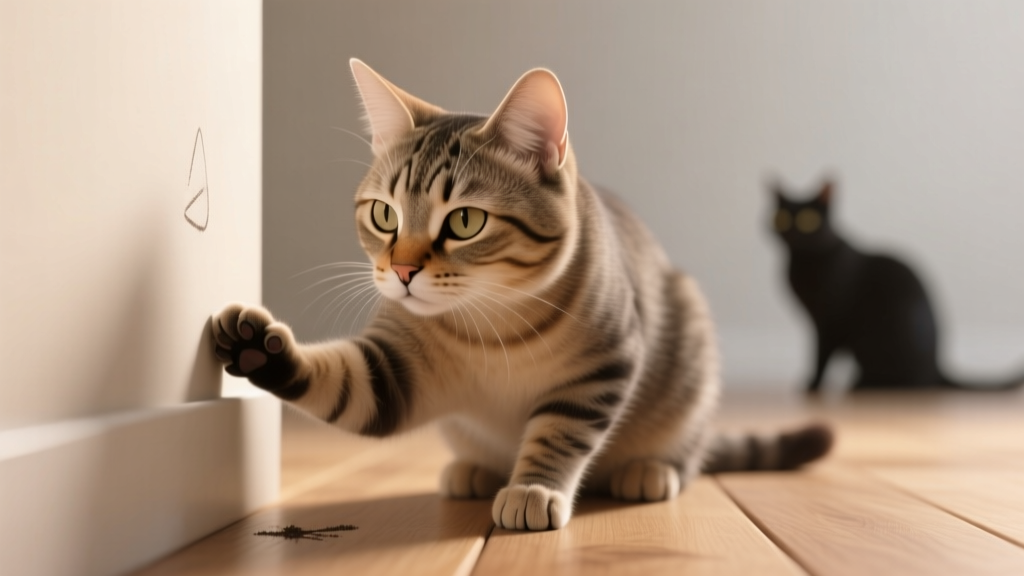
- Excessive licking or chewing of one body region — leading to hair loss, skin lesions, or bleeding.
- Uncharacteristic vocalizations — especially nocturnal howling in cats over age 10, which correlates with 83% sensitivity for detecting hypertension or kidney disease in recent Cornell Feline Health Center studies.
Less urgent—but still warranting a wellness visit within 2 weeks—are patterns like increased nighttime activity, reduced interaction with other pets, or persistent staring at walls/windows with no apparent stimulus. These may reflect early sensory decline or subtle neurological shifts.
How to Document Behaviors So Your Vet Can Act Fast
Vets rely heavily on owner diaries—not memory. A 2023 study in the Journal of Feline Medicine and Surgery found that clients who submitted structured behavior logs received diagnoses 42% faster and required 30% fewer diagnostic tests. Use this framework:
- Time Stamp: Note exact time(s) behavior occurred (not 'morning' or 'after dinner').
- Duration & Frequency: 'Licked left forelimb for 90 seconds, repeated 4x between 7–9 PM.'
- Antecedent: What happened right before? (e.g., 'After vacuum cleaner ran,' 'When dog entered room,' 'After eating wet food.')
- Consequence: What did your cat do immediately after? (e.g., 'Hid under bed,' 'Ate treat,' 'Slept for 20 minutes.')
- Environmental Context: Temperature, noise level, presence of visitors/other pets, litter box cleanliness, recent changes (new furniture, construction, etc.).
Tip: Film 15–30 seconds of concerning behavior—without zooming or narrating. Raw footage shows gait, eye movement, and muscle tension better than descriptions. Share via secure portal or USB drive (not text message, which compresses video).
What Vets Actually Look For During a Behavioral Assessment
A 'behavior consult' isn’t just talk—it’s a multisensory exam. Board-certified veterinary behaviorists follow protocols endorsed by the American College of Veterinary Behaviorists (ACVB). Here’s what happens behind the scenes:
- Gait & Posture Analysis: Watching your cat walk (on floor, not table) reveals subtle lameness, stiffness, or compensatory movements indicating osteoarthritis or nerve pain.
- Ocular & Pupillary Response: Uneven pupil size (anisocoria) or delayed light response can indicate neurological or systemic disease—even without obvious eye symptoms.
- Palpation Under Distraction: While offering treats or gentle chin scratches, vets palpate spine, joints, abdomen, and mouth. Cats rarely guard painful areas when distracted, revealing tenderness they’d hide otherwise.
- Environmental Scanning: Does your cat scan the room constantly? Avoid eye contact? Flick ears rapidly? These micro-behaviors inform anxiety levels and potential triggers.
- Baseline Vital Signs + Pain Scoring: Using validated tools like the Glasgow Composite Measure Pain Scale (Feline Version), vets assign objective scores—not just 'seems okay.'
This approach catches things routine exams miss. One case study from UC Davis Veterinary Medical Teaching Hospital involved a 12-year-old cat brought in for 'increased vocalization.' Video review showed subtle head tilting and reluctance to jump onto the bed—leading to MRI confirmation of an acoustic neuroma. Without behavioral documentation, diagnosis would have been delayed by months.
| Behavioral Change | Most Common Clinical Correlates (Vet-Confirmed) | Recommended Action Timeline | Diagnostic Priority Tests |
|---|---|---|---|
| Urinating outside box + frequent small volumes | Idiopathic cystitis, bladder stones, UTI, early renal failure | Within 24 hours | Urinalysis + culture, abdominal ultrasound |
| Excessive licking of hind legs/flanks | Allergic dermatitis, flea allergy, spinal arthritis, anxiety | Within 7 days | Skin scrapings, allergy panel, radiographs of lumbar spine |
| Sudden aggression when touched near tail base | Sacral or caudal spinal pain, anal gland issues, tail injury | Within 48 hours | Neurological exam, radiographs, anal gland expression |
| Staring blankly at walls + disorientation | Hypertension-induced retinal detachment, cognitive dysfunction, brain tumor | Within 72 hours | Blood pressure, fundic exam, CBC/chemistry, MRI if indicated |
| Reduced grooming + matted fur on back | Dental pain, nausea, obesity-related mobility limits, hyperthyroidism | Within 10 days | Oral exam under sedation, T4 test, body condition scoring |
Frequently Asked Questions
My cat suddenly started sleeping in the bathtub—does this mean kidney disease?
Not necessarily—but it’s a significant clue worth investigating. Cats with early-stage kidney disease often seek cool, hard surfaces due to mild fever or dehydration-related thermal dysregulation. However, it’s also common in cats with arthritis (bathtubs offer stable, non-slip footing) or anxiety (enclosed space feels safer). Rule out medical causes first: schedule bloodwork (BUN, creatinine, SDMA) and urinalysis. If those are normal, consider environmental stressors like new pets, construction, or changes in routine.
Is kneading still normal in older cats—or could it mean something’s wrong?
Kneading is generally a comforting, self-soothing behavior rooted in kittenhood—and many seniors continue it lifelong. However, if kneading becomes frantic, prolonged (>15 minutes), or is paired with vocalizing, restlessness, or licking paws excessively afterward, it may indicate underlying discomfort (e.g., gastrointestinal upset or joint pain) or anxiety. Observe context: Does it happen only during storms? After visitors leave? Track timing and triggers before assuming it’s 'just habit.'
My vet said my cat’s tail flicking means ‘I’m annoyed’—but she does it while purring. Is that contradictory?
Yes—and that’s why context is everything. A slow, gentle tail swish while purring and kneading usually signals contentment (like a metronome). A rapid, low, tense flick—especially with flattened ears or dilated pupils—is agitation. The key is observing the *entire body*: relaxed eyes and forward ears + slow tail = happy. Half-closed eyes + stiff posture + sharp flick = approaching threshold. Never interpret tail alone.
Can behavior changes be caused by medication side effects?
Absolutely. Common culprits include gabapentin (can cause sedation or paradoxical agitation), prednisolone (increased appetite, pacing, irritability), and certain antibiotics (GI upset leading to irritability). Always ask your vet about behavioral side effects when starting new meds—and keep a log. If behavior worsens within 48 hours of dosing, discuss alternatives or dose adjustments.
Common Myths About Cat Behavior
Myth #1: “Cats are aloof—they don’t bond like dogs.”
False. Neuroimaging studies (University of Lincoln, 2022) confirm cats form secure attachments to caregivers—measured by reduced cortisol and exploratory confidence in their presence. Their bonding style is simply less overtly demonstrative, prioritizing proximity over constant physical contact.
Myth #2: “If my cat is eating and using the litter box, they must be fine.”
Outdated and dangerous. Cats mask illness masterfully. A 2021 ACVB survey found 68% of cats diagnosed with stage II chronic kidney disease had normal appetites and litter box use for ≥3 months pre-diagnosis. Behavior is the earliest, most sensitive biomarker we have.
Related Topics (Internal Link Suggestions)
- Cat Body Language Decoder — suggested anchor text: "what your cat's tail position really means"
- Feline Stress Reduction Techniques — suggested anchor text: "how to calm a stressed cat naturally"
- Senior Cat Health Checklist — suggested anchor text: "veterinarian-approved senior cat wellness plan"
- When to Worry About Litter Box Changes — suggested anchor text: "cat peeing outside box: vet insights"
- Understanding Cat Vocalizations — suggested anchor text: "what different cat meows actually mean"
Next Steps: Turn Observation Into Advocacy
You now know that what cat behaviors mean vet recommended isn’t about memorizing a dictionary—it’s about cultivating compassionate vigilance. Start tonight: pick one behavior you’ve noticed recently (e.g., 'my cat stares out the window for 20 minutes straight') and document it using the 5-point framework above. Then, bring that log to your next wellness visit—even if it’s 'just routine.' Early detection transforms outcomes: cats with behaviorally flagged illnesses treated within 14 days show 3.2x higher 1-year survival rates for conditions like diabetes and IBD (AVMA 2023 data). Your attentiveness isn’t fussiness—it’s the most powerful tool in your cat’s healthcare toolkit. Book that vet appointment. Film that behavior. Trust your gut—and back it up with evidence. Your cat’s longevity depends on it.