Why Cats Sit on the Ironing Board
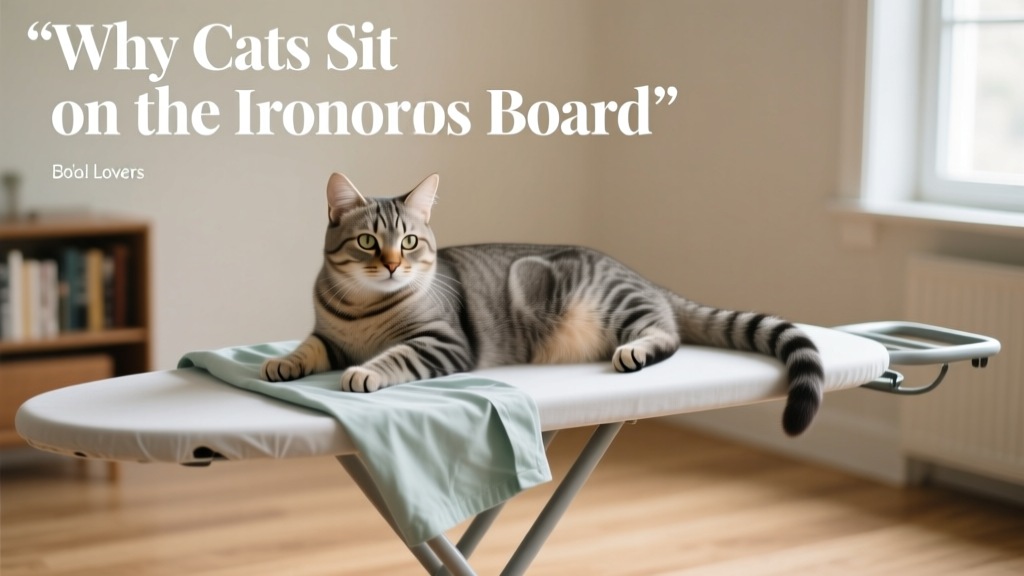
You set up the ironing board with the best intentions. The laundry basket is sorted, the wrinkled shirt is waiting, and you’re feeling oddly productive. You turn your back for five seconds—maybe to plug in the iron—and when you look again, your cat is already there. Plopped right in the middle like a fuzzy paperweight. Tail tucked. Eyes half-lidded. Completely unbothered by your schedule.
If you’ve ever stood there holding a shirt while negotiating with a purring cat on an ironing board, you’re in excellent company. This behavior is so common that many cat owners start to treat the board like an unofficial “cat perch” that just happens to unfold from the closet. The good news: it’s usually normal, and it actually tells you a lot about how cats think.
1) The scientific (and slightly sneaky) reason: cats love warm, elevated, predictable spots
Cats are experts at energy efficiency. In the wild, conserving calories matters. Even in your living room, your cat’s brain still runs the “save energy, stay safe, stay comfortable” program.
An ironing board checks several instinctive boxes:
- Height and vantage point: A board lifts your cat off the floor, offering a better view of the room. Elevated surfaces help cats feel safer because they can monitor what’s happening without being in the middle of it.
- Warmth (real or anticipated): Even if the iron isn’t on yet, the board is associated with heat. Cats are drawn to warm places because warmth reduces the energy needed to maintain body temperature.
- A defined “platform”: Cats like clear boundaries—boxes, baskets, windowsills. The ironing board is a long, narrow, slightly springy platform that feels like a designated lounging zone.
- Your scent + your attention: You touch the board, you stand near it, you do repetitive movements there. For many cats, that makes it socially and emotionally “important.”
From an evolutionary perspective, your cat isn’t trying to sabotage laundry. They’re choosing a location that feels safe, warm, and socially relevant—three of the biggest cat motivators.
2) What’s really happening: different contexts that change the meaning
“My cat sits on the ironing board” can mean a few different things depending on timing, body language, and what else is going on in the room.
A) The board is up, iron is off: “This is my perch now.”
This is the most common version. Your cat hops up soon after the board appears, as if the universe just delivered a new piece of furniture.
Why it’s appealing: It’s novel (cats investigate changes), elevated, and often placed in a central location where your cat can supervise. It can also feel like a “safe island” away from dogs, kids, or foot traffic.
B) You’re actively ironing: “I want to be where you are.”
Many cats are drawn to repetitive human activities: folding laundry, typing, cooking, wrapping gifts. Ironing is rhythmic and predictable, and you’re standing still in one spot for a while—prime companionship time.
Translation: Your cat may be seeking social closeness. Not always cuddling—sometimes just being near you is enough.
C) The iron is warm or the board is warm: “Heat, please.”
If the iron has been running, the board cover and pad can hold warmth. Some cats will wait like little heat-seeking missiles and then settle in the moment the iron is moved.
Translation: This is comfort behavior. It can also be a sign your cat is especially motivated by warmth (common in older cats, thin-coated cats, or cats in cooler homes).
D) Freshly laundered clothes are on the board: “Your scent + my scent = perfect.”
Clean clothing is fascinating because it’s both new (different detergent smells) and familiar (it’s yours). When your cat lies on it, they deposit their own scent from facial glands and skin oils, essentially “labeling” the item as part of the shared household territory.
Translation: This can be a friendly, affiliative behavior—your cat is blending scents with you, which is one way cats build social harmony.
E) Your cat sits there only when guests are over: “I need a secure observation post.”
If the ironing board appears during social events (extra chores before company), it might become your cat’s “control tower.”
Translation: This can signal mild stress or uncertainty. Elevation helps cats feel less vulnerable when unfamiliar people are around.
3) What it says about your cat’s mood and feelings
Cats communicate with posture and micro-movements. Here are common “ironing board” body language clues:
- Loose loaf (paws tucked, body relaxed): Contentment and security. Your cat feels safe enough to rest deeply.
- Slow blinking at you: Affection and calm. Returning a slow blink can be a nice way to “talk cat.”
- Tail draped loosely: Relaxed interest—your cat is hanging out, not on high alert.
- Tail flicking sharply or thumping: Irritation or overstimulation. If you keep moving clothes near them, they may feel crowded.
- Ears turned sideways (“airplane ears”): Unease or conflicted feelings—curious, but not fully comfortable.
- Making biscuits (kneading): Comfort and self-soothing. Often linked to kittenhood nursing memories and cozy nesting feelings.
In many homes, the ironing board becomes a little stage where your cat shows you: “I’m relaxed,” “I want company,” or “I’m claiming this spot.”
4) Related quirky behaviors you might notice
If your cat is an ironing-board enthusiast, you may also recognize these greatest hits:
- Sitting on your laptop or keyboard: Warmth, attention, and a desire to be in your activity zone.
- Jumping into laundry baskets: Enclosed, scent-rich, den-like comfort.
- Sleeping on freshly folded clothes: Soft texture plus your scent—and a little “territory tagging.”
- Claiming any new object you bring out: Cats are curious about changes and may “inspect” by sitting on it.
- Following you from room to room: Social attachment or routine-based bonding (some cats are true little shadows).
These behaviors often share the same drivers: warmth, safety, scent, social closeness, and environmental novelty.
5) When it’s normal (most of the time) vs. when it might be a concern
Usually, a cat on an ironing board is just a cat being efficiently adorable. That said, context matters.
Normal and harmless
- Your cat looks relaxed and moves away easily when redirected.
- The behavior is occasional or tied to routine (laundry day = perch day).
- Your cat is otherwise eating, drinking, playing, and using the litter box normally.
Potentially worth a closer look
- Heat-seeking becomes intense or constant: If your cat is suddenly obsessed with warmth (camping on heaters, vents, warmed surfaces) and seems restless, it can sometimes be linked to discomfort or illness. Older cats may seek warmth due to arthritis. A vet check is wise if it’s a noticeable change.
- Clinginess spikes abruptly: A cat that suddenly won’t leave you alone, vocalizes more, or seems anxious may be responding to stress, a change in the household, or medical issues.
- Aggression when you approach the board: Guarding behavior—hissing, swatting—can indicate stress, pain, or a cat that feels their resources (safe spots) are limited.
- Your cat seems disoriented or uncoordinated jumping up/down: That’s not “quirky,” that’s a safety concern—talk to your veterinarian.
Also, there’s one big non-negotiable: hot iron + cat = serious burn risk. If your cat regularly climbs up during ironing, treat it as a management issue, not a cute coincidence.
6) How to respond (and how to keep everyone safe)
You have two goals: honor your cat’s needs and keep them out of danger.
Safety first
- Never leave a hot iron unattended—even for “just a second.”
- Use physical barriers if needed: close the laundry room door, use a baby gate, or set up a temporary cat-free zone during ironing.
- Let the board cool before allowing your cat back into the space if they’re heat-seeking.
Offer an irresistible alternative
Cats don’t respond well to “no” without a “yes.” If the ironing board is attractive because it’s warm, elevated, and near you, provide a replacement that matches those features:
- Place a cat bed or folded towel on a nearby chair at a similar height.
- Set up a window perch or cat tree in the laundry area so your cat can supervise safely.
- Use a heated cat bed (low, pet-safe) in a separate spot—especially helpful for seniors.
Train a “station” behavior (yes, cats can do this)
If your cat loves being near you during chores, you can reward them for choosing the correct spot:
- Put a mat or bed nearby (“your cat’s ironing assistant station”).
- When your cat steps on the mat, calmly reward with a treat or gentle praise.
- If they jump on the board, quietly lift them down and guide them back to the station—no scolding required.
The secret is consistency: the mat pays well, the board never pays.
If you want to encourage the bonding part
If the iron is off and you’re just setting up laundry, it can be perfectly fine to let your cat lounge there. Some cats truly enjoy “parallel play”—being together without direct interaction. Talk to them softly, slow blink, and let them supervise your folding like the tiny manager they believe they are.
7) Fun facts and research-y nuggets
- Cats prefer warmth for practical reasons: Their thermoneutral zone (the temperature range where the body doesn’t have to work hard to stay warm) tends to be higher than humans’. That’s one reason your cat seeks sunbeams while you’re comfortable in a sweater.
- Scent is social glue: Cats have scent glands around the face and body. Rubbing, sitting, and sleeping on your things can be a way of creating a “group scent,” which supports feelings of familiarity and safety.
- Elevated perches reduce conflict in multi-cat homes: Behavior research and shelter behavior protocols frequently emphasize vertical space as a key resource. An ironing board can accidentally become valuable “vertical territory.”
8) FAQ: common questions about cats and ironing boards
Why does my cat sit on the ironing board only when I’m using it?
They’ve learned it’s a reliable time when you’re stationary and predictable. Many cats enjoy being near their humans during calm routines. It can also be attention-seeking—especially if the ironing board reliably makes you talk to them.
Is my cat trying to stop me from ironing?
Not in a plotting-your-downfall way. Cats repeat behaviors that feel good or get results. If sitting there gets warmth, a good view, or your attention, it’s a winning strategy from a cat’s perspective.
How do I keep my cat off the ironing board without stressing them out?
Give them a better option nearby (a raised perch or bed) and reward that choice. Manage access during active ironing for safety. Calm redirection works better than yelling or squirting water, which can increase anxiety and damage trust.
Could this mean my cat is anxious?
Sometimes. If the ironing board is used as a “safe tower” during loud noises, guests, or household changes, your cat may be seeking security. Look for other signs like hiding, reduced appetite, over-grooming, or increased vigilance.
My cat kneads on the ironing board—what does that mean?
Kneading usually signals comfort and contentment. The board cover can feel like a satisfying texture, and the whole setup may remind them of making a cozy nest.
Is it safe to let my cat sit on the ironing board?
Only when the iron is unplugged and fully cooled, and the board is stable. During ironing, it’s safer to keep your cat out of the room or provide a separate perch.
One last thing: your cat isn’t being weird—they’re being wonderfully cat
The ironing board is warm-adjacent, elevated, scent-rich, and located right where you’re focused. From a cat’s point of view, it’s basically a VIP lounge that appears on demand. When you understand the “why,” it’s easier to respond with empathy—setting boundaries for safety while still meeting your cat’s needs for comfort and connection.
Does your cat claim the ironing board like it’s a throne? Or do they wait until the second you lay down a crisp shirt and then dramatically flop right on top of it? Share your funniest (or most baffling) laundry-day cat stories with us on catloversbase.com—we’d love to hear how your cat “helps” around the house.