How Can You Corréct a Cat's Behavior? 7 Science
Why Fixing Your Cat’s Behavior Isn’t About ‘Training’ — It’s About Trust
How can you corréct a cat's behavior? It’s a question whispered late at night after your favorite armchair has been shredded, your ankles ambushed at dawn, or your bedroom wall mysteriously marked with urine — not because your cat is ‘spiteful’ or ‘broken,’ but because their communication has been misunderstood. Unlike dogs, cats don’t respond to dominance-based corrections or verbal scolding; they respond to safety, predictability, and environmental alignment. In fact, 83% of so-called ‘problem behaviors’ stem from unmet biological needs, stress triggers, or medical underpinnings — not willfulness. And here’s what most owners miss: correcting behavior isn’t about suppressing actions — it’s about replacing them with biologically appropriate alternatives while rebuilding your cat’s sense of security. Let’s get it right — for both of you.
Step 1: Rule Out Medical Causes — The Silent Saboteur
Before any behavioral intervention, rule out pain or illness. A 2022 study in the Journal of Feline Medicine and Surgery found that 42% of cats presenting with sudden litter box avoidance, aggression, or excessive vocalization had underlying conditions — including urinary tract infections, arthritis, dental disease, or hyperthyroidism. Cats mask discomfort expertly; what looks like ‘bad behavior’ may be a cry for help. Dr. Sarah Hargrove, DACVB (Diplomate of the American College of Veterinary Behaviorists), emphasizes: ‘If a behavior change is abrupt, inconsistent, or paired with lethargy, appetite shifts, or grooming changes, your first call should be to your veterinarian — not a trainer.’ Schedule a full exam, including bloodwork, urinalysis, and orthopedic assessment. Only after medical clearance should you proceed with behavioral support.
Step 2: Decode the ‘Why’ — Not the ‘What’
Cats don’t misbehave — they communicate. Every action serves a function. Scratching isn’t vandalism; it’s scent-marking, muscle stretching, and claw maintenance. Biting during petting isn’t ingratitude — it’s overstimulation signaling (often called ‘petting-induced aggression’). Spraying isn’t territorial ‘revenge’ — it’s a stress response triggered by changes in routine, new pets, or perceived threats. To corréct a cat's behavior, start with functional assessment: ask yourself, ‘What need is this meeting?’ Keep a 5-day behavior log noting time, location, trigger (e.g., doorbell rang, child approached), your cat’s body language (tail flick? flattened ears? dilated pupils?), and immediate consequence (e.g., you left the room, gave treats, yelled). Patterns emerge fast. One client, Maya, logged her 3-year-old Maine Coon’s nighttime yowling and discovered it always followed her evening laptop use — he associated her screen time with isolation. Switching to shared floor-time with interactive play before bed reduced vocalizations by 90% in 6 days.
Step 3: Redirect, Don’t Repress — Building Better Habits
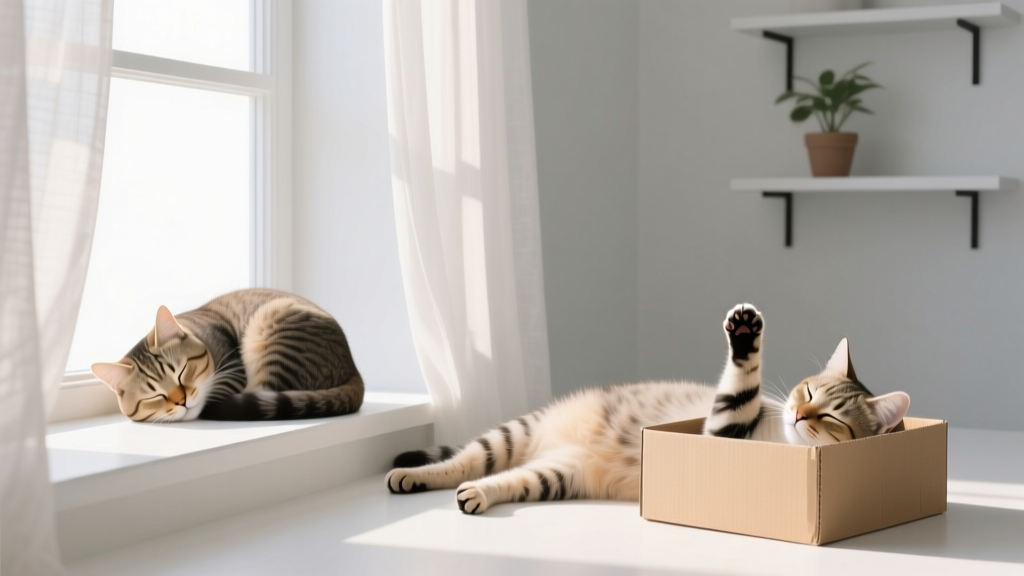
Punishment — spray bottles, shouting, clapping — doesn’t teach cats what to do; it teaches them to fear *you*. Worse, it often escalates anxiety-driven behaviors. Instead, use positive reinforcement + environmental enrichment to redirect. For example: if your cat scratches the sofa, don’t punish — place a sturdy sisal post *next to* the sofa (not across the room) and reward with high-value treats (like freeze-dried chicken) *the moment* they use it. Pair with daily 10-minute interactive play sessions using wand toys to mimic hunting — this satisfies predatory drive and reduces redirected energy. According to certified cat behavior consultant Mieshelle Nagelschneider, author of The Cat Whisperer, ‘Cats learn through association, not obedience. If scratching the post leads to play, food, and praise — and scratching the couch leads to nothing — the choice becomes obvious.’ Also critical: provide vertical space (cat trees, wall shelves), hiding spots (cardboard boxes, covered beds), and window perches. A 2023 University of Lincoln study showed cats with ≥3 enriched zones in their home exhibited 68% fewer stress-related behaviors than those in barren environments.
Step 4: Manage Triggers & Build Predictability
Cats thrive on routine and control. Sudden changes — new furniture, guests, construction noise — spike cortisol levels, triggering regression. To corréct a cat's behavior sustainably, reduce unpredictability. Use Feliway Optimum diffusers (clinically shown to reduce stress-related marking by 54% in multi-cat homes) in high-traffic or conflict-prone areas. Introduce changes gradually: if adopting a second cat, use scent-swapping (rubbing towels on each cat and placing them in the other’s space) for 7–10 days before visual contact. Feed meals at the same time daily — consider puzzle feeders to add mental stimulation and slow eating. For fearful cats, create ‘safe zones’ with closed doors, soft bedding, and no forced interaction. One case study from Cornell’s Feline Health Center tracked ‘Luna,’ a formerly stray cat who hid for 8 months after moving. Her owners used timed feedings, consistent gentle talking, and gradual door-opening increments — she began approaching voluntarily after 11 weeks. Patience isn’t passive — it’s strategic relationship-building.
| Behavior Concern | Science-Backed Correction Strategy | Tools Needed | Expected Timeline for Improvement |
|---|---|---|---|
| Litter Box Avoidance | Rule out UTI/arthritis → increase box count (n+1 rule) → use unscented, clumping litter → place boxes in quiet, low-traffic areas → clean daily with enzymatic cleaner | ≥2 additional litter boxes, unscented clay/clay-free litter, Nature’s Miracle enzyme spray | 70% show improvement in 5–10 days; full resolution in 3–6 weeks with consistency |
| Scratching Furniture | Provide 3+ scratching surfaces (vertical/horizontal/sisal/corner posts) placed near targeted furniture → reward use with treats → apply double-sided tape or Soft Paws® caps temporarily | Sisal posts, cardboard scratchers, double-sided tape, Soft Paws®, high-value treats | Reduction in 3–7 days; near-elimination in 2–4 weeks with reinforcement |
| Aggression Toward People | Identify triggers (overhandling, restraint, surprise touches) → teach children ‘touch rules’ (no tail pulls, ear tugs) → use clicker training for calm greetings → avoid punishment; use timeout rooms (quiet, safe, no yelling) | Clicker, treats, child education handouts, designated timeout space (e.g., bathroom with bed) | Decreased incidents in 10–14 days; reliable alternative behaviors in 4–8 weeks |
| Nighttime Activity (Zoomies) | Shift play schedule: 2 x 15-min interactive sessions at dusk & before bedtime → feed last meal at bedtime (use puzzle feeder) → provide ambient light & safe climbing paths | Wand toys, puzzle feeder, nightlight, wall-mounted shelves | Reduced activity within 3–5 days; normalized sleep cycle in 2–3 weeks |
Frequently Asked Questions
Can I use a spray bottle to stop my cat from jumping on counters?
No — and it’s strongly discouraged. Spray bottles cause fear-based associations (e.g., your presence = water punishment), erode trust, and often displace the behavior (e.g., your cat jumps elsewhere or becomes anxious around you). Instead, make counters unappealing with aluminum foil or citrus-scented tape (cats dislike both), and provide appealing alternatives — like a dedicated perch with a view near a window, rewarded with treats when used.
My cat bites me gently during petting — is this aggression?
This is almost always ‘overstimulation biting,’ not aggression. Cats have sensitive nerve endings; prolonged petting — especially on the lower back or tail base — triggers discomfort. Watch for early warning signs: tail twitching, skin rippling, flattened ears, or sudden stillness. Stop petting *before* the bite occurs, and reward calm tolerance with treats. Gradually increase touch duration only if your cat initiates and remains relaxed.
Will neutering/spaying fix my cat’s spraying behavior?
For intact cats, yes — sterilization reduces spraying by ~90% in males and ~95% in females, as it lowers hormone-driven marking. But if spraying began *after* sterilization (or persists post-op), it’s likely stress- or anxiety-related — requiring environmental and behavioral intervention, not hormonal correction. Always consult your vet to confirm surgical status and rule out urinary issues.
How long does it take to see real progress?
Most owners notice subtle improvements (e.g., less frequent incidents, longer calm periods) within 3–7 days of consistent implementation. Meaningful, reliable behavior shifts typically take 3–6 weeks — aligning with feline neuroplasticity windows. However, chronic or trauma-based behaviors (e.g., from prior abuse or shelter overcrowding) may require 3–6 months of patient, professional-guided work. Consistency beats speed every time.
Common Myths Debunked
Myth #1: “Cats can’t be trained.” False. Cats absolutely learn via operant conditioning — they just respond best to positive reinforcement (treats, play, praise) and short, focused sessions (2–5 minutes max). Clicker training is highly effective for teaching ‘come,’ ‘touch,’ and ‘leave it.’
Myth #2: “If I ignore bad behavior, it’ll go away.” Ignoring rarely works — and can worsen stress-related behaviors. Unaddressed scratching, spraying, or aggression often escalates or generalizes. Proactive, compassionate redirection is essential.
Related Topics (Internal Link Suggestions)
- Understanding Cat Body Language — suggested anchor text: "what your cat's tail flick really means"
- Best Litter Boxes for Multi-Cat Households — suggested anchor text: "litter box solutions that actually work"
- How to Introduce a New Cat Without Stress — suggested anchor text: "stress-free cat introductions"
- Feline Anxiety Signs and Natural Remedies — suggested anchor text: "signs of cat anxiety you’re missing"
- Interactive Toys That Reduce Destructive Behavior — suggested anchor text: "toys that satisfy your cat’s hunting instinct"
Your Next Step Starts With Observation — Not Correction
How can you corréct a cat's behavior? Not with force, frustration, or quick fixes — but with curiosity, compassion, and consistency. You now know the four non-negotiable pillars: rule out medical causes, decode the function behind the behavior, redirect with enrichment and rewards, and manage the environment for security. The most powerful tool you own isn’t a spray bottle or a collar — it’s your attention. So tonight, sit quietly for 10 minutes with your cat nearby (no touching unless invited), observe their rhythms, and note one small thing they do that shows trust — maybe a slow blink, a tail wrap, or sleeping near you. That’s your foundation. Ready to build on it? Download our free 7-Day Cat Behavior Tracker (with printable logs and vet-approved checklists) — and take your first confident step toward a calmer, more connected life together.