Why Cats Sit on the Shoe Rack Top Shelf
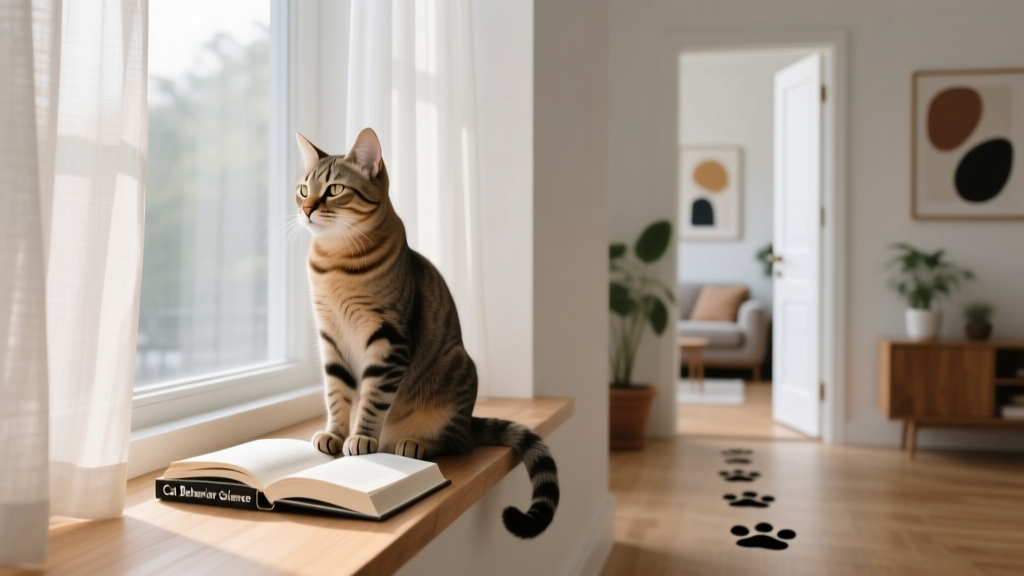
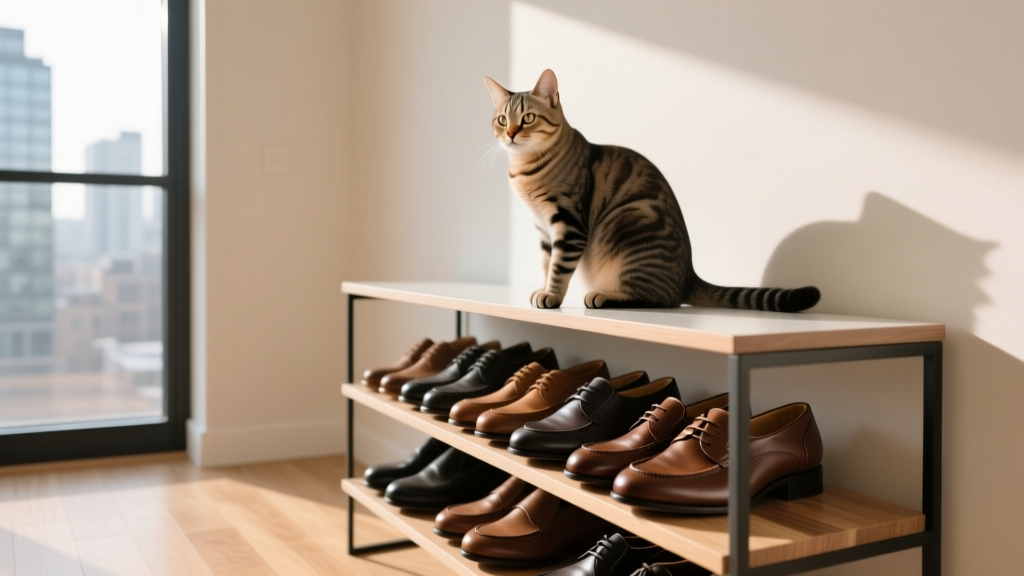
You’re headed out the door, keys in hand, and there’s your cat—perched like a tiny gargoyle on the top shelf of the shoe rack. Not in a comfy bed. Not on the couch. On the shoe rack, staring down at you as if they’re supervising your footwear choices. You shoo them gently, they hop down… and five minutes later, they’re right back up there, loafed neatly between sneakers and boots.
If you’ve ever wondered, “Why there?” you’re in excellent company. Cats pick locations that make perfect sense in cat logic—especially places like the top shelf of a shoe rack: elevated, strategic, and soaked in the scent of their favorite humans.
The evolutionary “why”: height, safety, and surveillance
Domestic cats may live in climate-controlled homes, but their brains are still tuned by survival instincts. Their wild ancestors—and today’s free-ranging cats—benefit from three big things that a shoe rack top shelf provides:
- Elevation for security: Being off the ground reduces the chance of surprise encounters. From a cat’s perspective, height = safety.
- A vantage point for information: Cats are observation specialists. Perching near entrances gives them a front-row seat to household traffic and potential “events.”
- Control of access points: Doorways are important territory. The entryway is where new scents enter, humans leave and return, and unfamiliar sounds happen. Sitting high near the door is a natural “checkpoint.”
The top shelf of a shoe rack is basically a miniature watchtower: elevated, narrow (cats often enjoy snug perches), and positioned in a high-traffic, information-rich zone.
Why the shoe rack specifically? A behavior breakdown by context
Cats don’t choose spots randomly. The top shelf of a shoe rack checks multiple boxes at once, and the “why” can change depending on the situation. Here are the most common motivations I see in cat behavior work:
1) The scent buffet: “You smell like home”
Shoes are scent-dense objects. They carry your personal odor, outdoor smells, and a map of everywhere you’ve been. For cats, scent is a comfort language. Perching above your shoes lets them marinate in “their people” smell without necessarily rubbing or lying directly on the shoes.
Scenario you’ll recognize: You come home after a long day, and your cat is already on the shoe rack, blinking slowly. They may not even greet you at the door—because in their mind, they’ve been hanging out with your scent the whole time.
2) The social hotspot: “I want to be where things happen”
Entryways are social magnets. Humans pass through, coats rustle, bags thump down, voices change tone (“Where are my keys?”). Cats often gravitate to predictable patterns and gathering points. The shoe rack top shelf is a prime place to monitor the household without being underfoot.
Scenario: Your cat appears the moment you put on shoes, as if they’ve learned the ritual. They might be curious (Are you leaving?), annoyed (Don’t leave!), or excited (Are we going somewhere fun like the vet? Probably not fun, but still… information!).
3) The “safe but close” compromise
Some cats want proximity without touch. The shoe rack offers closeness to humans while maintaining personal space. This is especially common in shy cats, newly adopted cats, or cats that are affectionate on their own terms.
Scenario: Guests arrive. Your cat doesn’t hide under the bed. Instead, they hop to the shoe rack top shelf and quietly assess the newcomers from a controlled distance.
4) Temperature and texture: the secret comfort factor
Depending on your home, the entryway may be cooler (tile floor, drafts) or warmer (sun puddle near the door). The rack itself can also be appealing: stable, flat, slightly elevated, often near a wall (cats love having a “backstop” behind them).
Scenario: In summer, your cat chooses the shoe rack because it’s near a cooler airflow. In winter, they might pick it because it’s away from cold floor tiles.
5) Territorial messaging: “This is part of my domain”
The entryway is a boundary zone where outside scents intrude. Cats manage territory with scent marking—rubbing cheeks, head bunting, rolling, scratching. Sitting on the shoe rack can be a quiet way of claiming the area as “ours,” especially in multi-pet homes or apartment hallways with lots of passing smells.
Scenario: After you bring home a new package or a visitor wears strong perfume, your cat suddenly spends more time on the shoe rack, as if “rebalancing” the area.
What it says about your cat’s mood and feelings
Where your cat sits is one clue; how they sit is the real message. Here’s what common “shoe rack perching” body language can mean:
- Loaf position (paws tucked), soft eyes: Content, secure, mildly curious. This is the “I belong here” pose.
- Upright sit, ears forward, whiskers relaxed: Interested and monitoring. They’re gathering intel.
- Tail wrapped neatly, slow blinks: Calm affection. They may be enjoying your scent and your presence.
- Frozen posture, ears swiveling, pupils larger: Alert or unsure. Something in the hallway/outside may be stressing them.
- Head lowered, tail twitching at the tip: Mild irritation or pent-up energy—sometimes a sign they want play, not petting.
If your cat chooses the shoe rack top shelf when you’re putting on shoes, it can also be a social signal: “I’m paying attention to you.” That attention might be affectionate… or it might be a polite protest about you leaving.
Related behaviors you might also notice
Shoe-rack sitting often comes with a few companion quirks. If you’ve seen any of these, they’re all part of the same feline logic:
- Sleeping in shoes or on dirty laundry: Seeking strong familiar scent (often your scent).
- Rubbing cheeks on the rack legs or doorway corners: Scent marking with facial glands (“friendly graffiti”).
- Blocking the doorway or weaving around your ankles: Social attention-seeking and sometimes a “don’t leave” request.
- Meowing or chirping when you put shoes on: Anticipation, routine association, or mild anxiety about departures.
- Perching on other “top-of” locations: Bookshelves, fridge tops, tall hampers—cats love vertical real estate.
When it’s normal vs. when it might be a concern
In most homes, sitting on the shoe rack top shelf is perfectly normal cat behavior: perching, scent-soothing, watching. That said, look closer if you notice any of these patterns:
- Sudden obsession with the entryway paired with hiding, increased startle response, or aggression. Possible trigger: new neighborhood cat outside, construction noise, or an unsettling smell.
- Guarding the shoe rack (hissing, swatting, resource guarding the shelf). This can happen in multi-cat homes if vertical spaces are limited.
- Compulsive licking of shoes or chewing laces frequently. Occasional sniffing is normal; repeated chewing can signal stress, boredom, or pica-like tendencies and is also a safety hazard.
- Elimination near the entryway (urine marking, accidents). This is a big one: entryways are common marking zones when a cat feels territorial pressure or stress.
- Signs of pain (hesitation jumping up/down, stiff landing). If your cat is older or arthritic, jumping onto a narrow shelf might be risky.
If the behavior changes suddenly or comes with other stress signs—overgrooming, appetite changes, litter box problems—it’s worth a vet check and a behavior assessment.
How to respond (and how to encourage it safely)
If you don’t mind the shoe rack being a cat perch, you can make it safer and more satisfying. If you’d rather redirect them, you can do that too—without turning it into a daily battle.
If you want to allow it
- Create a “legal perch” nearby: Add a small wall shelf, a narrow cat tree, or a sturdy bench near the entryway. Cats love options; giving them a better option often reduces shoe-rack use naturally.
- Add traction and comfort: A non-slip mat or a thin folded towel on the top shelf can prevent slips and make it more inviting than the shoes themselves.
- Keep it stable: Make sure the rack doesn’t wobble. Cats avoid unstable perches—or fall off them, which can create fear.
- Make departures easier: If your cat perches there when you leave, toss a treat onto a snuffle mat or offer a small puzzle feeder. This can turn “don’t leave!” tension into a predictable, positive ritual.
If you want to discourage it
- Offer an alternative with the same benefits: Height + scent + view. Put a cat perch near the door and occasionally rub a cloth that smells like you on it (or place a worn T-shirt there).
- Remove the payoff: If the shelf is warm and sunny, provide a sunnier perch elsewhere. If it’s about greeting you, add a greeting station (a cat tree by the hallway).
- Use gentle environmental blockers: Temporarily place a basket or decorative item on the top shelf so it’s less “sit-friendly.” Avoid anything that could fall or scare your cat.
- Avoid punishment: Scolding can make the entryway feel unpredictable, which may increase anxiety and intensify the behavior.
The goal isn’t to “win” the shoe-rack debate—it’s to meet the need underneath it: security, information, scent comfort, or social connection.
Fun facts and research-ish nuggets cat people love
- Cats navigate the world with scent first, eyes second. Your shoes are a concentrated scent scrapbook—especially because they carry outdoor odors your indoor cat rarely gets to explore.
- Vertical space reduces conflict. In multi-cat homes, adding perches and shelves often lowers tension because cats can share territory in layers instead of competing on the same floor space.
- Doorways are “high value” zones. Many behaviorists consider entrances and windows key “monitoring stations” because they connect the cat’s territory to the outside world.
- Narrow perches can feel safer than wide ones. It sounds backwards, but some cats prefer “just-enough space” because it makes them feel tucked in and protected—especially if their back is against a wall.
FAQ: Cats and the shoe rack top shelf
Why does my cat sit on the shoe rack when I’m putting shoes on?
They’ve likely learned your routine and are responding to it. Some cats are curious (“Where are you going?”), some want attention, and some feel mild separation stress. Watch body language: relaxed loafing suggests calm interest; pacing, loud meowing, or clinginess suggests they’re uncomfortable with departures.
Is it safe for my cat to sit on the shoe rack?
Usually yes—if the rack is sturdy and the shelf surface isn’t slippery. Risks include the rack tipping, your cat slipping, or chewing laces. Older cats may need a lower perch or a step/stool to reduce jump strain.
Why does my cat prefer the top shelf instead of the floor near the shoes?
Height is a big deal to cats. The top shelf offers a better view, more security, and often less chance of being stepped on. It also keeps them close to shoe scent without being in the chaos zone.
My cat sniffs shoes intensely—does that mean they’re anxious?
Not necessarily. Intense sniffing can be simple curiosity and information gathering. If it’s paired with hiding, marking, aggression, or persistent agitation at the door, then anxiety or territorial stress becomes more likely.
How do I stop my cat from getting on the shoe rack without upsetting them?
Provide a nearby alternative perch that offers the same “perks” (height, view, and a bit of your scent). Make the shoe rack less convenient (remove the flat empty space) while making the alternative more rewarding (treats, comfort, consistency).
Could my cat be guarding the entryway?
Sometimes. If they hiss at other pets, block passage, or swat near the shoe rack, they may be resource guarding a valued perch or reacting to outside cats. More vertical options, structured play, and reducing window/doorway triggers can help.
Cats sitting on the shoe rack top shelf isn’t just a quirky habit—it’s a tiny window into how cats think: strategic, scent-driven, and always gathering intel about their world (and yours). If you watch the context and body language, you’ll start seeing your cat’s “shoe rack time” as communication, not randomness.
Does your cat perch on the shoe rack like a tiny hallway sentry—or do they have an even stranger favorite spot? Share your funniest and most puzzling cat location choices with the Cat Lovers Base community at catloversbase.com.