Cat Belly Display: Trust Trap or Invitation?
You’re on the couch, minding your own business, when your cat strolls over like they own the place (because, obviously). They hop up beside you, give a slow blink, and then—dramatic flourish—flop onto their back with the belly fully exposed. It’s the holy grail of cuteness. You reach out for a gentle belly rub… and suddenly you’ve activated the “grab-with-all-four-feet-and-bite” feature. Your hand is now prey. Your cat looks vaguely offended that you didn’t understand the assignment.
So what is the belly display? A love letter? A trap? A confusing mix of “I trust you” and “please do not touch”? Most of the time, it’s all of the above—depending on context, your cat’s personality, and what happens in the next 0.3 seconds.
Why Cats Show Their Bellies (The Science and the Evolution)
A cat’s belly is a vulnerable area. The fur can be soft, but underneath are vital organs with much less protection than the back or sides. In the wild, exposing the underside is risky—so cats generally avoid doing it unless they feel safe, confident, or ready to defend themselves.
From an evolutionary perspective, cats are both predator and prey. That combo shapes a lot of their “mixed signals.” A cat that feels threatened may protect their belly at all costs. A cat that feels secure can relax enough to expose it—but they may still be wired to react quickly if something unexpected happens (like a hand swooping in from above).
There’s also a practical reason: cats use their spine and core muscles constantly. Rolling onto the back can be a stretch, a reset, or a way to regulate body temperature. And because cats are masters of communication with minimal effort, a belly display can also be a big, obvious signal: “I’m comfortable here,” “I’m feeling playful,” or “I’m inviting interaction—on my terms.”
Different Belly Displays: Same Pose, Different Messages
If you’ve ever assumed “belly up = rub time,” you’ve learned the hard way that cats don’t do universal translations. Here are common versions of the belly display and what usually comes with them.
1) The Relaxed Flop (a.k.a. “I live here now”)
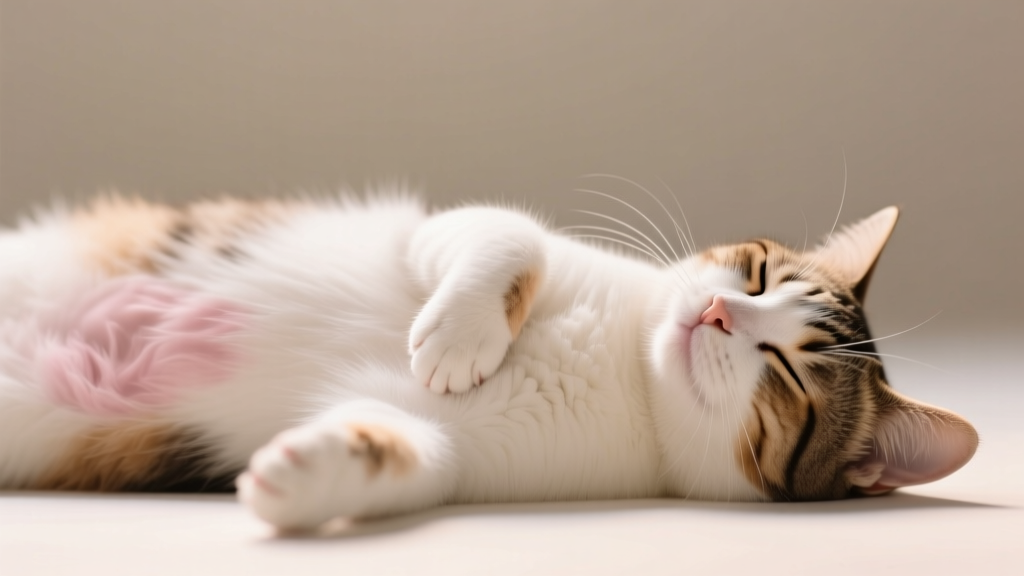
What it looks like: Your cat slowly melts onto their side or rolls onto their back. Legs are loose, paws may be curled. Breathing is calm. They might half-close their eyes.
Typical meaning: Safety and comfort. This is often a “trust” display, but not necessarily a request for touch. It’s more like your cat saying, “I’m so safe that I can be careless for a moment.”
Real-life scene: You’re reading, your cat drifts over, flops near your hip like a fuzzy comma, and stays there while the room is quiet.
2) The Play Trap (a.k.a. “Choose your fighter”)
What it looks like: Belly up with alert eyes, ears forward or slightly sideways, tail twitching. Hind legs are “loaded,” ready to bunny-kick. Your cat may grab your hand gently, then escalate.
Typical meaning: Play invitation—just not the kind that involves petting the belly. This is often an invitation to wrestle, chase a toy, or engage in mock hunting.
Real-life scene: You walk past, your cat rolls over dramatically, your hand goes in, and suddenly your cat is starring in their own action movie.
3) The Defensive Roll (a.k.a. “Back off, but I’m prepared”)
What it looks like: Belly exposed but body is tense. Ears may go sideways (“airplane ears”), pupils may be larger, tail may thump. The cat may swat if approached.
Typical meaning: A cat might roll partly onto their back if they feel cornered. It can be a defensive posture—using all four paws and teeth as weapons if needed.
Real-life scene: A visitor leans in too close. The cat rolls, stiffens, and looks ready to throw paws.
4) The Heat Dump (a.k.a. “I’m warm; behold my belly”)
What it looks like: Sprawled belly-up in a sunbeam, stretched long, maybe with one leg extended like a yoga instructor. Very relaxed.
Typical meaning: Temperature regulation and comfort. The belly has less fur density in some cats, and exposing it can help them cool off or enjoy warmth more evenly.
5) The Social Hello (a.k.a. “I like you, but from here”)
What it looks like: Your cat approaches, rolls briefly, then pops up or rubs your legs. Belly display is short and casual.
Typical meaning: Friendly greeting and bonding. Think of it as a visual “hi!” plus a little trust flex.
What Belly Displays Say About Your Cat’s Mood
The belly itself is only one part of the message. Your cat’s whole body is the caption. Here’s how to read the emotional tone.
- Relaxed and trusting: Soft body, slow blinks, paws loosely curled, gentle breathing, tail still or softly curved.
- Playful and excited: Bright, focused eyes; tail flicking; quick head movements; paws ready to grab; little wriggles.
- Overstimulated: Skin twitching, tail thumping, sudden head turns toward your hand, ears rotating back, tension building fast.
- Anxious or defensive: Tense body, ears flattened or sideways, pupils dilated, whiskers pinned forward, growl or hiss possible.
A helpful rule: if your cat approaches you, flops, and stays relaxed, it’s usually positive. If your cat is cornered or startled and rolls to belly-up while tense, that’s a different story.
Related Behaviors You Might Notice
Once you start paying attention to belly displays, you’ll spot the “supporting cast” behaviors that often come with them:
- Slow blinking: Often a calm, friendly signal—like a feline “I’m cool with you.”
- Side-lying with one paw raised: A common halfway point between rest and play.
- Bunny kicking: Powerful hind-leg kicks, often used during play wrestling (and in real fights).
- Gentle mouthing: A cat may use teeth with inhibited pressure during play; it can escalate if they’re overstimulated.
- Rolling after catnip: Catnip can trigger rolling, cheek rubbing, and overall “wiggle bliss.”
- Showing the belly then grooming: A calm transition—your cat is comfortable enough to do self-care in your presence.
When Belly Displays Are Normal (and When They Might Be a Concern)
Most belly displays are perfectly normal. Cats roll, sprawl, and show their underside for comfort, communication, and play.
It may be worth paying closer attention if:
- Your cat suddenly starts guarding their belly and reacts with pain when touched (even lightly).
- The belly looks distended, tight, or unusually swollen.
- You notice vomiting, diarrhea, appetite changes, hiding, or reduced activity alongside belly sensitivity.
- Your cat is overgrooming the belly (thin fur, bald patches, irritated skin), which can signal allergies, stress, fleas, or pain.
- The belly display seems frantic or paired with restlessness and discomfort rather than relaxation.
Cats are excellent at masking illness. A behavior change—especially if it’s sudden and persistent—is often more meaningful than any single pose. When in doubt, a vet check is a smart move.
How to Respond (So You Keep Your Blood Inside Your Body)
If your cat shows you their belly, take it as a compliment first, and a petting invitation second. Here are practical ways to respond that build trust without triggering the trap.
1) Try “consent testing” instead of going straight for the belly
Offer a finger near your cat’s head or cheek area. Many cats prefer cheek rubs, chin scratches, and gentle head pets. If your cat leans in, purrs, or slow blinks, you’re on the right track.
2) Pet the “safe zones” first
For lots of cats, the safest petting areas are:
- Cheeks (where scent glands are)
- Chin
- Base of ears
- Shoulders and upper back
If your cat stays loose and happy, you can experiment—but don’t assume belly access is included.
3) If you want to test belly touch, go minimal
Use one or two gentle strokes, slow and light, then stop. Watch for signals like tail flicking, skin twitching, ears rotating back, or your cat grabbing your hand. If you see those, end the session and switch to a toy.
4) Redirect “wrestle invites” to toys
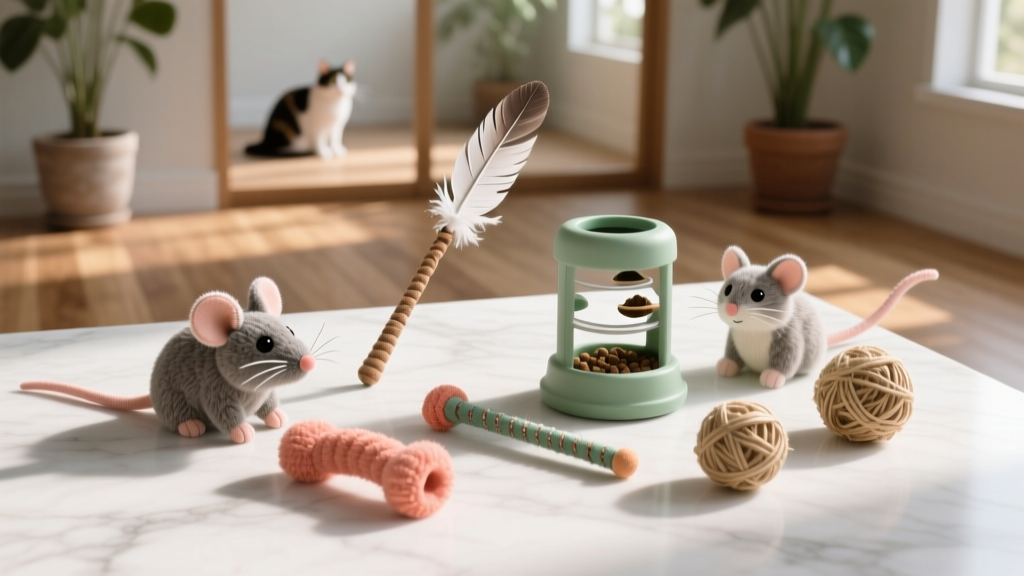
If your cat belly-flops and then attacks hands, they’re often asking for play. Try wand toys, kicker toys, or tossing a small ball. You’ll satisfy the urge without teaching your cat that hands are prey.
5) Reward calm belly displays
If your cat flops belly-up and stays relaxed, you can quietly reinforce it with soft praise, a slow blink, or a treat placed nearby. You’re telling your cat: “This is a safe moment.”
Fun Facts and Research-Style Nuggets
- The belly is a toolbox: A cat on their back can use all four paws plus teeth—one reason belly-up can be strategic in both play and defense.
- Not all cats are belly-rub cats: Tolerance for belly touch varies widely and is influenced by early handling, personality, and how sensitive the cat is to touch.
- Overstimulation is real: Some cats enjoy petting briefly, then their nervous system hits “too much” quickly—especially on the belly where the skin can be more sensitive.
- Trust can be shown without touch: A cat exposing their belly near you may be communicating security, not requesting interaction. In cat language, simply being relaxed together can be the bonding moment.
FAQ: Common Questions About Cat Belly Displays
Is my cat offering me a belly rub when they show their belly?
Sometimes, but not always. Often it’s a sign of comfort or a play invitation. Look for relaxed body language (loose limbs, slow blinks) and try petting cheeks or chin first.
Why does my cat show their belly and then bite me?
Common reasons are play (they want to wrestle), overstimulation (petting gets too intense), or your hand moved in a way that triggered a hunting reflex. Switch to toys and keep petting sessions shorter.
Can I train my cat to like belly rubs?
You can increase tolerance for gentle belly touch in some cats using slow, incremental steps and rewards. But many cats simply don’t enjoy belly contact, and that preference deserves respect. Aim for trust, not “winning” the belly.
Why does my cat roll over when I come home?
It’s often a social greeting plus excitement. Some cats roll to show they’re happy and comfortable; others roll to kick-start playtime or to encourage attention (on their terms).
My cat only shows their belly to one person—why?
Cats are excellent at pattern recognition. If one person moves slowly, respects boundaries, and doesn’t go straight for the belly, the cat may feel safer exposing their underside to them.
Should I ever rub my cat’s belly?
If your cat enjoys it, sure—but let them lead. Start with brief, gentle contact and stop before your cat has to “end it” with teeth or claws. For many cats, belly viewing is a privilege; belly touching is a separate subscription.
If your cat is a dedicated belly-flopper, a sneaky hand-trapper, or a rare unicorn who adores belly rubs, we want to hear about it. Share your cat’s belly-display stories (and the hilarious misunderstandings they’ve caused) over at catloversbase.com.