Cat Pawing at Glass Doors: Wanting In or Out
1) The “Excuse Me, Human” Moment We’ve All Seen
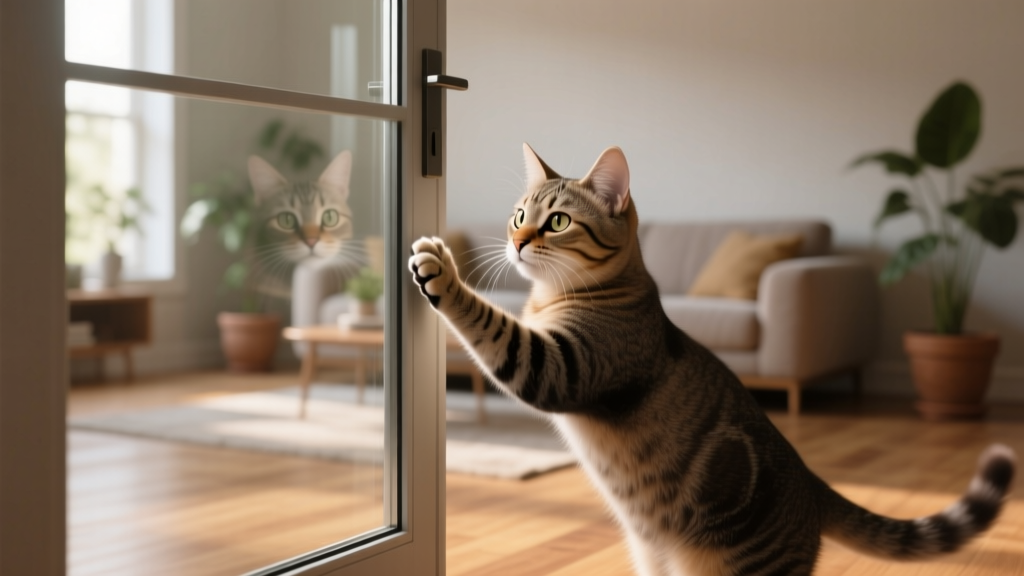
You’re on the couch, finally settled. The house is quiet. Then you hear it: tap… tap-tap… scrape. You look over and your cat is standing at the sliding glass door like a tiny, fuzzy solicitor, paw patting the glass with unwavering confidence.
Maybe she’s outside on the patio, staring in as if you’ve betrayed her. Maybe she’s inside, pawing at the door while making intense eye contact—then dramatically looking away, as if she’s too dignified to ask. You get up, open the door, and… she freezes. Or she walks through and immediately wants the opposite. Classic.
So what’s going on? Is your cat asking to come in, begging to go out, demanding service, or just conducting important paw-to-glass research? Often, it’s a little of everything—plus some very cat-specific logic.
2) The Science and Evolution Behind Pawing at Glass
Cats are hunters and scouts by design. In the wild, felines survive by controlling access to resources: food, safety, social contact, and information. Doors—especially glass doors—sit right at the intersection of those priorities.
Glass is visually “open” but physically closed. Your cat can see the patio, the birds, the neighbor’s cat, the sunlight patch… yet can’t move through it. That mismatch between “I can see it” and “I can’t reach it” creates frustration and motivates problem-solving behaviors, including pawing.
Paws are sensory tools. Cats explore with their paws almost like we use hands. Paw pads contain nerve endings that help them gauge texture, temperature, vibration, and resistance. A glass door is smooth, cool, and unyielding—an interesting surface that doesn’t respond like bark, fabric, or carpet.
Cause-and-effect learning seals the deal. If your cat paws the door and you open it (even once), you’ve taught a powerful lesson: “This works.” Cats are excellent at repeating behaviors that get results, especially when the result is access—outside smells, indoor comfort, or your attention.
3) A Context-by-Context Breakdown: What Your Cat Might Be Doing
Pawing to go outside: “The world is happening and I’m missing it.”
Your indoor cat spots a fluttering bird, a squirrel tail, or a leaf skittering by. She paws the glass and maybe chirps or chatters. This is prey drive plus curiosity. Even if she’s not hunting, watching is mentally stimulating—like cat TV in high definition.
Pawing to come inside: “I’ve reconsidered my outdoor choices.”
Your cat begged to go out, immediately realized it’s windy, or a neighborhood dog barked, and now she’s at the door tapping with urgency. Some cats add a tiny body lean into the glass as if they can push their way through. This is comfort-seeking and safety-seeking, not stubbornness.
Pawing because the door is “in the way” of social time
Sometimes the other side of the glass is you—or a favorite person, another pet, or the rest of the family. Cats bond through proximity. If your cat can see you but can’t reach you, pawing becomes a social request: “I want to be with you right now.”
Pawing at reflections or movement
At night, glass becomes a mirror. A cat may paw at her own reflection or at the reflected movement of headlights, shadows, or passing people. The behavior often looks playful—sideways hops, arched back, or quick paw taps followed by a startled retreat.
Pawing as a “ritual” or habit
Some cats develop routines: paw the door at 7 a.m., patrol the window at lunch, tap the glass after dinner. These rituals can be a way to predict the day, self-soothe, or prompt you into a schedule they prefer.
Pawing due to scent cues: “Someone was here.”
Outdoor cats, neighborhood cats, raccoons, and even insects can leave scent traces near doors. Your cat may paw while sniffing the frame, the track, or the bottom edge. This can be part investigation, part territorial monitoring.
4) What Pawing at Glass Says About Your Cat’s Mood
The paw tap itself is only half the story. Your cat’s body language tells you what she’s feeling.
- Curious/engaged: Ears forward, tail relaxed or gently swishing, focused gaze. She may alternate between watching outside and checking your reaction.
- Frustrated: Faster tapping, pawing with claws, repeated meows, pacing between door and you. Some cats escalate to jumping at the handle or batting the frame.
- Anxious/uncertain: Low posture, ears slightly back, wide eyes, hesitant pawing. This is common when a strange animal is outside.
- Territorial/defensive: Stiff posture, tail puff, ears flattened, growling, intense stare at something outside. Pawing may come with spraying or scratching nearby surfaces.
- Playful: Bouncy movements, quick paw taps, sideways hops, and short bursts of energy—often triggered by reflections, bugs, or moving shadows.
5) Related Behaviors You Might Also Notice
Door pawing rarely shows up alone. If your cat is a “glass door tapper,” you may also see:
- Chattering or chirping at birds and squirrels
- Rubbing cheeks on the door frame (scent-marking)
- Scratching near the door (especially if frustrated)
- Meowing in a specific “request” tone that seems designed for humans
- Door-dashing when it opens, even if they act unsure once outside
- Patrolling windows and staring at “invisible” things you can’t see (often tiny insects, sounds, or distant motion)
6) Normal vs. Concerning: When Should You Worry?
Usually, pawing at a glass door is normal. It’s a reasonable cat response to a visible boundary. That said, certain patterns can signal a problem worth addressing.
More likely normal:
- Brief tapping when they want access, then stopping
- Pawing tied to predictable events (meal times, people arriving, birds outside)
- Playful tapping without distress
Potential concern if you notice:
- Obsessive repetition (long stretches, difficult to interrupt)
- Signs of high stress (panting, dilated pupils, hiding afterward)
- Aggression toward animals outside (growling, lunging, redirected aggression toward you or other pets)
- New behavior in an older cat that appears suddenly and intensely
- Self-injury (broken nails, raw paw pads) or damage to teeth from biting at the glass/frames
If the behavior is sudden, extreme, or paired with other changes (appetite shifts, litter box issues, sleep changes), a vet check is wise. Pain, cognitive changes, or anxiety can amplify repetitive behaviors.
7) How to Respond (Without Becoming a 24/7 Doorman)
Your goal is to meet the need behind the pawing—access, stimulation, reassurance—without accidentally training nonstop door demands.
Respond strategically, not automatically
If your cat paws and you immediately jump up every time, she learns: tap = human opens door. Instead, pause. Ask for a tiny “polite” behavior you can reward, like sitting or stepping back from the door. Then open it or offer an alternative.
Create a better “watching station”
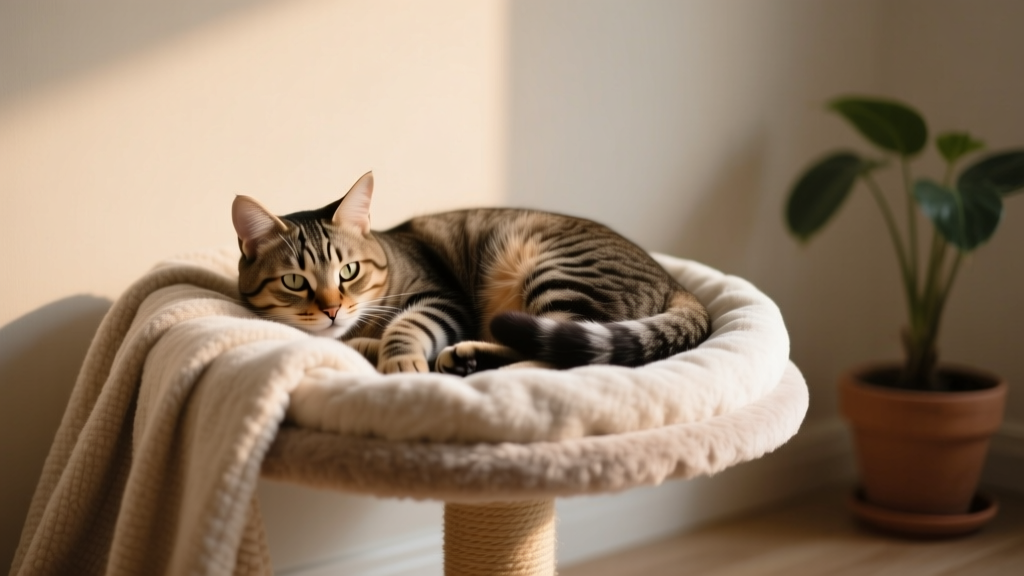
If your cat paws because the outside view is irresistible, set up a perch near the glass with a comfortable bed. Add a window shelf, cat tree, or stool so she can watch without pawing. For high-traffic outdoor areas, consider frosted film on the lower portion to reduce trigger intensity while keeping light.
Offer a safe outdoor option
- Catio: Best of both worlds—fresh air without roaming risks.
- Harness training: Some cats love structured outdoor time.
- Supervised patio time: With boundaries and calm routines.
Redirect prey drive
If your cat is keyed up by birds and squirrels, schedule two short interactive play sessions daily (wand toys, chase games). End with a small meal or treat to complete the hunt-catch-eat sequence. A satisfied hunter is less likely to rage-tap at the glass.
Manage outdoor-cat “visitors”
If neighborhood cats are triggering territorial pawing, try motion-activated deterrents outside (safe, humane options), block sightlines with plants or window film, and clean the exterior area to reduce scent marks (use enzymatic cleaners where appropriate).
Protect paws and your door
Trim nails regularly, provide scratching posts near entry areas, and consider a clear protective film on the glass if clawing is intense. If your cat is slipping on smooth floors while pawing, add a runner rug for traction.
8) Fun Facts and Research-Adjacent Nuggets
- Cats are excellent observational learners. Many cats discover that humans respond fastest to certain cues (like door pawing) and will refine their “signal” over time.
- Indoor cats seek “environmental control.” Access to multiple resting spots, vertical space, and predictable routines can reduce attention-seeking behaviors at boundaries like doors.
- That tap can be communication. Domestic cats use behaviors that work on humans—meows, stares, and yes, door tapping—because we’re responsive. Your cat is not “being bad”; she’s being effective.
- Glass changes at night. The same door that’s a window by day becomes a mirror after dark, which can shift a cat from calm watching to playful (or defensive) reactions.
9) FAQ: Common Questions About Cats Pawing at Glass Doors
Why does my cat paw at the glass door and then not go out when I open it?
She may be asking for information, not a full exit. Cats often want the door open to smell the air, listen, and assess safety. Wind, noise, or a scent outside can make her hesitate once the option becomes real.
Is pawing at the door a sign my cat is bored?
Sometimes, yes—especially if it happens frequently and your cat has limited enrichment indoors. Add interactive play, puzzle feeders, and a better viewing perch. If it’s occasional and tied to birds or visitors, it’s normal curiosity.
Should I ignore my cat when she paws at the door?
Ignoring can work if the behavior is purely attention-seeking, but many cats are communicating a real need (wanting in, wanting safety, wanting stimulation). A middle path is best: don’t reward frantic pawing instantly, but do provide an appropriate alternative and reinforce calm behavior.
My cat claws the glass and leaves marks—how do I stop it?
First, rule out frustration triggers (outdoor cats, intense prey viewing). Then provide a perch, increase play, keep nails trimmed, and use a clear protective film on the glass. Reward “paws down” behavior near the door and redirect to scratching posts placed nearby.
Can pawing at the glass door mean my cat is stressed or anxious?
Yes. Watch for flattened ears, stiff posture, growling, or frantic pacing—especially if another animal is outside. Reduce visual triggers and give your cat a safe retreat space. If anxiety signs are frequent or escalating, consult your vet or a qualified behavior professional.
Why does my cat do this more at certain times of day?
Many cats are crepuscular—most active at dawn and dusk—when birds and small wildlife are also active. The door becomes a hotspot for stimulation at those times, plus your cat may be anticipating routine events (breakfast, your return home, evening play).
The takeaway: Pawing at glass doors is usually your cat’s way of negotiating access—access to outdoors, to you, to information, or to relief from boredom. When you read the context and body language, that little tap becomes a surprisingly clear message.
Does your cat do the polite single tap, the rapid-fire “let me in RIGHT NOW” drumroll, or the dramatic paw-swipe with a full stare-down? Share your cat’s glass-door habits (and the funniest “changed my mind” moments) with fellow cat people on catloversbase.com.