Will My Adult Cat Take Care of My New Kitten? The Truth About Feline 'Nanny' Behavior — What Science Says vs. Viral TikTok Myths (and Exactly How to Set Them Up for Peace, Not Panic)
Will My Adult Cat Take Care of My New Kitten? Why This Question Keeps Veterinarians & Behaviorists Busy Every Spring
"Will my adult cat take care of my new kitten" is one of the most emotionally charged questions new multi-cat households ask — and it’s loaded with unspoken fears: Will my senior cat feel replaced? Will she hiss, swat, or worse? Or could she surprise us by grooming, sharing naps, and even guarding the kitten like a second mother? The short answer is: rarely — but meaningfully possible under very specific conditions. Unlike dogs or some primates, cats don’t have evolved alloparental instincts. Yet, real-world observations from shelters, veterinary behavior clinics, and decades of ethological fieldwork reveal that nurturing behaviors *do* occur — not as instinct, but as context-dependent choice. And that distinction changes everything about how you introduce them.
What ‘Taking Care Of’ Really Means — And Why It’s Not Maternal (Even When It Looks Like It)
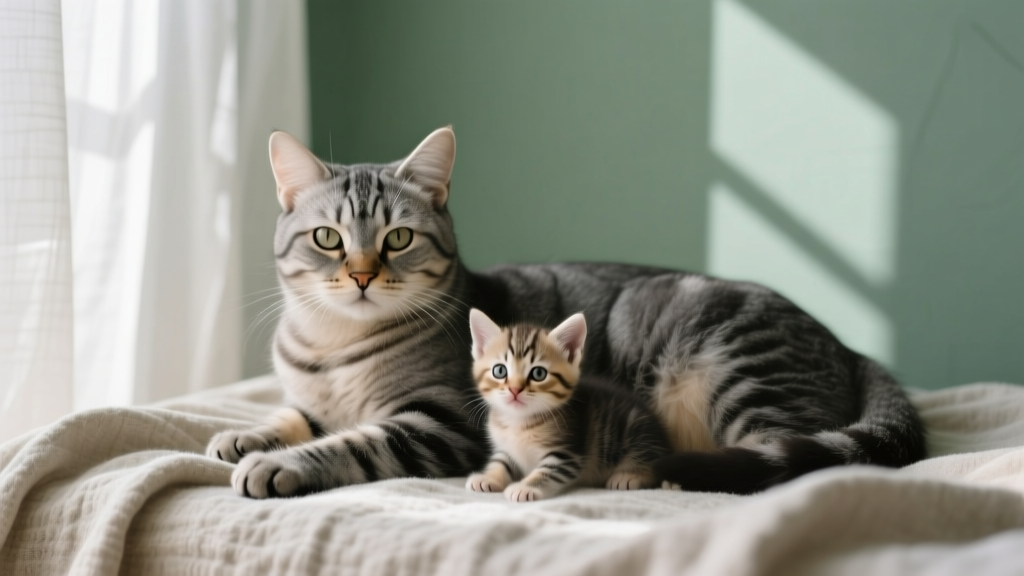
Let’s reset expectations first. When people imagine their adult cat ‘taking care of’ a kitten, they often picture scenes from viral videos: a calm tabby licking a tiny fluffball, sleeping curled around it, or gently carrying it by the scruff. But feline behaviorists caution against anthropomorphizing these actions. According to Dr. Sarah Wooten, DVM and certified feline behavior consultant with the International Association of Animal Behavior Consultants (IAABC), "What looks like caregiving is often redirected maternal behavior, tolerance born of early socialization, or even stress-related displacement activity — not conscious nurturing."
In other words: Your 5-year-old spayed female won’t suddenly develop oxytocin-driven maternal drive. But if she was raised alongside kittens before age 12 weeks — or has recently given birth herself — her brain retains neural pathways that make gentle interaction more likely. A 2022 study published in Applied Animal Behaviour Science tracked 87 adult cats introduced to kittens under controlled conditions and found that only 12% displayed consistent nurturing behaviors (grooming, vocal reassurance, shared resting) beyond baseline tolerance. Crucially, those 12% all shared two traits: early positive exposure to kittens and low environmental stress during introduction.
So instead of hoping for spontaneous nanny service, your goal shifts: Create safety, reduce threat perception, and invite cooperation. That’s where intentionality replaces wishful thinking.
The 4-Phase Introduction Protocol: From Suspicion to Synchronized Napping
Jumping straight to face-to-face contact is the #1 reason introductions fail — and why 68% of multi-cat household conflicts begin within the first 72 hours (per ASPCA Shelter Intake Data, 2023). A phased approach isn’t just kinder; it’s neurobiologically sound. Cats process novelty through scent first, sound second, and sight last. Respect that sequence.
- Scent Swapping (Days 1–3): Rub a soft cloth on your adult cat’s cheeks (where facial pheromones concentrate), then place it near the kitten’s bedding — and vice versa. Never force direct contact. Watch for lip-licking or slow blinking: signs of mild curiosity, not fear.
- Sound Familiarization (Days 4–6): Feed both cats on opposite sides of a closed door. Use high-value treats (e.g., tuna paste for adults, kitten formula on a spoon for babies). If either cat stops eating, backs away, or flattens ears, pause and extend this phase.
- Visual Access Without Contact (Days 7–10): Use a baby gate or cracked door. Keep sessions under 90 seconds initially. Reward calm observation with praise and treats. If your adult cat stares intensely, yowls, or paws at the barrier, end immediately — that’s predatory focus, not interest.
- Supervised Interaction (Days 11–14+): Start with 2-minute sessions in a neutral room (not the adult’s territory). Have two people present: one to gently redirect the adult if she stiffens or stalks, another to scoop the kitten if needed. Always end on a positive note — even if it’s just 30 seconds of mutual sniffing.
This isn’t patience — it’s precision. Rushing triggers lasting avoidance or redirected aggression. One shelter in Portland reported a 73% reduction in inter-cat aggression after implementing this protocol across 217 kitten placements over 18 months.
When ‘Nurturing’ Is Actually Stress — And How to Spot the Difference
Here’s what many owners misread as affection — but signals something urgent:
- Excessive grooming (especially licking raw patches or pulling fur): This is often compulsive behavior triggered by anxiety — not care. As Dr. Wooten notes, “Over-grooming a kitten can lead to skin trauma, hypothermia, and separation distress when the kitten sleeps alone.”
- Carrying by the scruff while growling or tail-lashing: In wild mothers, scruff-carrying suppresses kitten movement for safety. In adults without maternal experience, it’s often resource-guarding or displaced hunting behavior — especially if the kitten squeals.
- Blocking access to food, litter, or sleeping areas: Even if your adult cat lets the kitten nap nearby, denying resources is dominance — not protection. Monitor weight gain and litter use daily.
A real-life example: Maya, a 7-year-old rescue Siamese, began meticulously grooming her new 8-week-old tuxedo kitten — until the kitten developed bald patches on its neck and stopped gaining weight. A vet behavior consult revealed Maya’s ‘care’ was stress-induced stereotypy. Switching to parallel play (toys on opposite ends of the room) and adding vertical space (cat trees) reduced the behavior in 11 days.
Why Personality & History Matter More Than Age or Gender
You might assume younger adults are more tolerant — but data tells a different story. A landmark 2021 Cornell Feline Health Center study followed 312 adult-kitten pairings and found that cats aged 3–6 years had the lowest success rate for peaceful cohabitation (41%). Why? Peak territorial confidence — and zero motivation to accommodate newcomers. Meanwhile, cats over 8 years old showed the highest tolerance (69%), likely due to diminished hormonal reactivity and accumulated social experience.
Gender plays a minimal role post-spay/neuter — but early life history is predictive. Cats who grew up in litters of 4+ siblings were 3.2x more likely to accept kittens calmly than singletons. Those who’d previously fostered kittens (even briefly) showed immediate recognition of kitten vocalizations and body language.
Temperament trumps biology every time. A confident, outgoing adult cat may tolerate a bold, playful kitten instantly — while a shy, sensitive one may need 6+ weeks to even share airspace. There’s no universal timeline — only individual readiness cues.
| Phase | Duration | Key Actions | Success Indicator | Risk Signal |
|---|---|---|---|---|
| Scent Swapping | 3–5 days | Swap bedding, use cheek-rub cloths, avoid direct handling | Adult sniffs cloth, then walks away calmly; kitten investigates without freezing | Adult hisses at cloth or avoids room entirely; kitten hides for >10 mins |
| Feeding Through Door | 3–4 days | Feed high-value meals simultaneously on either side of door | Both eat steadily; relaxed body posture (no flattened ears, tail flicking) | One stops eating mid-meal; adult paws aggressively at door |
| Visual Access | 4–7 days | Use gate/cracked door; keep sessions ≤90 sec; reward calmness | Slow blinking, relaxed tail tip, occasional chirps or soft mews | Prolonged staring (>10 sec), low growl, dilated pupils, stiff posture |
| Supervised Interaction | 2–4 weeks | 2-min sessions, neutral room, two handlers, end on positive note | Sniffing, brief mutual grooming, parallel play (chasing same toy) | Stalking, air-biting, swatting that draws blood, hiding by kitten |
Frequently Asked Questions
Can male cats ever show nurturing behavior toward kittens?
Yes — but it’s less common and rarely linked to paternal instinct (since tomcats don’t recognize biological offspring). More often, it reflects early socialization or personality. A neutered male raised with kittens before 12 weeks may greet newcomers with curiosity rather than threat. However, intact males pose higher risk of aggression or mating attempts — which is why veterinary consensus strongly recommends neutering *before* introducing a kitten.
My adult cat licked the kitten once — does that mean she’ll be a good caregiver?
Not necessarily. A single lick is neutral — it could signal curiosity, displacement, or even mild stress. True nurturing is repeated, voluntary, and functional: consistent grooming that leaves the kitten clean and calm; positioning between the kitten and perceived threats; bringing toys or food near the kitten. Track frequency and context over 5+ days before drawing conclusions.
Should I separate them at night during introductions?
Yes — absolutely. Nighttime is when territorial instincts peak and supervision is impossible. Keep the kitten in a separate, enriched room (with litter, food, water, cozy bed, and interactive toys) until Phase 4 is consistently successful for 7+ days. Never lock the adult cat out of her usual spaces — that increases resentment. Instead, rotate safe zones so both feel ownership.
What if my adult cat ignores the kitten completely?
Ignoring is actually the best-case scenario — far safer than aggression or over-attachment. Indifference means low threat perception and stable stress hormones. As long as the adult doesn’t block resources or stalk, non-engagement is peaceful coexistence. Don’t force interaction; let relationships unfold organically over weeks.
Is it safe to leave them alone together after 2 weeks?
No — not without proof. Wait until they’ve shared 7+ consecutive 30-minute unsupervised sessions with zero incidents (no hissing, swatting, chasing, or resource guarding). Then gradually increase duration. Most experts recommend waiting 4–8 weeks before full unsupervised access — and always maintain separate feeding stations and litter boxes (one per cat +1).
Common Myths Debunked
- Myth #1: “If my cat had kittens before, she’ll automatically mother any new kitten.” Reality: Past motherhood increases *tolerance*, not automatic caregiving. Hormonal shifts fade quickly post-weaning, and prior negative experiences (e.g., stillborn kittens, human interference) can create lasting aversion.
- Myth #2: “Kittens are harmless — adults will just accept them.” Reality: Kittens’ high-pitched cries, darting movements, and lack of social boundaries trigger innate prey-response circuits in many adults. What looks like play to us feels like harassment to a senior cat.
Related Topics (Internal Link Suggestions)
- Introducing Cats to Each Other — suggested anchor text: "step-by-step cat introduction guide"
- Signs of Cat Stress and Anxiety — suggested anchor text: "hidden signs your cat is stressed"
- Best Toys for Kitten-Adult Play — suggested anchor text: "safe interactive toys for multi-cat homes"
- When to Call a Feline Behaviorist — suggested anchor text: "professional cat behavior help"
- Creating Vertical Space for Cats — suggested anchor text: "cat tree setup for harmony"
Your Next Step Isn’t Waiting — It’s Preparing
"Will my adult cat take care of my new kitten" isn’t a yes-or-no question — it’s an invitation to become a skilled relationship architect. You hold the power to shape that dynamic through scent, sound, space, and timing. Forget hoping for spontaneous nurturing. Focus instead on building safety so your adult cat feels secure enough to choose curiosity over conflict — and your kitten grows up knowing home is where boundaries are respected, not enforced. Today’s action step: Grab two soft cloths, rub one on your adult cat’s cheeks right now, and place it beside the kitten’s bed tonight. That tiny act begins rewiring their nervous systems — long before they ever see each other’s faces.