Why Cats Sit on the Roof Garden Planter
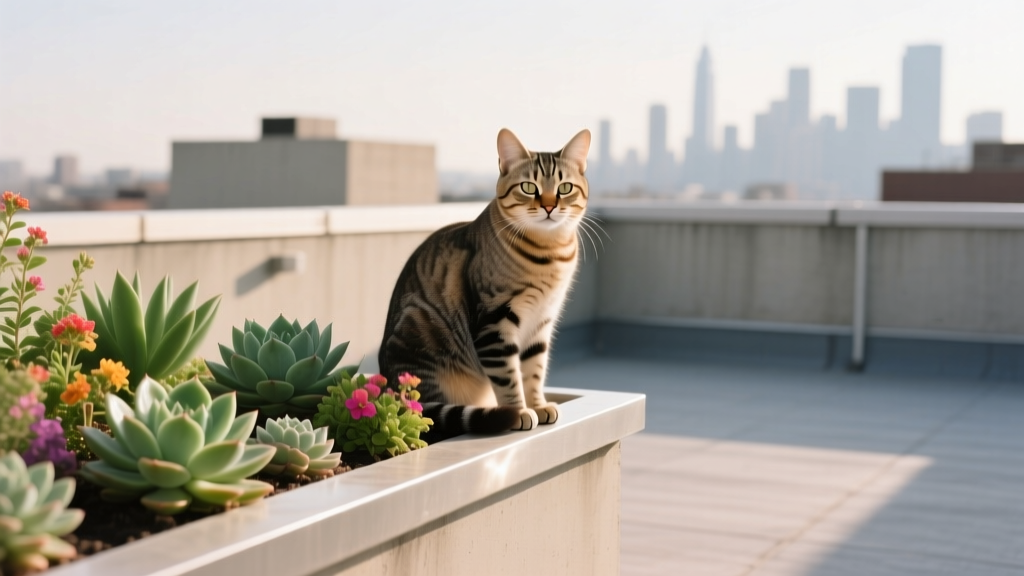
You step outside with your coffee, ready to admire your rooftop herbs… and there’s your cat. Plopped like a fuzzy gargoyle on the edge of the roof garden planter, calmly surveying the neighborhood as if they pay the mortgage. Maybe they’re perched on the warm rim, maybe they’re nestled right in the soil you just fluffed, leaving you a little torn between “Aww” and “Seriously?”
If your cat treats the roof garden planter like their personal throne (or a very luxurious loafing spot), you’re not alone. This behavior is surprisingly logical when you look at the world through feline eyes: a blend of instinct, comfort, security, and good old-fashioned curiosity.
1) The evolutionary logic: height, safety, and the “control center” instinct
Cats are small predators. In the wild, being small means you’re both hunter and potential prey. One of the safest strategies is to claim a vantage point—somewhere elevated, stable, and with multiple sightlines. Your roof planter checks a lot of ancient survival boxes:
- Elevation = advantage. Height lets cats spot birds, insects, and movement below. It also helps them see potential threats (like unfamiliar animals or people) before those threats get close.
- Boundary edges feel secure. Cats love edges: fence rails, balcony ledges, window sills. The rim of a planter is a tidy boundary that makes the world feel “organized” and predictable.
- Territorial monitoring. Cats are territorial in a quiet, subtle way. Sitting in a high spot is like checking the “status dashboard” of their area—who’s around, what’s changed, and whether everything is as it should be.
- Microclimates matter. On rooftops, planters can hold warmth from the sun and block wind. Cats are masters at finding the coziest thermal zone like they’ve got built-in climate sensors (because… they basically do).
So while it may look like your cat randomly chose your rooftop planter to be weird, it’s often a very strategic choice: safe, warm, elevated, and full of interesting smells.
2) What exactly is so appealing about a roof garden planter?
Planters are more than decorative containers to cats—they’re multi-sensory enrichment stations.
- Smell library. Soil holds scent beautifully. Add compost, herbs, flowers, visiting insects, and wind-carried city smells, and your planter becomes a “news feed” your cat can read with their nose.
- Texture heaven. The rim might be smooth and cool; the soil might be soft and slightly springy; the leaves might brush their whiskers. Cats explore the world through touch as much as sight.
- Sound and vibration. Rooftops amplify certain sounds: pigeons landing, distant traffic, rustling leaves. Planters can also transmit tiny vibrations—like a bird hopping nearby—which cats find endlessly fascinating.
- Defined personal space. A planter is a contained “spot.” Cats love defined spaces because they feel easier to control. A good loaf in a planter can feel as secure as a box.
3) A detailed breakdown: different contexts for planter-sitting
Not all roof planter visits mean the same thing. Your cat’s body language and timing provide clues.
They sit on the rim like a lookout
What it looks like: Upright posture, paws tucked neatly or planted, ears swiveling, tail still or gently wrapped. Their gaze scans the horizon.
What it often means: Confident territory-checking. They’re calm but alert—like a security guard who also enjoys sunbeams.
They loaf in the soil (yes, the soil)
What it looks like: Full loaf or half-loaf with their belly and chest settling into the dirt, eyes half-closed.
What it often means: Comfort and temperature regulation. Soil can be cool in shade or warm if sun-baked. Some cats also enjoy the “nest” feeling of a slightly scooped-out patch.
They sit there after you garden
What it looks like: You finish watering, and minutes later your cat appears, sniffs everything, then parks themselves.
What it often means: Your activity made the planter more interesting. Disturbed soil releases new scents. Watering amplifies smell. Also: your cat may be “reclaiming” the spot after a change—feline housekeeping.
They sit there when guests are over
What it looks like: Company arrives, your cat disappears… then reappears on the roof planter, watching from a distance.
What it often means: Social comfort through distance. Some cats feel safest observing from above rather than interacting up close. It’s not always fear—sometimes it’s just preference.
They choose the planter over their expensive cat bed
What it looks like: A high-end bed sits unused indoors while your cat posts up outside on the planter like it’s the Ritz.
What it often means: The planter offers what the bed doesn’t: height, breeze, smells, movement to watch, and novelty. Comfort isn’t only softness; it’s also security and stimulation.
4) What this behavior says about your cat’s mood and feelings
Think of the roof garden planter as a mood ring—your cat’s posture, face, and tail tell the real story.
- Relaxed and content: Slow blinks, loose body, paws tucked, ears neutral, tail gently curled. Your cat is enjoying a safe “me time” moment.
- Curious and engaged: Forward ears, focused gaze, occasional chirps, slight crouch. They’re mentally stimulated, tracking birds or insects.
- On edge: Tense body, low crouch, ears angled sideways or back, tail flicking. They might be monitoring a neighborhood cat, loud construction, or a new smell that feels “off.”
- Seeking reassurance: They sit there but keep looking back at you, or they only relax when you’re nearby. This can mean the planter is a “safe base” and you’re part of that safety.
Most of the time, planter-sitting signals that your cat feels secure enough to hang out in an exposed area. That’s a compliment to their environment—and to you.
5) Related behaviors you might notice
If your cat loves the roof planter, you might also see:
- Window-sill guarding: Same concept, different height. Cats adore a good watchtower.
- “Helping” you garden: Sniffing tools, pawing soil, sitting directly where you need to work.
- Sunbeam chasing: Moving from planter rim to warm tiles to shaded corner as the day changes.
- Rubbing cheeks on planter edges: Scent-marking with facial glands—an “I own this” signature.
- Chattering at birds: That rapid little jaw vibration is often excitement and frustration mixed together.
6) When planter-sitting is normal… and when it might be a concern
Normal: Your cat visits the planter, relaxes, watches, and returns inside with no change in appetite, litter box habits, or social behavior. They’re simply enjoying enrichment.
Potential concern: Consider digging deeper (sometimes literally) if you notice any of the following:
- Sudden obsession paired with anxiety: If your cat becomes hypervigilant, startles easily, or seems “stuck” guarding the planter, there may be a territorial conflict (like a roaming cat) or a new stressor.
- Compulsive digging or eating soil: Occasional pawing is normal. Persistent digging, chewing plants, or eating dirt can signal stress, boredom, or (rarely) nutritional issues—talk with your vet if it’s frequent.
- Avoiding indoors entirely: If your cat suddenly refuses to come inside, hides more, or seems uncomfortable indoors, check for household changes: new scents, noise, litter box issues, conflict with another pet, or pain.
- Safety risks: Rooftops and edges can be dangerous. If the planter is close to a drop, your cat may be one squirrel away from a bad decision.
Plant safety note: Some common garden plants are toxic to cats (true lilies are a major emergency). If your cat spends time in planters, it’s worth double-checking every plant on your roof for cat safety.
7) How to respond (and how to encourage it safely)
If your cat has chosen the roof planter as their hangout spot, you can support the behavior without sacrificing your garden—or your cat’s safety.
- Create a “cat-approved” planter zone. If possible, dedicate one container with cat-safe plants (like cat grass) or even a pot of clean soil as the “allowed” lounge spot. Cats love having a spot that’s truly theirs.
- Stabilize the perch. Make sure the planter won’t tip and the rim is wide enough to sit on comfortably. Avoid wobbly stands.
- Add a nearby alternative perch. A sturdy outdoor cat tree, bench, or wide shelf can offer height without plant damage.
- Protect delicate plants. Use decorative stones on soil surface, low plant cages, or strategically placed twigs to discourage digging where you don’t want it—without scaring your cat.
- Supervise rooftop time. Especially for young cats, seniors, or enthusiastic bird-watchers. Consider a catio-style enclosure if your roof setup allows it.
- Reward calm behavior. If your cat settles nicely (instead of digging), quietly drop a treat nearby or offer gentle praise. You’re reinforcing “lounging is great, landscaping is not.”
8) Fun facts and research-y nuggets
- Cats are heat seekers by design. Domestic cats often prefer warmer ambient temperatures than humans do. A sun-warmed planter rim can feel like a heated seat in feline terms.
- Your cat’s nose is doing most of the entertainment. Cats have an impressive sense of smell, and many also use the vomeronasal organ (the “Flehmen response” system) to analyze scent molecules. That rooftop breeze is basically delivering scent stories all day long.
- Perches reduce stress in multi-cat homes. Animal behavior research and shelter best-practices frequently emphasize vertical space as a key resource. Even in a single-cat home, vertical territory can increase confidence and reduce boredom.
9) FAQ: Common questions about cats and roof garden planters
Is my cat trying to tell me something by sitting on the planter?
Usually it’s not a “message” so much as a choice that meets your cat’s needs: a safe vantage point, warmth, interesting scents, and a defined resting spot. If the behavior ramps up suddenly, it can also reflect changes in the environment (new animals outside, new smells, noise).
Why does my cat sit on the planter after I water the plants?
Watering intensifies smells and cools or warms the soil depending on sun exposure. You’ve basically refreshed the sensory experience. Some cats also like to monitor changes you make—very on-brand for a species that notices when you move a chair two inches.
How do I stop my cat from crushing my herbs or digging in the soil?
Give them a better “yes” option: a dedicated cat-friendly planter or perch nearby. Then protect the herbs with a simple barrier (decorative stones, a low mesh cover, or a plant cage). Pair that with rewards when they choose the correct spot.
Could my cat fall off the roof if they sit on the planter edge?
Cats have great balance, but they’re not immune to slipping, startled jumps, or chasing instincts. If the planter is near a drop or railing gap, treat it as a real hazard. Supervision, secure barriers, or a contained catio setup are the safest solutions.
My cat rolls in the planter dirt. Is that normal?
It can be normal. Rolling may be comfort behavior, scent-marking, or simple joy. The main concern is what’s in the soil (fertilizers, pesticides, toxic plants). Use pet-safe products and consider keeping a clean “cat soil” planter if your cat is a dedicated roller.
Does planter-sitting mean my cat is bored indoors?
Not necessarily, but it can be a clue that your cat loves outdoor-level stimulation: moving birds, breezes, and changing smells. If you want to bring some of that indoors, try bird videos, window perches, food puzzles, and rotating toys to mimic novelty.
Cats don’t choose roof garden planters to be inconvenient (even if the timing is hilariously suspicious). They choose them because the spot makes sense: it’s high, interesting, comfortable, and full of sensory “updates.” With a few safety tweaks and a little creative compromise, you can protect your plants and keep your cat’s favorite lookout intact.
Does your cat have a rooftop “throne,” a favorite planter, or a weirdly specific garden habit? Share your story (and your best “caught in the act” moments) with the Cat Lovers Base community at catloversbase.com.