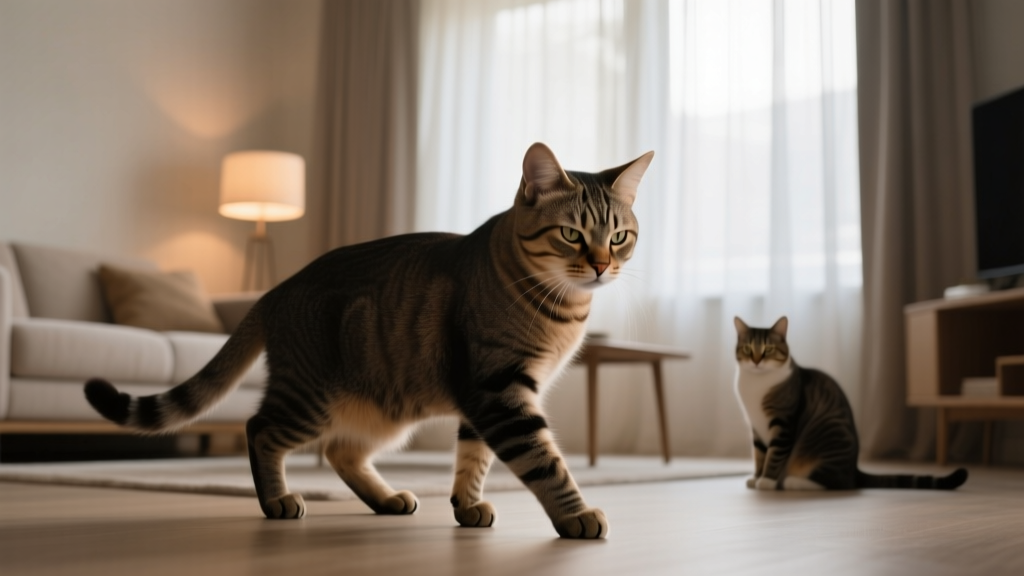
What Can Lead to Behavioral Issues in Cats? 7 Hidden...
Why Your Cat’s 'Bad Behavior' Is Almost Always a Cry for Help
What can lead to behavioral issues in cats is rarely simple disobedience — it’s almost always an urgent signal that something is physically, emotionally, or environmentally out of balance. When your formerly calm cat starts urinating outside the litter box, biting without warning, over-grooming until bald patches appear, or howling at 3 a.m., these aren’t ‘personality flaws’ — they’re symptoms. In fact, a landmark 2022 study published in the Journal of Feline Medicine and Surgery found that 82% of cats referred for behavior consultations had at least one underlying medical condition contributing to their actions — and nearly half were never screened for pain before behavior modification began. Ignoring this reality doesn’t just delay resolution — it risks worsening both physical health and emotional trust.
1. Undiagnosed Medical Pain: The Silent Catalyst
Contrary to popular belief, cats don’t ‘act out’ when they’re in pain — they withdraw, hide, or redirect. A cat with arthritis may avoid jumping into her favorite high perch, then begin scratching the couch instead (a more accessible surface). One with dental disease might hiss when petted near the jaw — misread as ‘grumpiness.’ According to Dr. Sarah Hargreaves, a board-certified veterinary behaviorist and co-author of the AAHA/AAFP Feline Behavior Guidelines, ‘Cats are masters of masking discomfort. What owners label “aggression” or “stubbornness” is often nociceptive reactivity — the nervous system’s protective response to injury or inflammation.’
Common pain-related triggers include:
- Osteoarthritis (especially in senior cats — affecting up to 90% of cats over age 12)
- Chronic kidney disease (causing nausea, lethargy, and irritability)
- Urinary tract infections or FLUTD (feline lower urinary tract disease), which make litter box use painful and lead to substrate aversion)
- Dental resorptive lesions (painful tooth decay invisible without oral exam)
- Hyperthyroidism (increasing metabolism, causing restlessness and vocalization)
Real-world case: Luna, a 14-year-old domestic shorthair, began ambushing her owner’s ankles at night. After ruling out anxiety, her veterinarian performed a full orthopedic workup — revealing severe bilateral hip dysplasia. Once started on a multimodal pain protocol (meloxicam + joint supplements + environmental modifications), the attacks ceased within 10 days.
2. Environmental Stress & Lack of Control
Cats are not ‘low-maintenance’ pets — they’re high-control, low-tolerance species. Their evolutionary wiring demands predictability, safe vantage points, and autonomy over resources. When those needs go unmet, stress hormones like cortisol spike — altering brain chemistry and triggering behaviors ranging from excessive grooming to urine marking.
Key environmental stressors backed by peer-reviewed research:
- Resource competition: Sharing food bowls, water stations, or litter boxes across multiple cats — especially if placed in high-traffic or noisy areas. The rule of thumb? n+1 litter boxes (where n = number of cats), each in separate, quiet locations.
- Lack of vertical space: A 2021 University of Lincoln study showed cats with access to ≥3 elevated resting zones (shelves, cat trees, window perches) exhibited 63% less redirected aggression than those confined to floor-level only.
- Unpredictable human schedules: Sudden changes in routine — new work hours, guests, home renovations — trigger chronic low-grade stress. Unlike dogs, cats don’t adapt quickly; they internalize disruption.
- Sensory overload: Loud appliances (vacuum cleaners, blenders), unfamiliar scents (air fresheners, laundry detergents), or even ultrasonic pest repellers (inaudible to humans but painful to feline hearing) can cause sustained anxiety.
Pro tip: Use the ‘Feline Stress Score’ developed by the International Society of Feline Medicine (ISFM). Observe your cat for 5 minutes daily: ears forward = relaxed; ears flattened = anxious; tail flicking = escalating stress. Track patterns for two weeks — correlations with household events often reveal hidden triggers.
3. Unmet Instinctual Needs: Boredom Isn’t Just Boredom
‘Bored’ is a human word — cats experience frustrated predatory drive. Domestic cats retain 95% of wild hunting instincts, yet most receive zero opportunity to stalk, chase, pounce, and ‘kill’ — a sequence neurologically essential for dopamine regulation. When denied, frustration manifests as nocturnal hyperactivity, attacking ankles, chewing cords, or obsessive licking.
Dr. Mikel Delgado, certified applied animal behaviorist and researcher at UC Davis, explains: ‘A cat who doesn’t hunt isn’t lazy — she’s neurologically under-stimulated. Her brain expects 10–20 short, intense hunts per day. Without them, cortisol rises and serotonin drops — exactly the biochemical profile linked to compulsive disorders in cats.’
Effective enrichment isn’t about buying toys — it’s about designing daily rituals:
- Morning ‘Hunt’: Use a wand toy to simulate prey movement (erratic, low-to-the-ground, pauses) for 5 minutes — end with a ‘kill’ (let her catch a plush mouse).
- Food-based foraging: Replace 50% of kibble with puzzle feeders or DIY snuffle mats (towel with treats tucked in folds).
- Scent exploration: Rotate safe, stimulating scents weekly — dried catnip, silver vine, or valerian root in a cloth pouch tied to a string.
- Window theater: Install a bird feeder outside a clean window — but add a ledge or shelf so she can observe safely without straining her neck.
Case study: Milo, a 3-year-old neutered male, began chewing baseboards after his owner started working remotely. His ‘boredom’ was actually thwarted hunting drive — he’d been getting only one 2-minute play session daily. After implementing three 5-minute hunts/day and rotating food puzzles, destructive chewing stopped in 11 days.
4. Social Misalignment & Human Misinterpretation
Many so-called ‘behavioral issues’ stem not from cat dysfunction — but from mismatched expectations. We interpret feline communication through a human lens: slow blinking = affection (correct), but tail thumping = anger (often wrong — it can mean intense focus or mild irritation). Worse, we punish natural behaviors — hissing, swatting, hiding — reinforcing fear and eroding trust.
Three critical misalignments:
- Punishment backfires: Spraying water, yelling, or tapping the nose increases fear-based aggression. The cat associates the punishment with you, not the action — damaging the bond irreparably.
- Forced affection: Petting beyond the cat’s tolerance threshold (often 5–10 seconds for many cats) triggers ‘petting-induced aggression’ — a neurological reflex, not spite.
- Ignoring consent signals: Tail flicking, flattened ears, skin twitching, or dilated pupils are clear ‘stop’ cues. Overriding them teaches the cat that her voice doesn’t matter — leading to escalated avoidance or defensive bites.
Veterinary behaviorist Dr. E’Lise Christensen emphasizes: ‘Cats don’t need training — they need translation. Every behavior has function. If your cat scratches the sofa, she’s not defying you — she’s maintaining claw health, marking territory, or stretching muscles. Provide better options, not corrections.’
| Cause Category | Top 3 Signs It’s Present | First Action Step | When to See a Vet |
|---|---|---|---|
| Medical Pain | 1. Reduced mobility or reluctance to jump 2. Increased vocalization at night 3. Licking or biting one area obsessively | Schedule full wellness exam with bloodwork, urinalysis, and orthopedic check | Immediately — especially if signs appeared suddenly or worsen over 48 hours |
| Environmental Stress | 1. Urine marking on vertical surfaces 2. Excessive grooming leading to bald patches 3. Hiding more than 50% of waking hours | Conduct a ‘stress audit’: Map litter boxes, food/water locations, escape routes, and noise sources | If no improvement after 2 weeks of environmental adjustments |
| Frustrated Predatory Drive | 1. Pouncing on feet/hands unpredictably 2. Chewing non-food items (cords, fabric) 3. Staring intently at walls or shadows | Implement two 5-minute interactive hunts daily using wand toys — end with food reward | If self-injury occurs (e.g., chewing until bleeding) or behavior escalates despite enrichment |
| Social Miscommunication | 1. Swatting during petting 2. Hissing when picked up 3. Running away when approached | Learn your cat’s individual consent signals — stop petting at first tail flick or ear turn | If aggression becomes unpredictable (no warning signs) or targets face/neck |
Frequently Asked Questions
Can changing my cat’s diet cause behavioral issues?
Yes — but indirectly. Sudden diet changes can cause gastrointestinal upset (leading to irritability or litter box avoidance), while food sensitivities may trigger itchiness and over-grooming. More critically, diets deficient in key nutrients like taurine or omega-3s impact brain health and stress resilience. Always transition foods gradually over 7–10 days, and consult your vet before switching to novel proteins or elimination diets — especially if behavior changes coincide with feeding.
Is my cat’s aggression toward other pets normal?
Not necessarily — and never acceptable if it causes injury. While some tension between cats is typical during introductions, persistent aggression (hissing, stalking, blocking access to resources) signals unresolved stress, resource guarding, or failed socialization. Introduce new pets slowly (7–14 days minimum), using scent-swapping and visual barriers first. Never force interaction. If aggression persists beyond 3 weeks, seek help from a certified cat behavior consultant — early intervention prevents entrenched patterns.
Will spaying/neutering fix behavioral issues?
It helps with hormonally driven behaviors — like spraying in intact males (reduces ~90% of cases) or roaming — but does not resolve anxiety, fear-based aggression, or learned habits. A 2023 Cornell Feline Health Center review found no statistically significant reduction in non-reproductive behaviors (e.g., scratching, vocalizing, inter-cat conflict) post-alteration. Sterilization is vital for health and population control — but it’s not a behavior ‘cure-all.’
How long does it take to see improvement after addressing the cause?
Timeline varies by cause: Pain relief often shows results in 3–7 days. Environmental stress reductions typically yield noticeable change in 2–4 weeks. Enrichment-driven improvements (e.g., reduced nighttime activity) usually appear in 10–14 days. However, deeply ingrained behaviors — like chronic urine marking — may require 8–12 weeks of consistent management plus pheromone support (Feliway Optimum) and possibly anti-anxiety medication. Patience and consistency are non-negotiable.
Are certain breeds more prone to behavioral issues?
No breed is inherently ‘difficult’ — but genetics influence temperament thresholds. Siamese and Oriental breeds tend toward higher energy and vocalization; Maine Coons often display strong attachment that may manifest as separation anxiety. However, environment and early experiences outweigh breed predisposition. A well-socialized Bengal raised with predictable routines will likely be calmer than a poorly handled domestic shorthair. Focus on individual needs — not stereotypes.
Common Myths About Cat Behavior
Myth #1: “Cats misbehave to get revenge.”
False. Cats lack the cognitive capacity for complex emotions like vengeance. What looks like ‘revenge’ (e.g., peeing on your bed after a vacation) is actually stress-induced marking — triggered by your absence disrupting their secure scent landscape. They’re not punishing you; they’re trying to restore safety.
Myth #2: “If my cat is eating and purring, she can’t be in pain.”
False — and dangerously misleading. Up to 70% of cats with chronic pain continue eating normally and may even purr as a self-soothing mechanism. Purring occurs at frequencies shown to promote tissue repair — it’s a physiological coping tool, not a happiness indicator. Rely on mobility, posture, and subtle behavioral shifts — not appetite or purring — to assess comfort.
Related Topics
- Feline Anxiety Symptoms — suggested anchor text: "signs your cat is stressed"
- Best Litter Boxes for Multi-Cat Households — suggested anchor text: "litter box solutions for multiple cats"
- How to Introduce a New Cat Safely — suggested anchor text: "introducing cats without fighting"
- Cat Enrichment Ideas You Haven’t Tried — suggested anchor text: "indoor cat enrichment activities"
- When to Consider Anti-Anxiety Medication for Cats — suggested anchor text: "cat anxiety medication guide"
Your Next Step Starts With Observation — Not Correction
What can lead to behavioral issues in cats is rarely singular — it’s usually a layered interplay of biology, environment, and relationship history. The most powerful tool you have isn’t a spray bottle or a supplement — it’s your attention. Start tonight: Set a timer for 5 minutes and simply watch your cat — note where she rests, how she moves, what she ignores and what she investigates. That observation is your diagnostic baseline. Then, pick one section from the table above that resonates most — and implement its ‘First Action Step’ within 48 hours. Small, evidence-based changes compound. And remember: Every behavior has meaning. Your job isn’t to suppress it — it’s to understand it. Ready to decode your cat’s next signal? Download our free Feline Behavior Tracker PDF (with printable stress logs and enrichment calendars) — because understanding begins not with judgment, but with curiosity.