Why Cats Sit on the Patio Heater Side
You step outside with a mug of tea, flip on the patio heater, and within minutes your cat appears like they’ve been summoned by a warm-weather spell. They don’t just sit near it—they position themselves on the “heater side” with impressive precision, sometimes even rotating their body like a little rotisserie chicken to warm each flank evenly. If you try to nudge a chair closer for yourself, you’ll likely get a slow blink that says, “Excuse you, I was here first.”
This isn’t just your cat being adorable (though it absolutely is). Sitting on the patio heater side is a perfectly sensible cat decision—one rooted in biology, survival instincts, and a dash of feline luxury preferences. Understanding why they do it can help you read your cat’s mood, keep them safe, and even improve your relationship (because respecting a cat’s heat ritual is basically diplomacy).
1) The scientific and evolutionary “why”
Cats are heat seekers by design. Their wild ancestors survived by conserving energy, maximizing comfort, and choosing rest spots that supported hunting success. Warmth is a shortcut to all three.
Heat conservation: the energy budget of a tiny predator
Even indoor cats are built like efficient little athletes. Their bodies run best within a comfortable temperature range, and maintaining body temperature costs calories. When a cat finds an external heat source—sunbeam, radiator, warm laptop, patio heater—they can spend less energy staying warm. That saved energy can go toward other important cat business, like grooming, monitoring birds, or launching a surprise “ankle ambush.”
Cats run warmer than you think
A typical cat’s normal body temperature is around 100.5°F to 102.5°F (38°C to 39.2°C). That means they often enjoy environments that feel a bit too warm for humans. What’s “toasty” for you may be “perfect” for them.
Comfort equals safety
Warmth doesn’t just feel nice—it’s associated with safety and rest. Kittens pile together for heat, and adult cats continue to seek cozy spots when they want to relax. From a feline perspective, the heater side is prime real estate: warm, stable, predictable, and usually near their favorite people.
2) A detailed breakdown: different contexts and what’s going on
Cats aren’t just attracted to heat; they’re attracted to the right kind of heat in the right setting. Here’s how the same behavior can mean slightly different things depending on the situation.
When it’s chilly outside
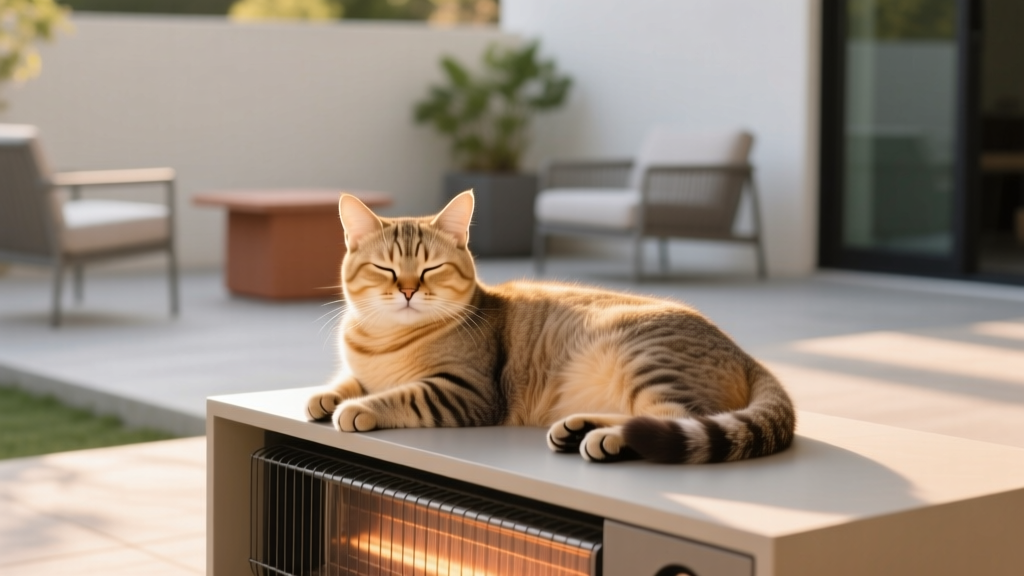
This is the obvious one. If the air is cool, your cat is using the heater like a portable sunbeam. You might notice them tuck paws under, curl their tail around their body, and half-close their eyes. That posture is both heat-efficient and a sign of contentment.
When your cat chooses the heater over a lap
Some cats adore laps. Others love warmth more than cuddling—especially if they’re feeling independent, overstimulated, or just not in the mood for hands. Choosing the patio heater side can be your cat’s way of saying, “I want to be near you, but I don’t want to be handled right now.” It’s the feline equivalent of sitting next to you on the couch instead of hugging.
When multiple cats compete for the heater zone
Heat sources can become “resources” in multi-cat homes. If you see one cat consistently claiming the heater side while another hangs back, that can reflect subtle social dynamics. The confident cat may be resource guarding. The other cat may be avoiding conflict. Watch for body blocking, staring, or one cat “accidentally” settling exactly where the other intended to sit.
When your cat presses one side close to the heater
Some cats “toast” one side at a time, then rotate. That’s normal comfort behavior. But if your cat consistently keeps one particular side toward the heat and seems stiff, it can occasionally hint at discomfort (for example, they’re trying to soothe an ache). Don’t panic—just notice patterns.
When they sit there after dinner
Warmth after eating is common across species. Digestion increases internal heat production, and many cats become sleepy post-meal. The heater side becomes the perfect nap anchor: warm belly, warm air, zero responsibilities.
3) What it means about your cat’s mood and feelings
The heater-side choice is often a clear emotional signal—especially when you pair it with body language.
- Relaxed and happy: Soft eyes, slow blinks, loose posture, paws tucked, gentle tail wrap. This is a cat who feels safe.
- Seeking security: Curled tight, head lowered, scanning the environment. They may be using warmth as comfort if they feel uncertain (new noises outside, guests, unfamiliar pets).
- Social but not snuggly: They sit close to you and the heater, but lean away from hands. This often means they enjoy your presence without wanting physical contact.
- Possessive of the spot: Staring, blocking, quick tail flicks when another cat approaches. This can indicate mild tension or resource guarding.
Bonus insight: if your cat is purring on the heater side, remember that purring can mean contentment—but it can also be self-soothing. Context matters.
4) Related behaviors you might also notice
If your cat loves the patio heater side, you’ll probably recognize a few other heat-chasing classics:
- Sunbeam stalking: Moving from patch to patch as the sunlight shifts across the floor.
- The warm laundry magnet: Appearing instantly when a dryer opens, then nestling into the warm pile like it’s a paid spa service.
- Radiator/range hovering: Sitting near baseboards, heaters, or warm appliances (sometimes a little too close).
- Laptop love: The keyboard isn’t the point—it’s warm, elevated, and it has your attention.
- Sleeping on top of you: Humans are heated mattresses with a heartbeat. Convenient.
5) When it’s normal vs. when it might be a concern
Most of the time, choosing the heater side is completely normal and honestly pretty wholesome. That said, there are a few situations where you’ll want to pay closer attention.
Likely normal
- It’s cool outside and your cat seeks warmth.
- Your cat alternates between heater time and other normal activities (eating, grooming, playing).
- Your cat’s appetite, litter box habits, and energy level are unchanged.
Potentially concerning
- Heat-seeking suddenly increases: If your cat becomes unusually obsessed with warmth, especially indoors, it can sometimes accompany illness, pain, or changes in metabolism.
- Lethargy: If “heater sitting” comes with hiding, weakness, or reluctance to move, call your vet.
- Changes in drinking/urination: Increased thirst or litter box changes paired with lethargy deserve prompt attention.
- Overheating signs: Panting, drooling, restlessness, very warm ears/paws, bright red gums, or vomiting. Cats overheat more easily than many people realize.
- Burn risk behavior: Trying to press against the heater, sleeping too close, singed whiskers, or focusing on the hottest area.
If you’re unsure, take a quick video of the behavior and your cat’s posture. Vets (and behavior pros) love clear examples.
6) Tips for responding to or encouraging the behavior (safely)
You don’t have to discourage heater lounging—just make it safer and more cat-friendly.
Create a “warm zone” that isn’t dangerous
- Keep a safe distance: Place a chair, cat bed, or outdoor cushion far enough away that your cat can’t touch the heating element.
- Use a barrier: A stable screen or pet gate can prevent accidental contact while still letting warmth through.
- Offer a heated pet pad indoors: If your cat is heat-motivated, a cat-safe heated bed inside can reduce risky outdoor heater snuggling.
Respect their “near you” boundary
If your cat chooses the heater side instead of your lap, take it as a win: they’re sharing space with you. Try a gentle slow blink, speak softly, and let them initiate contact. Cats bond through calm proximity more than forced cuddles.
Prevent resource tension in multi-cat homes
- Add more warm spots: Two cats, two warm beds. Three cats, at least three options.
- Watch the “heirarchy” pressure: If one cat consistently gets displaced, provide a second heated spot in another location.
- Reward peaceful sharing: Toss treats when both cats remain relaxed in the area (no staring contests).
Keep outdoor lounging smart
- Supervise: Especially if your cat is bold, young, or determined to get extremely close.
- Mind the wind: Wind can push heat (and your cat) into unusual positions. Re-check the safe distance.
- Limit time: If the heater is strong, keep sessions short and comfortable rather than hours-long roasting.
7) Fun facts and research nuggets about cats and warmth
- Cats prefer warmer ambient temperatures than humans. Many cats choose environments that feel “too warm” to us, especially for sleeping.
- Warmth supports deeper rest. Like many mammals, cats sleep more soundly when thermally comfortable—one reason the heater side becomes a premium nap site.
- Heat can be social. In friendly cat relationships, warmth-sharing (like sleeping close together) reinforces bonds. The patio heater becomes a “community campfire” for cats who get along.
- Sunbathing isn’t just cute—it's strategic. Cats often pick warm spots with good sight lines. Your patio heater area may offer both heat and a perfect view of the yard.
8) FAQ: Common questions cat owners ask
Is it safe for my cat to sit next to a patio heater?
It can be safe if your cat can’t touch the heating element and you supervise. Burns and overheating are the main risks. Provide a designated spot at a safe distance and consider a barrier if your cat likes to press close.
Why does my cat sit on the heater side even when it’s not that cold?
Cats often enjoy warmer temperatures than we do, and warmth can feel emotionally soothing. It may also be about habit: once a cat discovers a reliable cozy spot, they’ll return to it like it’s part of their daily schedule.
My cat keeps switching sides like they’re rotating. Is that normal?
Very normal. Cats adjust their position to regulate comfort—warming one side, then the other. If the behavior looks frantic, or your cat seems unable to settle, consider overheating or anxiety as possible factors.
Why does my cat choose the heater side instead of sitting with me?
Often it means your cat wants closeness without handling. Think of it as companionable “parallel play.” You can build trust by letting them choose the level of contact and rewarding calm proximity with soft talk or a slow blink.
Should I worry if my cat suddenly becomes obsessed with heat?
If it’s a noticeable change and comes with lethargy, appetite changes, hiding, or litter box changes, it’s worth calling your vet. Heat-seeking can be purely preference—but sudden shifts deserve a health check.
How can I give my cat warmth safely without using a patio heater?
Try a cat-safe heated bed or pad designed for pets, a warm (not hot) microwavable pet heat disc, or a cozy insulated bed placed in a draft-free spot. Always follow product safety instructions and avoid human heating pads unless specifically designed for pets.
Wrapping it up
When your cat parks themselves on the patio heater side, they’re not being weird—they’re being brilliantly cat. Warmth means comfort, energy savings, and a sense of safety. It can also be a sweet social compromise: close to you, close to the heat, and fully in control of their personal space.
Have a cat who claims the heater like it’s their throne? Share your funniest patio-heater (or sunbeam, radiator, laundry pile) stories with the Cat Lovers Base community at catloversbase.com—we’d love to hear how your cat does cozy.