Why Cats Sit on the Roof Skylight Frame
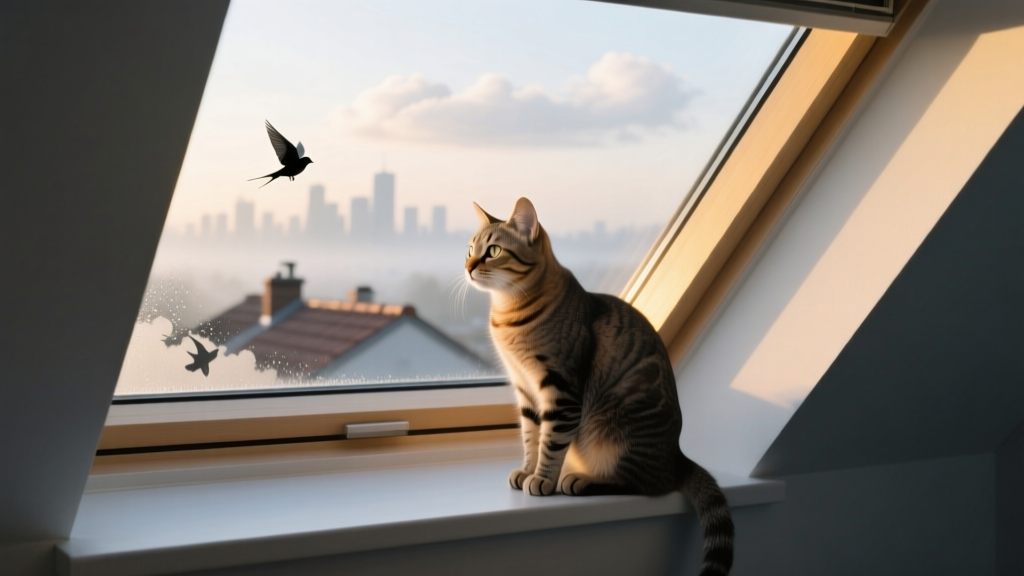
You’re making coffee, the house is quiet, and then you glance up and spot your cat perched like a tiny gargoyle… on the frame of the roof skylight. Not the comfy couch. Not the cat bed you bought with high hopes. The skylight frame—narrow, slightly awkward, and (to you) not remotely cozy. Your cat looks down at you with that calm, confident expression that says, “Yes, this is the best seat in the house.”
If you’ve ever wondered why cats love that particular perch, you’re not alone. Skylight frames combine several cat-magnet features: height, warmth, a view, and the subtle thrill of being somewhere they technically “shouldn’t” be. Here’s what’s going on in that furry little mind—plus how to tell when it’s normal, when it’s risky, and how to work with the behavior without turning your home into a feline obstacle course.
1) The Scientific and Evolutionary “Why”
Cats are both predators and, historically, potential prey. That combination shaped a brain that’s obsessed with vantage points. In the wild, height offers survival advantages: you can spot prey, monitor rivals, and avoid ambush. Even though your indoor cat isn’t tracking mice across the savanna, those instincts are still very much installed.
A skylight frame hits several evolutionary buttons at once:
- Vantage point: Height provides a wider “scan range.” Cats feel more in control when they can see what’s happening.
- Security: Above-ground spaces reduce surprise encounters. Many cats relax more when they can’t be approached from all directions.
- Resource guarding (in a peaceful way): High perches help cats manage space in multi-pet homes. They can share a room without being in each other’s faces.
- Heat-seeking: Sunlight through a skylight warms the frame and the surrounding air. Cats are experts at locating tiny pockets of warmth.
Add in the fact that cats prefer to rest where they can observe household patterns—who walks where, when food happens, when the dog gets rowdy—and you’ve got a perfect explanation for “sky seat” obsession.
2) A Detailed Breakdown: Different Contexts, Different Motivations
Not every skylight sit is the same. The context matters, and your cat’s “why” can shift by time of day, season, and household vibe.
They’re sunbathing (and the frame is basically a heating pad)
On a cold day, your cat may choose the skylight frame because it’s the warmest micro-zone in the house. Sunlight heats surfaces unevenly; even a narrow strip of warmed trim can be more appealing than a larger, cooler bed.
Cat-owner scenario: You notice your cat rotates like a rotisserie chicken—front paws one way, then a slow 180—staying exactly where the sun patch hits.
They’re watching the “outside channel”
If the skylight has a view of trees, birds, rooflines, or shifting shadows, your cat may be using it as a private theater. Visual stimulation matters to cats; it scratches the hunting itch without the actual hunting.
Scenario: Your cat’s tail tip flicks slowly while they stare upward, laser-focused. You look and see… nothing. But your cat is tracking a leaf shadow like it owes them money.
They’re avoiding traffic (social distance, not dislike)
Some cats choose high, narrow spots when they want to be near you without being handled. Skylight frames are great for “together but not touched.” This is common in cats who are affectionate yet easily overstimulated.
Scenario: Company comes over. Instead of hiding under the bed, your cat climbs up to their skylight lookout—present, observant, and safely out of reach.
They’re managing another pet
In multi-cat households, height is social currency. A skylight perch can reduce conflict by giving one cat a safe lane. Similarly, cats may retreat upward to avoid a dog’s enthusiastic “hello.”
Scenario: The dog enters the room and your cat wordlessly relocates to the skylight frame. Not panic—more like, “I’m opting out of this conversation.”
They’re exploring, testing, and mapping
Cats are natural surveyors. They build a “home map” using scent, memory, and repeated routes. The skylight frame may be part of a patrol circuit: couch back → bookshelf → window ledge → skylight frame → hallway cabinet. The route itself can be soothing, like pacing with purpose.
3) What This Behavior Says About Your Cat’s Mood
Your cat’s body language on the skylight frame is the real message. Here are common “moods,” translated:
- Relaxed and content: Loaf position, slow blinks, ears neutral, paws tucked, tail still. They’ve claimed the spot as a safe resting place.
- Curious and engaged: Upright posture, head tracking, whiskers forward, tail tip twitching. They’re hunting with their eyes.
- Seeking peace: Body turned slightly away from activity below, ears rotating like little radar dishes. They want space but not isolation.
- On edge: Crouched low, ears partly back, pupils large, tail wrapped tight or flicking sharply. Something downstairs feels unpredictable.
- Confident (and maybe a little smug): Sprawled posture even on a narrow ledge, grooming, acting like gravity is a suggestion. This is “I own the house” energy.
The key is consistency. If your cat uses the skylight frame as a calm hangout, it’s usually a sign they feel safe and in control.
4) Related Behaviors You Might Also Notice
Skylight sitting rarely happens in isolation. Cats who love this spot often show other “high perch” or “warmth and watch” habits, such as:
- Balancing on the back of the sofa like it’s a tightrope
- Sleeping on top of the fridge or kitchen cabinets
- Climbing cat trees to the highest platform and supervising the room
- Following sun patches from floor to chair to windowsill throughout the day
- Perching on stair landings to monitor household movement
- Sitting in doorways or at the top of stairs (strategic choke points in cat logic)
These all reflect the same motivations: control of space, safety, stimulation, and comfort.
5) When Skylight Perching Is Normal vs. When It’s a Concern
Most of the time, a cat choosing the skylight frame is perfectly normal—just feline interior design choices. But there are a few times to pay closer attention.
Normal (and often positive)
- Your cat can get up and down safely without slipping or jumping from risky heights
- They look relaxed, groom, nap, or calmly observe
- They still eat, drink, use the litter box, and socialize in their usual ways
Potential concerns
- Sudden change: A cat who never sought high places suddenly spends hours up there. This can indicate stress, pain, or feeling unsafe.
- Avoidance behavior: If your cat is hiding up high all day and avoiding interaction, something may be bothering them (new pet, construction noise, visitors, bullying by another cat).
- Risk of falls: Older cats, cats with arthritis, or cats with poor balance can slip. Narrow frames and smooth surfaces increase risk.
- Overheating: Skylight areas can get surprisingly hot. Panting, drooling, or restlessness in strong sun is a red flag.
- Compulsive pacing: Repetitive, restless pacing around the skylight area can suggest anxiety.
If the behavior is new and intense, or your cat seems distressed, a vet check is smart—especially to rule out pain (like arthritis), vision issues, or other medical contributors.
6) Tips for Responding to (or Encouraging) the Behavior
You don’t have to ban the skylight frame to be a responsible cat parent. The goal is to keep your cat safe while honoring their need for height and warmth.
Make it safer if they insist on sitting there
- Improve traction: If the frame is slick, add a removable, non-slip mat or grip tape designed for safe indoor use. (Avoid anything that could leave sticky residue or fumes.)
- Create a “landing zone”: Place a stable chair, ottoman, or cat tree nearby to reduce risky jumps.
- Check heat: On hot days, close blinds or use a UV-filtering film if the area overheats.
Offer a better alternative (without starting a negotiation war)
- Add a tall perch nearby: A cat tree or wall shelf near the skylight can satisfy the same urge with more stability.
- Use comfort upgrades: Put a fleece pad or a warmed (not hot) blanket on the alternative perch to compete with the frame’s warmth.
- Reward the alternative: Treats, gentle praise, or a short play session when they choose the safe perch helps build the habit.
Reduce stressors that might be driving the behavior
- Multi-cat homes: Provide multiple elevated routes and resting spots so no one has to “defend” a single perch.
- Busy homes: Add quiet hideaways at different heights (covered beds, shelves, cat condos) so your cat has options.
One important note: if you try to remove your cat from the skylight frame, avoid chasing. Chasing turns it into a game or a stress event. Instead, lure with a treat trail, a wand toy, or a calm call to a known safe perch.
7) Fun Facts and Research-Style Nuggets
- Cats are heat connoisseurs: Domestic cats often prefer warmer resting spots than humans do. Sun-heated surfaces can be especially attractive because they provide “free” warmth without effort.
- Height reduces conflict: In multi-cat environments, vertical space is widely recognized by feline behavior professionals as a key resource. More perches often equals less tension.
- Observation is enrichment: Watching outdoor movement (birds, shadows, weather) is a form of mental stimulation. Think of it as low-impact “hunting practice.”
- Narrow doesn’t mean uncomfortable to cats: Cats can feel secure when their body is supported in a tucked position. A narrow frame can function like a “beam bed” if their paws and chest feel stable.
FAQ: Common Questions About Cats and Skylight Frames
Is it safe for my cat to sit on the skylight frame?
It can be, depending on the frame’s width, traction, and your cat’s age and agility. If there’s any chance of slipping or a dangerous fall, provide a safer nearby perch and improve traction if possible.
Why does my cat choose the skylight frame instead of their cat bed?
Because it checks more boxes: warmth, height, a view, and control of the room. Many cat beds are comfortable but placed in low-traffic, low-visibility areas. Try moving the bed to a higher spot or placing it on a stable elevated surface.
My cat sits up there when guests come over—are they scared?
Not necessarily. Many cats cope with change by choosing a high observation point. If they look relaxed and curious, it’s a healthy strategy. If they’re tense, crouched, or hiding for hours, they may be stressed and need more quiet options.
Should I discourage this behavior?
Only if it’s unsafe or causing household problems. Cats need vertical territory. Instead of discouraging the instinct, redirect it: provide a safer tall perch near the skylight and reward your cat for using it.
Why does my cat meow from the skylight frame?
They may be requesting interaction (“Come admire my penthouse”), reacting to outdoor stimuli, or asking you to open a door/blind. Note the timing—does it happen when birds are outside, when you’re in the kitchen, or when they want play?
My senior cat started doing this—what should I watch for?
Watch for slipping, hesitation before jumping, stiffness when coming down, or changes in appetite and grooming. Seniors may seek warmth for sore joints, but the climbing can be risky. A vet check and adding ramps/steps can help.
One Last Thought
A cat on a roof skylight frame is often a cat doing what cats do best: finding the warmest, highest, most strategic spot and turning it into a throne. When you see it through their eyes—comfort, safety, information, and a dash of drama—it starts to make perfect sense.
Does your cat have a favorite “why are you sitting there?” location—skylight frame, curtain rod, fridge top, or something even stranger? Share your story (and what you’ve noticed about their mood when they do it) with the community at catloversbase.com.