Why Cats Sit on the Kitchen Window Counter
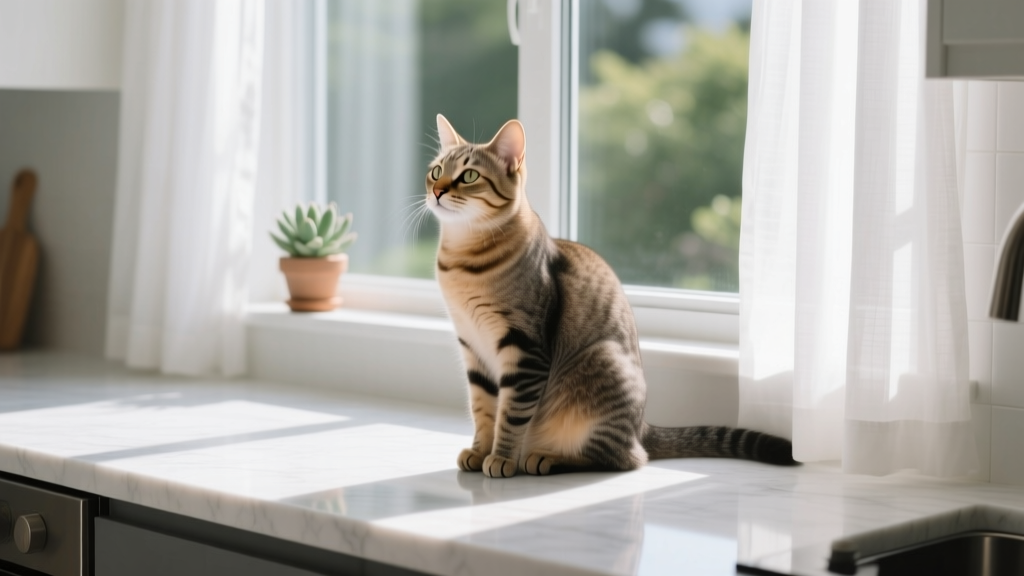
You’re trying to make coffee, slice a tomato, or unload groceries, and there they are: your cat, perched on the kitchen window counter like a tiny supervisor. Tail tucked neatly, ears swiveling, eyes tracking the birds outside—and occasionally tracking you, too. If you shoo them off, they return five minutes later. If you ignore them, they stretch, yawn, and somehow manage to look both innocent and in charge.
If your cat treats the kitchen window counter like a VIP lounge, you’re not alone. This quirky habit is a perfect mix of feline instinct, comfort-seeking, and social strategy. The good news: it usually makes a lot of sense once you look at it through a cat’s eyes.
1) The scientific (and evolutionary) reason: cats love vantage points
Domestic cats may sleep on our beds and beg for treats, but they’re still built like small predators. In the wild, a good lookout spot is everything. Height and visibility help a cat:
- Spot prey (birds, insects, small animals)
- Monitor potential threats (other animals, unfamiliar movement)
- Control territory (knowing who’s where reduces stress)
Your kitchen window counter offers the feline equivalent of a watchtower with entertainment included. It’s elevated, often central to the home, and provides a constantly changing “cat TV” view outdoors. Even indoor-only cats have strong hunting circuitry—watching birds can activate that stalking-and-pouncing part of the brain without any actual chase.
There’s also a comfort angle. Cats are heat-seekers, and kitchen windows often sit in sunny patches or near warm air currents. Add the subtle smells of food and the presence of their favorite humans, and you’ve got a location that hits several cat priorities at once: security, stimulation, warmth, and social proximity.
2) A detailed breakdown: different contexts for “kitchen window counter sitting”
Not all counter-perching is the same. The “why” changes depending on what else is happening.
They’re bird-watching (the classic)
If your cat’s eyes are wide, whiskers forward, and tail tip flicking while they stare outside, they’re in predatory observation mode. They may chirp, chatter, or do that little butt-wiggle even though they’re behind glass. This is normal, mentally enriching behavior—like solving a puzzle, but with feathers.
They’re supervising your routine
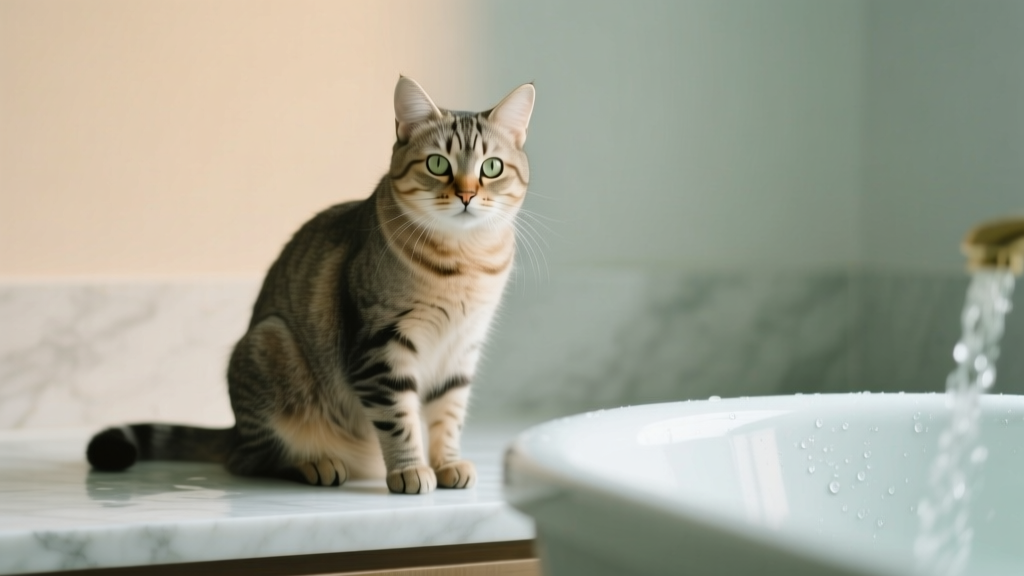
Many cats sit on the kitchen counter window area when you’re busy because the kitchen is where humans do predictable, interesting things: opening cans, running water, rattling bags. Some cats are “project managers.” They like to be close enough to monitor you, but not necessarily on your lap.
In multi-pet homes, the kitchen can also be a strategic spot to keep an eye on other animals coming and going.
They’re waiting for food (and know exactly what they’re doing)
If your cat appears the moment you touch a cutting board, they’ve learned a pattern. Cats are excellent at associative learning: “human at counter” often means “food happens.” Sitting in the kitchen window area may be their way of politely (or not so politely) reminding you of the household treaty regarding snacks.
They’re avoiding something
Sometimes the kitchen window counter is a safe zone. If your cat runs there when guests arrive, when the vacuum comes out, or when another cat is being pushy, they may be choosing height to feel secure.
They’re seeking warmth or comfort
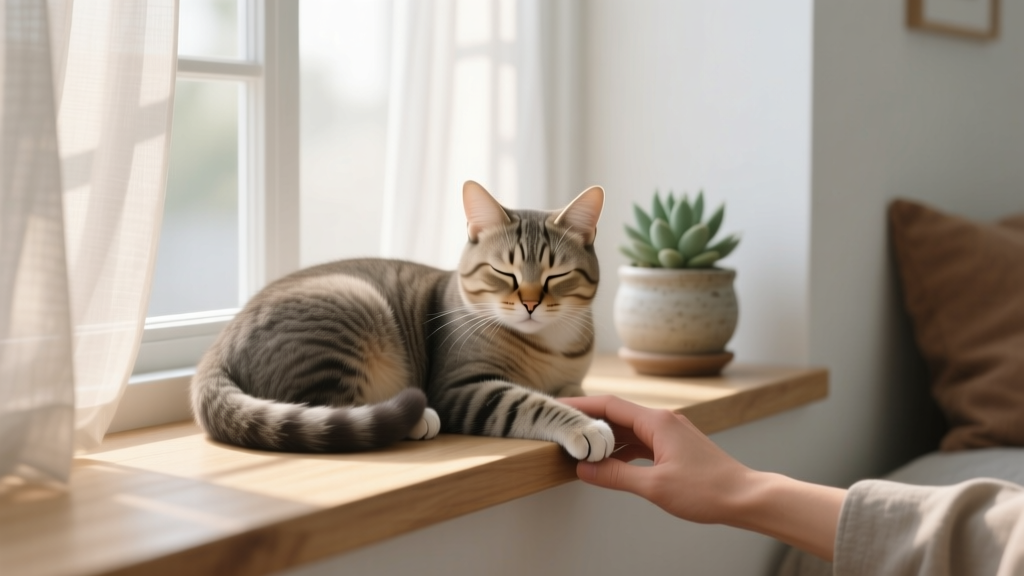
Sunny windows are irresistible. Some cats will rotate between several “sun stations” throughout the day as the light moves. If the kitchen window gets the best afternoon beam, your cat has simply done the math.
3) What this behavior says about your cat’s mood and feelings
Your cat’s body language on the counter can tell you whether they’re calm, excited, or stressed.
- Relaxed and content: loose posture, slow blinks, paws tucked (“loaf”), occasional grooming, gentle tail wrap.
- Playful/hunting-curious: forward ears, intense staring, tail tip twitch, chirping at birds, crouching with weight shifted.
- Alert and on duty: upright posture, ears rotating, scanning between window and room, minimal blinking.
- Uneasy or guarding: tense body, low growl, ears slightly sideways, tail flicking more sharply, vigilant tracking of other pets/people.
In many homes, the kitchen counter window seat is a cat’s chosen spot for “calm control.” It’s not dominance in the comic-book sense; it’s more like stress management. Seeing the room and the outdoors helps them feel informed, and informed cats feel safer.
4) Related behaviors you might also notice
If your cat loves the kitchen window counter, you may spot a few companion quirks:
- Chattering or chirping at birds and squirrels (a common hunting-related vocalization).
- Rubbing cheeks on the window frame or counter edge (scent marking with facial glands—“this is my observation post”).
- Following you from room to room and then settling near you rather than on you (social but independent).
- Guarding the route to the food area—sitting near bowls or food storage like a furry bouncer.
- Perching on other high spots (tops of couches, cat trees, shelves) to expand their “map” of the home.
5) When it’s normal… and when it might be a concern
Most of the time, a cat on the kitchen window counter is simply being a cat. Still, there are a few situations where it’s worth paying closer attention.
Normal (and usually beneficial)
- Your cat visits the counter window daily and seems relaxed.
- They use it for bird-watching, sunbathing, or quiet time.
- They can be redirected easily when needed.
Potential concern
- Sudden change: A cat who never cared about the kitchen window now camps there anxiously all day.
- Obsessive vigilance: Constant staring outside paired with agitation, pacing, yowling, or spraying near the window (possible outdoor cat conflict).
- Aggression from the perch: Swatting at people or pets when they pass, blocking access to bowls or doorways.
- Avoidance behavior: Hiding on the counter because something in the home feels unsafe (bullying, stress, pain).
- Health clues: If your cat seeks warmth excessively, seems withdrawn, or has reduced appetite, talk to a veterinarian—sometimes “hanging out” is actually “not feeling great.”
If you suspect outdoor animals are stressing your cat, you might also notice flattened ears, low growls, or redirected aggression (your cat lashes out at a housemate after seeing a neighborhood cat outside). That’s a common trigger.
6) Tips for responding to (or encouraging) the behavior
You can respect your cat’s instincts while keeping your kitchen functional and safe. The goal isn’t to “win” against your cat; it’s to shape the environment so everyone gets what they need.
Create a better “yes” spot
- Add a window perch or cat tree near the kitchen window so the view remains available without using food-prep space.
- Use a washable mat on an approved surface (a side counter, a shelf, a radiator cover) to make that spot extra appealing.
Make counters less rewarding (without drama)
- Keep food scraps and crumbs cleaned up so the counter isn’t a snack bar.
- Block access temporarily when you’re cooking (closed door, baby gate, or placing large items on the counter edge).
- Reward the alternative: treats, praise, or play when your cat chooses their perch instead of the counter.
Support their hunting needs
- Offer short daily play sessions (wand toys, feather teasers) to satisfy the “stalk-chase-pounce” sequence.
- Try feeder puzzles or scatter feeding to add mental work similar to foraging.
Keep it safe and sanitary
- Avoid leaving hot pans, knives, or open ovens unattended—curiosity and jumping skills are a risky combo.
- Use cat-safe deterrents if needed (double-sided tape on edges, motion-activated air puff devices placed responsibly). Avoid yelling; it often increases anxiety or turns it into a game of “counter when you’re not looking.”
If they’re watching outdoor cats
- Use window film on the lower portion to reduce visual triggers while still letting in light.
- Discourage outdoor visitors by removing food sources outside and using humane deterrents (motion sprinklers, scent deterrents approved for your area).
7) Fun facts and research-friendly tidbits
- Cats gather information to feel safe. A good viewpoint reduces “surprise events,” which can lower stress in easily startled cats.
- Window watching can be enrichment. Many behaviorists recommend visual stimulation (like bird feeders placed at a safe distance) for indoor cats—just monitor frustration levels if your cat becomes too keyed up.
- Scent marking is social media for cats. When your cat rubs their face along the window frame, they’re leaving chemical messages that say, “This place is familiar and secure.”
- Height is emotional leverage. For some cats, being up high isn’t about superiority—it’s about having an exit plan and a clear view.
8) FAQ: common questions cat owners ask
Is it okay to let my cat sit on the kitchen counter?
From your cat’s perspective, yes—it’s a comfy lookout spot. From a human perspective, it depends on your household rules and food safety needs. If you’d rather not allow it, offer an equally attractive alternative perch near the window and reward your cat for using it.
Why does my cat jump up there the moment I start cooking?
They’ve learned the pattern: cooking equals smells, possible tastes, and your attention. It can be food-seeking, curiosity, or social monitoring. Try giving them a small meal or puzzle feeder before cooking, then guide them to a designated perch.
My cat sits on the counter and stares at me. What does that mean?
Often it’s a check-in: “What are you doing?” or “Is it food time?” Look at the whole body. Slow blinks and relaxed posture suggest affection or comfort. Tense posture and sharp tail flicks suggest arousal or impatience.
Why does my cat chatter at the window?
That chirping/chattering sound is commonly linked to hunting excitement and frustration—your cat’s brain is in “I would like to catch that” mode, but the glass prevents it.
Should I worry if my cat suddenly starts spending all day at the kitchen window?
If it’s a new, intense habit—especially with agitation, appetite changes, hiding, or aggression—consider stress triggers (outdoor cats, new pets, schedule changes) and rule out medical issues with your vet.
How do I keep my cat off the counter without ruining our relationship?
Skip punishment. Use management (block access during cooking), make the counter less rewarding (no food payoff), and heavily reward a nearby “yes spot.” Cats respond best when the alternative is genuinely better.
Cats don’t sit on the kitchen window counter to be difficult; they do it because it checks a lot of instinctive boxes: safety, information, warmth, entertainment, and closeness to you. Once you see it as a strategy instead of a nuisance, it becomes much easier to guide the behavior—without turning your kitchen into a daily showdown.
Does your cat have a favorite kitchen “office,” a specific window they patrol, or a dramatic bird-chattering routine? Share your stories (and the funny details) with fellow cat people on catloversbase.com—we’d love to hear what your tiny supervisor is up to.