How to Change a Cat’s Behavior the Right Way
Why 'How to Change a Cat’s Behavior' Is One of the Most Misunderstood — and Urgently Needed — Skills for Cat Owners
If you've ever wondered how to change a cats behavior — whether it's your senior cat suddenly urinating outside the litter box, your newly adopted kitten shredding your sofa at dawn, or your otherwise gentle cat hissing at visitors — you're not alone. Over 68% of cat owners report at least one persistent behavioral issue within the first year of ownership (2023 International Cat Care Survey), yet fewer than 12% consult a qualified behavior professional before resorting to punishment, rehoming, or surrender. The truth? Cats don’t misbehave — they communicate unmet needs. And when you know how to listen, interpret, and respond with evidence-based strategies, changing their behavior isn’t about control — it’s about connection, safety, and mutual trust.
Step 1: Rule Out Medical Causes — Because Behavior Is Often a Symptom, Not the Problem
Before any training begins, rule out pain or illness. A sudden shift in behavior — especially in cats over age 7 — is frequently the first sign of underlying disease. According to Dr. Alice Moon-Fanelli, DACVB (Diplomate of the American College of Veterinary Behaviorists), "Over 40% of cases labeled as 'aggression' or 'inappropriate elimination' turn out to be linked to osteoarthritis, hyperthyroidism, dental disease, or urinary tract discomfort." A full veterinary workup should include bloodwork, urinalysis, thyroid panel, and orthopedic evaluation — particularly if changes coincide with aging, weight loss, increased thirst, or reduced grooming.
Real-world example: Luna, a 9-year-old domestic shorthair, began avoiding her litter box and started spraying vertical surfaces. Her owner assumed it was territorial stress after moving apartments. Only after a vet visit — revealing stage 2 chronic kidney disease and painful bladder inflammation — did targeted pain management and litter box modifications resolve the issue completely within 10 days.
Key takeaway: Never skip this step. What looks like 'bad behavior' may be your cat’s only way of saying, "I hurt."
Step 2: Decode the 'Why' — Mapping Triggers, Functions, and Feline Motivations
Cats don’t act randomly. Every behavior serves a function: to gain something (attention, food, access) or avoid something (fear, pain, overwhelm). To change behavior, you must first understand its purpose. Certified feline behavior consultant Mikel Delgado, PhD, recommends building a simple ABC log for 5–7 days:
- A (Antecedent): What happened right before the behavior? (e.g., doorbell rang, vacuum turned on, child approached sleeping cat)
- B (Behavior): What exactly did the cat do? (Be specific: "hissed + flattened ears + tail thrashing" not "was aggressive")
- C (Consequence): What happened immediately after? (e.g., person backed away → cat got space; owner picked cat up → cat got attention)
This reveals patterns. For instance, if your cat bites during petting, the antecedent might be prolonged stroking on the lower back; the consequence may be your startled withdrawal — unintentionally reinforcing the bite as an effective 'stop signal.' Once mapped, you can intervene *before* the behavior escalates.
Step 3: Replace, Don’t Suppress — The Power of Positive Reinforcement & Environmental Design
Punishment — yelling, spray bottles, clapping — doesn’t teach cats what to do instead. It erodes trust and increases fear-based reactivity. Instead, use the '3 Rs': Redirect, Reward, Repeat.
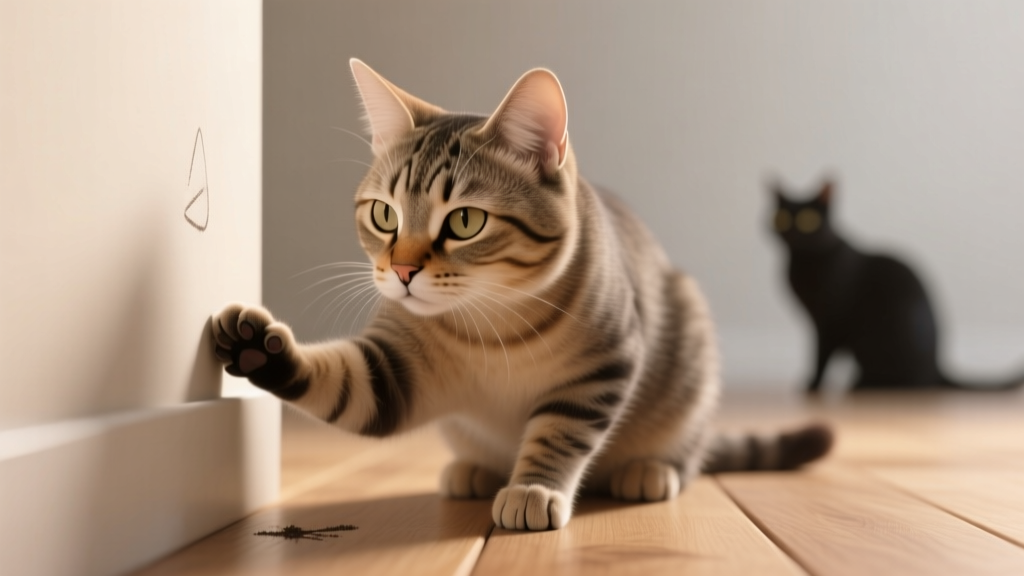
Redirect: Offer an appropriate outlet that satisfies the same instinct. If your cat scratches the couch, place a sturdy sisal post *next to it*, sprinkle with catnip, and gently guide paws onto the post. If they knead blankets obsessively, provide a soft, washable 'kneading pillow' with hidden treats inside.
Reward: Use high-value, immediate rewards. For most cats, this means freeze-dried chicken, tuna flakes, or warm meat baby food (no onion/garlic). Deliver within 1 second of desired behavior. Timing matters more than treat size.
Repeat: Consistency beats intensity. Five 60-second sessions daily are far more effective than one 15-minute session weekly. Neuroplasticity research in felines shows that reward-based learning strengthens synaptic pathways most efficiently with frequent, brief exposures.
Case study: Oliver, a 3-year-old rescue with severe resource guarding, would swat at his owner’s hand when reaching for his food bowl. Using clicker training paired with tossing treats *away* from the bowl while the owner slowly approached, he learned that human proximity = extra food. Within 11 days, he’d voluntarily sit beside the bowl while his owner refilled it.
Step 4: Enrichment as Medicine — Why Boredom Is the Silent Behavior Saboteur
Cats evolved to hunt 10–20 times per day. Indoor life offers less than 1% of that mental and physical stimulation. Understimulation directly correlates with redirected aggression, overgrooming, and stereotypic behaviors (e.g., pacing, excessive licking). A landmark 2022 study in Applied Animal Behaviour Science found that cats receiving daily 15-minute interactive play sessions + puzzle feeders showed 73% fewer problem behaviors over 6 weeks versus controls.
Effective enrichment isn’t just toys — it’s structure:
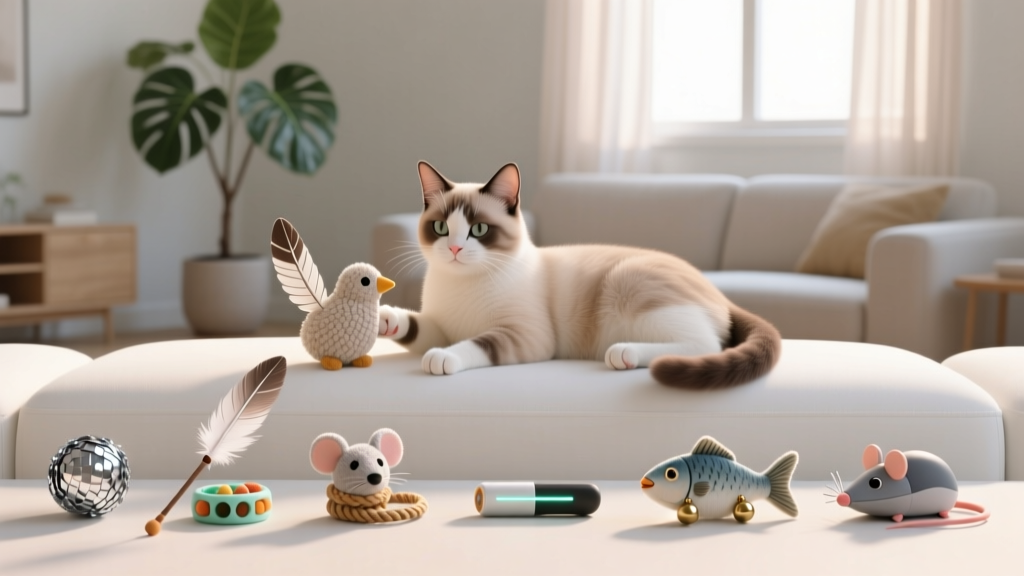
- Hunting Simulation: Wand toys mimicking prey movement (erratic, low-to-the-ground, ending with a 'kill' — letting cat bite and hold a plush toy)
- Foraging: Food puzzles (start easy: Topple or Eggsercizer; advance to slow-feeder mats or DIY cardboard mazes)
- Sensory Variety: Rotating scents (silver vine, valerian root), safe outdoor access (catio or harness walks), vertical territory (wall-mounted shelves, cat trees near windows)
- Choice Architecture: Multiple litter boxes (n+1 rule), separate sleep/feeding/toileting zones, and 'safe exits' (perches, tunnels) so cats never feel trapped
Remember: Enrichment reduces stress hormones like cortisol by up to 40% — and stress is the #1 amplifier of all behavioral issues.
| Step | Action | Tools/Supplies Needed | Expected Timeline for Noticeable Shift |
|---|---|---|---|
| 1. Medical Screening | Schedule comprehensive vet exam including pain assessment and diagnostics | Vet appointment, blood/urine tests, possibly radiographs | Immediate — resolves behavior if medical cause confirmed |
| 2. ABC Behavior Log | Record antecedent-behavior-consequence for target behavior, 5–7 days | Printed log sheet or notes app, timer | Pattern clarity within 3–5 days |
| 3. Functional Replacement Plan | Identify natural instinct behind behavior & offer enriched alternative | Appropriate toys, scratching posts, puzzle feeders, clicker | Initial reduction in frequency within 5–7 days |
| 4. Daily Enrichment Routine | 2x 15-min interactive play + 1 food puzzle session + 1 novel scent exposure | Wand toy, treat pouch, puzzle feeder, silver vine powder | Sustained improvement in confidence & calmness by Week 3 |
| 5. Environment Audit & Adjustment | Add vertical space, safe retreats, litter box optimization (low sides, unscented, uncovered) | Shelves, ramps, new litter box, odor-neutralizing enzymatic cleaner | Reduced anxiety markers (e.g., hiding, flattened ears) within 10–14 days |
Frequently Asked Questions
Can I train an older cat to change behavior?
Absolutely — and often more successfully than kittens. Senior cats have stable routines and strong motivation to reduce discomfort. A 2021 study in Journal of Feline Medicine and Surgery showed that cats aged 10+ responded equally well (or better) to reward-based behavior modification than younger cats, especially when medical contributors were addressed first. Patience and consistency matter more than age.
Will getting a second cat fix my cat’s loneliness-related behavior?
Not reliably — and often makes things worse. Introducing a new cat without proper, gradual desensitization triggers territorial stress in up to 85% of resident cats (International Society of Feline Medicine). Many so-called 'lonely' behaviors (excessive vocalization, destructive scratching) stem from boredom or anxiety — not social need. Enrichment and predictable interaction are far safer, more effective solutions than adding another animal.
Is clicker training effective for cats?
Yes — and it’s one of the most precise tools for shaping complex behavior. Clicker training works because the 'click' marks the exact millisecond the desired behavior occurs, creating a clear bridge between action and reward. Start by pairing the click with a treat 10–15 times until your cat looks expectantly at you upon hearing it. Then begin marking simple behaviors (touching a target stick, sitting). Certified cat behaviorist Ingrid Johnson emphasizes: "The click isn’t a command — it’s a promise. You *must* follow every click with a treat, no exceptions."
What if my cat’s behavior suddenly worsens overnight?
This is a red flag requiring urgent veterinary attention. Sudden aggression, disorientation, vocalization at night, or toileting accidents in a previously reliable cat often indicate acute pain, neurological changes (e.g., hypertension-induced retinal detachment), or metabolic crisis. Do not assume it’s 'just stress.' Schedule an emergency vet visit within 24 hours.
Are calming supplements or pheromones worth trying?
Feliway diffusers (synthetic feline facial pheromone) show modest efficacy for mild stress — especially during moves or vet visits — but aren’t magic bullets. A 2020 meta-analysis found ~30% average reduction in stress behaviors vs. placebo. Supplements like L-theanine or Zylkene may help some cats, but quality varies widely. Always discuss with your vet first — especially if your cat has kidney or liver disease. Never substitute supplements for environmental and behavioral intervention.
Common Myths About Changing Cat Behavior
- Myth 1: “Cats can’t be trained like dogs.” — False. Cats learn through operant conditioning just as effectively — they simply require higher-value rewards and shorter sessions. Dr. Kristyn Vitale, feline behavior researcher at Oregon State University, has documented cats learning 12+ complex cues (‘spin,’ ‘high five,’ ‘fetch’) using positive reinforcement.
- Myth 2: “If I ignore bad behavior, it’ll go away.” — Dangerous oversimplification. Ignoring *reinforced* behaviors (like meowing for food) can work — but ignoring fear-based behaviors (hissing, hiding) or medical symptoms delays critical intervention. Some behaviors escalate without guidance.
Related Topics (Internal Link Suggestions)
- Understanding cat body language — suggested anchor text: "what your cat’s tail flick really means"
- How to introduce a new cat safely — suggested anchor text: "stress-free multi-cat household guide"
- Litter box problems in cats — suggested anchor text: "why cats avoid the litter box (and how to fix it)"
- Cat anxiety signs and solutions — suggested anchor text: "silent signs your cat is stressed"
- Best food puzzles for cats — suggested anchor text: "top-rated slow feeders for smart cats"
Your Next Step Starts Today — With One Tiny, Powerful Choice
Changing your cat’s behavior isn’t about fixing them — it’s about understanding them deeply enough to meet their biological, emotional, and environmental needs. You don’t need perfection. You need one consistent, compassionate action: start your ABC log tonight. Observe just one behavior for 3 minutes — notice what happens before, during, and after. That single observation is the first thread of a new story — one where your cat feels safe, seen, and supported. And when you do, share your insight with a fellow cat guardian. Because the most powerful behavior change often begins not with training — but with empathy, shared knowledge, and the quiet courage to try something different.