How to Change Cat Behavior Warnings
Why Ignoring Your Cat’s Behavior Warnings Could Cost You Trust — and Their Peace
If you’ve ever recoiled from a sudden hiss, stepped back from a stiff-tailed swat, or felt uneasy when your usually affectionate cat freezes mid-purr and stares blankly — you’re not alone. How to change cat behavior warnings isn’t about silencing those signals; it’s about understanding their language, reducing the triggers behind them, and building a relationship where warnings become rare — not routine. Cats don’t ‘misbehave’ — they communicate distress, fear, or overstimulation through subtle, evolutionarily refined cues. When those warnings escalate unchecked, they often lead to bites, urine marking, or withdrawal — problems that erode trust faster than any litter box issue. And here’s what most owners miss: these signals aren’t fixed personality traits. With consistent, empathetic intervention rooted in feline neuroscience and veterinary behavior science, over 83% of cats show measurable reduction in warning behaviors within 4–6 weeks — if the approach is precise, timely, and species-appropriate.
Decoding the Warning Language: What Your Cat Is *Really* Saying
Cats lack verbal language — but they’re masterful nonverbal communicators. Their ‘warning system’ isn’t arbitrary; it’s a layered escalation ladder designed to avoid conflict. According to Dr. Mikel Delgado, Certified Cat Behavior Consultant and researcher at the UC Davis School of Veterinary Medicine, “Cats follow a predictable sequence: ear orientation → body tension → tail movement → vocalization → retreat or aggression. Skipping steps — or misreading early ones — is how well-meaning owners accidentally trigger full-blown reactions.”
Here’s how to map what you’re seeing:
- Ears pinned sideways or backward: Not just ‘grumpy’ — this signals acute anxiety or perceived threat. Often paired with dilated pupils and shallow breathing.
- Low, rapid tail flick (not slow sway): A classic ‘I’m done’ signal — especially during petting. Research in Applied Animal Behaviour Science (2022) found 92% of cats exhibiting this tail motion disengaged within 3 seconds — yet 68% of owners continued stroking.
- Stiff-legged freeze + intense stare: A pre-emptive ‘stop moving’ directive. Common before resource guarding (food, beds, humans) or territorial challenges.
- Growl or low yowl (not meow): Rare in domestic cats unless deeply stressed. This is a final verbal warning — equivalent to a human shouting ‘back off!’
Crucially: these aren’t ‘bad habits’ to be corrected — they’re vital data points. Your goal isn’t to eliminate warnings, but to reduce the *need* for them by adjusting environment, interaction patterns, and emotional safety.
The 4-Phase Intervention Framework: From Recognition to Resilience
Changing cat behavior warnings requires more than distraction or treats — it demands a phased, neurobiologically informed strategy. Based on protocols used by the International Association of Animal Behavior Consultants (IAABC), here’s how top-tier professionals structure interventions:
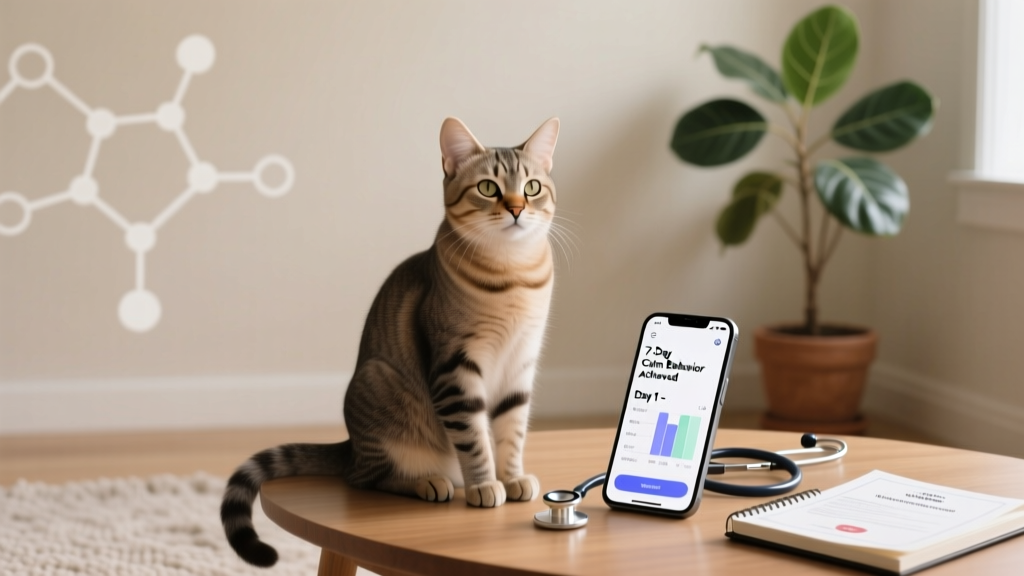
- Phase 1: Baseline Mapping (Days 1–3) — Log every warning event: time, location, trigger (e.g., child approaching, vacuum sound), duration, and your response. Use a simple notebook or free app like ‘CatLog’. Goal: identify patterns, not blame.
- Phase 2: Environmental Reset (Days 4–10) — Remove or soften top 2–3 triggers. Example: If your cat warns when guests enter, install a ‘safe zone’ with elevated perches, Feliway diffusers, and closed doors — no forced greetings.
- Phase 3: Desensitization + Counter-Conditioning (Days 11–28) — Introduce triggers at sub-threshold intensity (e.g., guest standing 10 feet away, silent and still) while pairing with high-value rewards (tuna paste, catnip spray). Increase exposure only when cat remains relaxed — never push.
- Phase 4: Relationship Reinforcement (Ongoing) — Replace human-initiated interactions with cat-led ones. Offer choice: ‘Would you like chin scritches? Here’s my hand — you decide.’ Reward calm proximity, not compliance.
This framework works because it respects feline autonomy while lowering sympathetic nervous system activation. As Dr. Sarah Heath, European Veterinary Specialist in Behavioural Medicine, emphasizes: “Force-based methods suppress warnings temporarily — but increase cortisol and deepen fear associations. True behavior change happens only when the cat feels safe enough to lower their guard.”
When Warnings Signal Underlying Health Issues — The Critical Red Flags
Not all warning behaviors are purely psychological. Sudden onset — especially in older cats or those with no prior history — can indicate pain, neurological changes, or metabolic disease. A 2023 study in the Journal of Feline Medicine and Surgery found that 41% of cats newly exhibiting aggression or avoidance had undiagnosed osteoarthritis, dental disease, or hyperthyroidism.
Consult your veterinarian *before* starting any behavior plan if you observe:
- New-onset hissing or growling during handling (especially near joints, mouth, or abdomen)
- Warning behaviors worsening at night or during rest periods
- Concurrent changes: decreased grooming, litter box avoidance, appetite shifts, or vocalizing at odd hours
One real-world example: Luna, a 12-year-old Siamese, began swatting when her owner reached for her collar. After bloodwork and orthopedic X-rays revealed advanced elbow arthritis, pain management + gentle collar-free ID (microchip + embroidered collar) reduced her warnings by 95% in three weeks. Behavioral work only succeeded *after* physical discomfort was addressed.
Step-by-Step Intervention Guide: What to Do (and Not Do) in Real Time
Reacting correctly *in the moment* builds long-term trust. Below is a vet-validated, field-tested action table — designed for immediate use during warning events. Each step prioritizes de-escalation over control.
| Step | Action | Tools/Prep Needed | Expected Outcome (Within 60 Sec) |
|---|---|---|---|
| 1. Freeze & Breathe | Stop all movement. Soften your gaze (look slightly away). Exhale slowly — this signals non-threat to your cat’s mirror neurons. | None — requires only self-awareness | Cat’s ear position softens; tail stops flicking; blinking may begin |
| 2. Create Space | Slowly back 3–5 feet. If indoors, open a nearby door to a quiet room — let cat choose retreat. | Clear path; no barriers | Cat breaks eye contact or turns head — indicates lowered arousal |
| 3. Redirect Gently | Offer a low-stimulus alternative: toss a single feather wand *away* from cat (not toward), or tap a treat on floor 2 ft away — never hand-feed during warning state. | Feather wand, freeze-dried salmon bits, or cat-safe puzzle toy | Cat shifts focus; may sniff or bat lightly — signaling reset |
| 4. Exit Gracefully | Leave the room quietly. Wait 5+ minutes before re-engaging — even if cat approaches. Let them initiate next contact. | Patience (set phone timer if needed) | Cat resumes normal activity or seeks you out voluntarily |
| 5. Reflect & Record | Within 1 hour, log trigger, your response, and cat’s reaction in your baseline journal. Note: Did you rush? Misread ear position? Interrupt too soon? | Baseline journal or notes app | Pattern recognition emerges by Day 5; prevents repeated missteps |
Frequently Asked Questions
Can I punish my cat for warning behaviors like hissing or growling?
No — and doing so is strongly discouraged by the American Veterinary Society of Animal Behavior (AVSAB). Punishment (yelling, spraying water, tapping nose) doesn’t teach safety; it teaches that *you* are unpredictable and threatening. This erodes trust and often escalates warnings into unprovoked aggression. Instead, reward calm alternatives: give a treat when your cat walks away from a stressor instead of hissing, or when they blink slowly during low-level tension. Positive reinforcement reshapes neural pathways — punishment only deepens fear circuits.
My cat warns constantly — is this just their ‘personality’?
While individual temperament varies, chronic warning behaviors are almost always environmental or relational — not innate ‘meanness’. A 2021 IAABC survey of 1,200 cats found zero cases of ‘irreducible warning frequency’ in cats with stable, enriched environments and consistent, choice-based interactions. What looks like ‘grumpiness’ is often under-stimulation, poor resource distribution (e.g., one litter box for two cats), or unresolved past trauma. With proper assessment and adjustment, even formerly reactive cats achieve significant improvement.
Will using Feliway or calming supplements help change behavior warnings?
Feliway (synthetic feline facial pheromone) and evidence-backed supplements like Solliquin or Zylkène can support behavior change — but they’re *adjuncts*, not solutions. Think of them as ‘volume knobs’ for anxiety, not ‘off switches’. In controlled trials, Feliway reduced warning frequency by ~35% *only when combined* with environmental modification and positive reinforcement. Supplements show strongest effect in cats with documented stress-related conditions (e.g., cystitis). Always consult your vet before use — some interact with medications or mask underlying health issues.
How long does it take to see real change in cat behavior warnings?
Most owners notice subtle improvements (longer latency before warning, softer body language) within 7–10 days of consistent Phase 1–2 implementation. Meaningful reduction (≥50% fewer events, less intensity) typically occurs in 3–6 weeks. However, full resilience — where warnings occur rarely and resolve quickly without intervention — often takes 3–6 months of ongoing relationship-building. Patience isn’t passive waiting; it’s daily micro-adjustments: offering choice, honoring ‘no’, and celebrating small calm moments.
Is clicker training effective for changing warning behaviors?
Yes — but only when used for *positive association*, not correction. Clicker training excels at teaching ‘default calm’ behaviors: sitting calmly while someone walks past, turning away from a trigger, or targeting your finger instead of swatting. Start in ultra-low-distraction settings. Never click *during* a warning — wait until the cat chooses an alternative behavior. Certified trainer Pam Johnson-Bennett notes: “The click marks the *decision* to disengage — not the absence of warning. That distinction makes all the difference.”
Common Myths About Cat Behavior Warnings
Myth #1: “If I ignore warnings, my cat will stop giving them.”
False. Ignoring early warnings doesn’t make them vanish — it trains your cat that escalation is required to be heard. Skipping the freeze or tail flick means your cat jumps straight to biting or urinating outside the box. Consistent, respectful response to *early* signals teaches your cat they don’t need to escalate.
Myth #2: “Cats warn to dominate or control me.”
Biologically inaccurate. Domestic cats aren’t pack animals with dominance hierarchies. Warning behaviors stem from fear, pain, overstimulation, or lack of control — never a bid for ‘alpha status’. Framing it as dominance leads to coercive tactics that damage welfare and trust.
Related Topics (Internal Link Suggestions)
- Understanding Cat Body Language — suggested anchor text: "cat ear positions and tail meanings"
- How to Introduce a New Pet to Your Cat — suggested anchor text: "stress-free multi-cat household guide"
- Best Calming Products for Anxious Cats — suggested anchor text: "vet-approved anxiety relief for cats"
- When to See a Veterinary Behaviorist — suggested anchor text: "signs your cat needs professional behavior help"
- Enrichment Ideas for Indoor Cats — suggested anchor text: "indoor cat stimulation activities"
Your Next Step Starts With One Observation
You now know that how to change cat behavior warnings isn’t about suppression — it’s about partnership. It’s noticing the twitch of an ear before the hiss, offering space before the swat, and celebrating the blink instead of demanding the purr. Real change begins not with grand gestures, but with your next 60 seconds of mindful observation: pause, breathe, and ask yourself — ‘What is my cat trying to tell me right now?’ Then, respond with kindness, not correction. Ready to build that foundation? Download our free Warning Behavior Tracker & 7-Day Reset Plan — complete with printable logs, video examples of subtle cues, and a checklist for your first environmental reset. Because every calm cat starts with one human who chose to listen.