What Cat Behaviors Mean at Home
Why Understanding What Cat Behaviors Mean at Home Is the Single Most Underrated Skill of Cat Ownership
\nIf you've ever stared blankly as your cat kneads your sweater, stares silently from across the room, or suddenly bolts like a furry missile at 3 a.m., you're not alone—and you're definitely not imagining things. What cat behaviors mean at home isn’t just curiosity; it’s the foundational language of trust, safety, and mutual well-being between human and feline. Unlike dogs, cats rarely broadcast distress with obvious whining or pacing—they communicate through micro-gestures: ear tilt, tail flick speed, blink duration, even how they position their paws while sleeping. Misinterpreting these signals doesn’t just cause frustration—it can delay recognizing early anxiety, pain, or environmental stressors that escalate into urinary issues, overgrooming, or aggression. In fact, a 2023 study published in Applied Animal Behaviour Science found that 68% of cats surrendered to shelters exhibited chronic behavioral miscommunication with owners *before* rehoming—often rooted in misreading subtle cues like slow blinking (a sign of calm) as indifference, or flattened ears (fear) as ‘grumpiness.’ This article decodes what your cat is truly saying—no guesswork, no myths, just actionable, vet-validated insight.
\n\nBody Language: The Silent Grammar of Feline Communication
\nYour cat’s posture, ear position, tail carriage, and eye movement form a real-time syntax—each combination conveying precise emotional and physiological states. Dr. Mikel Delgado, certified cat behavior consultant and researcher at UC Davis, emphasizes: “Cats don’t have ‘moods’ in isolation—they have *contextual responses*. A twitching tail means something very different when paired with forward-facing ears versus flattened ones.” Let’s break down the most frequently misread signals:
\n- \n
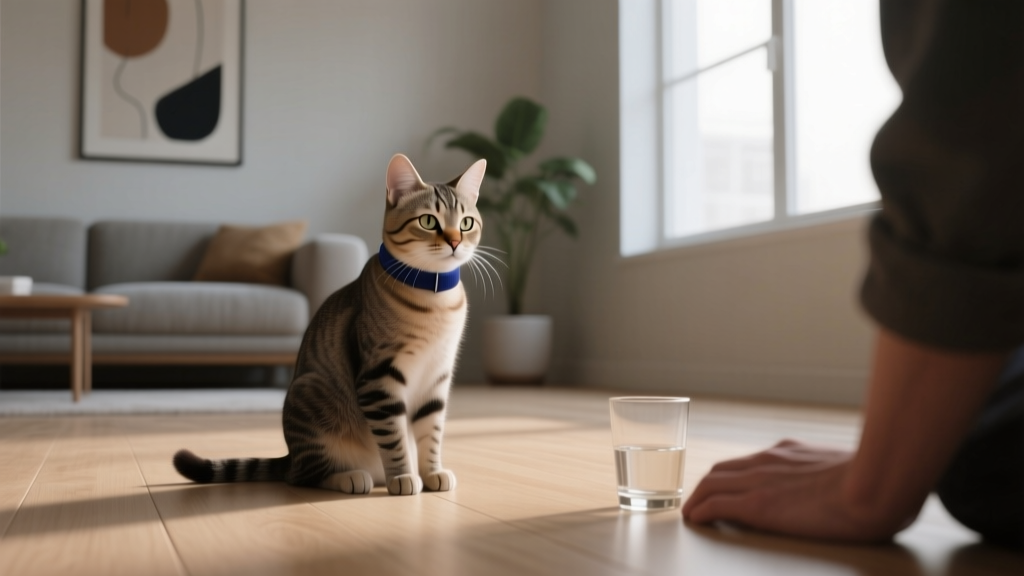
- Slow blinking (‘cat kisses’): Not boredom—it’s a deliberate, low-risk social signal of trust. When your cat locks eyes with you and slowly closes both eyes for 1–2 seconds, they’re signaling, “I feel safe enough to be vulnerable.” Try returning it: sit quietly, soften your gaze, and blink slowly. If they blink back? You’ve just passed a feline trust audit. \n
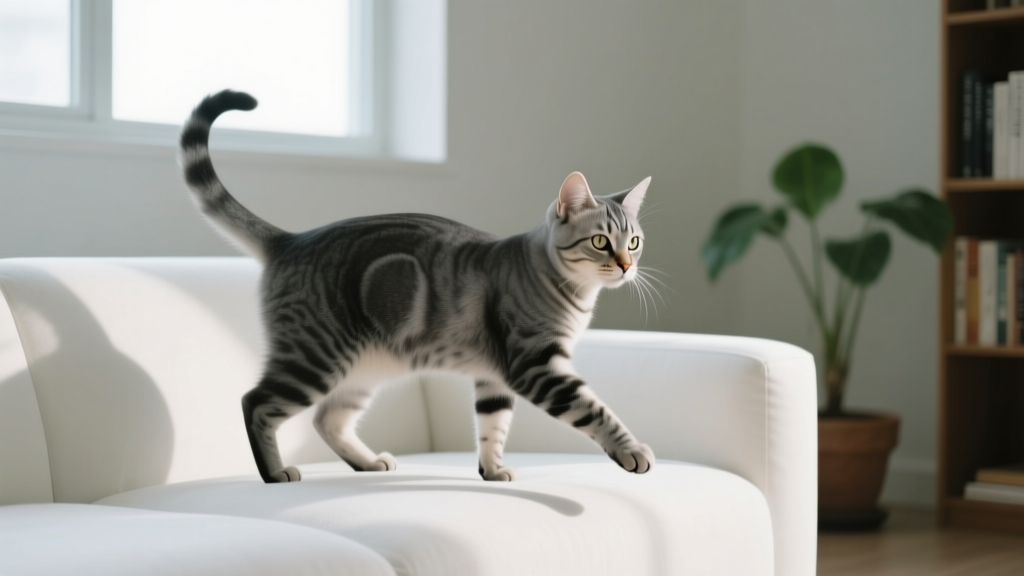
- Tail held high with a gentle curve at the tip: This is the gold standard of confidence and friendliness—not dominance. A fully upright tail signals, “I’m relaxed and open to interaction.” But if the tail is stiff, quivering rapidly at the base while held high? That’s excitement mixed with mild arousal—often prelude to play (or overstimulation). Observe what happens next: does your cat rub against your leg? Then it’s affection. Does she dart away and stare intently at the wall? Likely redirecting hunting energy. \n
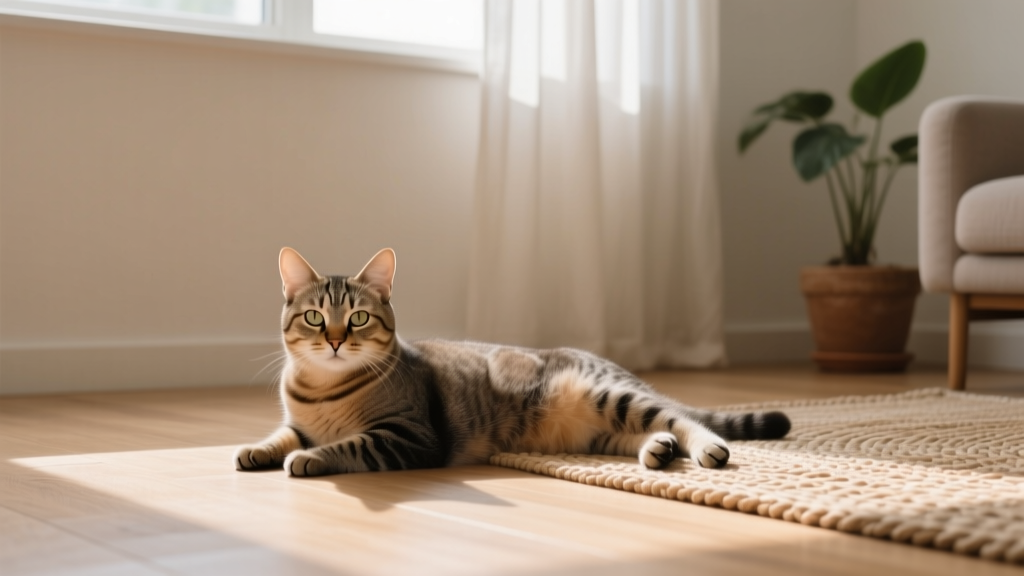
- Half-closed eyes while lying on her side: Many owners assume this means sleepiness—but in a safe environment, it’s actually a profound sign of security. Fully exposing the belly (even briefly) is one of the riskiest postures for a prey animal. If your cat rolls onto her side or back *while remaining alert*, with eyes half-lidded and whiskers relaxed forward, she’s telling you, “I know you won’t harm me.” (Note: This isn’t an invitation to rub her belly—most cats tolerate that for under 3 seconds before reacting defensively.) \n
A mini case study illustrates the stakes: Luna, a 4-year-old rescue tabby, began hiding under the bed every evening. Her owner assumed she was “shy” and gave her space. After two weeks, Luna developed cystitis. A feline behaviorist observed that Luna’s ear positioning—slightly rotated backward, not flat—combined with rapid, shallow breathing while hiding indicated *chronic low-grade fear*, not shyness. Turns out, the neighbor’s new dog barked near the shared fence each evening, triggering her sympathetic nervous system. Once soundproofing was added and vertical spaces increased, Luna’s hiding stopped—and her urinary health normalized within 10 days.
\n\nVocalizations: Beyond ‘Meow’—What Each Sound Really Signals
\nCats evolved meowing primarily to communicate with humans—not other cats. That means every ‘meow’ is tailored, intentional, and context-dependent. Researchers at the University of Tokyo analyzed over 2,000 cat vocalizations and found that cats develop unique ‘dialects’ with individual owners, varying pitch, duration, and rhythm based on learned outcomes. Here’s how to decode the most common sounds:
\n- \n
- Persistent, high-pitched, rising meows: Often mistaken for ‘hunger,’ this pattern typically signals acute discomfort or distress—especially if new or escalating. In senior cats, it may indicate hyperthyroidism or cognitive decline. Rule out medical causes first with your vet. \n
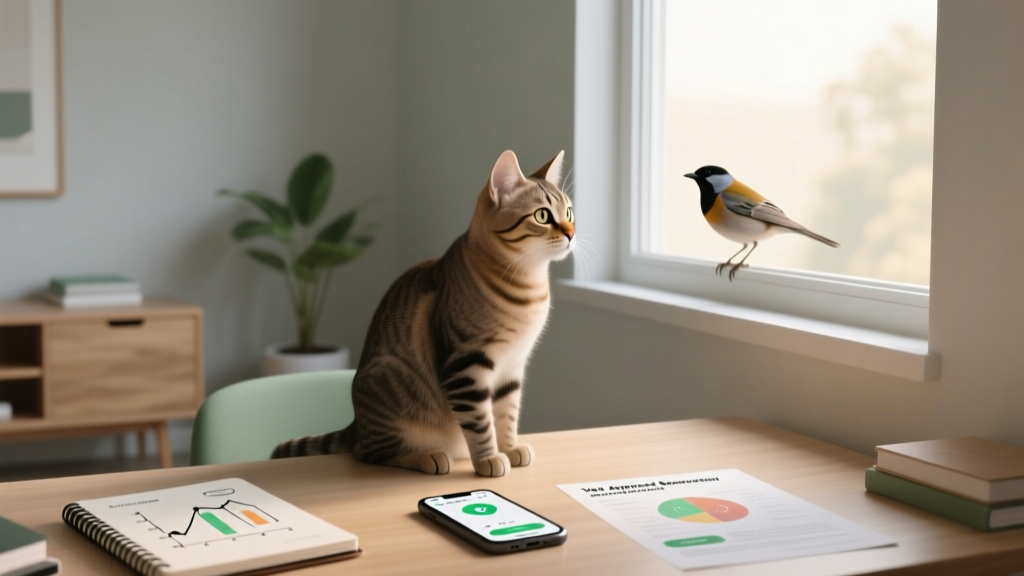
- Chirps and chatters (usually at windows): This isn’t frustration—it’s a hardwired motor pattern linked to the ‘kill bite’ sequence. When your cat sees birds but can’t hunt, her jaw muscles contract involuntarily. It’s a sign of intense focus and instinctive drive—not anger. Redirect with interactive wand toys that mimic erratic prey movement for 5 minutes daily. \n
- Purring: Universally seen as contentment—but science confirms it’s far more nuanced. Purring occurs at 25–150 Hz, frequencies proven to promote bone density and tissue repair. Cats purr when injured, giving birth, or stressed in carriers. As Dr. Elizabeth Colleran, past president of the American Association of Feline Practitioners, explains: “Purring is a self-soothing biofeedback mechanism. If your cat is purring while trembling or hiding, treat it as a red flag—not reassurance.” \n
Routine & Environmental Behaviors: When ‘Weird’ Is Actually Wise
\nCats are creatures of predictive safety—not random whimsy. Their seemingly odd habits—from knocking objects off shelves to sleeping in laundry baskets—are functional adaptations refined over millennia. Understanding the evolutionary ‘why’ transforms annoyance into empathy:
\n- \n
- Bringing ‘gifts’ (dead mice, socks, bottle caps): This is not a ‘present’—it’s a teaching behavior. Mother cats bring prey to kittens to instruct hunting skills. If your cat deposits items near your shoes or pillow, she’s treating you as part of her social group and attempting to ‘provide’ or ‘train’ you. Redirect by offering puzzle feeders that require ‘hunting’ for kibble—satisfying the instinct without the mess. \n
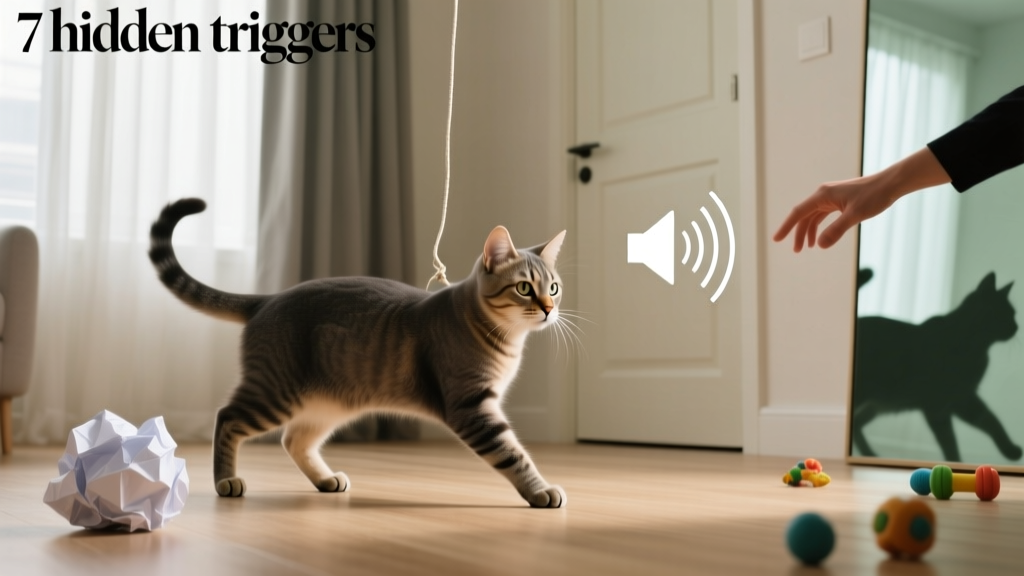
- Sudden bursts of energy (‘zoomies’): Often dismissed as ‘crazy,’ these are critical stress-release mechanisms. Indoor cats lack natural outlets for predatory energy cycles. Zoomies typically occur after naps or during twilight hours (crepuscular peaks). Ensure daily 15-minute interactive play sessions using feather wands—ending with a ‘kill’ (letting the toy disappear under furniture) to complete the sequence neurologically. \n
- Scratching furniture instead of posts: Not defiance—it’s multisensory marking. Cats deposit scent from glands in their paws *and* visually signal territory. If scratching feels good (texture, angle, height), they’ll choose it over a post—even if you bought the ‘best’ one. Solution: Match the substrate (sisal rope vs. cardboard), height (tall enough to stretch fully), and location (near sleeping areas or entryways). \n
When Behavior Shifts Signal Health or Welfare Emergencies
\nSubtle changes in baseline behavior are often the earliest indicators of illness—far earlier than lab results. According to the International Society of Feline Medicine, 80% of cats with early kidney disease show only behavioral shifts: decreased grooming, altered sleep locations, or reduced interaction. Track these three ‘red-flag triads’:
\n- \n
- Appetite + Litter Box + Interaction: Any simultaneous change in all three warrants immediate vet consult. Example: eating less, urinating outside the box, and avoiding lap time = possible UTI, arthritis, or dental pain. \n
- Grooming intensity + Coat texture + Shedding patterns: Overgrooming (bald patches on belly/legs) often indicates anxiety or allergies. Undergrooming (dull coat, matting) suggests pain, nausea, or mobility issues—especially in seniors. \n
- Vertical space use + Vocalization timing + Sleep cycle disruption: A cat who stops climbing to favorite perches may have joint pain. Nighttime yowling in older cats correlates strongly with hypertension or cognitive dysfunction. \n
Keep a simple 7-day behavior log (paper or app like ‘CatLog’). Note: time of day, duration, triggers, and your response. Patterns emerge fast—and provide invaluable data for your vet.
\n\n| Behavior | \nMost Common Meaning | \nWhat to Do Next | \nWhen to Worry | \n
|---|---|---|---|
| Kneading with purring | \nContentment + security (neonatal comfort reflex) | \nEnjoy the moment; gently stroke head/cheeks | \nIf sudden onset in adult with no prior history + excessive licking of paws → possible anxiety or GI discomfort | \n
| Staring without blinking | \nIntense focus or mild challenge (not aggression) | \nSlow-blink back; offer a treat if calm | \nIf accompanied by dilated pupils, rigid posture, or hissing → intervene calmly; assess for threats | \n
| Head-butting (bunting) | \nMarking you with facial pheromones = deep bonding | \nReturn with gentle chin scritches; avoid touching sensitive ears | \nIf bunting becomes frantic, obsessive, or targets walls/furniture exclusively → possible neurological issue | \n
| Excessive licking of one area | \nSelf-soothing or mild irritation | \nCheck for fleas, dry skin, or minor wounds; increase play | \nIf bald patch appears >1cm, or licking lasts >10 min continuously → vet visit for pain or allergy workup | \n
| Bringing toys to food bowl | \nInstinctive ‘safe storage’ behavior (prey caching) | \nProvide covered beds or boxes near feeding area | \nIf accompanied by guarding food bowl aggressively or refusing to eat → dental pain or resource anxiety | \n
Frequently Asked Questions
\nWhy does my cat stare at me and then look away?
\nThis is a classic sign of non-threatening attention. Direct, unblinking eye contact is confrontational in cat language. By looking at you and deliberately looking away (especially with a slow blink), your cat is saying, “I see you, I’m not challenging you, and I trust you.” It’s one of the highest compliments a cat can give.
\nIs it bad if my cat sleeps on my chest or head?
\nNot at all—it’s a powerful sign of bonding and thermoregulation. Cats seek warmth, scent, and rhythmic breathing (your heartbeat) for security. However, if your cat suddenly starts sleeping *only* on your face or blocks your airway nightly, it may indicate anxiety or separation distress. Gently encourage alternative cozy spots nearby with heated pads or fleece blankets.
\nMy cat knocks things off tables—is she mad at me?
\nNo—she’s conducting physics experiments. Cats learn cause-and-effect through object manipulation. Height, sound, and movement trigger their predatory interest. Instead of punishment, redirect with ‘knock-down’ toys (like the FroliCat BOLT laser with auto-shutoff) or treat-dispensing balls placed on stable surfaces. Never yell—it associates *you* with the startling noise she just created.
\nWhat does it mean when my cat licks my hair or face?
\nThis is allogrooming—the ultimate social gesture. In colonies, cats groom trusted allies to strengthen bonds and distribute communal scent. It signifies deep acceptance. While adorable, monitor for overzealousness: if licking becomes obsessive or draws blood, consult a behaviorist, as it may mask underlying anxiety.
\nWhy does my cat follow me to the bathroom?
\nThree reasons: 1) You’re predictable there (routine), 2) The cool tile and enclosed space feel safe, and 3) Your undivided attention (even if brief) makes it a high-value interaction zone. It’s not about surveillance—it’s about proximity to calm, focused human presence.
\nCommon Myths About Cat Behavior—Debunked
\nMyth #1: “Cats are aloof and don’t form attachments.”
\nFalse. Groundbreaking research using the ‘secure base test’ (adapted from human infant studies) shows cats display clear attachment styles—secure, anxious, or avoidant—just like dogs and children. In a 2019 study, 64% of cats used their owner as a ‘secure base’ to explore novel rooms, returning for comfort when stressed.
Myth #2: “If my cat pees outside the litter box, she’s being spiteful.”
\nBiologically impossible. Cats lack the cognitive capacity for spite—a complex secondary emotion requiring theory of mind. Urine marking or inappropriate elimination almost always signals medical issues (UTI, arthritis), substrate aversion (dirty box, wrong litter), or territorial stress (new pet, construction noise). Punishment worsens anxiety and damages trust.
Related Topics (Internal Link Suggestions)
\n- \n
- How to Read Cat Body Language: A Visual Guide — suggested anchor text: "cat body language chart" \n
- Why Is My Cat Acting Differently? 7 Medical Causes Behind Behavior Changes — suggested anchor text: "sudden cat behavior change" \n
- Best Cat Toys for Mental Stimulation (Vet-Approved) — suggested anchor text: "interactive cat toys" \n
- Creating a Cat-Friendly Home: Vertical Space, Hiding Spots & Safe Zones — suggested anchor text: "cat-friendly home setup" \n
- Understanding Cat Pheromones: How Feliway Works (and When It Doesn’t) — suggested anchor text: "Feliway effectiveness" \n
Conclusion & Your Next Step
\nWhat cat behaviors mean at home isn’t a mystery to be solved—it’s a relationship to be cultivated. Every slow blink, tail flick, and chirp is an invitation to listen more deeply, respond more thoughtfully, and meet your cat where she is—not where we assume she should be. You now hold evidence-based tools to interpret her world with accuracy and compassion. So tonight, try this: sit quietly for 5 minutes without reaching out. Watch her ears, her tail, her breathing. When she glances your way—blink slowly. Wait. See if she answers. That silent exchange? That’s where true understanding begins. Your next step: Download our free 7-Day Cat Behavior Tracker (PDF) and log one behavior daily—then revisit this guide to decode what you observe.