Why Cats Sit on the Hall Mirror Shelf
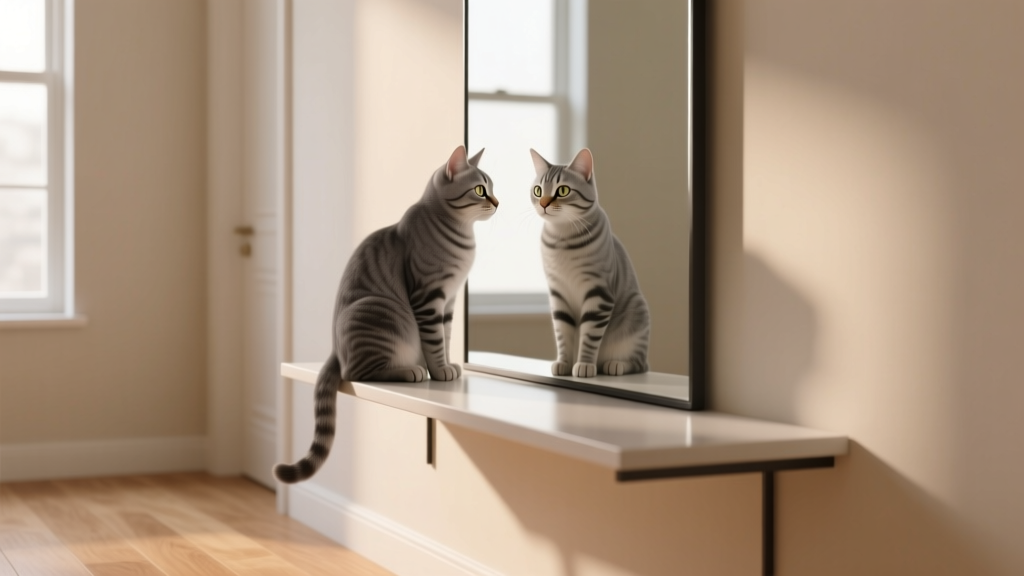
You’re walking down the hallway with a laundry basket, half-thinking about dinner, when you catch movement in the mirror. For a split second you startle—because there’s a cat perched on that narrow little shelf under the hall mirror, calmly supervising the whole household like a furry security guard. Maybe they blink slowly at you. Maybe they flick an ear as if to say, “Yes, I live here too.” And you’re left wondering: Why this spot? Of all the cozy beds, couches, and cat trees, why the awkward, human-decor shelf that seems barely wide enough for a whisker?
As quirky as it looks, the hall mirror shelf is basically a VIP lounge for many cats. Once you understand what that spot offers—height, sightlines, scent, and control—the behavior starts to make perfect feline sense.
1) The scientific (and evolutionary) “why” behind mirror-shelf sitting
Cats are small predators that evolved to survive by being strategic. In the wild, a cat-like hunter does best when it can:
- See without being seen (or at least see first)
- Control access to resources (food, water, safe resting spots)
- Monitor movement (prey, rivals, family members)
- Stay safe by choosing elevated perches
Even your pampered indoor cat still carries that blueprint. Elevated resting places are not just “fun.” They’re a survival strategy baked into feline psychology: height equals information and safety.
The hallway is also a high-traffic “river” of your home. People pass through. Sounds carry. Smells change. Doors open and close. From a cat’s perspective, the hall is a prime location to gather intelligence, and the mirror shelf is an excellent observation deck.
Add the mirror and you get something extra: a visual “event screen.” Some cats ignore reflections; others watch them casually; a few become intensely interested. Regardless, the mirror changes the light and movement patterns in a way that can be oddly captivating to a cat’s hunting brain.
2) A detailed breakdown: different contexts where this behavior shows up
Not all mirror-shelf sitting is the same. The “why” often depends on what else is happening in the home.
It’s the best perch in the house
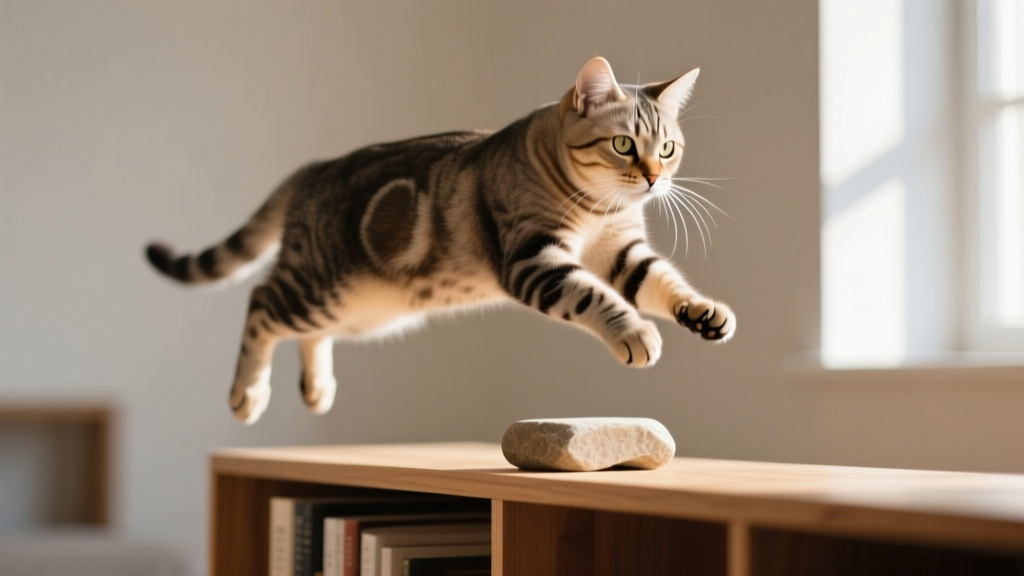
If your cat has limited vertical options—no tall cat tree, few shelves, minimal window perches—the hall mirror shelf might be the only elevated spot with a broad view. Cats are drawn to high-value real estate. Narrow or not, if it offers a strong vantage point, they’ll make it work with impressive gymnast-level balance.
They’re monitoring a routine
Many cats learn the household schedule: shoes on means someone leaves; a jacket means a walk; a tote bag means groceries; the sound of keys means attention might shift. The hall is where these rituals happen. A cat on the mirror shelf is often doing “pattern watching”—tracking predictable human behavior in a way that makes the world feel manageable.
They want to be close… without being touched
The hallway is social without being intimate. A cat can be near you, see you, and be part of the action, but still maintain physical distance. For cats that like companionship on their terms, the mirror shelf can be the perfect “together-but-not-too-close” spot.
They’re avoiding another pet (or a kid)
Vertical space is emotional space for cats. If there’s a dog that gets excited, a toddler who toddles, or another cat who occasionally bullies, that shelf can become a safety platform. You’ll often see a tense body, tucked paws, and a “ready to exit” posture if the shelf is being used as a refuge.
They’re drawn to scent and facial rubbing opportunities
Hallways collect scent. People brush past walls. Coats carry outdoor smells. Shoes bring in the world. Many mirror areas also have corners and edges—excellent for cheek rubbing. If your cat often rubs their face on the shelf edge before sitting, that’s not random: they’re depositing friendly pheromones from facial glands, labeling the spot as “safe and mine.”
They like the temperature and airflow
Some hallways get warm drafts, cool breezes, or steady ambient heat from nearby vents. Cats are comfort thermometers with fur. If the shelf is near a vent, sunny reflection, or warm wall, it may be a climate choice disguised as a quirky habit.
3) What it means about your cat’s mood and feelings
Where a cat sits is information. How a cat sits is even more information. Here are common “mirror shelf moods”:
- Relaxed and content: Loose body, paws tucked or draped, slow blinks, ears gently swiveling. Your cat feels safe and likes the view.
- Curious and alert: Upright posture, head turning, ears forward, tail wrapped or gently flicking. They’re monitoring sounds and movement.
- Guarding or mildly controlling: Staring at doorways, stiff posture, limited blinking. This can mean “I’m in charge of this zone,” especially in multi-cat homes.
- Insecure or seeking distance: Body tucked tight, ears slightly sideways, big pupils, tail close to body. The shelf is acting as a safe retreat.
- Playful/hunting mode: Crouched with intent, focused eyes, quick tail tip twitch. They may be preparing to pounce on a passing sock foot (or another cat).
One helpful rule: height-seeking is often confidence-building. If your cat is shy, giving them safe perches can improve their overall comfort and reduce conflict.
4) Related behaviors you might also notice
Cats who love the hall mirror shelf often show a cluster of “strategic perch” habits:
- Doorway sitting: Posting up where they can watch multiple rooms at once.
- Counter cruising: Choosing elevated surfaces for observation (even when it’s inconvenient for humans).
- Top-of-stairs lounging: Another classic vantage point with control over traffic flow.
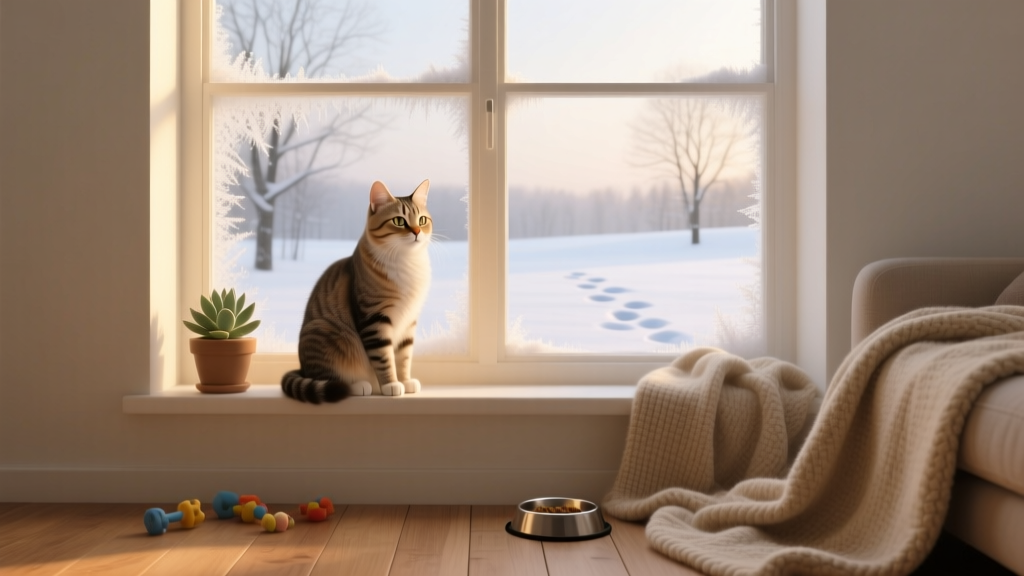
- Window sentry duty: Long periods of watching birds, people, and “neighborhood news.”
- Shadow-following: Trailing you from room to room, then settling in a spot that overlooks your activity.
- Mirror curiosity: Glancing at reflections, tracking movement, or occasionally “talking” to the mirror cat (more common in kittens).
5) When mirror-shelf sitting is normal vs when it might be a concern
Most of the time, this is normal cat behavior: a preference for a perch with a good view. Still, a few situations deserve a closer look.
Normal (and often adorable)
- Your cat jumps up and down easily, lands confidently, and uses the shelf as one of several favorite spots.
- They look relaxed and choose the shelf at predictable times (morning routine, pre-dinner, when guests arrive).
- They’re otherwise eating, playing, using the litter box normally, and socializing as usual.
Potential concerns
- Sudden obsession with the shelf paired with hiding more than usual, reduced appetite, or irritability (could indicate stress, pain, or a household change affecting them).
- Wobbliness, missed jumps, or hesitation when getting up or down (possible pain, arthritis, vision issues, or vestibular problems—worth a vet check).
- Increased conflict if one cat guards the shelf and blocks hall access for another (a resource issue that can escalate).
- Dangerous setup if the shelf is unstable, sharp-edged, or directly above a hard surface where a fall could injure them.
If your cat’s behavior changes quickly or is paired with physical difficulty, trust your instincts and talk to your veterinarian.
6) Tips for responding to (or encouraging) the behavior
If you like the mirror-shelf habit, you can make it safer and more enriching—without turning your hallway into a full jungle gym (unless you want to).
Make the perch safe
- Check stability: Ensure the shelf is anchored and can handle a cat launching onto it at speed.
- Add traction: A small piece of non-slip shelf liner, a thin mat, or a folded towel can prevent slipping.
- Soften the landing zone: A runner rug or soft mat below helps in case of a misstep.
Offer “approved” alternatives
If you’d rather not have a cat on that shelf (or you want to reduce hallway traffic jams), provide a better option:
- A tall cat tree near the hallway entrance
- A wall-mounted cat shelf system with wider platforms
- A window perch in an adjacent room that offers an even better view
Then use gentle guidance: reward your cat (treats, praise, play) for choosing the alternative. Avoid scolding—cats don’t interpret punishment as “don’t do that.” They interpret it as “humans are unpredictable,” which can increase stress.
Reduce social pressure
- Guest management: If your cat uses the shelf when visitors arrive, let them. It’s a coping strategy.
- Multi-cat support: Provide multiple elevated spots so one cat can’t control all the high ground.
Turn it into enrichment
You can occasionally toss a treat onto a nearby safe perch (not necessarily the mirror shelf) to encourage climbing and confidence. Or use a wand toy in the hallway for short, controlled play sessions—just avoid encouraging leaps onto unstable décor.
7) Fun facts and research-y nuggets about cats and perching
- Cats map their world in 3D. Vertical territory matters as much as floor space. Adding height can reduce stress and conflict, especially in multi-cat households.
- They love “control without confrontation.” A perch lets a cat observe and choose whether to engage—an important feature for an animal that prefers avoiding direct conflict.
- Hallways amplify information. Sound travels, scents mix, and movement is predictable—great for a creature that thrives on patterns and cues.
- Mirrors can be stimulating without being “confusing.” Adult cats often learn quickly that reflections aren’t another cat they can interact with, but they may still track motion and light as a form of visual enrichment.
FAQ: Common questions about cats and the hall mirror shelf
1) Does my cat think the mirror reflection is another cat?
Some kittens and young cats do, at first. Many adult cats treat reflections as neutral background or mild entertainment. If your cat hisses, puffs up, or fixates intensely on the reflection, offer distance and alternate perches, and consider whether overall stress levels in the home are high.
2) Why does my cat choose the mirror shelf only when I’m leaving?
Because leaving rituals happen in the hall, and cats notice patterns. Sitting there may be a way to monitor the routine, seek a last moment of connection, or self-soothe by watching predictable actions.
3) Is it attention-seeking?
Sometimes. But it’s often more accurate to call it “connection-seeking” or “environment-managing.” Your cat may enjoy that you look at them, talk to them, or approach them—while they still control the distance.
4) Should I stop my cat from sitting there?
If it’s safe and your cat seems relaxed, there’s no behavioral reason to stop it. If the shelf is unstable, fragile, or you’re seeing conflict between pets, it’s smart to redirect them to a sturdier, wider perch.
5) My cat fell off once—why do they keep going back?
Cats are persistent when a location offers high value (view, safety, routine monitoring). A fall may not “teach” them to avoid it, especially if they weren’t injured. Improve traction and stability, and provide a better alternative perch nearby.
6) Can this be a sign my cat is anxious?
It can be—particularly if the shelf becomes a primary hiding/avoidance spot and you notice other changes (less play, more hiding, tension with other pets, changes in appetite). In those cases, look for stressors and consider a vet check and a behavior plan.
Cats don’t pick spots randomly. The hall mirror shelf is often a perfect blend of height, information, and social control—three things cats find deeply comforting. If you make it safe (or provide an even better perch), you’re not just accommodating a quirky habit. You’re speaking your cat’s language.
Has your cat claimed an unusual “throne” in the house—mirror shelf, bookshelf edge, top of the fridge? Share your funniest (or most puzzling) perch stories with the Cat Lovers Base community at catloversbase.com.