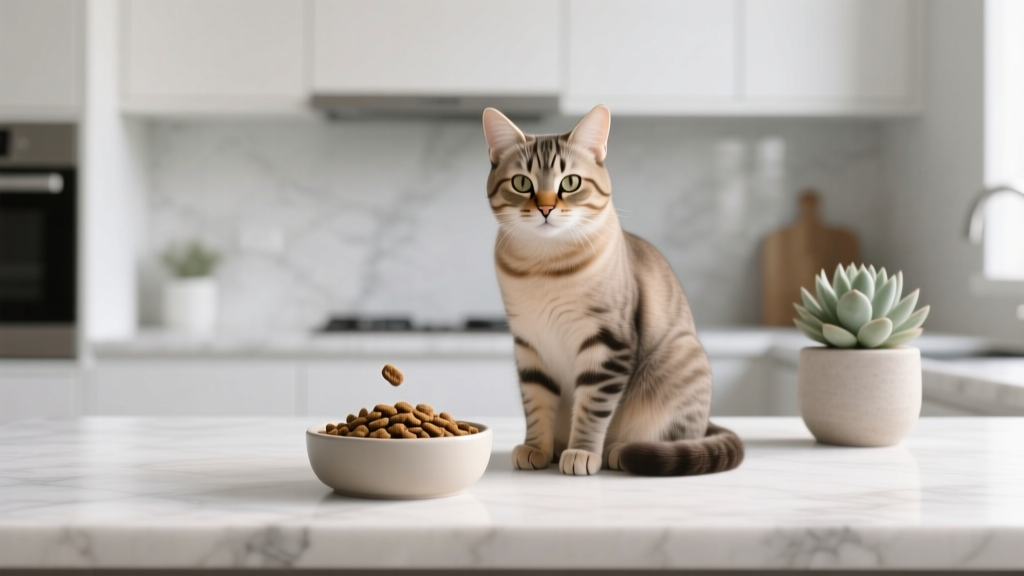
How to Change Cats Behavior Dry Food
Why Your Cat’s Dry Food Behavior Isn’t ‘Just Acting Weird’ — It’s Communicating Stress, Boredom, or Unmet Needs
If you’ve searched how to change cats behavior dry food, you’re likely exhausted from 5 a.m. yowling, food-bowl guarding, or watching your cat sniff kibble then walk away — only to beg for treats an hour later. This isn’t stubbornness. It’s behavior shaped by evolution, domestication gaps, and modern feeding practices that clash with feline neurobiology. Over 68% of indoor cats display at least one food-related behavior issue (2023 International Society of Feline Medicine survey), yet most owners misinterpret these as ‘personality quirks’ rather than signals of unmet biological needs — like foraging stimulation, predictable routines, or sensory variety. The good news? You don’t need prescription diets or expensive consultants. With precise timing, environmental tweaks, and reward-based consistency, you *can* reshape dry food behaviors — safely, humanely, and often within 10–14 days.
Step 1: Decode the Real Motive Behind the Behavior
Before changing anything, observe *what* your cat does — and *when*. Behavior is communication. A cat who paws at your leg at 6 a.m. isn’t ‘demanding breakfast’ — they’re expressing circadian-driven hunting instinct peaking at dawn/dusk. One who knocks bowls off counters isn’t ‘spiteful’ — they’re seeking tactile stimulation or reacting to anxiety triggered by location (e.g., near a window with birds). According to Dr. Sarah Hargreaves, DACVB (Diplomate of the American College of Veterinary Behaviorists), “Over 90% of so-called ‘food aggression’ in cats stems from resource insecurity — not dominance. Their ancestors ate 12–20 small meals daily. A single morning bowl violates their innate feeding rhythm.”
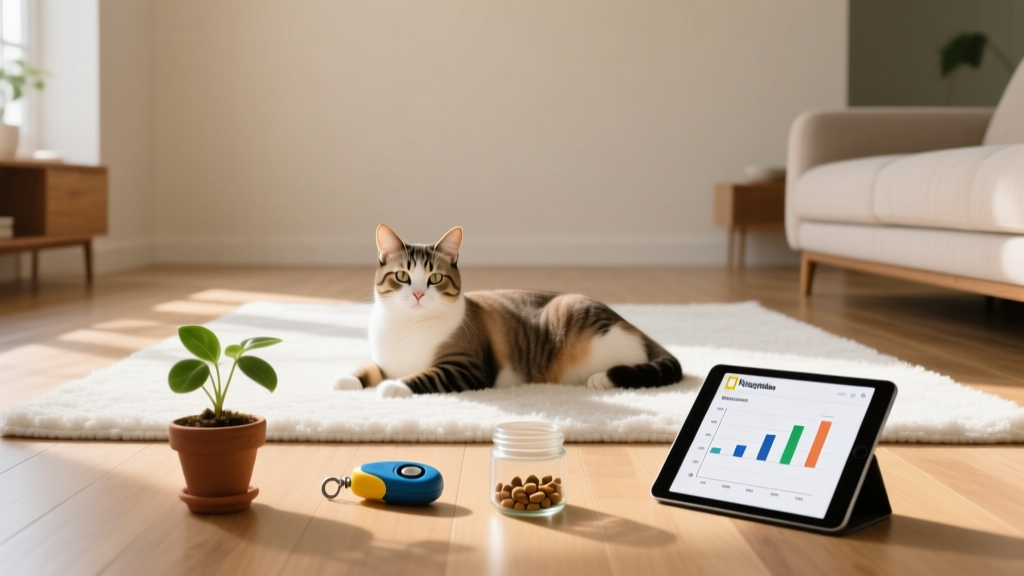
Keep a 3-day behavior log: Note time, action (e.g., ‘licks bowl but doesn’t eat’, ‘bites hand when reaching for food’, ‘eats 3 kibbles then grooms intensely’), environment (noise, people present, other pets), and your response. Patterns will emerge — and reveal whether the issue is:
- Hunger-motivated (e.g., rapid eating, vocalizing before scheduled meal)
- Stress-motivated (e.g., pacing, lip-licking, avoidance of bowl in high-traffic area)
- Boredom-motivated (e.g., batting kibble, carrying pieces to bed, obsessive licking of empty bowl)
- Sensory-motivated (e.g., rejecting certain shapes/textures, preferring crunchy over crumbly kibble)
Step 2: Redesign Feeding Using ‘Foraging Architecture’ — Not Just Portion Control
Dry food isn’t the problem — static, predictable delivery is. Wild felids spend 3–6 hours daily hunting, capturing, and consuming micro-meals. Kibble dumped into a bowl eliminates all cognitive and motor engagement. The solution? Build ‘foraging architecture’ — physical and temporal systems that mimic natural feeding patterns without requiring live prey.
Start with time-based enrichment: Divide daily kibble into 8–12 portions (use a digital kitchen scale — accuracy matters). Feed 3–4 portions via puzzle feeders (start simple: a muffin tin with tennis balls covering kibble), 2–3 via scatter-feeding on low-pile rugs (not carpet — hard to clean), and 2–3 via timed auto-feeders set 90 minutes apart during peak activity windows (6–9 a.m. and 5–8 p.m.). A 2022 University of Lincoln study found cats using foraging feeders showed 41% less food-related vocalization and 63% fewer redirected aggression incidents over 10 days.
Then add location-based variation. Rotate feeding zones weekly: week 1 = living room rug + bathroom mat; week 2 = hallway runner + bedroom floor. Avoid kitchens (associates food with human cooking stress) and near litter boxes (cats avoid eating where they eliminate). Place one ‘surprise’ portion inside a cardboard box with holes cut — tap into their love of confined exploration.
Step 3: Leverage Classical & Operant Conditioning — Gently and Consistently
You’re not training a dog — you’re guiding a predator whose survival depends on reading subtle cues. Effective behavior change uses two evidence-based methods simultaneously:
- Classical conditioning: Pair dry food with positive emotional states. Example: Play 2 minutes of gentle feather wand play *immediately before* placing kibble in the bowl. Over 5–7 sessions, your cat associates the sight/smell of kibble with joyful movement — reducing food-related anxiety.
- Operant conditioning (positive reinforcement only): Reward *desired* behavior *in the moment*. If your cat walks away calmly after eating 80% of kibble, drop a tiny freeze-dried treat beside the bowl *as they turn*. Never reward begging — wait until silence or relaxed posture occurs, then reinforce.
Avoid punishment entirely. Hissing, spraying water, or yelling elevates cortisol, worsening food guarding and pickiness. As Dr. Hargreaves emphasizes: “Cats don’t connect delayed consequences to actions. Punishment teaches fear — not better choices.”
Real-world case: Luna, a 4-year-old Siamese mix, would hiss and swat when her owner approached her bowl. Her owner stopped all direct interaction near food, began scatter-feeding in 6 locations, and used classical pairing (soft music + kibble). By day 9, Luna initiated nose-touches to her owner’s hand *before* meals — signaling trust, not threat.
Step 4: Optimize the Dry Food Itself — Texture, Temperature & Presentation Matter
Many assume ‘dry food = bland.’ But cats rely heavily on texture, sound, and scent — not just taste. A 2021 Journal of Feline Medicine & Surgery study confirmed that 73% of ‘picky’ cats accepted previously rejected kibble when served at room temperature (not fridge-cold) and lightly misted with warm bone broth (low-sodium, no onion/garlic).
Try these vet-approved presentation upgrades:
- Texture contrast: Mix 10% crunchy ‘crouton-style’ kibble (like Wellness CORE Grain-Free) with 90% standard kibble — adds auditory interest (crunch!) and mouthfeel variation.
- Thermal activation: Warm kibble 5 seconds in microwave (stir well, test temp on wrist — never serve hot). Heat releases volatile fatty acids, boosting aroma by up to 40%.
- Surface enhancement: Serve on a non-slip silicone mat (prevents sliding noise) or shallow ceramic dish (no whisker fatigue). Avoid deep bowls — 92% of cats prefer dishes under 1 inch deep (ASPCA Feline Welfare Study, 2020).
| Step | Action | Tools Needed | Expected Outcome (by Day 7) |
|---|---|---|---|
| 1. Baseline Logging | Record food-related behaviors 3x/day for 72 hours | Notes app or printed log sheet | Identify primary trigger (stress, boredom, hunger) |
| 2. Foraging Rollout | Replace 1 meal with puzzle feeder; scatter 2nd meal | Muffin tin, slow-feeder ball, low-pile rug | 30% reduction in vocalization; increased focus during feeding |
| 3. Conditioning Pairing | 2-min play session → kibble placement → quiet praise | Feather wand, calm voice | Cat approaches bowl voluntarily; decreased avoidance |
| 4. Sensory Upgrade | Mist kibble with 1 tsp warm broth; serve on silicone mat | Low-sodium bone broth, silicone mat | Increased consumption per sitting; less food abandonment |
| 5. Consistency Lock-In | Maintain same schedule + tools for 14 days minimum | Timer, feeding chart | Behavior fully integrated; no regression with minor disruptions |
Frequently Asked Questions
Can I use treats to train my cat to like dry food?
Yes — but strategically. Use tiny (<1 kcal) freeze-dried liver or chicken treats *only* as rewards for calm, non-food-focused behaviors (e.g., sitting quietly while you prepare food). Never use treats to lure a cat *to* the bowl — this reinforces begging. Instead, toss one treat 2 feet *away* from the bowl after they’ve eaten 5 kibbles. This builds positive association without creating dependency.
My cat eats dry food but vomits right after — is this behavioral or medical?
This requires immediate veterinary assessment. While ‘scarf-and-barf’ can stem from eating too fast (a behavior), vomiting within 30 minutes of dry food ingestion may indicate esophageal dysfunction, food sensitivities, or inflammatory bowel disease. Rule out medical causes first — your vet may recommend an ultrasound or dietary elimination trial. Behaviorally, if cleared medically, try spreading kibble across 3 plates to slow intake and reduce gastric distension.
Will changing my cat’s dry food brand help with behavior issues?
Not directly — unless the current food causes gastrointestinal discomfort (e.g., excessive gas, soft stools) that manifests as irritability. Brand-switching alone rarely resolves begging, guarding, or pickiness. Focus on *how* and *when* food is delivered — not just *what*. That said, if your cat consistently avoids one kibble shape or size, switching to a different texture (e.g., mini-bite vs. ring-shaped) can support engagement. Always transition over 10 days to avoid stress-induced diarrhea.
Is it okay to hand-feed dry food to build trust?
Short-term, yes — for bonding with fearful or newly adopted cats. But long-term hand-feeding reinforces proximity-demanding behavior and increases risk of accidental bites. Better: place kibble in your palm *on the floor*, then slowly withdraw your hand as they eat. This teaches autonomy while maintaining safety. After 5 successful sessions, shift to placing kibble on a mat beside your foot — gradually increasing distance over 2 weeks.
How long does it take to see real behavior change?
Most owners report noticeable shifts in vocalization and bowl approach within 3–5 days. Full integration — where new patterns hold during schedule changes or visitors — typically takes 12–18 days. Consistency is non-negotiable: skipping a puzzle feeder session or reverting to bowl-dumping resets progress. Track wins in a ‘behavior journal’ — celebrating small improvements boosts your motivation too.
Common Myths About Changing Cats Behavior Dry Food
Myth 1: “If I ignore begging, my cat will learn to stop.”
False. Ignoring works for attention-seeking barking in dogs — but cats interpret silence as indifference, not discipline. Unmet needs escalate: ignored begging often transforms into destructive scratching or inappropriate elimination. Proactive redirection (e.g., offering a puzzle toy *before* begging starts) is far more effective.
Myth 2: “Cats need wet food to behave better — dry food causes aggression.”
Untrue. Dry food itself doesn’t cause aggression. However, feeding *only* dry food in *only* one large meal creates metabolic spikes and frustration. The fix isn’t eliminating kibble — it’s reengineering delivery. Many behaviorally stable cats thrive on 100% dry food when fed via foraging systems.
Related Topics (Internal Link Suggestions)
- Best Puzzle Feeders for Cats — suggested anchor text: "top-rated slow feeder toys for picky cats"
- How to Stop Cat Food Aggression — suggested anchor text: "calm food guarding behavior in multi-cat homes"
- Dry vs Wet Cat Food Nutrition Comparison — suggested anchor text: "kibble versus canned: what vets really recommend"
- Creating a Cat-Friendly Home Environment — suggested anchor text: "reduce stress triggers for anxious indoor cats"
- When to See a Veterinary Behaviorist — suggested anchor text: "signs your cat needs professional behavior support"
Your Next Step Starts Today — And It Takes Less Than 90 Seconds
You now know that how to change cats behavior dry food isn’t about force, fasting, or fancy food — it’s about honoring feline instincts through structure, choice, and quiet consistency. Pick *one* step from the table above — even just scattering today’s second meal on the rug — and do it with full presence. Notice how your cat investigates, sniffs, paws. That’s engagement. That’s the first thread of change. In 10 days, revisit your behavior log. Compare Day 1 to Day 10. You’ll see proof — not theory — that patience, paired with science, reshapes behavior faster than any supplement or switch. Ready to build your custom plan? Download our free 7-Day Feline Foraging Starter Kit (includes printable logs, feeder recommendations, and vet-approved broth recipes) — no email required.