Why Cats Sit on the Garden Bench Outside
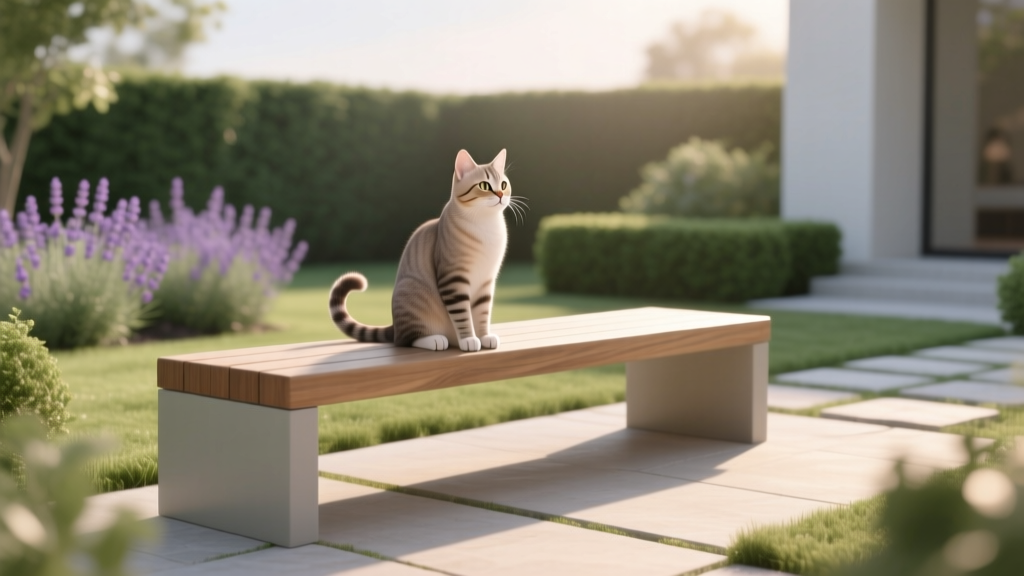
You open the back door to let in a little air, coffee in hand, and there’s your cat—parked on the garden bench like they own the place. Not curled up in a cozy ball, not prowling the flowerbeds, but sitting upright and still, like a tiny furry lifeguard watching over the yard. You call their name. An ear flicks. The tail tip twitches once. They don’t move. They’re clearly “doing something”… even if it looks like they’re doing nothing.
If your cat has a favorite outdoor bench (or patio chair, porch step, picnic table, or that one specific plank of decking), you’re in excellent company. This is a classic cat behavior, and it’s packed with meaning—part science, part instinct, and part “because it feels nice right here.”
The evolutionary reason: benches are perfect “lookout posts”
Cats are both predators and prey. That combo shapes nearly everything they do. In the wild (and in your neighborhood), a successful cat is one who can see without being seen, track movement, and retreat quickly if something feels off. A garden bench happens to tick a lot of those ancient boxes.
- Height advantage: Even a small elevation gives a better view of the territory. From a bench, your cat can scan for birds, squirrels, other cats, delivery trucks, and suspicious plastic bags.
- Safe boundaries: Benches provide edges and defined spaces. Cats love “perches” that make the world feel more predictable.
- Ambush potential: A bench is a ready-made staging area. From there, a cat can launch into a chase—or pretend they’re not interested while absolutely being interested.
- Quick escape routes: A bench often sits near cover: shrubs, fencing, the house, a tree. That means “I can observe, and if anything changes, I’m gone.”
Domestic cats may not need to hunt to survive, but their nervous system still runs on those instincts. A bench outside is basically a deluxe observation tower in their personal kingdom.
What’s really going on: a context-by-context breakdown
Not all bench-sitting is the same. The “why” changes depending on time of day, what else is happening around the house, and what your cat is feeling.
1) The Neighborhood Watch shift
This is the classic: your cat sits upright, body still, head slowly turning like a fuzzy security camera. They may stare at one point for a long time, then suddenly refocus on something you can’t see.
What it means: They’re monitoring territory. Cats are highly tuned to movement, and outdoor environments are basically streaming entertainment. Even a leaf skittering can be worth tracking.
2) The “I’m waiting for you” bench sit
Some cats take up position on the bench when you’re gardening, grilling, or just hanging out. They’re not necessarily asking for petting—they’re just present.
What it means: Social companionship, cat-style. Many cats prefer parallel time: being near you without constant interaction. Think of it as a quiet “I like your company” rather than a demand.
3) The sun-warmed spa treatment
Benches soak up heat. Wood, metal, even composite materials can become a warm, delicious platform—especially in the morning or late afternoon.
What it means: Temperature regulation and comfort. Cats naturally seek warmth because it supports muscle function and relaxation. A warm bench can feel like a heated blanket with a view.
4) The scent checkpoint
A bench outside is a hub of smells: humans sit there, dogs sniff around it, birds perch nearby, other cats may pass. Your cat may sit, sniff, rub their cheeks along the edge, or knead the surface.
What it means: Information gathering and scent marking. Cats “read” their world through smell the way we read social media—constant updates about who’s been there and what happened.
5) The “I want in / I want out” indecision zone
Some cats sit on the bench near the door and stare at the house, then stare at the yard, then stare at you, as if you’re the staff member responsible for weather negotiations.
What it means: They’re balancing safety and stimulation. Outdoors is exciting; indoors is secure. The bench becomes a neutral “buffer” spot where they can choose.
What the bench behavior says about your cat’s mood
Body language turns bench-sitting into a real emotional readout. Here are common “bench poses” and what they often indicate:
- Upright sit, relaxed shoulders, slow blinks: Calm and content. Your cat feels safe enough to settle and observe.
- Tail wrapped around paws: Neutral-to-relaxed. A composed “I’m just hanging out” posture.
- Tail tip twitching, ears rotating: Alert curiosity. They’re engaged, tracking movement or sound.
- Low crouch, tense body, ears angled sideways (“airplane ears”): Uneasy or cautious. Something in the environment is bothering them.
- Sudden freeze with intense stare: High focus—could be prey interest or concern about another animal.
- Half-closed eyes, loaf position, minimal movement: Resting and feeling secure, often paired with warmth-seeking.
One of the biggest clues is how easily your cat “comes back” to you. A relaxed cat will glance at you, maybe slow blink, and return to watching the yard. A stressed cat may startle, bolt, or stay locked onto a threat.
Related behaviors you might notice
If your cat loves the garden bench, you might also see:
- Chin and cheek rubbing on the bench edge (facial pheromones = “this is mine”)
- Kneading the bench surface (comfort behavior, sometimes excitement)
- Rolling on the bench (scent exchange and relaxation)
- “Chattering” at birds from the bench (that rapid clicky sound—classic hunting frustration/excitement)
- Guarding the route—sitting in the same spot at the same time daily (routine + territory monitoring)
- Redirected zoomies after a high-alert watch session (built-up arousal needs an outlet)
All of these are connected to the same core themes: territory, comfort, observation, and controlled access to the world.
When bench-sitting is normal vs. a concern
Most of the time, a cat sitting on an outdoor bench is perfectly normal and even enriching. But context matters. Consider it a potential concern if you notice:
- Sudden obsession with the bench paired with restlessness, pacing, or agitation (could indicate a new neighborhood cat, predator presence, or stressor)
- Hiding or refusing to come inside when that’s unusual for your cat (fear, territorial pressure, or discomfort)
- Excessive vocalizing from the bench—especially yowling, growling, or persistent crying (anxiety, conflict with another cat, or pain)
- Stiff movement when jumping up/down or avoiding the bench after using it for years (possible arthritis or injury)
- Overgrooming, spraying, or house-soiling that begins around the same time as increased outdoor watchfulness (stress can spill into other behaviors)
If the behavior changes abruptly or comes with physical signs (limping, weight loss, reduced appetite, hiding), a vet check is smart. Cats are masters at looking “fine” while quietly dealing with discomfort.
How to respond (and how to encourage it safely)
If your cat enjoys bench time, you can use it to strengthen your relationship and support their mental health—while keeping them safe.
Create a “cat-approved” bench setup
- Add a non-slip mat or outdoor cushion so the surface feels stable and comfortable.
- Provide shade options nearby (umbrella, shrub cover). Cats like choice: sun for warmth, shade for cooling.
- Place the bench with escape routes in mind—cats feel safer when they can retreat quickly.
Respect the watch session
If your cat is in observation mode, avoid sudden grabs and surprise cuddles. Try a gentle approach: stand nearby, speak softly, and offer a slow blink. If they lean in or lift their chin, you can offer a brief cheek rub. If they don’t, that’s also communication.
Turn it into enrichment
- Scatter a few treats on the bench occasionally to create positive associations (especially if outdoor sounds sometimes spook them).
- Try a short wand-toy session after bench time if your cat comes inside revved up. It can help “complete the hunt.”
- Offer a bird feeder at a distance (never right next to the bench) to provide safe viewing entertainment while protecting wildlife.
Prioritize safety
If your cat goes outdoors unsupervised, consider safer alternatives: a catio, leash-and-harness time, or a secure fenced area. Outdoor benches can attract neighborhood animals, and conflicts can arise quickly. The goal is to keep the good parts (fresh air, stimulation, perching) while reducing risk.
Fun facts and research-flavored nuggets
- Cats are “sit-and-wait” hunters by design. Even well-fed cats practice hunting sequences because the behavior itself is rewarding.
- Scent is social networking for cats. When your cat rubs the bench, they’re depositing pheromones from facial glands—chemical messages that help them feel familiar and secure in an area.
- Elevated resting spots reduce stress. In multi-cat homes, access to perches and vertical space is strongly associated with better harmony. Outdoors, the same principle applies: elevation can increase perceived safety.
- Cats run on routines. Many cats choose the same observation posts at predictable times because predictability itself is comforting.
FAQ: Common questions about cats sitting on outdoor benches
Why does my cat sit on the bench and stare at nothing?
They’re rarely staring at nothing. Cats detect tiny movements, distant sounds, and scents we miss. They may be tracking a bird behind leaves, a squirrel on a fence, or a sound from a neighboring yard.
Is my cat guarding me when they sit on the bench near where I’m gardening?
Sometimes it can look like “guarding,” but it’s usually companionship and curiosity. Your cat may also be drawn to the activity, smells of soil, and the predictable routine of you being outside.
Why does my cat rub their face on the bench before sitting?
That’s scent marking with facial pheromones. It’s a calming “this is safe and familiar” signal and a way to claim the spot as part of their territory.
My cat suddenly stopped sitting on the bench—should I worry?
If it’s a minor change and they seem normal otherwise, it could be weather, new neighborhood activity, or simply shifting preferences. If you also notice stiffness, reluctance to jump, hiding, appetite changes, or unusual irritability, it’s worth discussing with your veterinarian.
Is it okay to let my cat sleep on the bench outside?
Supervised, in safe weather, it can be fine. Unsupervised outdoor sleep can increase risks (other animals, parasites, getting trapped, heat/cold exposure). Consider a catio or supervised porch time if your cat loves outdoor lounging.
How can I encourage my cat to use the bench instead of the flowerbeds?
Make the bench more appealing: add a comfortable mat, place it where the view is good, and reward bench time with calm praise or a treat. You can also gently block off the most tempting digging spots with decorative stones or plant guards.
That garden bench isn’t just furniture to your cat—it’s a throne, a lookout, a scent bulletin board, and sometimes a quiet place to be near you without making a big fuss about it. The more you notice the subtle body language and context, the more you’ll feel like you’re in on the secret life of your cat’s outdoor routine.
Does your cat have a “favorite seat” outside—or a weirdly specific spot they claim every day? Share your cat’s bench stories (and photos, please) with the Cat Lovers Base community at catloversbase.com.