Why Cats Sit on the Bathroom Scale Display
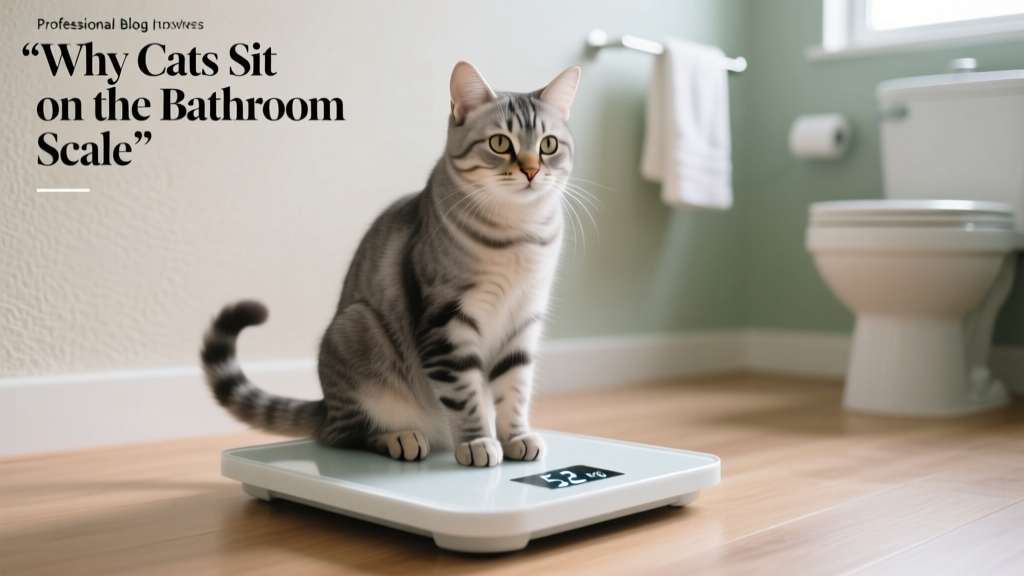
You step into the bathroom with a serious, grown-up goal: check your weight. The scale is ready. The tile is cold. The lighting is unkind. And then—padding in like they own the place—your cat hops onto the scale and plops down directly on the display window. Not the middle of the platform. Not beside it. Precisely on the one spot you need to see.
You try to shoo them. They blink slowly like you’ve made a strange suggestion. You pick them up. They return. You move the scale. They follow. It’s so oddly specific that it feels personal… but it’s not. It’s cat logic, and once you know what’s going on, it becomes one of those hilarious, “Oh, of course” feline mysteries.
1) The scientific (and evolutionary) “why” behind this habit
Cats are drawn to the bathroom scale display for a mash-up of instinct, sensory curiosity, and simple environmental convenience. Here are the big forces at play:
- Warmth-seeking behavior: Many scales—especially digital ones—hold a tiny bit of residual warmth from batteries, internal components, or recent use. Cats are heat detectives. If there’s a slightly warmer patch, they’ll find it.
- Pressure-point preference: The display area is often a slightly raised or framed section that feels different under paws. Cats are remarkably tactile; a subtle ridge or texture can be more interesting than a flat surface.
- Territory and “resource claiming”: Cats like to place themselves in the middle of human routines. Not because they’re plotting, but because shared spaces and objects become socially significant. The scale is an object you “care about,” so it earns attention.
- Vantage and security: Bathrooms are often smaller, quieter rooms with fewer escape routes. In cat terms, that can feel secure: fewer surprises, fewer angles to monitor. A stable, flat platform near your feet is prime observation real estate.
- Novelty + predictability combo: Cats love patterns. You enter the bathroom, you stand near the scale, you look down. Predictable human behavior is fascinating—like watching the same short show on repeat.
Evolutionarily, cats are built to investigate micro-changes in their environment: a new smell, a faint hum, a slight warmth, a different texture. Those tiny details used to matter when survival depended on reading subtle cues. Your scale display is basically a tiny sensory “bulletin board.”
2) A detailed breakdown: different contexts that make the scale irresistible
Not every cat sits on the scale display for the same reason. Context matters, and your cat’s version of this behavior can tell you what need they’re meeting.
The “You’re doing something” version
You walk into the bathroom with purpose, and your cat appears like a fuzzy supervisor. When they sit on the display, they’re often doing one (or more) of these:
- Seeking interaction: “Oh good, you’re standing still. Perfect time to ask for attention.”
- Inserting themselves into the routine: Cats bond by sharing space and syncing schedules. Your cat may have learned that bathroom time equals reliable proximity.
- Controlling access: Some cats are “social gatekeepers.” Blocking the display isn’t sabotage—it’s proximity plus mild boundary-setting: “I’m here first.”
The “Cool object that lights up” version
If your cat gets on the scale, shifts their paws, and triggers the numbers, they may simply enjoy the cause-and-effect. Cats aren’t usually big “trick” learners like dogs, but they do notice patterns. A scale that wakes up, beeps, or flashes is an interactive toy in disguise—especially if it’s the only object in the bathroom that responds to them.
The “It smells like you” version
Bathroom items carry strong human scent: skin oils from feet, detergent traces from bathmats, and ambient fragrance from soaps. If your cat presses their chest or chin near the display edge, they may be scent-mixing—adding themselves to your smell landscape.
The “Best seat in the room” version
Many bathrooms don’t offer cat-friendly perches. The scale is flat, stable, and placed where humans stand. If your cat likes to be near your ankles (and many do), the scale becomes a default “seat.” The display section is often closest to where you approach, so it becomes the most desirable spot.
The “I like the bathroom” version
Some cats adore bathrooms because:
- It’s cooler in summer (tile floors).
- It’s quieter than the main rooms.
- They can corner you for pets while you’re captive (brushing teeth is a classic “you can’t chase me away” moment).
3) What sitting on the display can mean about your cat’s mood
Your cat’s body language will tell you whether this is playful curiosity, affectionate clinginess, or mild stress.
- Relaxed and content: Soft eyes, slow blinks, tail loosely wrapped, paws tucked. This is a “cozy claim” and usually means your cat feels safe and socially connected.
- Curious and playful: Ears forward, sniffing, paw-tapping the surface, shifting weight to make the scale wake up. This is exploration, often seen in younger cats or confident adults.
- Attention-seeking: Meowing, rubbing your legs, flopping dramatically right as you try to step on. Your cat wants engagement—petting, play, or sometimes dinner.
- Possessive or overstimulated: Stiff body, tail flicking, ears sideways, swatting if you move them. This can happen if your cat is stressed, guarding the space, or feeling pushed past their comfort threshold.
- Seeking security: Low posture, scanning the room, sitting close to the doorway or your feet. If there’s tension in the home (new pet, visitors, loud noises), the bathroom can become a “quiet bunker.”
Most of the time, sitting on the scale display is neutral-to-positive. It’s rarely a sign of “dominance” (a word that gets overused with cats). Think of it more as: “This spot meets my needs right now.”
4) Related quirky behaviors you might also notice
If your cat is a scale-display sitter, you’ll probably see similar “strategic sitting” elsewhere:
- Blocking your phone screen or laptop keyboard (warmth + attention + scent)
- Sitting on mail, papers, or books (new smells, flat textures, your focus lives there)
- Perching on the edge of the sink (cool ceramic, water fascination, bathroom surveillance)
- Sleeping on your clothes pile (strong you-scent, soft texture, safe nest)
- Choosing the “one inconvenient square” of a bed or sofa (cats love edges, corners, and spots that feel protected)
The common thread: cats gravitate toward things that are warm, textured, scented like you, and connected to your attention.
5) When it’s normal… and when it might be a concern
Totally normal if your cat:
- sits on the scale occasionally, especially when you’re nearby
- seems relaxed and easy to redirect
- uses the bathroom normally (no litter box issues, no hiding, no unusual vocalizing)
Worth a closer look if the behavior changes suddenly or comes with other signs, such as:
- Bathroom fixation plus hiding: If your cat starts camping in the bathroom constantly and seems withdrawn, they may be stressed or not feeling well.
- Increased clinginess: Sudden “velcro cat” behavior can sometimes signal discomfort, anxiety, or changes in the household routine.
- Aggression when moved: If your cat growls, swats, or panics when you lift them from the scale, consider whether they’re in pain (being handled hurts) or guarding spaces due to stress.
- Frequent drinking from the tub/sink and lingering near the scale: Increased thirst can indicate health issues. The scale isn’t the cause, but the bathroom may become a water-hunting zone.
If you’re seeing appetite changes, litter box changes, vomiting, weight loss, or hiding, check in with your veterinarian. Odd location preferences can be a subtle “something’s off” clue—especially if it’s new.
6) How to respond (and how to encourage it in a healthy way)
You’ve got two goals: respect your cat’s curiosity and keep your bathroom routine functional.
If you just want to see the numbers
- Create an “approved spot” nearby: Put a small bathmat, folded towel, or non-slip perch next to the scale. Many cats will choose the comfier option once it’s established.
- Use a gentle cue: Teach “off” with a treat lure. Reward when your cat steps off the scale, not when they’re sitting on it. Consistency matters more than volume of training.
- Keep it calm and predictable: If every scale moment turns into a big reaction, some cats will repeat it because it reliably gets your attention.
- Pick them up like a polite elevator ride: Support chest and hindquarters, move slowly, and place them on their alternate spot. Avoid pushing or scooting, which can trigger defensive reactions.
If you think it’s cute and want to lean into it
- Make it a mini enrichment game: Let your cat step on the scale, read their weight if they’ll tolerate it, and reward with a treat. Some cats learn to “weigh in” voluntarily.
- Pair bathroom routines with connection: A 30-second pet session or a quick wand-toy play burst can satisfy the attention request so your cat doesn’t need to block the display to get you to notice them.
- Add vertical options: A small cat shelf or sturdy stool near the bathroom doorway gives your cat a better observation perch than the scale.
Practical relationship takeaway: your cat is communicating needs (warmth, security, attention, curiosity). If you meet the need intentionally, you’ll see fewer “creative” interruptions.
7) Fun facts and research-y tidbits that make this make sense
- Cats are heat-seeking specialists: Their thermoneutral zone (the temperature range where the body doesn’t need to work to stay warm) is higher than humans’. That’s why the “slightly warm” spot is always the best spot.
- They map homes by smell and texture: A cat’s world is a patchwork of scent zones and tactile landmarks. The scale’s smooth glass/plastic plus your foot scent creates a distinctive “station.”
- Predictable routines build security: Many cats feel safest when they can anticipate what happens next. Joining your bathroom routine is a way to keep tabs on the household rhythm.
- Blocking behavior often works: Cats learn quickly which actions make humans pause, talk, bend down, or reach out. Sitting on the display is a very efficient way to make you respond.
8) FAQ: Common questions cat owners ask
Is my cat trying to stop me from weighing myself?
Probably not. Cats don’t think in moral commentary or human-style sabotage. Your cat is choosing a spot that’s warm, interesting, and connected to you. The fact that it blocks the display is an inconvenience for you, but for them it’s just “the best square.”
Why the display specifically and not the center of the scale?
The display often has a slight edge, ridge, or texture change, and it’s usually closest to where you approach and look. If your cat wants your attention, sitting where your eyes go is a smart strategy. If they want tactile novelty, that framed area feels different under paws.
Should I let my cat sit on the scale?
Yes, if it’s safe and your cat isn’t becoming possessive or stressed. If the scale is glass and your cat is a wild jumper, place a non-slip mat nearby to prevent sliding. If you’re trying to track your cat’s weight, turning it into a calm “weigh-in” routine can be genuinely useful.
My cat only does this when I’m in the bathroom. Why?
Because you’re the main event. The bathroom often creates a perfect attention opportunity: you’re standing still, the space is small, and your routine is predictable. Many cats treat this like a daily check-in.
My cat yowls and refuses to move off the scale. What does that mean?
It can mean “I want something” (food, play, petting), or it can be frustration/stress. Look at the full picture: Are there changes at home? Are they acting clingier or hiding more? If it’s intense or new, rule out discomfort with a vet visit and consider stress-reduction steps (more play, more hiding spots, calmer routines).
Can I train my cat to get off the scale on command?
Yes. Use a consistent cue (“off”), lure them to a nearby mat, and reward the moment all paws leave the scale. Keep sessions short. You’re not “correcting” a bad cat—you’re teaching a useful household behavior while still respecting their curiosity.
One last thought (and an invitation)
When your cat sits on the bathroom scale display, they’re doing what cats do best: turning ordinary human objects into sensory adventures and social moments. It’s quirky, sometimes inconvenient, and oddly endearing—like living with a tiny roommate who has strong opinions about where your eyes should be.
Does your cat sit on the scale, the sink, the bathtub edge, or somewhere even more hilariously specific? Share your stories (and your cat’s funniest “best seat in the house” choices) with the Cat Lovers Base community at catloversbase.com.