Why Cats Sit on the Basement Exercise Mat
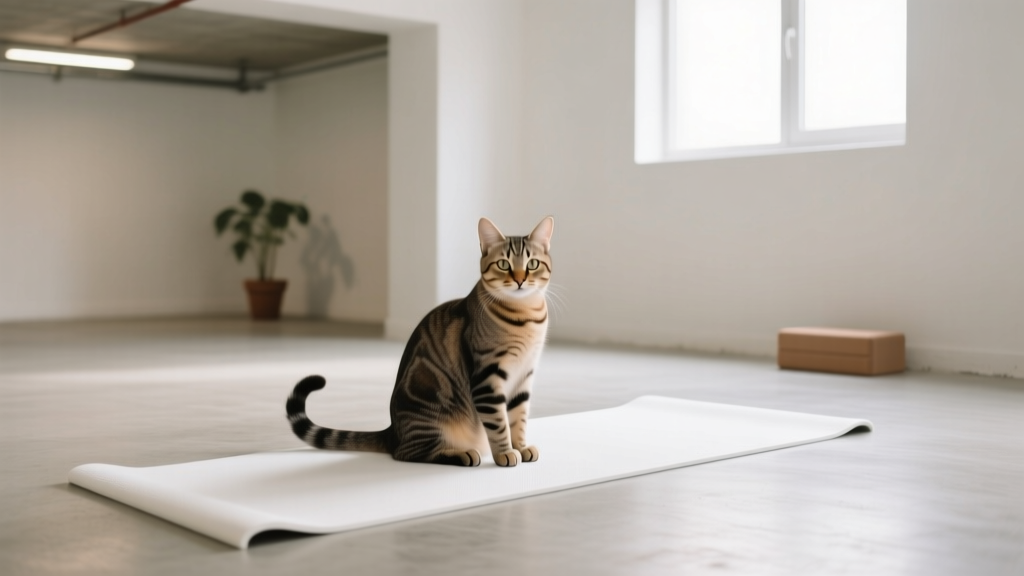
You head down to the basement with the best intentions: a quick workout, a little stress relief, maybe even a new routine you’ll stick with this time. You unroll the exercise mat, step away for one second to grab your water bottle, and—of course—your cat appears. Like they were waiting in the shadows for their cue, they stroll over and plop themselves right in the center of the mat. Sometimes they loaf. Sometimes they sprawl. Sometimes they stare at you with the calm confidence of a tiny personal trainer who’s decided you are the one who needs supervision.
If you’ve ever asked, “Why are you here?” while your cat blinks slowly from the middle of your burpees, you’re not alone. Cats are drawn to exercise mats for reasons that are surprisingly sensible in cat logic—and pretty revealing about how they experience your home, your attention, and even your scent.
The Scientific (and Evolutionary) “Why” Behind Mat-Sitting
Cats are experts at choosing spots that feel safe, comfortable, and strategically useful. That skill didn’t come from nowhere. In the wild, small cats survive by balancing two needs:
- Security: A place where they can rest without being easily surprised.
- Information: A place that helps them monitor the environment—especially the movements of larger animals (including you).
An exercise mat checks both boxes. It’s a defined “platform” with edges (cats love boundaries), it’s often placed in an open area with a wide view (classic surveillance territory), and it smells like you—strongly. From a feline perspective, your mat is basically a warm-ish, grippy, scent-rich observation post that appears on cue and reliably summons your attention.
There’s also the simple physics of comfort. Many mats have a slightly cushioned surface that reduces pressure on joints. Some have a faint warmth retention (especially foam mats), and many provide a texture cats can grip. For a creature that’s built to climb, pounce, and settle into stable footing, a mat can feel oddly “right.”
What’s Going On? A Detailed Breakdown by Context
Cats don’t sit on mats for just one reason. The “why” often depends on what’s happening around the mat and how your cat feels in that moment.
1) The Mat Is a Scent Billboard
Exercise mats are scent magnets. Even if you can’t smell it, your cat absolutely can. Sweat, skin oils, laundry detergent residue, deodorant, and the general “you-ness” of your routine cling to that surface. Cats use scent to map their world. When your cat settles on the mat, they may be:
- Investigating: “This smells new/intense—what’s the story here?”
- Claiming: “This belongs in my territory too.”
- Self-soothing: “This smells like my person, and that’s comforting.”
If your cat rubs their cheeks on the mat edges or rolls around on it, that’s not random. They’re likely depositing facial pheromones (friendly “this is safe” signals) to blend your scent with theirs.
2) The Mat Is a Predictable Attention Trigger
Many cats are little pattern detectives. They notice that when the mat comes out, you do a bunch of predictable movements and you’re in one place for a while. That’s enticing. Your cat might be thinking:
- “If I sit here, I get interaction.”
- “If I sit here, I can keep you from leaving.”
- “If I sit here, you’ll talk to me, look at me, or pet me.”
Even “No, move!” counts as attention. To a social cat, your voice and focus can be the reward. To a clever cat, the mat becomes a guaranteed way to get you to react.
3) The Basement Factor: Temperature, Acoustics, and Safety
Basements often have different sensory qualities than the rest of the house:
- Cooler air: Some cats love cool surfaces, especially if they run warm.
- Echoes and vibrations: Running machines, speakers, and footsteps carry differently. Curious cats may investigate and then “anchor” themselves somewhere stable.
- Less foot traffic: A basement can feel quieter and less chaotic—more restful.
The mat may also be one of the few “soft islands” down there. If the basement floor is concrete or unfinished, a mat is basically premium real estate.
4) Texture and Claw Satisfaction
Some mats have a slightly tacky or patterned surface. That can feel satisfying under paw pads. Cats may knead it, stretch on it, or do the subtle “push-pull” with their paws that looks like they’re testing the traction. If your cat is kneading the mat, it can be comfort behavior—an echo of kittenhood nursing and relaxation.
5) Blocking as a Social Strategy
Sometimes a cat on the mat is not about the mat at all. It’s about you. Cats can be surprisingly direct: if your cat wants closeness, play, or reassurance, sitting in the middle of your activity is effective. This is especially common in cats who:
- are strongly bonded to one person,
- feel a bit left out when routines change,
- have learned that interruption earns engagement.
Think of it as the feline version of placing a hand over your phone: “Hello, I’m right here.”
What This Behavior Says About Your Cat’s Mood and Feelings
Your cat’s body language on the mat tells the real story. Here are common “mat moods” and what they tend to mean:
- Loaf position (paws tucked, relaxed face): Calm, comfortable, mildly curious. Your cat feels safe.
- Slow blinking at you: Friendly trust. They may be enjoying your company even if they’re “in the way.”
- Tail wrapped around body: Settled and content; possibly a little possessive of the spot.
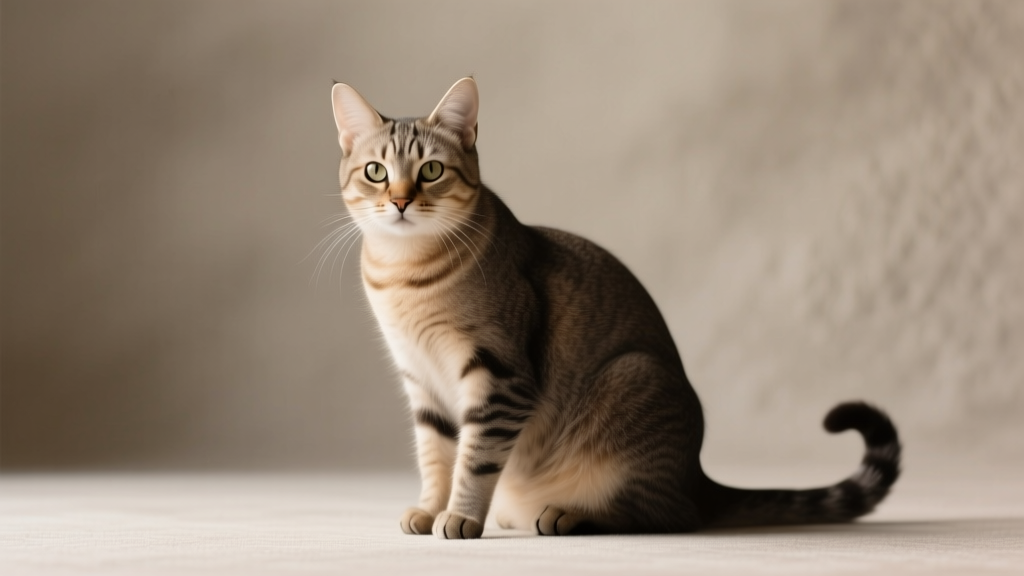
- Upright sitting with alert ears and wide eyes: Curious or monitoring. They’re watching your movements closely.
- Rolling or rubbing: Social, affiliative behavior—mixing scents and inviting interaction.
- Flattened ears, twitchy tail, low posture: Overstimulated or uneasy. In this case, the mat may be a “safe base” they’re clinging to.
Most of the time, mat-sitting is a compliment: your cat is choosing to be near you during a loud, active, human-focused ritual.
Related Quirky Behaviors You Might Also Notice
If your cat loves the basement mat, you may see similar “why must you sit exactly there?” habits:
- Sitting on laundry piles: Warmth + your scent + soft texture.
- Claiming freshly unboxed items: Novel smell + safe “boundary” space.
- Parking on your keyboard or book: Attention magnet + blocking your focus.
- Lying on the exact spot you need to stand: Social proximity + control of traffic flow.
- Investigating yoga straps, resistance bands, foam rollers: Movement + interesting textures + potential play.
These behaviors share a theme: cats like to insert themselves into the center of whatever matters to you—because you matter to them, and because it’s smart social strategy.
When Mat-Sitting Is Normal (and When It Might Be a Concern)
Normal, everyday cat behavior usually looks like relaxed lounging, curious sniffing, mild kneading, or calmly watching you exercise.
It may be worth a closer look if you notice any of the following:
- Sudden clinginess or blocking behavior paired with hiding, reduced appetite, or changes in litter box habits.
- Obsessive licking or chewing the mat (some mats have appealing textures or chemical residues; chewing can also be stress-related).
- Fearful behavior around the basement—startling, bolting, or growling—especially if new equipment is noisy.
- Aggression when you try to move them (hissing, swatting). This can signal pain, anxiety, or resource guarding.
- Increased vocalizing that seems distressed rather than chatty.
If the behavior is new and intense, or your cat seems uncomfortable, it’s sensible to rule out medical issues first (pain, sensory decline, stress). Cats are excellent at masking discomfort, and behavior changes are often the first clue.
How to Respond (or Encourage It) Without Turning Workouts Into Negotiations
You don’t have to choose between fitness and feline happiness. A few small tweaks can keep everyone satisfied.
Give Them a “Yes Spot” Near the Mat
Place a small cat bed, folded blanket, or towel beside your exercise area. Sprinkle a pinch of catnip (if your cat enjoys it) or toss a few treats there. Many cats will happily choose the designated lounge if it’s equally appealing and close to you.
Use the Mat as a Positive Together-Time Cue
If your cat only interrupts because they want attention, build in a quick “connection ritual” before you start: 30 seconds of petting, a few treats, or a short wand-toy session. You’re telling your cat, “I see you,” before they feel the need to shout it with their body.
Reward Calm “Supervision”
If your cat sits politely off to the side, occasionally drop a treat on their blanket or praise them softly. You’re reinforcing the behavior you want: nearby companionship without being directly underfoot.
Keep Safety in Mind
- Skip resistance bands on the floor if your cat tends to pounce or chew.
- Watch for claws on thin mats—kneading can puncture some materials.
- Avoid essential oil sprays on mats; many are unsafe for cats.
If You Must Move Them, Do It Politely
Instead of dragging the mat (which can startle them), lure your cat off with a treat toss to their “yes spot,” or use a toy to redirect. This keeps trust intact and prevents the mat from becoming a battleground.
Fun Facts and Research-Flavored Nuggets
- Cats love edges and defined spaces. It’s why they sit in boxes, laundry baskets, and yes—on neatly outlined mats. Boundaries can make a cat feel secure.
- Scent is social glue. Cats create a “group scent” with the beings they trust, mixing pheromones and familiar smells on shared surfaces. Your mat may become part of that shared scent map.
- They’re excellent routine readers. Many cats anticipate events (meals, bedtime, work calls) based on cues like objects being moved. An unrolled mat is a big, obvious cue that something is about to happen—with you at the center of it.
FAQ: Cats and Exercise Mats
Why does my cat sit on my mat the moment I unroll it?
It’s a combination of curiosity, scent attraction, and learned routine. The mat appears, your attention shifts, and your cat knows something interesting is happening. Sitting on it is the fastest way to be included.
Is my cat trying to stop me from working out?
Not out of spite. More often, they’re seeking proximity or interaction. If your workout reduces the attention they usually get, mat-blocking can be a “reconnect with me” strategy.
Why does my cat roll around or rub their face on the mat?
Face rubbing and rolling are often affiliative scent-marking behaviors. Your cat may be mixing their scent with yours, which can be calming and socially bonding in cat language.
My cat kneads the mat—does that mean they’re stressed?
Usually kneading means comfort and contentment. If kneading is paired with drooling, purring, and relaxed posture, it’s a cozy sign. If it’s frantic or paired with other stress signals (hiding, overgrooming), then stress could be part of the picture.
How do I keep my cat off the mat without upsetting them?
Offer an equally good alternative next to you (blanket/bed), reward them for using it, and redirect with treats or a toy. Avoid punishment; it can create anxiety around the basement or around you exercising.
Could my cat be attracted to the mat material itself?
Yes. Some cats like the texture, warmth retention, or even the smell of certain foams. If your cat chews the mat, supervise closely and consider switching to a more durable, pet-safe material.
If your cat has claimed your basement mat, you’re in good company—cats have a long history of choosing the most inconvenient spot because it’s also the most socially meaningful one. The mat is your routine, your scent, your attention, and a perfect little “territory island” all rolled into one.
Does your cat have a favorite “why are you sitting there?” place—exercise mat, laptop, laundry, or something even stranger? Share your story (and your funniest workout interruptions) with the Cat Lovers Base community at catloversbase.com.