Why Cats Sit on the Balcony Railing Safely
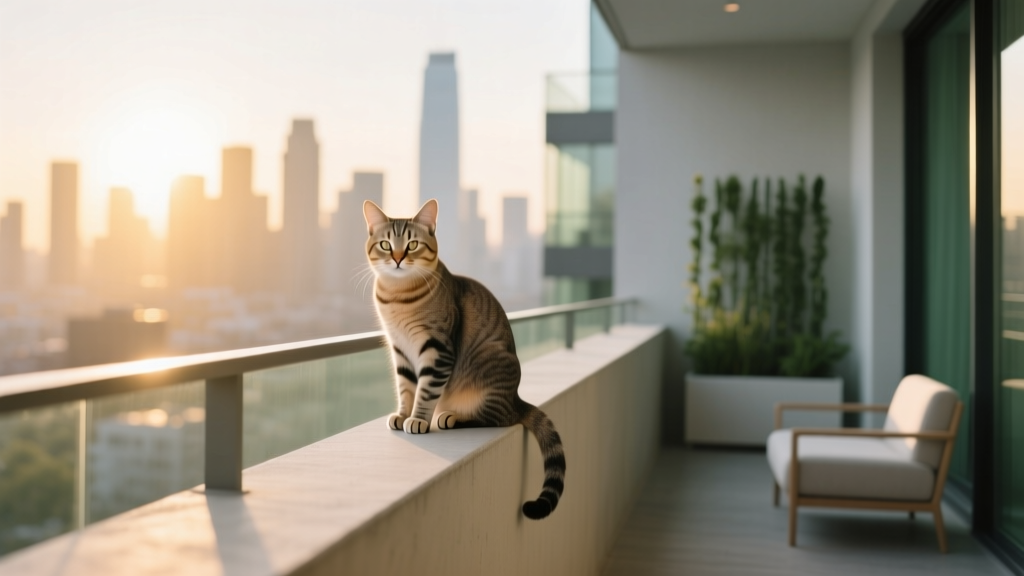
You step onto the balcony with your morning coffee and there’s your cat—perched on the railing like a tiny circus performer, tail draped neatly, eyes half-lidded as if they pay rent. Your heart does a little flip. You whisper their name. They don’t even glance back. They’re busy watching pigeons, sniffing the breeze, and looking impossibly confident for someone balancing on something three inches wide.
If you’ve ever wondered, “Why on earth does my cat choose that spot?” you’re in good company. From a behavior perspective, balcony railing sitting makes a lot of sense for cats—especially when it’s done safely. It’s part lookout tower, part sun lounge, part sensory buffet.
1) The scientific (and slightly wild) reason cats love high perches
Cats are both predators and potential prey in the natural world. Even domestic cats carry the instincts of a small hunter who benefits from good vantage points. Height provides:
- Information: A higher perch expands the “visual map” of the territory. Cats are surveillance specialists.
- Control: Being above ground level reduces surprise encounters and gives a sense of safety and agency.
- Hunting advantage: Watching movement from above helps cats track birds, insects, and any interesting rustle.
- Thermoregulation: Balconies often collect warm sun pockets and breezy cool zones—perfect for a cat that likes to fine-tune their comfort.
Even though your cat isn’t stalking dinner on your balcony (hopefully), their brain still lights up for “high place + good view + interesting smells.” The railing is basically a natural “cat TV” seat.
2) A closer look: what “balcony railing sitting” can mean in different contexts
The same behavior can have different motivations depending on what’s happening around your home. Here are common scenarios behaviorists see:
They’re monitoring their territory
Cats are deeply territorial, even the sweet, cuddly ones. A balcony offers a border view: “What’s happening out there?” If your cat sits in one particular spot, they may be tracking a neighbor cat, a dog that passes daily, or that one squirrel who has the audacity to exist.
What you’ll notice: Steady staring, slow tail flicks, ears swiveling like radar dishes, little “chirps” or quiet chattering at birds.
They’re soaking up sensory enrichment
Outdoor air is full of information—scents, humidity changes, plant aromas, distant cooking smells. Cats “read” the world with their noses as much as their eyes. The railing places their face right in the path of breeze currents, like opening a window in your brain.
What you’ll notice: Sniffing, flehmen response (that funny open-mouth “stink face”), rubbing cheeks on the railing, closing eyes as if savoring the air.
They’re enjoying sun-and-breeze comfort engineering
Cats are expert comfort designers. A railing can be warmer (sun-heated surface) or cooler (airflow) than the balcony floor. Some cats prefer a slight breeze on their whiskers; others prefer warmth on their belly.
What you’ll notice: Loafing, tucking paws, shifting position to keep the sun on their back, slow blinks, relaxed whiskers.
They’re seeking “personal space” from the household
If your home is lively—kids, guests, another pet, a vacuum that appears without warning—the balcony perch can function as a peaceful retreat. Height is calming for many cats because it reduces the chance of being approached too quickly.
What you’ll notice: Your cat chooses the railing during busy times, then comes back inside when the house quiets down.
They’re practicing balance and confidence
Yes, cats are naturally agile, but they still benefit from balance practice. Walking narrow edges, hopping up and down, and positioning their paws carefully are all part of feline body awareness. For some cats, the railing is a fun little “confidence course.”
What you’ll notice: A cat that hops up with ease, settles, then calmly watches the world—no frantic movements, no wobbling.
3) What it says about your cat’s mood and feelings
Balcony railing sitting is often a sign of a cat who feels comfortable in their environment—as long as the setup is truly safe. Here’s how to read the emotional tone:
- Content and secure: Soft eyes, slow blinks, relaxed tail, still body, ears occasionally rotating toward sounds.
- Curious and engaged: Forward-leaning posture, ears forward, whiskers slightly ahead, tracking movement below.
- Overstimulated or annoyed: Tail thumping, tense shoulders, pupils widening, quick head movements, ears flattening briefly.
- On alert (possible stress): Frozen posture, low body crouch even on the perch, rapid scanning, sudden retreat inside.
Most cats use high perches as a “secure base.” They can observe without participating. It’s the feline version of sitting at the edge of a party where you can hear everything but don’t have to make small talk.
4) Related behaviors you might also notice
If your cat loves the balcony railing, you may see these familiar companion behaviors:
- Window perching and “neighborhood watch” duty (same motivation: view + control)
- Cat chattering at birds or insects (hunting frustration/anticipation)
- Cheek rubbing on balcony furniture or door frames (scent marking: “This is mine.”)
- Rolling on warm surfaces when the sun hits (comfort + scent deposition)
- Bolting to the balcony after hearing certain sounds (trash truck, birds, neighbor’s footsteps—predictable events become exciting cues)
5) When it’s normal vs. when it might be a concern
“Normal” depends less on the behavior and more on the safety and your cat’s emotional state.
Generally normal (and often healthy enrichment)
- Your cat is calm and steady on the railing
- They can be redirected easily
- No signs of panic, aggression, or frantic pacing
- The balcony is secured (more on that in a moment)
Potential concerns to watch for
- Fixation on another animal: If your cat becomes tense, growls, or redirected-aggressive afterward (swats at you or another pet), they may be feeling territorial stress.
- Sudden fear reactions: Loud noises can startle cats. If your cat startles easily, a railing perch may increase risk of a scramble or misstep.
- Compulsive pacing or agitation: Repeated frantic up-down movements, vocalizing, or inability to settle can signal stress or frustration.
- Health and mobility changes: Older cats or those with arthritis may misjudge jumps. A cat that once balanced confidently may become less stable over time.
- Safety red flags: Any balcony without secure cat netting/screening, wide gaps, or climbable edges is a risk—even for agile cats.
A key point: cats are excellent jumpers, but they’re not immune to slipping, spooking, or making a rare miscalculation—especially if a bird suddenly takes off or a loud sound triggers a startle response.
6) How to respond (and how to encourage it safely)
If your cat loves railing time, you don’t need to ban it—you just want to make it safe and emotionally positive.
Make the balcony “cat-proof,” not just “cat-friendly”
- Install cat netting or a secure catio-style enclosure: This is the gold standard. A properly installed net or screen reduces fall risk and prevents escape.
- Check for climbable routes: Chairs near the railing can become launching pads. Decide what access you’re comfortable with.
- Cover sharp edges and hot surfaces: Metal railings can get hot in direct sun. Add a safe cover or provide shaded alternatives.
- Supervise at first: Especially with young, impulsive cats or newly adopted cats learning the space.
Offer a “better seat” than the railing
If the railing makes you nervous, give your cat a perch that scratches the same itch:
- A tall outdoor cat tree or shelf positioned behind a safety barrier
- A sturdy chair with a non-slip mat (so they can sit high without balancing on a narrow edge)
- A window hammock or indoor perch near the balcony door
The goal is to preserve the benefits—view, breeze, height—while reducing risk.
Reinforce calm behavior
If your cat settles quietly and watches the world, you can reward that calm with:
- Soft praise
- A slow blink exchange
- A treat after they step down calmly (not while they’re edging out farther)
Avoid rushing toward them or grabbing them suddenly. From a cat’s point of view, a surprise grab near a ledge is exactly the kind of thing that causes panicked wriggling.
Redirect “too spicy” balcony emotions
If your cat gets wound up by birds or neighborhood cats, try:
- A quick indoor play session (wand toy, chase game) to discharge hunting energy
- Closing the balcony temporarily if another animal is triggering stress
- Adding visual barriers (frosted film, partial screening) to reduce constant stare-downs
7) Fun facts and research-flavored tidbits
- Cats prefer elevated resting spots: Studies on cat housing and shelter welfare consistently find that providing vertical space reduces stress-related behaviors and supports calmer social interactions.
- Your cat’s “viewing habits” can be predictable: Many cats run a routine—patrol, perch, nap, patrol. If your cat sits on the railing at the same time each day, they may be tracking a reliable daily event (mail carrier, school kids, bird activity peaks).
- Tail position is a balance tool: That casually draped tail isn’t only an attitude statement. It’s a stabilizer that helps fine-tune body position on narrow surfaces.
8) FAQ: Common questions about cats on balcony railings
Is it safe for my cat to sit on the balcony railing?
It can be safe only if the balcony is properly secured (cat netting/screening/catio enclosure) and your cat is calm, stable, and supervised when needed. Without safety measures, there’s always a risk of slipping or being startled.
Why does my cat choose the railing instead of the balcony floor?
The railing offers height, a better view, and often better airflow. It’s also a “boundary line” of the territory—cats love to monitor edges.
My cat chatters at birds from the railing. Are they frustrated?
Chattering often appears when a cat is excited and highly focused on prey they can’t reach. It’s common and usually harmless, but if your cat becomes frantic or aggressive afterward, add more play and consider reducing visual triggers.
Should I stop my cat from doing it?
If your balcony isn’t secured, yes—redirect them to a safer perch indoors. If it is secured, you can usually allow it and even treat it as enrichment, while keeping an eye on stress signals and overstimulation.
Why does my cat roll or rub on the railing?
Rubbing deposits facial pheromones—your cat’s way of saying “this spot is part of my safe territory.” Rolling can be comfort behavior plus scent marking (and a little bit of showmanship).
My cat suddenly stopped going on the balcony. Should I worry?
A sudden change can mean many things: weather shift, new outdoor animal presence, a startling event, or discomfort/pain (especially in older cats). If you also notice reduced jumping, hiding, irritability, or appetite changes, it’s worth consulting your veterinarian.
Closing thoughts
When cats sit on a balcony railing safely, it’s usually a perfect snapshot of who they are: watchful, curious, comfort-seeking little predators with a deep love of height and a strong desire to understand their world. With the right safety setup and a bit of behavior-reading, balcony time can become one of your cat’s best enrichment activities—and one of your favorite daily routines to observe.
Does your cat have a signature “balcony pose” or a particular bird they love to judge from above? Share your story (and your best “neighborhood watch” moments) with the Cat Lovers Base community at catloversbase.com.