Why Cats Sit on Plastic Bags
You bring groceries home, set a couple of plastic bags on the kitchen floor for “just a second,” and—like a magic trick—your cat appears. One sniff, one cautious paw-test… and then they plop down right on top of the bag as if you laid out a luxury cat bed. Maybe they even knead it like dough or stare at you with that smug little expression that says, Yes, this is mine now.
If you’ve ever wondered why your perfectly sensible cat chooses a crinkly, slippery plastic bag over the soft blanket you bought specifically for them, you’re not alone. This is one of those quirky cat behaviors that looks random—until you view it through a cat’s senses and instincts. Then it starts to make surprising sense.
1) The Scientific (and Evolutionary) Reasons Cats Love Plastic Bags
Cats experience the world differently than we do. What looks like “trash” to us can be a sensory jackpot to them. A plastic bag hits several feline buttons at once:
- Sound stimulation: The crinkle is sharp, sudden, and interesting—almost like the rustle of a small animal moving through dry grass. Many cats are hardwired to orient toward rustling sounds because, in the wild, that’s often “prey nearby.”
- Texture and tactile feedback: Plastic has a smooth, slightly grabby surface. When a cat steps on it, it shifts and responds under their paws. That “responsive surface” can be engaging the way a wobbling toy is engaging.
- Warmth and insulation: Thin plastic can trap a little pocket of warm air, especially if the bag is slightly puffed or layered. Cats are heat-seekers by design; their comfort zone is often warmer than ours.
- Scent cues: Plastic bags often carry food odors, human hand scents, store smells, or the scent of whatever was inside. For a cat, smells are information—like reading a newspaper headline.
- Enclosure appeal: Even when a bag is flat, it can feel like a “defined spot.” Cats are drawn to clear boundaries (think boxes, laundry baskets, open suitcases). A bag creates a little territory island.
Put together, plastic bags can mimic a tiny “hunting environment” (rustle + movement), a “nesting spot” (warm + boundary), and a “scent map” (interesting smells) all at once. It’s basically a cat enrichment item—just not one we intended.
2) A Detailed Breakdown: Different Contexts, Different Motivations
Not all plastic-bag sitting is the same. Watch the context and your cat’s body language, and you’ll often see one of these patterns.
The “I Claim This Spot” Sit
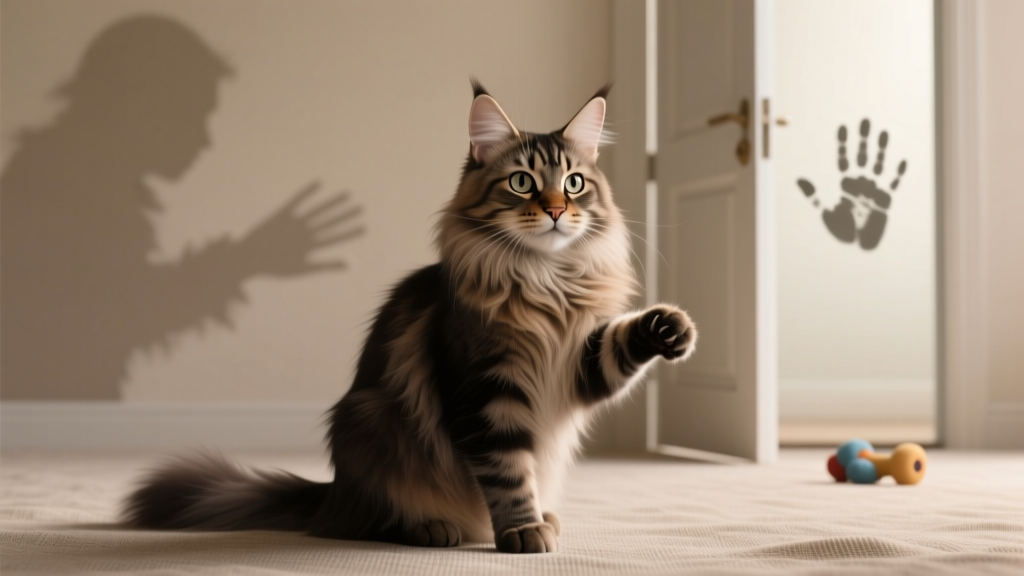
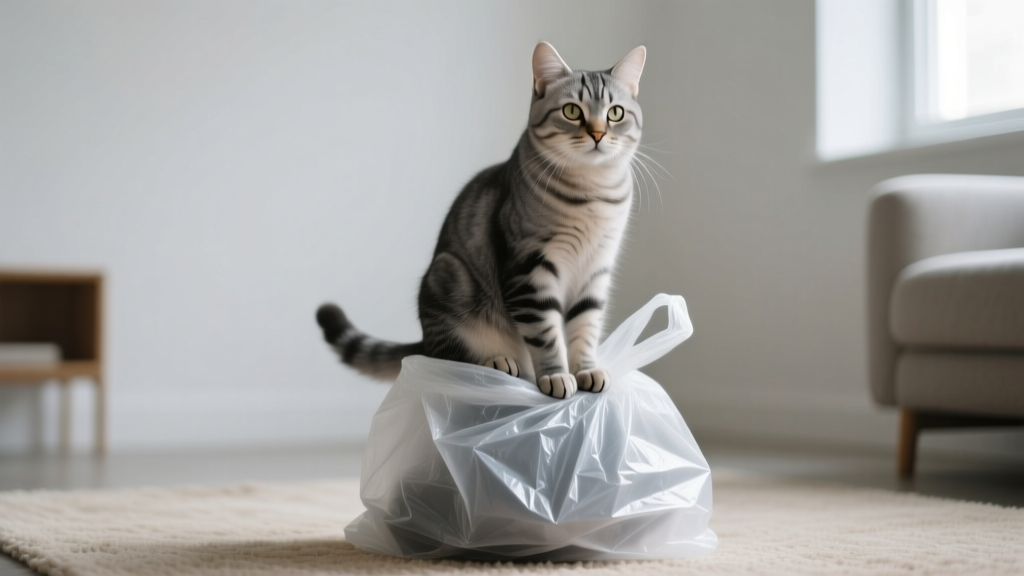
You set the bag down, and your cat walks over and sits upright, tail wrapped neatly, eyes half-lidded. This often has less to do with play and more to do with territory. Cats like to “bookmark” new items in the home with their presence. Sitting is a calm way of saying, “This belongs in my environment, and I approve.”
The “I Heard Prey” Pounce-and-Settle
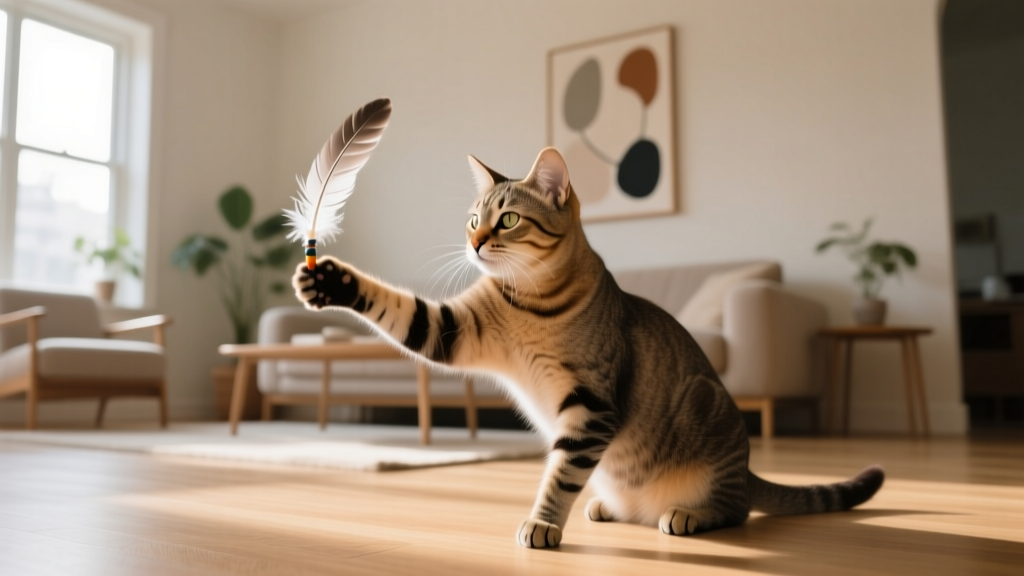
Some cats don’t sit immediately. They paw at the bag, pounce, bite the handle, then freeze—then sit. This sequence resembles a mini hunting routine: investigate, test, “capture,” then settle in once they’ve decided it’s safe (and conquered).
The “Warm, Cozy, Mine” Loaf
If your cat turns into a compact loaf on a bag—paws tucked, body relaxed—they may be using it as a heat trap and comfort station. This is especially common if the bag is on a sunny patch of floor or near a warm appliance.
The “I’m a Little Stressed, Don’t Look at Me” Sit
Sometimes cats choose odd surfaces when they’re mildly anxious. A bag might be in a quiet corner, under a chair, or away from traffic. Sitting there can be a self-soothing choice: the bag is familiar (or smells like you), and the crinkle gives them a sense of control over their environment (“If something approaches, I’ll hear it”).
The “I Like the Smell” Sit
If the bag contained bread, meat, treats, cat food, or even strongly scented soap, your cat may camp out to keep investigating that scent. Some cats will sit on it like a dragon guarding treasure, especially if they’ve learned that bags sometimes lead to snacks.
3) What This Behavior Says About Your Cat’s Mood
Plastic-bag sitting can be a surprisingly clear mood indicator when you combine it with posture and facial expression.
- Relaxed and content: Loafing, slow blinks, soft ears, still tail. Your cat is using the bag as a comfort spot.
- Playful and curious: Dilated pupils, quick head movements, pawing, hopping on and off. The bag is an interactive toy substitute.
- Possessive (not necessarily aggressive): Sitting squarely in the center, watching you closely, maybe a low meow if you reach for it. They’re “claiming” it.
- Overstimulated or keyed up: Rapid tail flicking, sudden biting of the bag, startled jumping at small noises. The bag may be revving them up rather than calming them down.
- Seeking security: Choosing the bag in a tucked-away location, body low, ears swiveling. Your cat may be using it as a safe observation post.
The key takeaway: the bag itself isn’t “the point.” The point is the experience it creates—sound, scent, warmth, boundary, and the feeling of control.
4) Related Quirky Behaviors You Might Also Notice
If your cat is a plastic-bag sitter, you may also recognize these classics:
- Box obsession: Similar appeal—defined edges, cozy containment, security.
- Sitting on paper: Warmth + texture + “new item” novelty; also a way to get your attention if the paper is important to you.
- Loving crinkly toys: Many cats crave that rustle sound because it mimics prey movement.
- Sleeping in the laundry basket: Soft warmth plus your scent—cat nirvana.
- Rolling on shopping bags or rubbing them: Scent-marking with facial glands, especially if the bag smells “new.”
In other words, plastic bags aren’t a weird exception—they’re part of a bigger pattern: cats gravitate toward sensory-rich, boundary-defined, scent-loaded “hotspots.”
5) When Sitting on Plastic Bags Is Normal… and When It’s a Concern
Most of the time, this behavior is harmless curiosity. But there are a few situations where you’ll want to intervene.
Normal and Not Worrisome
- Your cat sits or lies on a bag briefly, then moves on.
- They paw at it, crinkle it, or nap near it while supervised.
- They seem relaxed—soft body, calm breathing, normal appetite and litter box habits.
Potential Concerns
- Chewing or eating plastic: If your cat bites and swallows pieces, that can signal pica-like behavior, stress, boredom, or medical issues—and it poses a real obstruction risk.
- Getting tangled in handles: Handles can catch around the neck or limbs, especially if your cat panics and thrashes.
- Obsessive fixation: If they ignore food, play, or sleep to seek plastic constantly, it may indicate anxiety or insufficient enrichment.
- Sudden new behavior: A cat who never cared about bags but suddenly becomes fixated could be responding to stress, a new smell, household changes, or an underlying health issue.
If you see repeated plastic eating, gagging, vomiting, constipation, lethargy, or a painful belly, treat it as urgent and contact your veterinarian.
6) How to Respond (and Safer Ways to Encourage the Good Part)
You don’t need to ban every crinkly thing from your home, but you do want to keep the behavior safe.
- Remove or cut handles: If you’re letting your cat interact with a bag briefly, cut the loop handles to reduce entanglement risk. Better yet, don’t offer plastic bags at all—use safer alternatives below.
- Supervise and set time limits: Think of it like a “novelty enrichment session,” not an all-day toy left on the floor.
- Offer a crinkle alternative: Use crinkle mats, crinkle tunnels, or cat beds with rustly fabric. You’ll get the sensory appeal without the choking/ingestion hazards.
- Create a “legal” cozy spot nearby: Place a soft mat or a shallow box near where bags usually appear (kitchen, entryway). Many cats just want a front-row seat to household activity.
- Boost daily enrichment: If your cat seeks plastic because it’s the most exciting thing around, add short play sessions (2–3 times daily for 5–10 minutes). Wand toys, treat puzzles, and “hunt for kibble” games can reduce odd fixations.
- Don’t punish: Punishment can make a cat more anxious and more likely to cling to comfort-seeking habits. Quiet redirection works better: swap the bag for a crinkle mat, then reward with a treat when they engage with the safer option.
One of the simplest relationship wins: notice what your cat is telling you. A bag-sitter is often saying, “I like novelty, sound, and cozy boundaries.” When you provide those intentionally, many cats become calmer and more satisfied.
7) Fun Facts and Research-Adjacent Tidbits
- Cats are sensory specialists: Their hearing is tuned to higher frequencies than ours, making rustles and crinkles extra attention-grabbing.
- Novelty is enriching (in small doses): New objects can stimulate exploratory behavior—one reason cats investigate grocery bags so enthusiastically.
- Warmth is a big deal: Cats often prefer warmer resting surfaces than humans do, which is why even a thin, heat-trapping material can seem oddly appealing.
- “Defined space” reduces stress: Many cats relax when they can sit in a spot with clear boundaries (boxes, baskets, tunnels). A flattened bag still creates a distinct “island” on the floor.
FAQ: Common Questions Cat Owners Ask
1) Is it safe to let my cat play with plastic bags?
Not unsupervised. The biggest risks are handle entanglement and chewing/swallowing plastic. If your cat is fascinated by crinkle, choose a crinkle mat or tunnel designed for cats.
2) Why does my cat lick plastic bags?
Some cats lick plastic due to appealing residues (food oils, starches, scents), stress relief, or compulsive tendencies. Occasional licking isn’t unusual, but frequent licking or chewing is a reason to remove access and discuss it with your vet—especially if your cat is swallowing plastic.
3) My cat ignores expensive beds but sits on bags. Does that mean they’re unhappy?
Not necessarily. It often means the bag provides what the bed doesn’t: novelty, crinkle sound, a cool texture, or a “new item” smell. Try adding variety—different textures, a box-style bed, a crinkle insert, or moving the bed to a more socially interesting spot.
4) Why does my cat sit on the bag right after I unpack groceries?
Grocery bags are a sensory buffet: new smells, food traces, and the excitement of “something changed in the environment.” Many cats also learn that groceries sometimes predict treats—so they show up to investigate.
5) Can this be a sign of anxiety?
It can be, depending on the pattern. If bag-sitting comes with hiding, jumpiness, over-grooming, or obsessive plastic licking/chewing, it may be a coping behavior. If your cat looks relaxed and it’s occasional, it’s usually just curiosity and comfort-seeking.
6) How can I redirect my cat without disappointing them?
Swap the bag for something that meets the same need: a crinkle mat for sound, a cardboard box for boundaries, a heated pad for warmth (on a safe, low setting), or a short play session for that “rustle-and-pounce” thrill. Then reward your cat for choosing the safer option.
That crinkly bag “bed” your cat keeps choosing isn’t bad taste—it’s feline logic: sensory stimulation, warmth, scent, and a clearly defined spot to claim. Once you see it that way, you can respond in a way that’s safer for your cat and more satisfying for both of you.
Does your cat have a favorite “why would you pick that?” lounging spot—plastic bags, shoebox lids, the bathtub, the mail pile? Share your funniest bag-sitting stories (and photos, if you have them) with the Cat Lovers Base community at catloversbase.com.