What Do Cats’ Behaviors Mean? A Practical, Vet
Why Understanding What Cats’ Behaviors Mean Is the Single Biggest Shift in Your Relationship
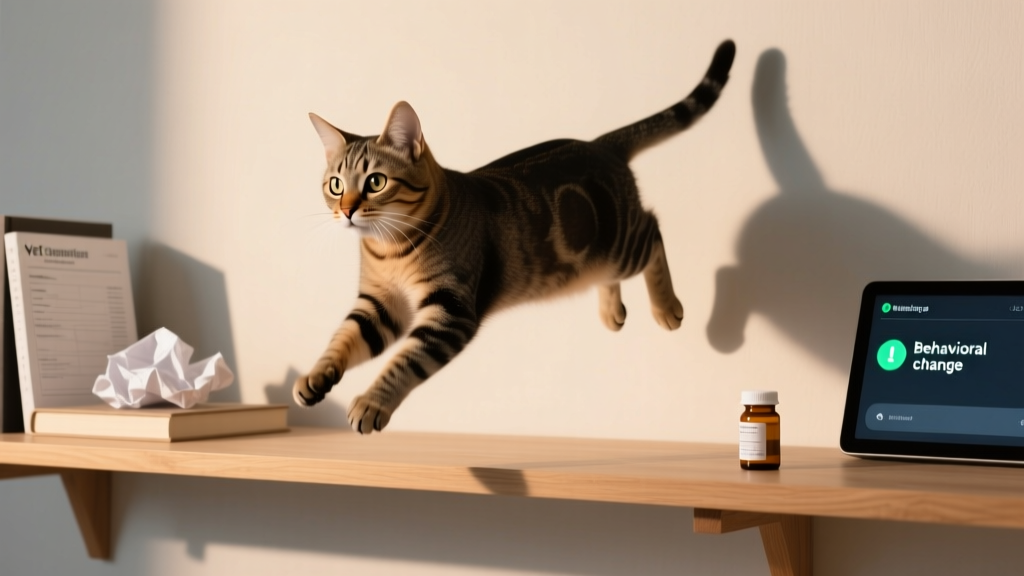
If you’ve ever stared at your cat mid-purr while they stare blankly back—or watched them suddenly bolt from your lap after gentle petting—you’re not alone. In fact, what do cats behaviors mean guide is one of the top-searched phrases among new cat guardians, seasoned adopters, and even veterinary staff seeking quick-reference tools. But here’s the truth most guides skip: cats don’t ‘act out’—they communicate with precision, consistency, and nuance. Yet without decoding their language, we misread affection as aloofness, stress as defiance, and fear as aggression. That misunderstanding doesn’t just cause confusion—it erodes trust, triggers avoidable conflict, and can even delay early detection of pain or anxiety. This guide isn’t about memorizing ‘cat dictionary’ definitions. It’s about building fluency—so you respond with empathy, not assumption, and transform every interaction into a moment of mutual safety and connection.
Decoding the 5 Core Communication Channels
Cats speak through five integrated systems: body posture, facial expression, vocalization, tactile signaling (like kneading or biting), and scent-based cues. Crucially, these rarely operate in isolation—context is everything. A flicking tail means something very different when paired with flattened ears versus slow blinks and relaxed whiskers.
1. Tail Language — The Most Misunderstood Signal
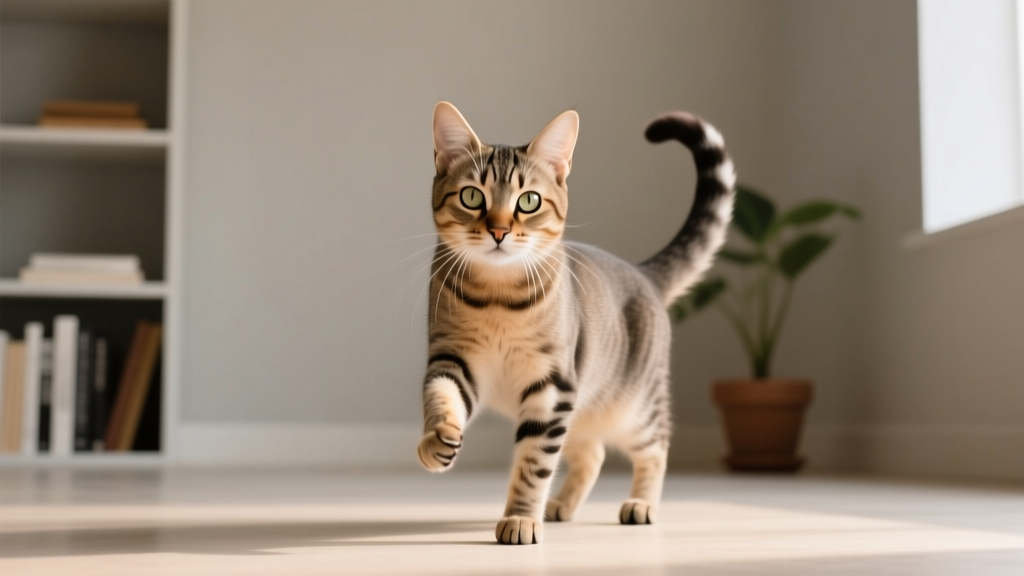
Contrary to popular belief, a wagging tail isn’t happiness—it’s agitation. Dr. Sarah Wooten, DVM and certified feline behavior specialist, confirms: “A rapidly swishing tail in a low position signals rising frustration—not playfulness. If ignored, it often escalates to a swat or hiss.” But subtlety matters: a gently curved tail held upright with a soft tip ‘question mark’ shape? That’s friendly greeting. A puffed-up tail? Fear or defensive arousal. And a tucked tail beneath the body? Deep anxiety or submission.
2. Ear Position — Your Real-Time Emotional Gauge
Ears are dynamic barometers. Forward-facing ears indicate curiosity or alert interest—think your cat tracking a bird outside. Slightly sideways (‘airplane ears’) suggest mild uncertainty—common during introductions to new people or environments. Flattened backward against the skull? Immediate warning: fear, pain, or aggression is imminent. Importantly, asymmetrical ear positioning—e.g., one forward, one back—often signals divided attention or mild discomfort (like being petted just past their tolerance threshold).
3. Eye & Blink Behavior — The Trust Metric
Direct, unblinking eye contact from a cat is a challenge—not affection. But the slow blink (a deliberate, languid closing and reopening of both eyes) is widely documented in peer-reviewed literature as a feline ‘I love you’ signal. A 2020 study published in Scientific Reports found that cats were significantly more likely to approach humans who slow-blinked at them—and reciprocated the gesture 84% of the time. When your cat slow-blinks while gazing at you? They’re offering vulnerability. Return it gently, and you reinforce safety.
4. Vocalizations — Context Is King
Meows are almost exclusively directed at humans—not other cats. Kittens meow to mothers; adults adapt it for us. A short, high-pitched ‘mew’ at breakfast time? Request. A drawn-out, low-pitched yowl at night? Pain, cognitive decline (especially in seniors), or territorial distress. Chirps and chatters? Frustration mixed with excitement—usually when watching prey they can’t reach. Purring? Not always contentment: cats also purr when injured, giving birth, or stressed. As Dr. Wooten notes, “Listen to the *quality*—a strained, uneven purr with tense muscles and flattened ears is a distress signal, not comfort.”
5. Tactile & Scent Signals — The Silent Conversation
Kneading (‘making biscuits’) is a neonatal behavior linked to nursing comfort—and adult cats use it to mark safe spaces with scent glands in their paws. Rubbing their cheeks or head on you deposits facial pheromones (F3), signaling ‘this belongs to my family.’ But biting during petting? Often a ‘cut-off signal’—not aggression. It’s their way of saying, ‘I’m overstimulated.’ Research from the Cornell Feline Health Center shows 72% of cats exhibit this ‘petting-induced aggression’ due to sensory overload, not hostility.
The Behavior Decoder Table: 27 Key Signals, Their True Meaning, and What to Do Next
| Behavior | Most Likely Meaning | What to Do Immediately | When to Consult a Vet |
|---|---|---|---|
| Slow blinking while making eye contact | Trust, relaxation, bonding | Return the slow blink; speak softly; maintain calm presence | Never—this is a healthy sign |
| Tail held straight up with quivering tip | Excitement, greeting, affection (often near owner) | Offer gentle chin scritches; engage in quiet play | Rarely—unless accompanied by urine spraying (possible marking) |
| Low, rapid tail swish + flattened ears | Building frustration or fear | Stop current interaction; create distance; offer a safe retreat | If frequent or escalating without clear trigger—rule out pain or hyperthyroidism |
| Excessive licking/grooming of one area | Pain, itch, or anxiety-related compulsion | Check skin for redness, sores, or fleas; reduce environmental stressors | Within 48 hours—can indicate allergies, infection, or dermatitis |
| Chattering at windows | Frustration + predatory excitement | Redirect with interactive wand toy; provide daily hunting simulation | Only if combined with vocal distress or self-injury |
| Sudden hiding + refusal to eat | Acute pain, illness, or severe stress | Minimize noise/light; offer food/water nearby; monitor closely | Within 12–24 hours—cats hide illness until advanced stages |
| Rolling onto back exposing belly | Sign of deep trust—but NOT an invitation to rub | Respect the gesture; offer chin or cheek scratches instead | If accompanied by growling or sudden aggression—reassess safety boundaries |
| Urine spraying on vertical surfaces | Stress response or territorial insecurity | Identify recent changes (new pet, renovation, visitor); add vertical space | Always—rule out UTIs, cystitis, or kidney disease first |
Real-Life Case Studies: How Decoding Behavior Transformed Outcomes
Case Study 1: Luna, 3-year-old rescue tabby
Luna was labeled ‘aggressive’ after repeatedly biting her owner’s hand during petting sessions. Her guardian assumed she was ‘ungrateful.’ Using the decoder table, they noticed Luna’s tail would begin low and twitch after ~90 seconds—even before biting. They implemented the ‘90-Second Rule’: pet only in brief, predictable intervals, ending *before* the tail cue appeared. Within 10 days, biting ceased entirely. The behavior wasn’t hostility—it was a precise, unheeded ‘stop’ signal.
Case Study 2: Oliver, 12-year-old senior Siamese
Oliver began yowling nightly and pacing. His owner thought he was ‘just getting old.’ A vet visit revealed early-stage hyperthyroidism—but crucially, the behavior log showed yowling always occurred *after* using the litter box. Further investigation revealed painful urination due to bladder stones. The vocalization wasn’t dementia—it was pain communication. Early intervention prevented kidney damage.
Case Study 3: Mochi, 6-month-old kitten
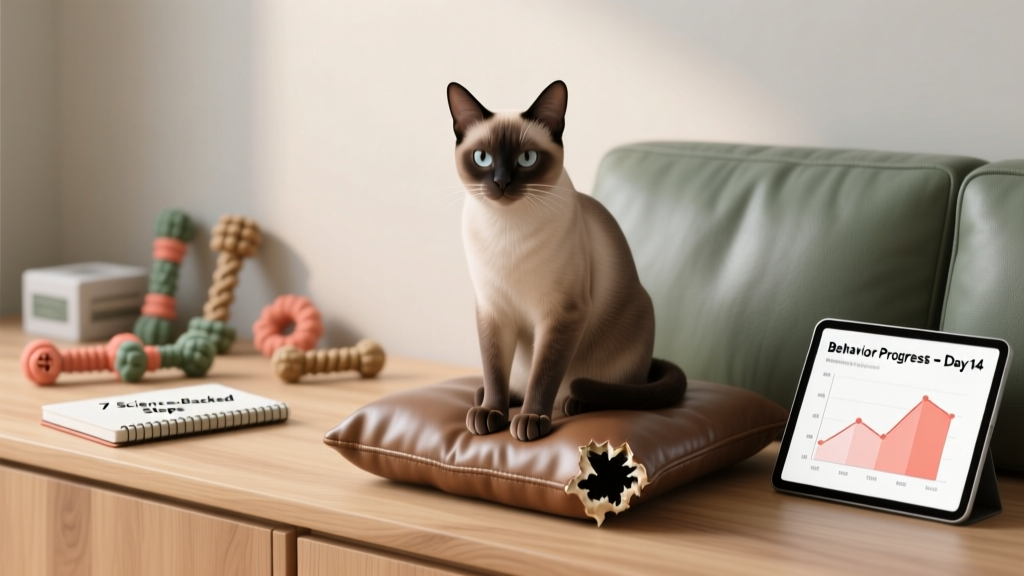
Mochi shredded curtains daily. Instead of punishment, his owner observed timing: destruction spiked after 4 p.m., coinciding with his human’s work-from-home calls. Mochi wasn’t ‘naughty’—he was bored and seeking engagement. Introducing 15-minute interactive play sessions at 3:45 p.m. reduced shredding by 92% in one week. His behavior meant ‘I need outlet + attention’—not ‘I hate your home.’
Frequently Asked Questions
Why does my cat stare at me without blinking?
Unbroken eye contact from a cat is typically a low-level challenge or assessment—not affection. It’s their way of testing boundaries or gauging your reaction. To diffuse tension, slowly blink or look away. If they return the slow blink, trust is building. Persistent staring *combined* with dilated pupils, stiff posture, or low growling may indicate anxiety or resource guarding—especially around food or sleeping areas.
Is it true that cats ‘don’t feel love’ like dogs do?
No—this is a persistent myth rooted in outdated anthropomorphism. Cats form secure attachments to caregivers, evidenced by separation anxiety, preference for familiar scents, and stress reduction in their presence (per a 2019 University of Lincoln study). Their love language is quieter: following you room-to-room, sleeping near your head, bringing ‘gifts’ (even if it’s a sock), and grooming you. They simply express devotion on their own terms—not ours.
My cat knocks things off tables—is it spite?
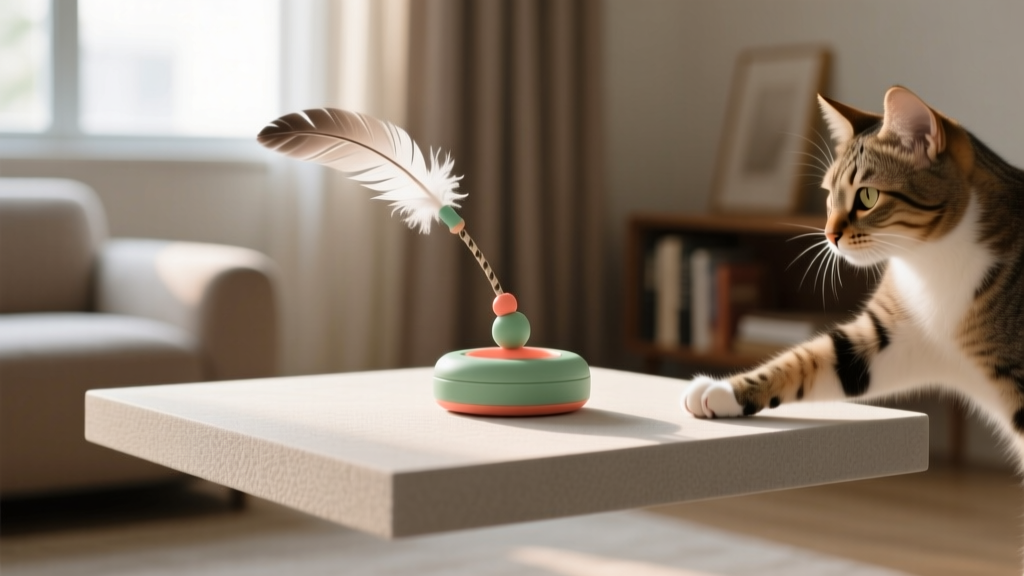
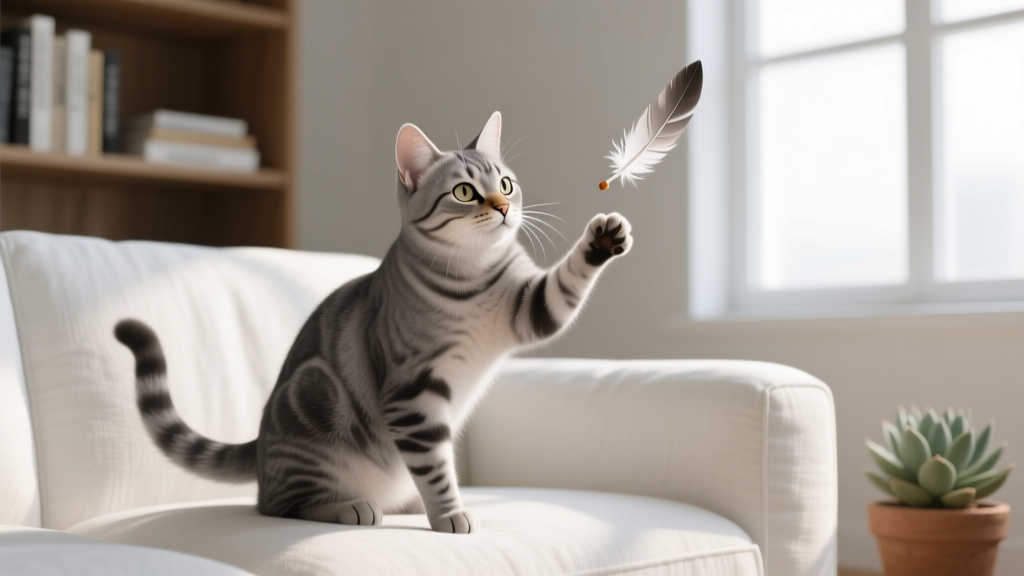
Spite requires complex intent and moral reasoning—traits cats lack. Knocking objects down serves three evidence-backed functions: 1) Stimulating prey-drive instincts (moving objects mimic small animals), 2) Testing cause-and-effect (especially in kittens), or 3) Seeking attention—because it reliably gets a reaction. Redirect with puzzle feeders or feather wands *before* the behavior starts, and ignore the act itself (no eye contact, no verbal correction).
What does it mean when my cat brings me dead mice or birds?
This is a profound gesture of inclusion and teaching—not ‘gifting’ in the human sense. In feral colonies, mother cats bring prey to kittens to teach hunting skills. Your cat views you as part of their family unit—and is attempting to train you. While unsettling, it reflects deep social bonding. To discourage it, keep your cat indoors (proven to increase lifespan by 2–5 years) and provide daily simulated hunting via wand toys and food puzzles.
Why does my cat suddenly sprint around the house at 3 a.m.?
Known as the ‘zoomies,’ this is normal energy release—especially in young or indoor-only cats lacking natural outlets. It’s tied to circadian rhythms (cats are crepuscular—most active at dawn/dusk) and pent-up hunting drive. Prevention: schedule vigorous 10-minute play sessions at dusk and dawn, followed by a meal (mimicking post-hunt satiety). Avoid reinforcing the behavior by chasing or yelling—they’ll associate your response with play.
Debunking 2 Common Myths About Cat Behavior
- Myth #1: “Cats are solitary and don’t need companionship.” — False. While cats are facultatively social (they *can* live alone), decades of ethological research—including field studies of feral colonies—show they form complex, cooperative social structures with preferred associates, shared grooming, and coordinated hunting. Indoor cats often suffer chronic loneliness without enrichment or compatible feline company.
- Myth #2: “If my cat purrs, they must be happy.” — False. Purring occurs across a wide physiological spectrum: contentment, pain, labor, fear, and recovery. The frequency (25–150 Hz) has been shown to promote bone density and tissue repair—suggesting an evolutionary self-soothing mechanism. Always assess purring alongside body language: relaxed posture = comfort; tense muscles + flattened ears = distress.
Related Topics (Internal Link Suggestions)
- Understanding Cat Body Language Cues — suggested anchor text: "cat body language chart"
- How to Stop Cat Aggression Toward People — suggested anchor text: "why does my cat bite me"
- Senior Cat Behavior Changes Explained — suggested anchor text: "older cat acting weird"
- Introducing Cats to Each Other Safely — suggested anchor text: "how to introduce cats step by step"
- Enrichment Ideas for Indoor Cats — suggested anchor text: "best cat enrichment activities"
Your Next Step: Build Fluency, Not Just Knowledge
Knowing what do cats behaviors mean isn’t about achieving perfection—it’s about cultivating curiosity and humility. Start small: choose *one* behavior this week (e.g., tail position or ear angle) and observe your cat for 5 minutes daily. Note context: what happened before? What did you do? How did they respond? Keep a simple journal. Within 7 days, you’ll spot patterns no app or book can teach you—because they’re uniquely yours and your cat’s shared language. Then, share one insight in our community forum below—we’ll help you interpret it. Because the most powerful behavior guide isn’t written by experts. It’s co-authored, day by day, between you and your cat.