Why Cats Greet You at the Door Like Dogs Do
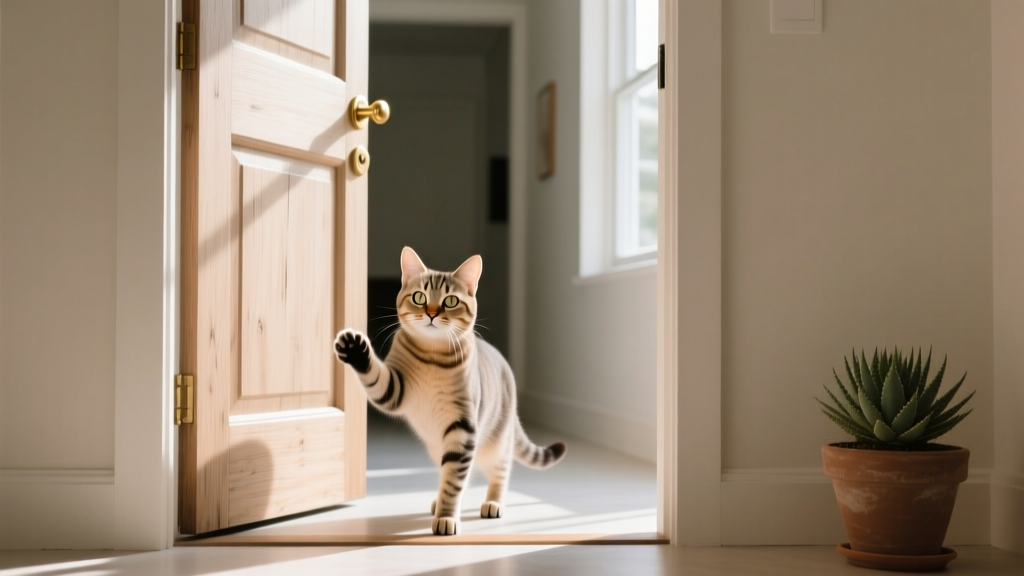
You open the front door after a long day, juggling keys, groceries, and your last shred of patience… and there they are. A small furry figure sitting two feet from the threshold like a bouncer at a very exclusive club. Maybe your cat chirps. Maybe they rub your ankles so enthusiastically you almost lose a tomato. Maybe they trot ahead of you as if to say, “Good. You’re back. Follow me.”
If you’ve ever caught yourself thinking, “Since when did I adopt a tiny dog?”—you’re not alone. Door greetings are common in cats, and they’re not random. They’re a surprisingly rich bundle of feline instincts, learning, attachment, and routine.
1) The science (and evolution) behind the “door greeter” cat
Cats aren’t pack animals in the same way dogs are, but they are social—especially with the individuals they trust. Domestic cats evolved from the African wildcat, a mostly solitary hunter. Solitary doesn’t mean antisocial; it means they don’t need a group to hunt. But cats can form strong social bonds and live in cooperative groups when resources allow (food, safe shelter, stable territory).
Greeting you at the door taps into a few core feline drives:
- Territory monitoring: Your cat’s home is their territory. When the “territory boundary” (the door) changes—opens, closes, brings new scents—your cat investigates. You’re part of that territory too, and you return carrying a whole world of interesting smells.
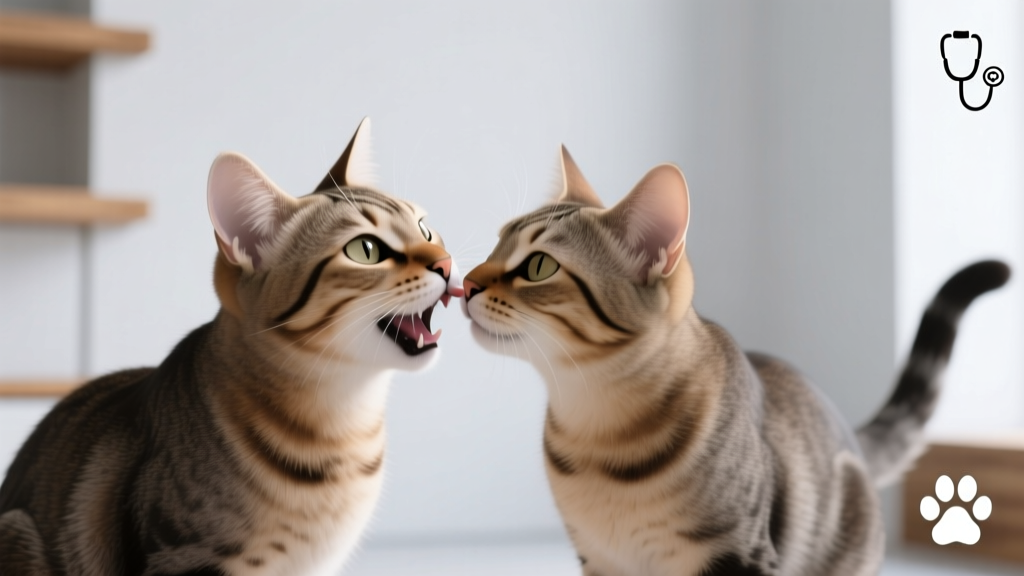
- Social bonding rituals: Friendly cats greet each other with upright tails, face rubbing, and proximity. Your cat may treat your arrival as a reunion with a preferred social partner.
- Predictable routine = safety: Cats are routine-loving creatures. A door opening at a certain time can become a “daily anchor.” Your arrival signals that the household rhythm is back on track.
- Learning and reinforcement: If your cat greets you and you respond—talking, petting, feeding, playing—you’ve taught them that door greeting works. Cats are excellent at repeating behaviors that get results.
So while it can look “dog-like,” your cat isn’t trying to cosplay as a Labrador. They’re doing a very cat-appropriate combination of checking territory, reconnecting, and collecting benefits.
2) A detailed breakdown: different door-greeting styles and what’s going on
Not all door greetings are created equal. The context and body language tell you what your cat is thinking.
The “statue by the door”
What you see: Your cat sits or loafs near the entryway, calmly watching.
What it often means: Anticipation and routine. Many cats learn the sound of your car, footsteps, elevator, or keys. They position themselves early, like they’re waiting for a favorite show to start.
The “head-butt and ankle weave”
What you see: Tail up, friendly face rubs, circling your legs, possibly a dramatic flop.
What it often means: Affiliation and scent marking. Cats have scent glands on their cheeks and head. Rubbing isn’t just “cuddly”—it’s a way of saying, “You smell like me and my home again.” If your cat is an ankle weaver, move slowly. Their love is occasionally a tripping hazard.
The “talkative concierge”
What you see: Meowing, trilling, chirping, sometimes a long “mrrrrow?” that sounds like a question.
What it often means: Attention seeking and social contact. Some cats are simply chatty. Others have learned that vocalizing gets an immediate response. If the meows are paired with relaxed posture and a tail held upright, it’s usually friendly.
The “escort service”
What you see: Your cat meets you, then walks ahead, looking back to make sure you’re following.
What it often means: Guiding you to a resource: food, water, a toy, a sunny window, the treat cabinet… or the litter box they want you to scoop immediately. Cats are excellent at training humans with tiny, confident glances over the shoulder.
The “door dash attempt”
What you see: Your cat greets you but also tries to slip outside.
What it often means: Curiosity, exploration, or a high-energy/under-stimulated cat seeking enrichment. It can also be a sign of stress or territorial pressure inside the home (more on that later).
3) What the behavior says about your cat’s mood and feelings
Your cat’s door greeting can reveal a lot about their emotional state—especially if you look at the whole body, not just the fact that they’re there.
- Tail straight up (often with a little hook at the end): Friendly, confident, socially open. This is one of the clearest “I’m happy to see you” signals in cat language.
- Slow blinks while approaching: Calm trust. Many cats offer a slow blink greeting when they feel safe and affectionate.
- Rubbing and purring: Contentment and bonding, with a side of scent marking. (Purring can also happen when a cat is stressed, so consider context.)
- Big, intense meows with pacing: Could be excitement, impatience, or a “Where have you been?” protest—especially if it happens around meal times.
- Crouched posture, ears sideways or back, tail low: Uncertainty or anxiety. The cat may be investigating the door because something about your return feels different (new scent, a visitor, a loud noise outside).
Many cats greet their favorite person more enthusiastically than others. That’s not “playing favorites” so much as it is reinforcement and relationship history: who feeds them, plays with them, respects their boundaries, and moves predictably.
4) Related behaviors you might also notice
Door greeting rarely shows up alone. If your cat is a greeter, you might see a whole suite of “social check-in” behaviors:
- Following you from room to room: Not always clinginess—often social curiosity and a desire to be near the action.
- Bringing a toy when you arrive: A play invitation, sometimes a self-soothing ritual, sometimes a proud “I hunted!” announcement.
- Rolling onto their back: A sign of comfort and trust. It’s often a greeting display, not necessarily a request for belly rubs (some cats mean it; many do not).
- Sniffing your shoes or bag intensely: Information gathering. Your cat is reading your day like a newspaper written in scent.
- Post-arrival zoomies: Release of excitement and energy. You came home—the household just “turned on.”
5) Normal vs. concerning: when door greeting deserves a closer look
Most door greeting is perfectly normal and a sign your cat is engaged with their environment. But a few patterns can hint at an underlying issue.
Usually normal
- Greeting that includes relaxed body language, tail up, soft face, normal appetite and litter box habits.
- Increased greeting behavior around predictable times (you get home, dinner time).
- Door monitoring after a noisy hallway event or neighbor activity (cats are vigilant).
Potential concerns
- Sudden clinginess or frantic greeting behavior: If your previously independent cat becomes intensely attached to your arrival, consider stressors (new pet, schedule change) or discomfort.
- Excessive vocalizing plus signs of distress: Panting, hiding, dilated pupils, or aggression can indicate anxiety or fear.
- Door guarding with aggression: Hissing, swatting, or blocking other pets/people could relate to territory insecurity or redirected aggression.
- Escape attempts that escalate: If your cat repeatedly bolts and seems frantic outside, talk to your veterinarian and consider a behavior consultation—especially if indoor stress or boredom might be driving it.
- New behavior in an older cat: Any sudden behavioral change can be medical. Pain, hyperthyroidism, cognitive changes, or sensory decline can alter how cats react to arrivals and routines.
If you’re unsure, a vet check is a great first step. Behavior is often the earliest place health issues show up.
6) How to respond (and how to encourage healthy greeting habits)
If you love the greeting—and you want to keep it sweet rather than chaotic—your response matters. Cats learn quickly what “works.”
- Reward calm greetings: If your cat stays relaxed (no frantic bolting, no biting your ankles), reinforce with gentle attention, a few treats, or a short play session. Timing matters: reward the calm moment, not the frenzy.
- Create a “welcome home ritual”: Many cats adore consistency. Try: hang keys, wash hands, then offer 2–3 minutes of play with a wand toy. This channels excitement into something appropriate.
- If your cat is a door dasher, add management: Use a baby gate, a screen door, or a small “airlock” routine (step in, close door, then greet). Toss a treat away from the door before opening it to create a habit of moving inward, not outward.
- Respect boundaries: Some cats greet by being near you, not on you. Let them approach. The best way to keep a social cat social is to make interactions feel safe and predictable.
- Enrich the indoor environment: More climbing options, window perches, puzzle feeders, and daily play can reduce door obsession driven by boredom.
- Be mindful of scent: If you come home smelling like another animal, your cat may act wary. Give them a moment, change clothes if needed, and let them investigate at their pace.
A helpful mindset: your cat greeting you is a conversation opener. Answer it in a way that makes sense in “cat language”—calm, consistent, and rewarding.
7) Fun facts and research nuggets about cats who greet
- Cats can form attachment styles: Research suggests some cats show attachment patterns to their humans that resemble secure or insecure attachments (measured through behavior in unfamiliar situations). A confident door greeting can be part of that secure “you’re my safe person” relationship.
- Trilling is often a friendly greeting sound: Many cats use chirps and trills as social signals—like a feline “Hi!”—especially directed at trusted individuals.
- Your cat recognizes routines better than you think: Cats are excellent at predicting patterns: workdays vs. weekends, pre-dinner activity, the sound of specific footsteps in a hallway. If they meet you at the door at the same time daily, it’s not magic—it’s observation plus learning.
- They’re also reading your mood: Cats pick up on body language, speed of movement, and tone. A calmer entrance often produces a calmer greeting.
FAQ: Common questions about cats greeting you at the door
Does my cat greeting me mean they missed me?
Often, yes—in a cat way. It can mean they’re happy you’re back, they feel safer when you’re home, and they enjoy the social interaction you bring. It can also mean they anticipate rewards (food/play). Usually it’s a mix of affection, routine, and expectation.
Why does my cat only greet me and not other family members?
Cats build relationships based on history and reinforcement. The person who feeds, plays, speaks gently, and respects boundaries often becomes the “preferred greeter target.” It can also be about predictability—some humans move more calmly than others.
My cat greets me and then bites my ankles. Is that aggression?
Not always. Ankle bites at the door are commonly overstimulation, excitement, or attention-seeking that has turned into a habit. Redirect with a toy immediately, reward calm behavior, and avoid using your hands/feet as play targets.
Why does my cat meow loudly the moment I walk in?
Some cats vocalize as a greeting, some as a request (“Dinner?”), and some as a release of pent-up energy. Check the context: tail up and relaxed body usually means friendly. If the meowing is new, intense, or paired with restlessness or weight loss, schedule a vet visit.
Can I train my cat to greet me at the door?
You can encourage it by pairing your arrival with something pleasant—treats, play, or attention—while rewarding calm behavior. Keep sessions short and consistent. If your cat is naturally shy, don’t force it; you’re aiming for comfort, not compliance.
Is it bad if my cat doesn’t greet me at the door?
Not at all. Some cats prefer to observe from a distance or wait until you’re settled. Others are naturally more independent or easily startled by the door opening. What matters most is your cat’s overall wellbeing and the quality of your interactions when they do choose to engage.
If your cat greets you at the door, you’re witnessing a small daily ritual of trust, territory, routine, and relationship—wrapped up in whiskers and a confident tail. Pay attention to the style of greeting, respond in ways that reinforce calm connection, and you’ll strengthen the bond without accidentally creating a tiny door-obsessed chaos gremlin.
Does your cat wait like a statue, chirp like a little bird, or escort you straight to the treat cabinet? Share your cat’s door-greeting stories (and their funniest “welcome home” habits) with the Cat Lovers Base community at catloversbase.com.