Why Cats Follow the Vacuum Cleaner Around
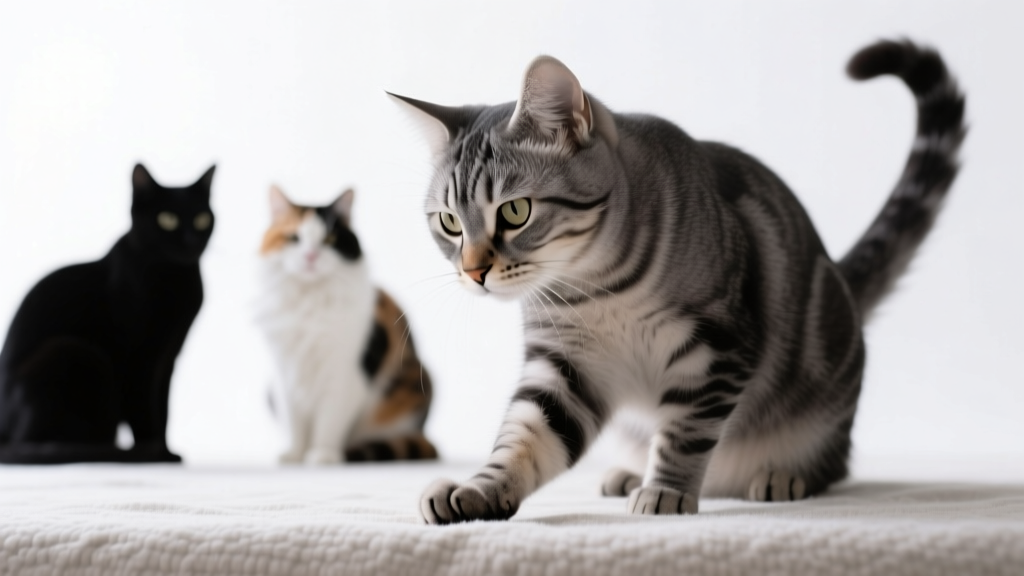
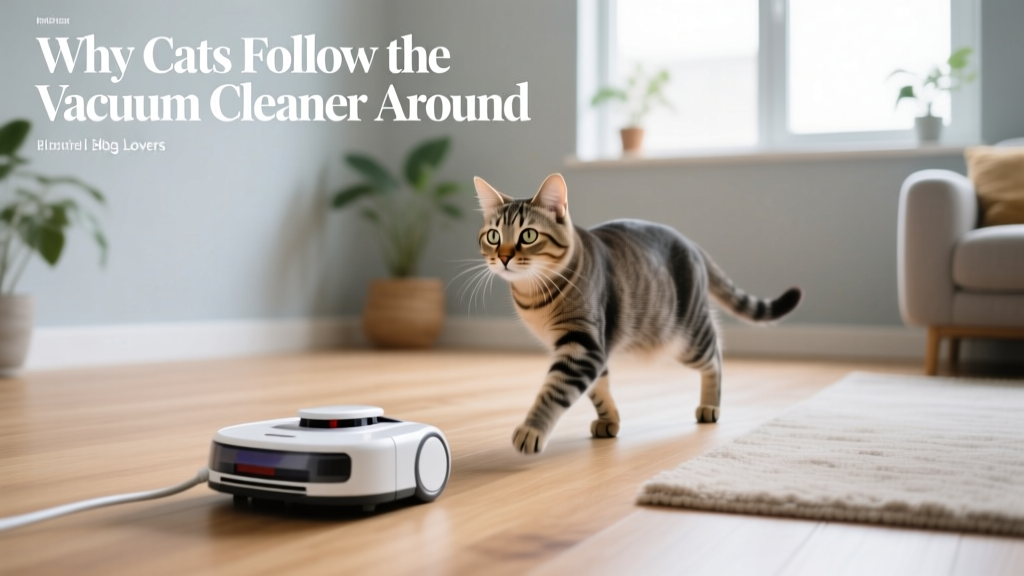
You finally carve out 20 minutes to clean. The vacuum roars to life, and you brace yourself for the usual: your cat disappearing under the bed like you’ve unleashed a monster. But instead… there they are. Tail up, eyes wide, trotting right behind the vacuum like a tiny supervisor in a fur coat. They circle it. They sniff it. They follow every turn as if they’re the foreman of your cleaning crew.
If your cat does this, you’re not alone—and you’re not imagining the weirdness. A loud, fast, unpredictable machine seems like the last thing a cat should voluntarily hang out with. Yet plenty of cats track the vacuum’s movements, shadow it room to room, and occasionally even attempt a brave (and mildly foolish) paw-tap. This behavior can look bold, goofy, or downright confusing… but it actually makes a lot of sense once you view it through a cat’s eyes.
1) The scientific (and evolutionary) reasons cats stalk the vacuum
Cats are built to notice and investigate movement. In the wild, a rustle in the grass might be prey—or a threat. That “notice first” brain wiring didn’t disappear just because your cat now has a heated bed and a favorite crinkly toy.
From a feline perspective, a vacuum cleaner is:
- Loud: Noise in nature often signals danger or opportunity.
- Large and mobile: Big moving objects deserve attention.
- Unpredictable: It changes direction, stops suddenly, and appears to “hunt” dust bunnies.
- Territory-invading: It travels across the home, which is your cat’s carefully curated kingdom.
This taps into two powerful systems in the cat brain:
- The hunting system: Movement triggers tracking, stalking, and pouncing instincts—even when the “prey” is a household appliance.
- The safety/territory system: Cats like to know what’s happening in their space. When something noisy and strange starts roaming the halls, some cats monitor it the way they’d monitor a new animal at the edge of their territory.
Also, many cats are neophobic (cautious with new things) but also intensely curious. For some, curiosity wins. For others, fear wins. And for some cats, following the vacuum is a way to control uncertainty: “If I keep my eyes on it, it can’t surprise me.”
2) A detailed breakdown: different “vacuum follower” types
Not all vacuum-following is the same. The context—and your cat’s body language—tells you which motivation is driving the behavior.
The “security guard” shadow
This cat keeps a consistent distance, often a few feet away, peeking from around corners. They may sit upright with ears angled forward and slightly to the side, watching every movement.
What’s going on: Vigilance. Your cat is tracking a potentially risky situation while keeping a safe escape route.
The “curious scientist” investigator
This cat approaches during pauses, sniffs the vacuum head, investigates the cord, and may follow closely as long as the vacuum stays predictable.
What’s going on: Information gathering. Cats learn by sniffing, observing, and mapping “rules” of new objects: Does it chase me? Does it bite? Where does it go when it’s done?
The “predator mode” stalker
Low body posture, intense stare, slow creeping steps, and sometimes a quick dart forward or a paw swipe—especially at the vacuum head as it glides past.
What’s going on: This is classic prey-drive behavior. The vacuum’s movement pattern can look like a giant, noisy animal that “runs away” and changes direction.
The “brave bouncer” challenger
This cat gets in the vacuum’s path, stands tall, tail may be puffed or held stiff, and they might swat or even try to bite the nozzle.
What’s going on: A mix of territorial confidence and overstimulation. Some cats respond to stress by confronting the trigger rather than fleeing.
The “social follower” who just wants to be near you
They’re not focused on the vacuum; they’re focused on you. They weave around your legs (not ideal during vacuuming), chirp, or trot alongside you from room to room.
What’s going on: Social bonding and routine. Your cat may interpret vacuum time as “we’re doing something together.” Cats can form strong attachments and sometimes choose proximity over comfort.
3) What following the vacuum says about your cat’s mood
Vacuum-following can signal everything from playful interest to genuine distress. Here’s how to read the emotional “tone” of it.
- Curious and confident: Tail up (a friendly “hello”), normal blinking, ears forward, relaxed gait, approaching during pauses.
- Alert but coping: Ears swiveling, body slightly tense, keeping a measured distance, retreating and re-approaching. This cat is managing their nerves by monitoring.
- Overstimulated or threatened: Puffing tail, crouching tightly, flattened ears, growling, hissing, sudden swats, frantic darting. This isn’t “fun brave”—it’s stress.
- Play-aroused: Wiggly butt, quick dashes, paw taps when the vacuum changes direction. This can look funny, but it can also escalate into stress if the noise is too intense.
One important nuance: cats can look “bold” while still being anxious. A cat that confronts the vacuum might not be fearless—they may be stuck between fear and the urge to control the situation.
4) Related behaviors you might notice
If your cat follows the vacuum, you may also see other “monitoring” or “weird appliance” behaviors:
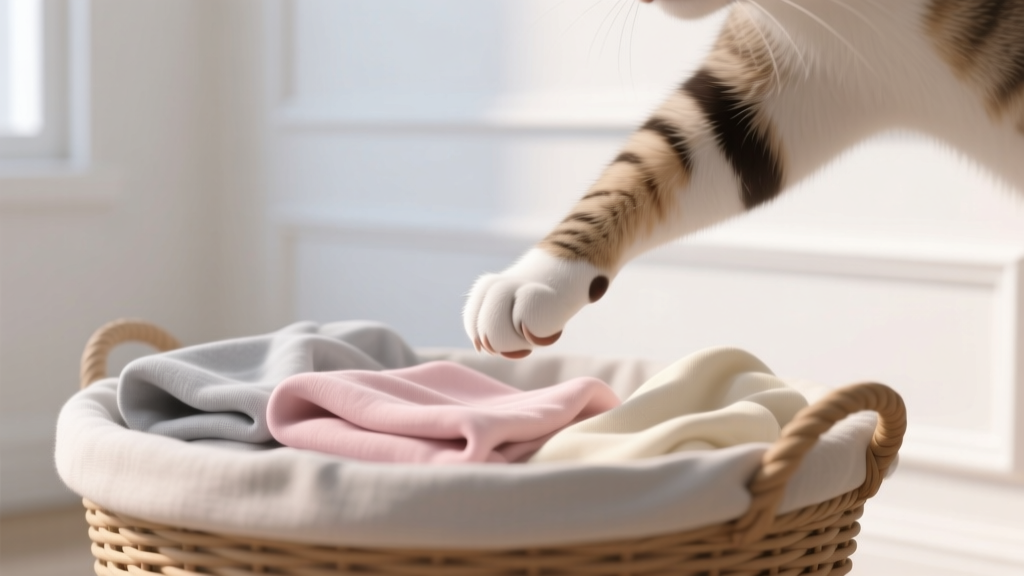
- Following you during chores (laundry, making the bed, sweeping)—your cat treats moving objects and routine changes as noteworthy events.
- Stalking brooms, mops, or swiffer heads—same movement trigger, less noise.
- Inspecting the vacuum when it’s off—sniffing the bristles, rubbing cheeks on it (scent-marking a “known” object).
- Zoomies after vacuuming—a release of stress or adrenaline once the noise stops.
- Hiding, then reappearing to watch—classic “I’m scared but I need to know” cat logic.
5) When vacuum-following is normal… and when it’s a concern
In most homes, vacuum-following is simply your cat being a cat: curious, vigilant, and a little dramatic. It may even be a sign of confidence if your cat can tolerate the noise and movement without panicking.
It’s generally normal if:
- Your cat can choose distance and leave the area when they want.
- They show relaxed or mildly alert body language (not panic).
- They return to normal behavior soon after vacuuming ends.
It may be a concern if:
- Your cat shows intense fear (panting, drooling, trembling, frantic escape attempts).
- They become aggressive toward the vacuum and redirected aggression occurs (swatting you or another pet afterward).
- Vacuuming triggers hiding for hours, loss of appetite, or litter box avoidance.
- The behavior suddenly appears or escalates dramatically, especially in an older cat (pain, hearing changes, or cognitive shifts can affect tolerance).
If your cat seems truly distressed, talk to a veterinarian or a qualified cat behavior professional. Stress is not “just a personality quirk” when it consistently disrupts a cat’s wellbeing.
6) Tips for responding (and keeping everyone safe)
You don’t need to “train it out” of your cat if they’re calmly curious. But you do want to keep them safe and prevent fear from building over time.
Create a “safe viewing spot”
Give your cat a predictable perch—like a cat tree in the corner or a bed on the sofa—where they can watch from a comfortable distance. Cats feel safer when they can observe without being in the action.
Control access to the cord and moving parts
Cords can be tempting, and a startled cat can get too close to the nozzle. If your cat is a close-follower, consider keeping them in a nearby room with a treat puzzle while you vacuum.
Pair the vacuum with good things (if your cat is nervous)
This is classic counterconditioning, but you can do it in a cat-friendly way:
- Leave the vacuum out (off) and place treats near it for a few days.
- Turn it on briefly in another room while your cat enjoys a high-value treat.
- Gradually decrease distance only if your cat stays relaxed.
The goal isn’t to make your cat “love” the vacuum. It’s to teach them, “This noise predicts snacks, not danger.”
Keep your movements predictable
Sharp turns and sudden lunges of the vacuum can trigger stalking or startle responses. Slow, steady passes are easier for cats to tolerate.
Respect your cat’s coping style
If your cat chooses to watch from a doorway, let them. If they choose to leave, don’t drag them out “to get used to it.” Forced exposure can increase fear.
Give a post-vacuum decompression routine
Many cats appreciate a small play session after vacuuming (wand toy, short chase) followed by a snack. It helps shift their nervous system back into “safe and normal.”
7) Fun facts and research-y bits (without the textbook vibe)
- Curiosity is a survival tool: Cats who investigate changes in their environment can better predict what’s safe. Your vacuum-following cat may be running a very serious “risk assessment” while looking slightly ridiculous.
- Cats map routines: Many cats thrive on predictability. The vacuum disrupts the home soundscape and movement patterns, so monitoring it is one way to restore order.
- Noise sensitivity varies hugely: Some cats are naturally more noise-sensitive due to temperament, early experiences, and genetics. Two cats in the same home can react in opposite ways to the exact same vacuum.
- Scent matters: Vacuums carry the smell of dust, debris, and every room they’ve visited. For a scent-driven species, the vacuum is basically a rolling bulletin board of household information.
FAQ: Common questions about cats and vacuum cleaners
Why does my cat follow the vacuum but run from the hair dryer?
Different sound frequencies, different movement patterns, and different associations. A vacuum moves across territory like a roaming “thing,” while a hair dryer is stationary but blasts air and heat—some cats find the airflow more startling than the movement.
Is my cat trying to protect me from the vacuum?
It can look that way, but it’s usually not “protection” in the human sense. More often, your cat is monitoring a loud intruder in their territory—or investigating something novel—while also keeping tabs on where you are.
My cat attacks the vacuum. Should I stop vacuuming when they do?
If you stop immediately every time, you may accidentally teach, “Attacking makes it go away.” Instead, prioritize safety: calmly block access, increase distance, and consider separating your cat during vacuuming. Then work on gradually building a better association when the vacuum is off or far away.
Why does my cat rub on the vacuum after I’m done?
That’s often scent-marking—your cat is re-labeling the object (and sometimes the freshly cleaned area) as “mine” using facial pheromones. It can also be a self-soothing ritual after a noisy event.
Can I train my cat to be less afraid of the vacuum?
Yes, in many cases. Go slowly, use treats, avoid forcing proximity, and practice short sessions. If fear is intense, a vet can help rule out medical issues and discuss anxiety-reduction options.
Is it okay if my cat watches the vacuum really closely?
If their body language is relaxed and they can choose to leave, it’s usually fine. The concern is when “watching” turns into panic, aggression, or prolonged stress afterward.
Better vacuum days, better cat-human relationships
A cat who follows the vacuum isn’t being weird just to be weird (though cats do excel at theatrical timing). They’re responding to movement, sound, routine disruption, and territorial instincts—plus whatever personal history they have with that noisy machine. When you read their body language and give them options—distance, safe spots, and positive associations—you’re speaking their language.
Does your cat supervise vacuuming like a tiny health inspector, stalk the nozzle like it’s prey, or act offended that you’re “deleting” all the interesting floor smells? Share your story with the Cat Lovers Base community at catloversbase.com—we’d love to hear exactly how your cat runs the household.