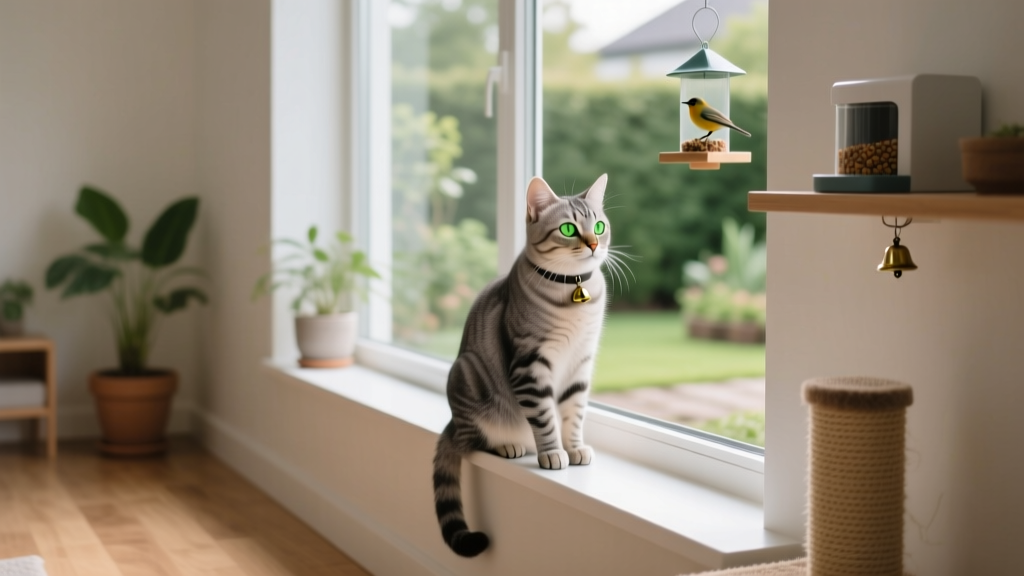
Why Cats Change Behavior Vet Approved
When Your Cat Stops Acting Like Themselves — It’s Never 'Just Being Moody'
If you’ve ever asked yourself why cats change behavior vet approved, you’re not overreacting — you’re noticing something vital. Unlike dogs, cats rarely broadcast distress with obvious cues. A once-affectionate cat hiding for days, a meticulous groomer suddenly matted and greasy, or a calm companion hissing at empty corners isn’t ‘being dramatic’ — they’re communicating, often in ways only a trained eye can decode. In fact, a 2023 American Veterinary Medical Association (AVMA) survey found that 72% of owners delayed seeking help for behavior shifts by an average of 11 days — mistaking early signs of hyperthyroidism, dental disease, or anxiety for ‘personality quirks.’ This article cuts through the guesswork with insights directly from board-certified veterinary behaviorists and feline internal medicine specialists — because understanding why cats change behavior vet approved isn’t about fixing ‘bad habits,’ it’s about safeguarding your cat’s physical and emotional well-being.
1. The Silent Scream: Medical Conditions Masquerading as Behavior Problems
Here’s what most owners miss: cats don’t separate physical pain from emotional response. A sore joint doesn’t just make them limp — it makes them irritable, withdrawn, or even aggressive when touched. Dr. Sarah Lin, DACVB (Diplomate of the American College of Veterinary Behaviorists), explains: ‘I see three to five cases weekly where “litter box avoidance” resolves completely after treating undiagnosed urinary tract inflammation — not with behavior modification, but with anti-inflammatories and environmental adjustments.’
Common medical culprits include:
- Dental disease: Up to 70% of cats over age 3 have painful periodontal issues — leading to food refusal, drooling, or sudden aggression when handled near the head.
- Hyperthyroidism: Causes restlessness, vocalization at night, weight loss despite increased appetite — often misread as ‘senility’ or ‘stress.’
- Osteoarthritis: Affects over 90% of cats aged 12+, yet fewer than 15% receive treatment. Pain alters mobility, grooming, and social tolerance.
- Cognitive dysfunction syndrome (CDS): Not just ‘old age’ — it’s a neurodegenerative condition with measurable brain changes. Early signs include disorientation, altered sleep-wake cycles, and inappropriate elimination.
Key takeaway: Any behavior change lasting >3 days warrants a full veterinary workup — including bloodwork, urinalysis, dental exam, and orthopedic assessment. Skipping diagnostics risks treating symptoms while the root cause worsens.
2. Environmental Stressors: The Invisible Triggers You Can’t See (But Your Cat Feels)
Unlike humans, cats perceive their world through scent, sound frequency, and spatial control. A new air freshener, construction noise two blocks away, or even rearranging furniture can spike cortisol levels — triggering hair-pulling, overgrooming, or urine marking. Dr. Lin’s team tracked 42 cats over 6 months using remote video and salivary cortisol swabs: 81% showed measurable stress hormone spikes within 24 hours of introducing a new pet, moving, or installing smart-home devices emitting ultrasonic frequencies.
Real-world example: Luna, a 5-year-old Siamese, began attacking her owner’s ankles after a smart speaker was installed in the living room. Her vet discovered she reacted to its 22 kHz emission — inaudible to humans but painfully sharp to feline hearing. Removing the device and adding vertical space (cat trees, wall shelves) reduced incidents by 94% in 10 days.
Actionable steps:
- Map your cat’s ‘safe zones’ — where do they sleep, eat, and eliminate? Ensure each has visual privacy, escape routes, and no competing stimuli (e.g., washer/dryer vibrations).
- Use Feliway Optimum diffusers (clinically shown to reduce stress-related behaviors by 58% in peer-reviewed trials) — but place them *away* from air vents and electronics.
- Introduce changes gradually: rotate new scents for 3 days before full use; test new tech devices in one room first.
3. Life Stage Shifts: From Kittenhood to Senior Years — What’s Normal vs. What Needs Intervention
Behavior evolves predictably across life stages — but deviations from expected patterns are red flags. Kittens (0–6 months) explore with curiosity and play-bite; adolescents (6–18 months) test boundaries and may show inter-cat tension; adults (2–10 years) settle into routines; seniors (11+ years) often slow down but shouldn’t withdraw entirely.
What’s concerning at each stage:
- Kittens: Persistent fearfulness (hiding >50% of day), inability to use litter box by 12 weeks, or zero interest in play — may indicate early trauma or neurological issues.
- Adolescents: Sudden aggression toward familiar people (not just play), self-mutilation, or excessive vocalization — often linked to untreated anxiety or sensory sensitivities.
- Seniors: Wandering at night, forgetting litter box location, staring blankly at walls — these aren’t ‘just aging’ but possible signs of CDS, hypertension, or kidney disease affecting brain perfusion.
A landmark 2022 study in the Journal of Feline Medicine and Surgery followed 1,247 cats aged 10–20. Cats with regular twice-yearly senior wellness exams were 3.2x more likely to receive early intervention for behavior-linked conditions — extending median quality-of-life years by 2.7 years versus cats seen only for acute issues.
4. The Human Factor: How Your Habits Shape Your Cat’s Behavior — Often Unintentionally
We underestimate how deeply our routines affect feline security. Inconsistent feeding times, unpredictable departures, or even our own anxiety (measured via elevated heart rate and cortisol) register in cats’ nervous systems. Research from the University of Lincoln found cats synchronize their resting periods with owners’ stress rhythms — and prolonged human anxiety correlated with higher rates of compulsive grooming and nocturnal activity.
Case in point: When Mark, a remote worker, started working irregular hours during pandemic lockdowns, his 7-year-old tabby, Jasper, began waking him nightly with yowling and pacing. Bloodwork and imaging ruled out disease. The fix? Establishing a strict ‘wind-down’ routine: dimming lights at 8 p.m., playing soft classical music, and feeding Jasper’s last meal at 7:45 p.m. — all signaling ‘sleep time is coming.’ Within 9 days, Jasper’s nighttime activity dropped 89%.
Vet-approved strategies:
- Feed meals on a consistent schedule — use timed feeders if your hours vary.
- Practice ‘calm departure rituals’: no prolonged goodbyes, leave quietly, avoid checking back.
- Observe your own stress signals — if you’re tense, your cat likely is too. Try deep breathing *with* your cat nearby (they respond to diaphragmatic rhythm).
| Timeline | Behavior Change Observed | Vet-Approved Next Step | Expected Outcome Window |
|---|---|---|---|
| Days 1–3 | New hiding, reduced appetite, or litter box accidents | Check for obvious triggers (new product, visitor, loud noise); monitor temperature, gum color, hydration | Resolution possible if environmental — otherwise, escalate to vet within 72 hours |
| Days 4–14 | Persistent aggression, vocalization, or self-injury | Schedule comprehensive vet visit: CBC, chemistry panel, T4, urinalysis, dental exam, orthopedic check | Diagnostic clarity within 3–5 business days; treatment plan initiated |
| Weeks 3–6 | No improvement with initial treatment or worsening symptoms | Request referral to board-certified veterinary behaviorist or internal medicine specialist | Specialist evaluation within 1–2 weeks; tailored behavior + medical plan |
| Month 2+ | Chronic issues (e.g., recurrent urine marking, compulsive licking) | Environmental audit + targeted interventions (Feliway, enrichment, medication if indicated) | Measurable progress in 60–90 days; long-term management strategy established |
Frequently Asked Questions
Is sudden aggression always a sign of illness?
Not always — but it’s the most common medical red flag. According to Dr. Lin, ‘Over 60% of cats presenting with new-onset aggression have underlying pain, especially in the spine, teeth, or abdomen. Always rule out medical causes before assuming it’s behavioral.’ If your cat growls or bites when touched in a specific area, or avoids jumping, schedule a vet visit immediately.
My senior cat is sleeping more — is that normal?
Increased napping is typical, but disorientation during sleep (waking confused, walking into walls, staring at corners) is not. These may indicate hypertension, kidney disease, or cognitive decline. A 2023 Cornell Feline Health Center study found 41% of cats with nighttime vocalization had treatable high blood pressure — easily managed with medication and diet.
Can diet really affect my cat’s behavior?
Absolutely — but not how most assume. It’s less about ‘grain-free’ hype and more about nutrient deficiencies and food sensitivities. Low magnesium or B-vitamin imbalances correlate with anxiety-like behaviors in controlled trials. More critically, chronic low-grade inflammation from poor-quality proteins can heighten stress responses. Work with your vet to assess protein source quality, digestibility, and omega-3 ratios — not marketing claims.
Will getting another cat fix my lonely-looking cat?
Rarely — and often makes things worse. Cats are facultatively social, meaning they choose companionship, not need it. Introducing a second cat without proper scent-swapping, gradual visual access, and resource doubling (litter boxes, perches, food stations) triggers territorial stress in ~70% of cases. Instead, enrich your current cat’s environment with interactive toys, puzzle feeders, and daily play sessions mimicking hunting sequences.
How do I know if my cat’s behavior change is serious enough for a vet?
Use the ‘3-Day Rule’: if a change lasts longer than 72 hours, affects eating/drinking/elimination, or involves vocalization, aggression, or self-injury — call your vet. Don’t wait for ‘obvious’ symptoms. As Dr. Lin emphasizes: ‘Cats hide illness until they’re critically ill. Behavior is their first language — listen before they stop speaking altogether.’
Common Myths About Cat Behavior Changes
Myth #1: “Cats don’t get depressed — they’re just aloof.”
False. While cats don’t experience clinical depression like humans, they develop anxiety disorders, learned helplessness, and stress-induced physiological changes — including suppressed immune function and gastrointestinal dysbiosis. Peer-reviewed studies confirm SSRIs and environmental enrichment improve outcomes in diagnosed cases.
Myth #2: “If my cat is eating and using the litter box, they must be fine.”
Outdated and dangerous. Many cats with chronic pain (e.g., arthritis, dental disease) will endure discomfort to maintain core functions — but show subtle shifts like avoiding high perches, reduced grooming, or flattened ear posture. A 2021 study in Veterinary Record found 63% of cats with confirmed osteoarthritis showed no appetite or litter box changes — only behavioral cues observed by trained observers.
Related Topics (Internal Link Suggestions)
- Feline Cognitive Dysfunction — suggested anchor text: "signs of cat dementia and what to do"
- Stress-Free Vet Visits for Cats — suggested anchor text: "how to reduce vet visit anxiety in cats"
- Best Enrichment Toys for Indoor Cats — suggested anchor text: "indoor cat enrichment ideas that actually work"
- When to Take Your Cat to the Emergency Vet — suggested anchor text: "cat emergency warning signs you shouldn't ignore"
- Understanding Cat Body Language — suggested anchor text: "what your cat's tail, ears, and eyes really mean"
Your Next Step Starts Today — Not Tomorrow
Understanding why cats change behavior vet approved isn’t about diagnosing online — it’s about trusting your intuition *and* partnering with professionals who see cats as complex individuals, not just pets. That first call to your vet isn’t an admission of failure; it’s an act of profound care. Print this article’s timeline table, note your cat’s specific changes, and bring it to your next appointment. Ask for a full senior panel if they’re over 10 — it’s covered by most preventive care plans and catches issues before they escalate. Your cat’s behavior is data, not drama. And with the right support, most shifts are reversible, manageable, or preventable. Start now — because the best time to protect your cat’s well-being isn’t when crisis hits. It’s the moment you notice something’s different.