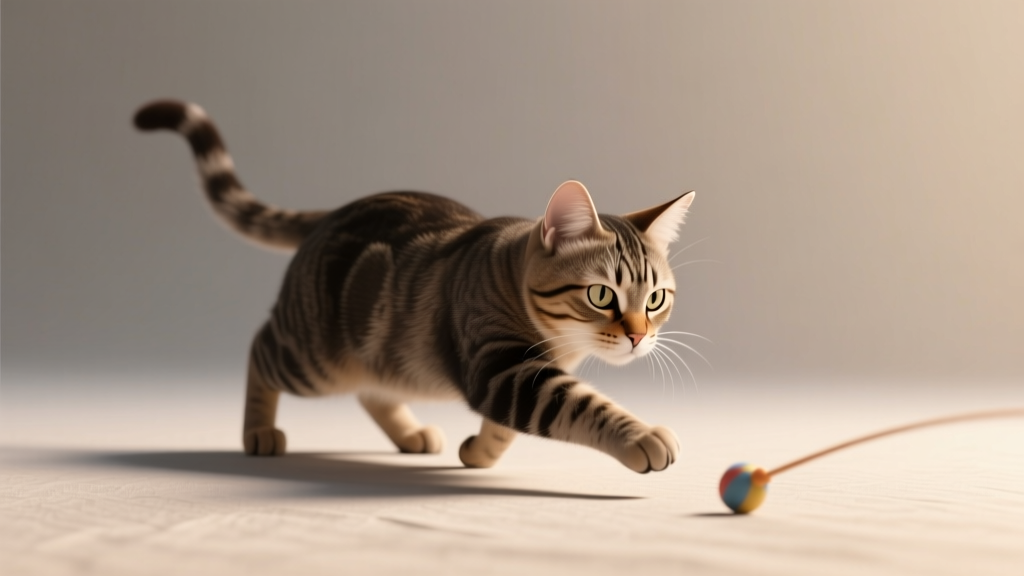
Why Cats Change Behavior for Play
Why Your Cat Suddenly Stopped Pouncing (and What It Really Means)
If you've ever wondered why cats change behavior for play—going from daily ambushes under the sofa to ignoring feather wands entirely—you're not alone. This isn't just 'getting lazy' or 'outgrowing play.' It's often the first subtle signal that something deeper is shifting: their physical comfort, emotional safety, cognitive engagement, or even their sense of control in the home. In fact, a 2023 study published in Applied Animal Behaviour Science found that 68% of cats exhibiting reduced play initiation showed concurrent signs of low-grade environmental stress—long before owners noticed overt anxiety or aggression. Ignoring these shifts doesn’t just mean fewer fun moments—it can accelerate boredom-related overgrooming, nighttime yowling, or redirected scratching. The good news? Most causes are reversible with targeted, compassionate intervention.
The 4 Core Drivers Behind Play Behavior Shifts
Cats don’t ‘decide’ to stop playing—they respond biologically and emotionally to internal and external cues. Understanding these four pillars helps you move beyond guesswork and into precise, empathetic care.
1. The Predatory Sequence Breakdown
Cat play isn’t recreation—it’s rehearsal. Ethologists define feline play as a truncated expression of the full predatory sequence: stalking → chasing → pouncing → biting → killing → eating. When any stage becomes inaccessible, frustrating, or unsafe, the entire chain collapses. For example, if your cat lives indoors with no access to live prey, they rely on toys that simulate realistic movement, resistance, and 'capture feedback' (e.g., a toy that flops when bitten). A 2022 Cornell Feline Health Center observation study found that cats offered only static or overly predictable toys engaged in less than half the total play time compared to those given interactive wands with erratic motion and tactile reward (like crinkle fabric or soft stuffing).
Real-world case: Luna, a 4-year-old domestic shorthair, stopped chasing her favorite string wand after her owner switched to a battery-powered version with uniform circular motion. Her veterinarian noted she’d begun chewing her front paws—a classic displacement behavior indicating unfulfilled predatory drive. Switching back to hand-led play with varied speeds and pauses restored her enthusiasm in under 72 hours.
2. Age-Related Sensory & Neurological Shifts
It’s not just about energy levels. Senior cats (7+ years) experience measurable declines in visual acuity (especially contrast sensitivity), hearing high-frequency sounds (like rustling paper or squeaky toys), and joint flexibility—all critical for dynamic play. Yet many owners misattribute this to 'disinterest' rather than diminished capacity. According to Dr. Sarah Hensley, DVM and feline behavior specialist at the International Cat Care Foundation, \"A 12-year-old cat may still *want* to chase—but if their knees ache or their eyes can’t track fast movement, they’ll disengage to avoid discomfort. That looks like apathy; it’s actually self-protection.\"
Actionable fix: Swap high-speed chases for scent-based games (hide treats in cardboard tubes), gentle batting puzzles, or slow-motion wand play near floor level. Introduce warm-up stretches (gentle passive range-of-motion exercises recommended by veterinary physiotherapists) before play sessions to improve mobility and reduce stiffness.
3. Environmental Stressors You Can’t See
Cats are exquisitely sensitive to micro-changes: new furniture blocking sightlines, HVAC drafts shifting air currents, ultrasonic pest repellers emitting frequencies above 20 kHz (inaudible to humans but painful to cats), or even the lingering scent of unfamiliar visitors. These aren’t minor annoyances—they trigger chronic low-level cortisol elevation, which directly suppresses dopamine-driven behaviors like play. A landmark 2021 University of Lincoln study measured salivary cortisol in 87 household cats and found that those living in homes with >3 unaddressed environmental stressors had play initiation rates 42% lower than cats in low-stress environments—even when diet, age, and health were controlled.
Try this diagnostic checklist: Is there a new appliance humming? Has litter box location changed? Are windows covered (depriving them of bird-watching stimulation)? Does your cat have at least three elevated, hidden vantage points where they feel safe observing? Addressing just one of these often yields immediate behavioral improvement.
4. Social Dynamics & Relationship Trust
Play is relational—not recreational. Kittens learn boundaries through rough-and-tumble with littermates; adult cats extend this trust to humans who respect their signals. If play sessions consistently end with overstimulation (tail flicking, flattened ears, sudden biting), your cat learns that interaction = loss of control. They don’t ‘hold grudges’—but they do recalibrate risk assessment. Over time, they may avoid initiating play altogether to prevent negative outcomes.
Veterinary behaviorist Dr. Tony Buffington emphasizes: \"When a cat walks away mid-play, that’s not rejection—it’s a request for better communication. Respond by pausing, offering a treat, and restarting with slower movements. This rebuilds predictive safety—the foundation of all confident play.\"
What to Do Next: A Step-by-Step Re-engagement Protocol
Don’t wait for motivation to return. Proactively rebuild play confidence using this evidence-informed 5-day reset:
- Day 1–2: Observe & Map — Track exactly when/where your cat shows interest (e.g., “sniffs toy at 6 a.m. near sunbeam”), even if brief. Note body language: ear position, tail tip twitch, pupil dilation.
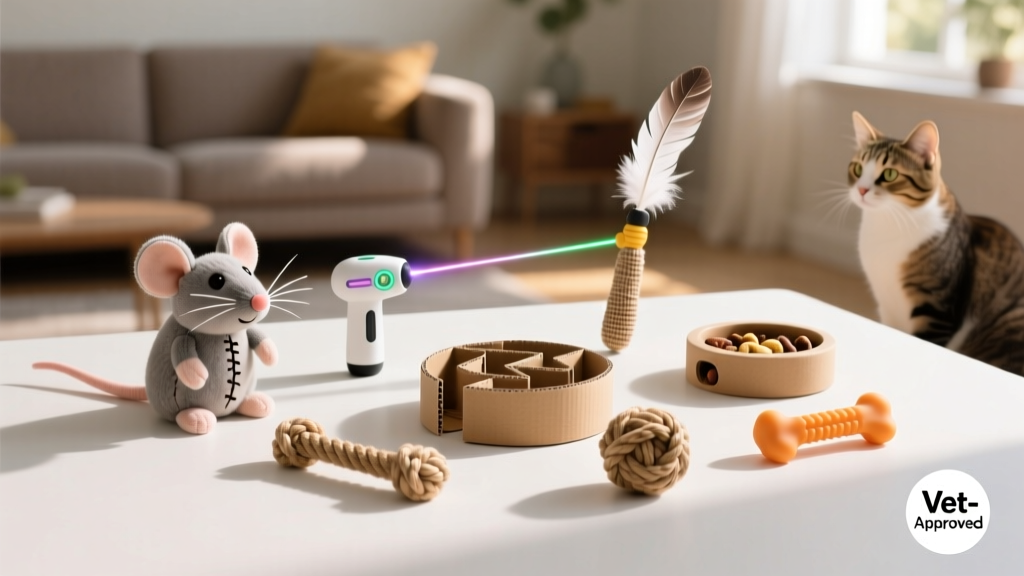
- Day 3: Reset the Toy — Rotate out all current toys. Introduce ONE new item matching their observed preference (e.g., if they sniff but don’t pounce, try a soft, scented mouse; if they watch birds, use a window-mounted laser *with a physical finisher*—a treat or plush toy they can ‘catch’).
- Day 4: Control the Pace — Use a wand toy, but mimic prey: 2 seconds stalking, 1 second freeze, 3 seconds erratic dart—never continuous motion. End every session *before* they lose focus (usually 90–120 seconds max for adults).
- Day 5: Reward the Process — Give high-value treats (freeze-dried chicken) for *any* engagement—even looking at the toy. Never reward only successful pounces. This builds positive association with the *idea* of play.
| Trigger Category | Key Signs | Immediate Action | Expected Timeline for Improvement |
|---|---|---|---|
| Predatory Frustration | Stares intensely but won’t chase; bites own paws; excessive grooming after failed attempts | Introduce toys with variable speed/resistance; add tactile finishes (crinkle, soft fur); always end with a 'capture' moment | 2–5 days (behavioral shift), 2–3 weeks (consistent engagement) |
| Sensory Decline | Avoids fast-moving toys; misses targets; prefers floor-level or scent-based games | Switch to low-frequency sounds (rattling beads vs. squeakers); use larger, high-contrast toys; add warming pads near play zones | 3–7 days (increased participation), 4–6 weeks (sustained interest) |
| Environmental Stress | Play only in specific rooms; hides during play; sudden startle responses | Identify and remove 1 stressor (e.g., relocate noisy appliance); add vertical space + hiding spots; use Feliway Optimum diffuser for 14 days | 5–10 days (reduced vigilance), 2–4 weeks (play initiation returns) |
| Trust Erosion | Walks away mid-session; avoids eye contact before play; stiff posture when approached with toy | Pause all forced play; initiate with slow blinks + treats; reintroduce toys via 'leave-it' games to restore choice | 4–8 days (relaxed proximity), 3–5 weeks (voluntary play initiation) |
Frequently Asked Questions
Do indoor cats really need daily play—or is it just 'nice to have'?
It’s non-negotiable for welfare. The American Association of Feline Practitioners states that insufficient play is a primary contributor to obesity, urinary tract disease, and behavioral disorders in indoor cats. Aim for two 10–15 minute sessions daily—mimicking natural hunting patterns (dawn/dusk). Skipping play isn’t harmless; it’s chronic understimulation with measurable physiological consequences.
My cat only plays with me at 3 a.m. Is this normal—and how do I shift it?
Yes—and it’s rooted in evolution. Cats are crepuscular (most active at dawn/dusk), but indoor lighting and feeding schedules disrupt natural rhythms. To reset timing: feed their largest meal *after* an evening play session (not before), dim lights 1 hour before desired bedtime, and provide puzzle feeders for midnight activity. Avoid reinforcing 3 a.m. play with attention—instead, toss a treat *away* from your bed to redirect. Consistency for 10–14 days typically shifts the peak activity window.
Is laser pointer play harmful if my cat never 'catches' anything?
Yes—when used without resolution. Unfinished predatory sequences cause frustration and anxiety. Always end laser sessions with a physical 'capture': shine the dot onto a treat, plush toy, or food puzzle your cat can physically interact with. Better yet, replace lasers with wand toys that allow real contact and bite feedback. The ASPCA explicitly warns against unsupervised laser-only play due to observed increases in obsessive behaviors.
Can medication help if my cat truly seems depressed and won’t play?
Rarely—and only after ruling out pain and environmental causes. True feline depression is exceptionally uncommon; what appears as depression is usually undiagnosed osteoarthritis (affecting 90% of cats over age 12), dental disease, or hyperthyroidism. Always pursue full veterinary workup—including orthopedic exam and blood panel—before considering behavioral meds. As Dr. Hensley notes: \"Medication doesn’t fix boredom. It masks pain or illness. Treat the root, not the symptom.\"
Common Myths About Play Behavior Changes
Myth #1: \"Cats outgrow play as they age.\"
False. While intensity and duration may decrease, the drive remains lifelong. What changes is the *expression*: older cats prefer shorter, lower-impact sessions focused on mental engagement (puzzle feeders, scent trails) over sprinting. Labeling this as 'outgrowing' play leads to dangerous under-stimulation.
Myth #2: \"If my cat plays with other pets, they don’t need human play.\"
Incorrect. Human-directed play serves unique social bonding functions—building trust, establishing shared rhythm, and reinforcing your role as a safe, responsive partner. Cats who play only with other animals often show increased separation anxiety and resource guarding around humans.
Related Topics (Internal Link Suggestions)
- Cat Play Aggression Solutions — suggested anchor text: "how to stop play biting in cats"
- Best Toys for Senior Cats — suggested anchor text: "low-impact cat toys for older cats"
- Feline Environmental Enrichment Checklist — suggested anchor text: "cat enrichment ideas that actually work"
- Recognizing Pain in Cats — suggested anchor text: "subtle signs your cat is in pain"
- Interactive Feeding Strategies — suggested anchor text: "how to make meals more engaging for cats"
Your Next Step Starts Today—Not Tomorrow
Understanding why cats change behavior for play transforms confusion into clarity—and clarity into compassionate action. You now know that withdrawal isn’t indifference, and silence isn’t satisfaction. It’s data. So tonight, before bed: pick *one* item from the table above that matches your cat’s pattern. Try just that one adjustment. Track what happens—not in days, but in moments: the ear twitch toward a new sound, the slow blink when you enter the room, the tentative paw-swipe at a dangling ribbon. These micro-signals are your roadmap. And if, after 10 days of consistent, respectful effort, you see no shift? That’s not failure—that’s your cue to schedule a full veterinary behavior consult. Because every cat deserves to feel safe, stimulated, and joyfully, unapologetically playful—no matter their age, history, or quirks.