What Type of Toy Is the Best for Cats? The Truth No One...
Why This Question Matters More Than Ever
What type of toy is the best for cats isn’t just a casual curiosity—it’s a vital question for every cat guardian who’s watched their feline companion knock things off shelves at 3 a.m., chew on cords, or withdraw into apathy after adoption. Indoor cats spend up to 16 hours a day sleeping—but the remaining 8 hours are prime windows for behavioral enrichment. Without appropriate outlets for predatory instincts, cats develop redirected aggression, obsessive licking, litter box avoidance, or chronic anxiety. According to Dr. Sarah Heath, a European College of Veterinary Behavioural Medicine diplomate, ‘Boredom in cats isn’t passive—it’s physiologically stressful, elevating cortisol levels comparable to those seen in chronically ill animals.’ So the real answer to ‘what type of toy is the best for cats’ isn’t a product—it’s a personalized behavioral prescription.
Step 1: Decode Your Cat’s Behavioral Blueprint
Forget generic ‘best toy’ lists. Start with observation—not shopping. Spend three days logging your cat’s spontaneous play patterns using this simple framework:
- Hunters: Stalks shadows, freezes mid-step, chirps at birds through windows.
- Pouncers: Launches full-body attacks on feet, rugs, or dangling strings—often with loud ‘chatter’.
- Chewers/Nibblers: Sucks or chews on fabric, plastic, or cardboard—common in early-weaned or anxious cats.
- Scratchers: Rubs cheeks, kneads blankets, shreds paper bags—even if they ignore scratching posts.
- Snugglers: Prefers soft, warm, low-stimulation toys (e.g., plush mice they carry around or sleep on).
A 2022 study published in Applied Animal Behaviour Science tracked 127 indoor cats across 12 shelters and homes and found that cats matched to toys aligned with their dominant behavioral profile showed 68% fewer stress-related behaviors (overgrooming, vocalization, hiding) within two weeks—versus only 22% improvement when given ‘popular’ toys mismatched to their instincts. For example, a senior, arthritic cat labeled a ‘Hunter’ may still stalk—but lacks the hip mobility to pounce. A feather wand becomes frustrating; a slow-moving, floor-level rolling ball with crinkle sounds is far more rewarding.
Step 2: Match Toys to Life Stage & Physical Needs
Cats aren’t static—they evolve. A 4-month-old kitten’s need for rapid-fire motor skill development is worlds apart from a 12-year-old cat managing early arthritis. Here’s how to adapt:
- Kittens (0–6 months): Prioritize multi-sensory toys that build coordination—feather wands with erratic movement, crinkle balls with unpredictable bounce, and tunnels with varied textures. Avoid string-based toys unsupervised (risk of ingestion). Introduce scratching posts early—vertical and horizontal—to shape lifelong habits.
- Adolescents (6–24 months): Peak energy + emerging territorial instincts. Rotate toys weekly to prevent habituation. Use puzzle feeders disguised as ‘prey’ (e.g., treat balls that release kibble only after vigorous batting). Introduce supervised outdoor time with a harness and leash—many cats respond better to real-world stimuli than any manufactured toy.
- Adults (2–10 years): Focus on consistency and novelty balance. Rotate 3–5 toys weekly, but keep one ‘anchor’ toy (e.g., a specific felt mouse they’ve bonded with) for security. Add scent enrichment: rub catnip or silvervine on toys—but only 1–2x/week to preserve sensitivity.
- Seniors (10+ years): Prioritize accessibility and cognitive engagement over physical intensity. Low-height ramps to elevated perches, soft plush toys with gentle heat packs (microwavable, never electric), and food puzzles with large openings reduce frustration. As Dr. Tony Buffington, DVM and professor at Ohio State’s Indoor Pet Initiative, advises: ‘A senior cat’s “play” may look like gentle pawing at a dangling ribbon—don’t mistake calm for disinterest. That’s still neural activation.’
Step 3: Safety First—The Hidden Risks Behind Popular Toys
Toy safety isn’t just about choking hazards—it’s about long-term physiological impact. Many top-selling cat toys violate basic ethological principles:
- String, yarn, and ribbon toys: Cause linear foreign body obstructions—requiring emergency surgery in 1 in 12 cases (per 2023 AVMA toxicology report).
- Plastic eyes/noses on plush toys: Easily detached and swallowed; microplastics accumulate in GI tracts.
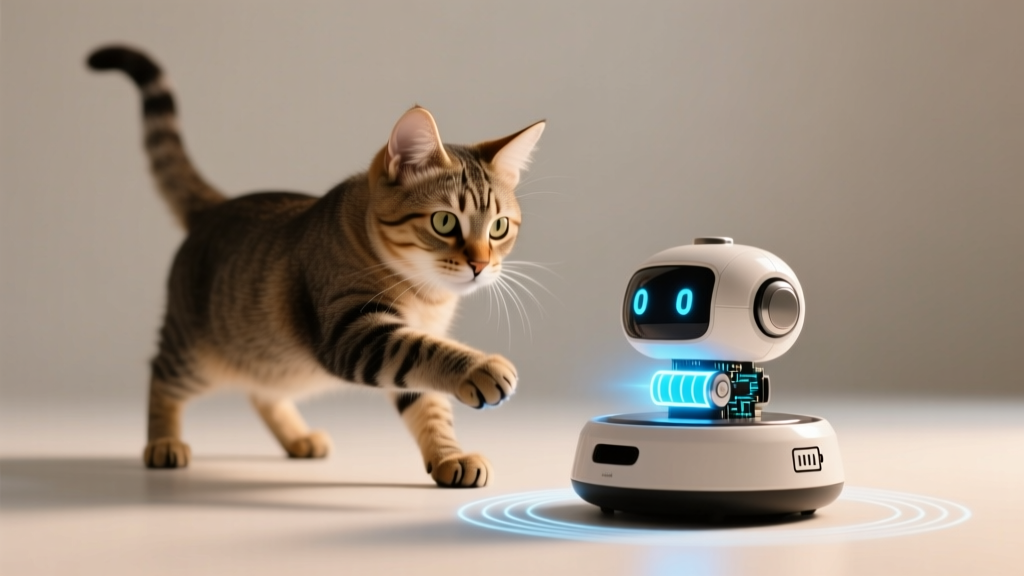
- Battery-operated ‘automatic’ toys: Often move too fast or unpredictably, triggering fear instead of play—especially in shy or rescued cats.
- Catnip-only toys: Overuse desensitizes receptors. Silvervine or Tatarian honeysuckle offer safer, longer-lasting alternatives for 70% of cats unresponsive to catnip (Cornell Feline Health Center, 2021).
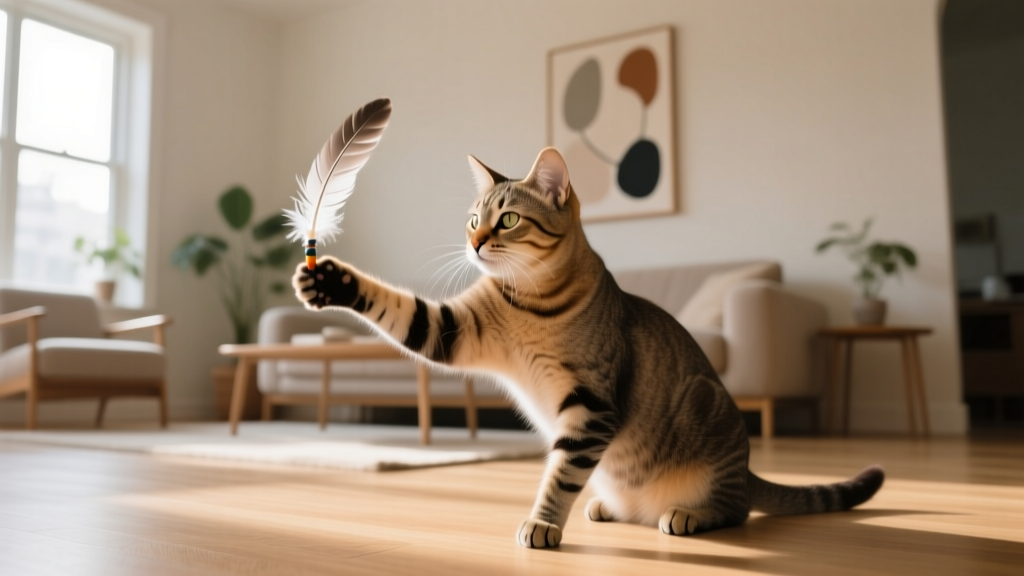
The gold standard? Toys you can supervise and control. A wand with a replaceable, securely knotted feather tip lets you mimic prey movement—slow crawl → sudden dart → freeze → drag—mimicking real rodent behavior. That sequence triggers the full predatory sequence: eye-stalk → chase → pounce → bite-kick → ‘kill shake’. Skipping steps (e.g., tossing a ball without the stalk) leaves cats unsatisfied and restless.
Step 4: The Enrichment Ecosystem—Toys Are Just One Piece
Thinking in isolation limits impact. The most effective toy use happens within an enrichment ecosystem—a layered environment where toys interact with space, scent, sound, and human presence.
Consider Luna, a 3-year-old rescue with history of resource guarding. Her owner tried 12 ‘best-selling’ toys—no change in aggression toward her other cat. Then, guided by a certified feline behavior consultant, she redesigned Luna’s space: added vertical territory (wall-mounted shelves), installed a window perch overlooking bird feeders, rotated toys daily *and* placed them near food bowls (to associate toys with positive outcomes), and used timed feeders that dispensed treats during quiet morning hours—when Luna was naturally most active. Within 10 days, Luna initiated play with her sister using a shared tunnel. The toy didn’t change—the context did.
Your ecosystem checklist:
- Verticality: At least one shelf or perch per cat, placed near windows or doorways.
- Concealment: Cardboard boxes, covered beds, or draped sheets for safe observation.
- Scent rotation: Alternate between catnip, silvervine, and plain cotton—never mix scents in one session.
- Human rhythm: Schedule 3–5 minute interactive sessions at dawn and dusk (peak natural activity times)—even if you’re tired. Consistency matters more than duration.
| Toy Type | Best For | Safety Rating (1–5★) | Enrichment Value | Key Tip |
|---|---|---|---|---|
| Interactive Wand Toys (e.g., GoCat Da Bird) | Hunters, Pouncers, Adolescents | ★★★★☆ (Supervision required; never leave unattended) | High — engages full predatory sequence | Use 3-second ‘freeze’ pauses mid-session to let cat ‘capture’ mentally—boosts satisfaction. |
| Puzzle Feeders (e.g., Trixie Flip Board) | Chewers, Snugglers, Seniors | ★★★★★ (No small parts; dishwasher-safe) | Very High — combines foraging + cognitive challenge | Start with 10% of daily calories in puzzles; increase slowly to avoid frustration. |
| Crinkle Balls / Rolling Tracks (e.g., FroliCat Bolt) | Pouncers, Kittens, Low-Mobility Adults | ★★★☆☆ (Ensure no loose plastic bits; inspect weekly) | Moderate-High — great for solo play, but lacks social component | Place track near a favorite napping spot—cats often bat balls while half-asleep. |
| Scratching Surfaces (Sisal rope posts, corrugated cardboard) | Scratchers, All Life Stages | ★★★★★ (Zero ingestion risk; supports claw health) | High — fulfills marking, stretching, and stress-release functions | Place near sleeping areas and furniture they target—don’t isolate in corners. |
| Plush ‘Carry’ Toys (e.g., SmartyKat Hot Pursuit) | Snugglers, Anxious Cats, Kittens | ★★★☆☆ (Remove plastic eyes; wash monthly) | Moderate — comfort-focused, not predatory | Add a drop of silvervine oil before bedtime—enhances bonding and reduces night-time vocalization. |
Frequently Asked Questions
Do laser pointers cause psychological harm to cats?
Yes—if used incorrectly. Lasers trigger the hunt-but-no-capture reflex, leaving cats frustrated and hyper-aroused. A 2020 University of Lincoln study found cats exposed to unsupervised laser play developed increased displacement behaviors (excessive grooming, tail-chasing) within 4 weeks. Solution: Always end laser sessions by directing the dot onto a physical toy (e.g., a stuffed mouse) so your cat can ‘catch’ and bite it. Never shine lasers near eyes—or on walls/ceilings where cats can’t reach.
My cat ignores all toys—does that mean something’s wrong?
Not necessarily—but it warrants investigation. First, rule out pain (dental issues, arthritis, thyroid disease) with a vet visit. If medically cleared, your cat may be under-stimulated *or* over-stimulated. Try ‘quiet play’: sit silently with a feather wand on your lap—let your cat approach and initiate. Or try scent-based enrichment: rub silvervine on a sock and place it in a paper bag. Some cats respond only to novel textures or temperatures (e.g., a chilled marble rolled down a ramp).
How many toys does a cat really need?
Quality > quantity. Research shows cats form attachments to 2–4 toys maximum. Rotating 5–7 toys weekly prevents boredom without overwhelming choice. Store extras out of sight—out-of-sight = out-of-mind = renewed excitement upon reintroduction. Bonus: Label each toy with date of last use to track rotation cycles.
Are ‘smart’ automated toys worth the price?
Rarely—for most cats. A 2023 review in Journal of Feline Medicine and Surgery analyzed 19 automated toys and found only 3 reliably sustained interest beyond 2 weeks. Most cats preferred human-led play—even brief sessions—because it includes voice cues, variable pacing, and social bonding. Save money: repurpose household items (ping pong balls in muffin tins, empty water bottles with dried beans) and invest in one high-quality wand instead.
Can toys help with separation anxiety?
Yes—but only as part of a broader plan. Puzzle feeders filled with wet food or frozen broth cubes extend engagement time post-departure. Pair with departure cues (e.g., putting keys in a specific bowl) followed by a 3-minute interactive session *before* leaving—so your cat associates your exit with positive anticipation, not abandonment. Never use toys as a substitute for addressing underlying anxiety with a vet or behaviorist.
Common Myths
Myth #1: “Cats only play to burn energy.”
Reality: Play is neurological maintenance. Kittens develop brain synapses through play; adults maintain cognitive flexibility and reduce amyloid plaque buildup (linked to feline dementia). A 2021 UC Davis longitudinal study found cats with daily 10-minute play sessions had 41% lower incidence of age-related cognitive decline.
Myth #2: “If my cat doesn’t bring me dead mice, they don’t need hunting toys.”
Reality: The predatory sequence is hardwired—even sterilized, indoor cats retain 97% of wild hunting neurology (per Cornell’s Feline Conservation Center). Denying outlet doesn’t erase instinct—it redirects it inward as stress or outward as aggression.
Related Topics (Internal Link Suggestions)
- How to Stop Cat Biting and Scratching Furniture — suggested anchor text: "stop cat scratching furniture"
- Best Catnip Alternatives for Non-Responders — suggested anchor text: "catnip alternatives that actually work"
- Creating a Cat-Friendly Home Layout — suggested anchor text: "cat-friendly home design"
- Signs of Cat Anxiety and Stress — suggested anchor text: "cat anxiety symptoms"
- DIY Cat Toys Using Household Items — suggested anchor text: "homemade cat toys safe"
Your Next Step Starts Today—Not Tomorrow
You now know what type of toy is the best for cats isn’t a universal answer—it’s a dynamic, evolving match between your cat’s biology, biography, and environment. Don’t overhaul everything at once. Pick one observation from Step 1 (e.g., ‘My cat stalks the light beam on the wall’) and match it to one toy type from the comparison table. Try it for 5 days—keeping notes on duration, intensity, and post-play calmness. Then rotate. Small, consistent adjustments compound into profound behavioral shifts. And if your cat’s play patterns shift suddenly—less interest, new aggression, or obsessive repetition—schedule a vet check. Because sometimes, the most important toy isn’t in the store—it’s the stethoscope listening to what your cat can’t say.