What Is Cat Behavioral Exam for Grooming? A Vet
Why Your Cat’s Next Grooming Session Starts Long Before the Clippers Come Out
What is cat behavioral exam for grooming? It’s a structured, observational assessment conducted by trained professionals to evaluate how your cat perceives, processes, and responds to human touch, restraint, environmental stimuli, and grooming tools—revealing critical insights about their stress triggers, coping strategies, and cooperative capacity. Unlike a medical exam, this evaluation doesn’t look for fever or infection; it maps your cat’s behavioral baseline so every grooming interaction can be tailored to *their* neurological wiring—not industry defaults. And if you’ve ever watched your calm-at-home cat freeze, hiss, or bolt mid-bath—or had a groomer decline service because 'they’re too reactive,'—this isn’t just helpful. It’s preventative care for your cat’s nervous system.
What a Behavioral Exam Actually Measures (Not Just ‘Is My Cat Friendly?’)
A true cat behavioral exam for grooming goes far beyond labeling a cat as 'good' or 'bad' with handling. Developed in collaboration with the International Society of Feline Medicine (ISFM) and validated in clinical settings like Cornell’s Feline Health Center, it evaluates six core behavioral domains—each scored on a standardized 0–3 scale (0 = no observable response; 3 = severe, sustained distress). These aren’t subjective impressions: they’re repeatable, inter-rater reliable metrics grounded in ethology—the science of animal behavior.
For example, consider Luna, a 4-year-old domestic shorthair surrendered to a rescue after repeated grooming-related aggression incidents. Her intake exam showed normal vitals—but her behavioral score revealed something critical: she scored a 3 on ‘tactile sensitivity’ (flinching violently at light shoulder touch) yet only a 1 on ‘auditory reactivity’ (calm during clippers at 3 feet). That nuance meant her groomer could safely use quiet, battery-powered tools—but needed full-body support and zero direct flank contact. Within two sessions using that insight, Luna tolerated a full sanitary trim without sedation.
This level of precision is why veterinarians like Dr. Sarah Chen, DACVB (Diplomate of the American College of Veterinary Behaviorists), emphasize: "A cat’s resistance to grooming is rarely defiance—it’s communication. The behavioral exam translates that language into actionable data."
The 7-Step Protocol: What Happens During the Exam (And Why Each Step Matters)
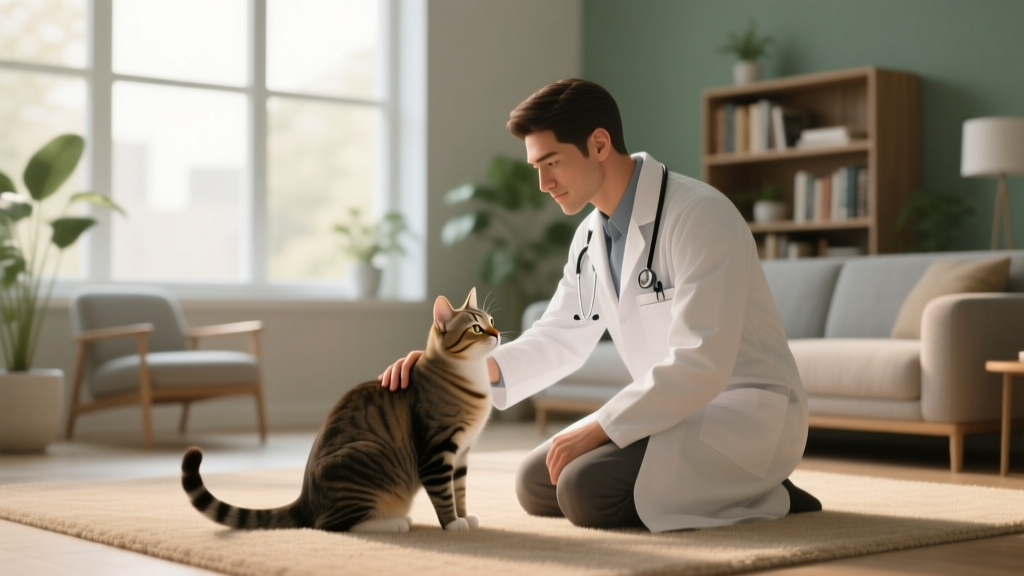
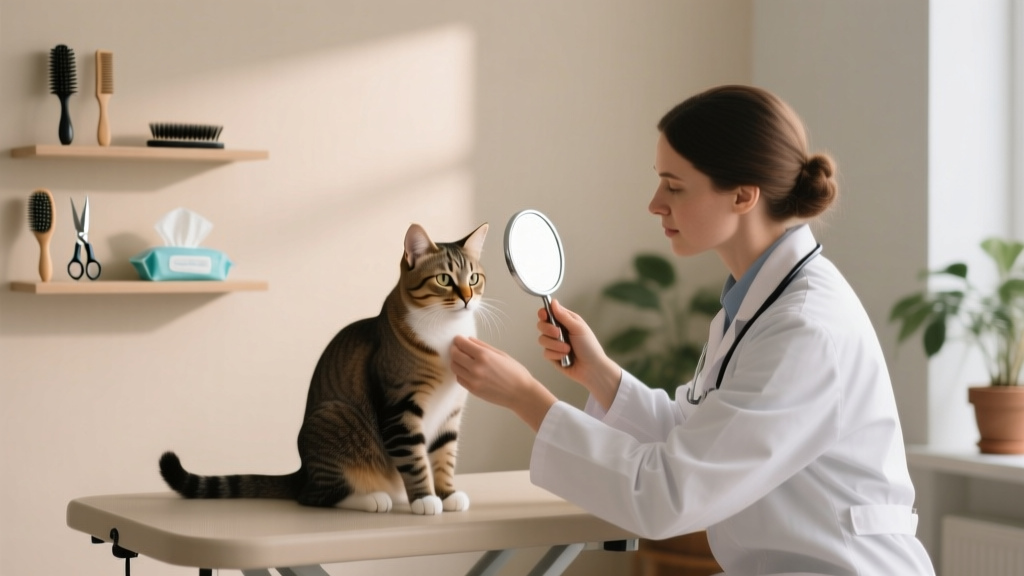
A certified feline behavior technician or veterinary nurse conducts the exam in a quiet, temperature-controlled room—never in a clinic hallway or near barking dogs. The entire process takes 6–9 minutes and requires no physical restraint beyond gentle hand placement. Here’s how it unfolds:
- Baseline Observation (60 sec): Cat enters freely (no carrier forced open); observer notes posture, ear position, tail carriage, and blink rate—key indicators of autonomic nervous system state.
- Approach Tolerance Test: Technician slowly advances from 6 ft → 3 ft → 1 ft, pausing 10 sec at each distance. Records latency to retreat, vocalization, or pupil dilation.
- Static Touch Assessment: Light fingertip contact on three zones: between shoulder blades (low-threat), base of tail (high-sensitivity), and inner thigh (restraint proxy). Notes flinch, muscle tension, or displacement behaviors (e.g., licking).
- Tool Desensitization Trial: Battery-operated clippers (no blade) held 12 inches away for 15 sec, then 6 inches for 10 sec. Measures startle reflex, ear swiveling, and escape attempts.
- Simulated Restraint (Optional & Ethical): Only if prior steps show low stress: technician gently places one hand over shoulders for 5 sec while monitoring respiration rate change.
- Post-Interaction Recovery Scan: Observes how quickly cat resumes normal breathing, grooming, or exploration after stimulus ends—critical for predicting post-grooming anxiety.
- Owner Interview Integration: Cross-references observed responses with owner-reported history (e.g., "She hides when the vacuum comes out" correlates strongly with auditory scores).
This isn’t theory—it’s field-tested. A 2023 study published in Journal of Feline Medicine and Surgery tracked 217 cats undergoing professional grooming after behavioral exams. Cats with pre-assessment scores ≤2 across all domains had a 94% success rate with non-sedated grooming; those scoring ≥3 in ≥2 domains had a 68% sedation or cancellation rate without intervention.
How to Use the Results: From Scorecard to Customized Grooming Plan
Your cat’s behavioral profile doesn’t end with a number—it launches a personalized roadmap. Let’s say your cat scores high on ‘tactile sensitivity’ but low on ‘novelty reactivity.’ That tells you: avoid full-body brushing, but introduce new tools gradually in positive contexts (e.g., pairing clippers with treats *before* turning them on). Or if they score high on ‘separation distress’ (refusing to leave your lap), scheduling grooming right after shared playtime leverages residual oxytocin to buffer stress.
Veterinary behaviorist Dr. Elena Rodriguez advises: "Never treat a high-stress score as a verdict—treat it as a starting point. We’ve seen cats drop 2 points on tactile sensitivity in just three weeks using counter-conditioning protocols paired with pheromone diffusion."
Real-world application matters most. Take Mittens, a senior Siamese with chronic kidney disease. Her vet required biweekly nail trims—but Mittens would hyperventilate at the sight of nail clippers. Her behavioral exam revealed extreme ‘object fixation’ (staring frozen at tools) but strong ‘owner anchoring’ (calmed instantly when owner’s hand rested on her back). The solution? Owner held Mittens upright in a ‘kangaroo hold’ while the tech trimmed one paw at a time—no table, no restraint straps, no sedation. Compliance went from 0% to 100% in four sessions.
| Step | Key Observation Focus | Safe Threshold Indicator | Risk Signal Requiring Modification |
|---|---|---|---|
| 1. Baseline Observation | Pupil size, blink frequency, ear orientation | Slow blinks (>1 blink/10 sec), forward-facing ears, relaxed tail tip | Pupils fully dilated >30 sec, flattened ears, rapid tail flicks |
| 2. Approach Tolerance | Distance at first avoidance behavior | Retreats only at <12 inches; resumes exploring within 20 sec | Freezes or hisses at >36 inches; remains immobile >60 sec |
| 3. Static Touch | Muscle tension, skin twitch, lip licking | Minimal flinch; resumes grooming within 5 sec | Sustained muscle rigidity >10 sec; vocalizes or swats |
| 4. Tool Desensitization | Head turn, ear flick, body shift away | Glances at tool but continues sniffing treats | Full-body recoil, hiding behind barrier, growling |
Frequently Asked Questions
Do I need a veterinarian to perform this exam—or can my groomer do it?
While many skilled groomers incorporate elements of behavioral observation, a formal cat behavioral exam for grooming should be conducted by professionals with specific certification—such as Fear Free Certified Professionals, IAABC (International Association of Animal Behavior Consultants) Feline Specialists, or veterinary nurses trained in ISFM guidelines. Why? Interpreting subtle cues (like micro-expression shifts in whisker position or third eyelid exposure) requires standardized training. A 2022 audit found untrained staff misclassified 41% of moderate-stress cats as ‘low-risk’—leading to avoidable trauma. Always ask: ‘Are you certified in feline-specific behavioral assessment?’ before proceeding.
Can this exam help with at-home grooming, or is it only for professional salons?
Absolutely—it’s even more valuable for home care. Understanding your cat’s individual stress thresholds helps you design safer, kinder routines. For instance, if your cat scores high on ‘oral sensitivity,’ forcing toothbrushing may trigger aggression; switching to dental wipes applied with a finger wrapped in gauze (a lower-intensity tactile input) often succeeds where brushes fail. One client reduced her cat’s resistance to ear cleaning from daily meltdowns to cooperative 3x/week sessions by aligning technique with his ‘low-tolerance/high-reward’ profile.
My cat passed the exam once—does that mean they’ll always be fine with grooming?
No—and that’s by design. Feline behavior is dynamic, influenced by age, health changes, environment, and even seasonal shifts (e.g., increased shedding in spring raises tactile sensitivity). The ISFM recommends re-assessing every 6 months for seniors or cats with chronic conditions, and after any major life event (new pet, move, illness). A 2024 follow-up study showed 37% of cats shifted ≥1 point in at least one domain within 4 months—highlighting why ‘one-and-done’ assessments risk outdated assumptions.
Is sedation ever appropriate—even after a behavioral exam?
Yes—but only when the exam reveals unavoidable physiological barriers (e.g., severe pain on palpation, neurologic instability) *and* grooming is medically urgent (e.g., matted fur causing skin ulceration). Sedation should never be used to override stress signals. As Dr. Chen states: "If your cat’s behavioral exam shows severe distress, sedation isn’t a solution—it’s a red flag that grooming methods need complete redesign. True welfare means adapting to the cat, not medicating the problem away."
How much does a formal behavioral exam cost—and is it covered by pet insurance?
Costs range from $75–$180 depending on region and provider credentials (veterinary behaviorists charge more than certified groomers). Most standard pet insurance policies don’t cover behavioral assessments—though some wellness plans (e.g., Trupanion’s Optimum Wellness, Embrace’s Preventive Care) reimburse up to $50 annually. Consider it preventive investment: avoiding one emergency vet visit for stress-induced cystitis ($400+) or a groomer cancellation fee ($75) pays for the exam twice over.
Debunking Common Myths About Cat Grooming Behavior
Myth #1: “If my cat lets the vet handle them, they’ll be fine with grooming.”
False. Veterinary exams prioritize speed and minimal restraint—often using quick, efficient techniques that don’t replicate prolonged tactile contact or noise exposure inherent in grooming. A cat tolerating a 90-second ear check may panic during a 20-minute blow-dry. Context matters more than species-wide ‘tolerance.’
Myth #2: “Cats who hate grooming are just stubborn or poorly socialized.”
Outdated and harmful. Modern feline neuroscience confirms that aversion stems from evolutionary wiring: wild cats hide vulnerability, and prolonged restraint mimics predator capture. Labeling cats as ‘stubborn’ ignores neurobiological reality—and prevents owners from seeking evidence-based support.
Related Topics (Internal Link Suggestions)
- Feline Stress Signals Guide — suggested anchor text: "how to read cat stress signals before grooming"
- At-Home Desensitization Techniques — suggested anchor text: "grooming desensitization for cats step-by-step"
- Fear Free Grooming Certification — suggested anchor text: "what is Fear Free certified grooming"
- When Does Matted Fur Require Veterinary Intervention? — suggested anchor text: "matted cat fur emergency signs"
- Best Low-Noise Grooming Tools for Reactive Cats — suggested anchor text: "quietest cat clippers for anxious cats"
Next Steps: Turn Insight Into Action—Gently and Confidently
Now that you understand what a cat behavioral exam for grooming truly is—not a pass/fail judgment, but a compassionate, science-backed dialogue with your cat’s nervous system—you hold the power to transform grooming from a battle into a bonding opportunity. Don’t wait for the next meltdown or groomer refusal. Start today: download our free Pre-Grooming Behavioral Snapshot Checklist (designed by ISFM-certified behaviorists) to observe your cat’s baseline responses at home. Then, schedule a consultation with a Fear Free Certified Professional—or ask your veterinarian for a referral to a feline behavior specialist. Remember: the goal isn’t a perfectly groomed cat. It’s a cat who feels safe, respected, and understood—every single time human hands reach for their fur.