What Is Cat Behavioral Exam Vs. Standard Vet Check? The...
Why Confusing These Two Exams Can Cost Your Cat Years of Peace
What is cat behavioral exam vs. standard veterinary physical exam? That’s not just semantics—it’s the difference between treating symptoms and solving root causes. If your cat hides during visitors, urinates outside the litter box, bites without warning, or suddenly stops grooming, those aren’t ‘just quirks’—they’re urgent behavioral signals often missed in a 12-minute wellness check. In fact, a 2023 study in the Journal of Feline Medicine and Surgery found that 68% of cats exhibiting chronic stress behaviors had normal bloodwork and physical exams—but showed clear, treatable behavioral pathology when assessed by a certified feline behaviorist. This article cuts through the confusion with actionable clarity: no jargon, no fluff—just what you need to advocate effectively for your cat’s emotional well-being.
What Exactly Happens in a Cat Behavioral Exam?
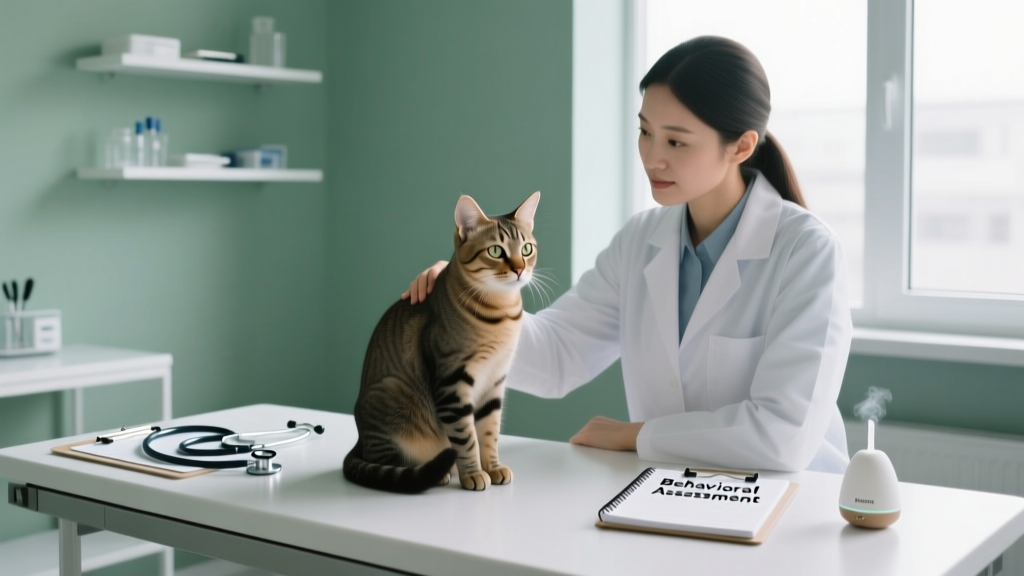
A cat behavioral exam isn’t a quick add-on—it’s a dedicated, time-intensive clinical assessment led by a veterinarian with specialized training in animal behavior (ideally a Diplomate of the American College of Veterinary Behaviorists, or DACVB) or a certified applied animal behaviorist (CAAB). Unlike a standard wellness visit—which focuses on weight, heart rate, dental health, and organ function—a behavioral exam digs into motivation, triggers, learning history, environmental context, and neurobiological underpinnings.
During a typical 60–90 minute session, the clinician will:
- Review a detailed pre-visit questionnaire covering daily routines, litter box use, inter-cat dynamics, human interactions, and timeline of behavior changes;
- Observe your cat’s body language in multiple settings (carrier, exam room, open space) using validated ethograms like the Feline Grimace Scale and Cat Stress Score;
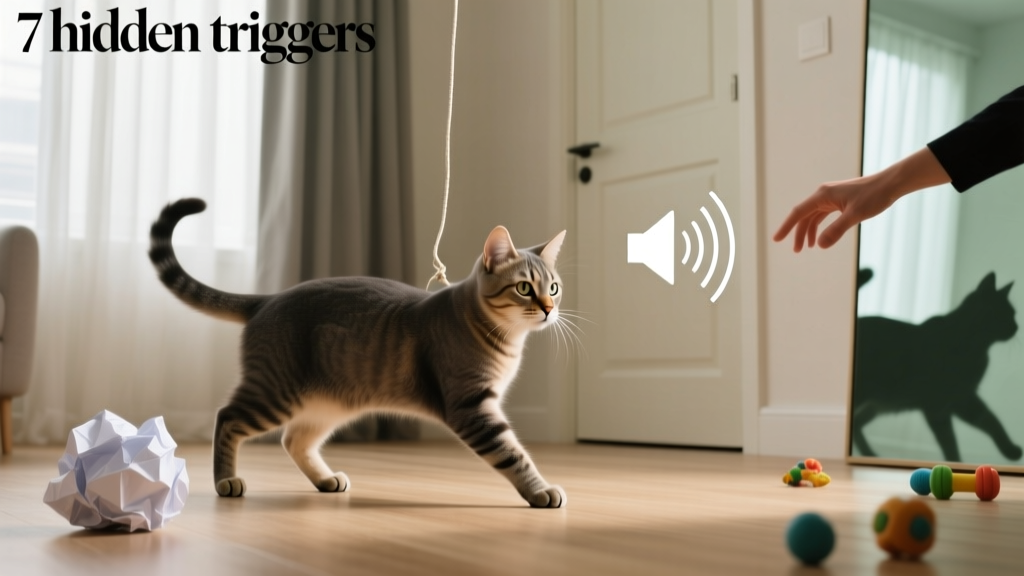
- Conduct structured functional assessments—e.g., presenting novel objects, simulating doorbell sounds, or introducing scent cues—to gauge reactivity thresholds;
- Rule out pain-mediated behaviors (e.g., arthritis causing litter box avoidance) through targeted palpation and discussion—not just blood panels;
- Map antecedents, behaviors, and consequences (the ABC model) to identify reinforcement patterns you may unknowingly sustain.
Dr. Sarah Lin, DACVB and lead researcher at the Cornell Feline Health Center, emphasizes: “A cat who hisses at strangers isn’t ‘aggressive’—they’re communicating overwhelm. A behavioral exam identifies *why* that overwhelm exists: Is it poor early socialization? Chronic low-grade pain? Resource competition with another pet? Without that distinction, we risk labeling, suppressing, or medicating instead of healing.”
Standard Vet Exam: What It Does (and Doesn’t) Cover
A routine veterinary exam—often called a ‘wellness visit’—is essential, but intentionally narrow in scope. Per the American Animal Hospital Association (AAHA) 2022 guidelines, core components include temperature, pulse, respiration (TPR), auscultation, oral exam, skin/coat assessment, and basic mobility check. Labs (CBC, chemistry panel, thyroid test) screen for systemic disease—but they won’t reveal whether your cat avoids the litter box because of urinary tract discomfort or because the box is next to the noisy washing machine.
Here’s where the gap widens: most general practice vets receive less than 5 hours of formal behavioral training in veterinary school (per AVMA curriculum audit, 2021). That means while they’ll spot an infected ear or elevated creatinine, they may miss subtle signs like slow blink suppression, tail-tip twitching during handling, or displacement grooming—all validated indicators of acute anxiety in cats.
Real-world consequence? A 2022 client survey by the International Association of Animal Behavior Consultants found that 41% of owners whose cats were prescribed anti-anxiety medication after a standard vet visit reported worsening symptoms within 3 weeks—because the underlying trigger (e.g., vertical space deprivation in multi-cat homes) wasn’t assessed or addressed.
When You Absolutely Need a Behavioral Exam (Not Just Another Checkup)
Don’t wait until crisis hits. Early intervention dramatically improves outcomes. According to the American Veterinary Society of Animal Behavior (AVSAB), these six scenarios warrant immediate referral to a behavior specialist—even if your cat’s bloodwork is perfect:
- New or escalating aggression toward people or other pets, especially if unprovoked or inconsistent with past temperament;
- Litter box avoidance persisting >7 days despite clean boxes, location changes, and veterinary clearance;
- Excessive vocalization (especially at night) with no apparent medical cause;
- Self-injurious overgrooming leading to bald patches or skin lesions;
- Freezing, hiding, or panic responses to routine stimuli (e.g., vacuum, nail trims, carrier presence);
- Marking behavior (spraying) in neutered/spayed cats—particularly if new onset after age 3.
Crucially: many of these issues begin subtly. One owner shared her experience with Luna, a 5-year-old Siamese: “She started sleeping under the bed only when guests came. I thought she was ‘shy.’ Six months later, she’d bite my daughter’s ankles. The behavioral exam revealed Luna associated children’s high-pitched voices with a traumatic vet visit at age 2—and her ‘shyness’ was actually anticipatory fear. We used desensitization + Feliway Optimum diffusers, and within 10 weeks, she greeted kids with head-butts.”
How to Prepare for a Cat Behavioral Exam (So You Get Real Answers)
Unlike a standard exam, your preparation directly shapes diagnostic accuracy. Bring these four items—no exceptions:
- A 7-day behavior log: Note time, duration, location, people/pets present, your response, and your cat’s body language (e.g., “3:15 PM, kitchen, saw dog outside window → flattened ears, dilated pupils, retreated under table for 22 min”);
- Video evidence: 2–3 short clips (under 60 sec each) showing the behavior *in context*—not just the ‘result’ (e.g., film the moment before spraying, not just the wall);
- Home environment photos: Layout of litter boxes, feeding stations, sleeping areas, and vertical spaces (cat trees, shelves);
- All prior medical records, including dates/titles of past exams, medications tried (with dosages/duration), and notes on observed side effects.
Pro tip: Record audio of ambient home noise for 10 minutes—many cats react to ultrasonic frequencies (e.g., HVAC hums, LED light buzzes) undetectable to humans. Dr. Lin’s team uses this routinely to identify environmental stressors missed in clinic-based observation alone.
| Feature | Standard Veterinary Exam | Cat Behavioral Exam |
|---|---|---|
| Duration | 12–20 minutes | 60–90 minutes (plus 30-min pre-visit intake) |
| Primary Goal | Detect physical disease & prevent illness | Identify behavioral diagnosis & environmental/learning drivers |
| Key Tools Used | Stethoscope, otoscope, thermometer, lab analyzer | Feline Stress Score chart, ABC functional analysis, environmental mapping, video review software |
| Who Performs It | General practice veterinarian (DVM) | DACVB board-certified behaviorist OR CAAB/CCPBT-certified specialist |
| Typical Cost (U.S.) | $55–$120 (wellness visit) | $225–$450 (initial consult; insurance rarely covers) |
| Follow-Up Protocol | Annual recheck or symptom-driven return | Structured 2–4 week plan with video check-ins, environmental tweaks, and progress metrics |
Frequently Asked Questions
Is a behavioral exam covered by pet insurance?
Most mainstream policies (e.g., Trupanion, Healthy Paws) cover behavioral exams only if initiated after a documented medical condition is ruled out—and only when performed by a DACVB-certified vet. Pre-authorization is required, and reimbursement averages 70–85% of the allowed amount (not billed amount). Always ask your insurer for written confirmation before scheduling.
Can my regular vet do this—or do I need a specialist?
Your regular vet can screen for behavioral concerns and rule out medical mimics—but true diagnosis and treatment planning require advanced training. Think of it like human healthcare: your GP orders bloodwork, but a psychiatrist diagnoses anxiety disorder. The AVSAB strongly recommends referral to a DACVB or CAAB for any behavior issue lasting >3 weeks or impacting quality of life.
My cat hates the car—how do I get them to a behavioral appointment?
Start 7–10 days pre-appointment: leave the carrier out with treats inside, feed meals beside it, then inside it. Use Feliway Classic spray 30 min before loading. For extreme cases, your vet can prescribe a low-dose gabapentin (given 2 hours pre-trip) to reduce travel anxiety—studies show it improves cooperation without sedation. Never force a cat into a carrier; use towel wraps or top-entry carriers instead.
Are there telehealth options for behavioral exams?
Yes—but with caveats. The American College of Veterinary Behaviorists permits initial video consultations for history-taking and environmental assessment. However, in-person observation is mandatory for accurate body language interpretation and functional testing. Telehealth works best for follow-ups or rural clients coordinating with local vets for hands-on support.
How long before I see improvement after a behavioral exam?
With consistent implementation of the behavior plan, 60% of cats show measurable improvement within 2–3 weeks (per 2023 AVSAB outcome tracking). Full resolution often takes 8–12 weeks, especially for fear-based conditions. Patience and data-tracking are critical—revert to old habits if progress stalls, and contact your behaviorist immediately.
Common Myths About Cat Behavioral Exams
Myth #1: “It’s just for ‘problem cats’—my sweet cat doesn’t need one.”
False. Behavioral exams are preventive tools—not crisis interventions. Just as dental cleanings prevent gum disease, early behavioral assessment prevents escalation: a cat who mildly avoids eye contact around toddlers may develop full-blown fear aggression without intervention. Wellness behavioral screening is now recommended annually for cats over age 3.
Myth #2: “If my cat passed their physical, their behavior is ‘all in their head’—so it’s not serious.”
Dangerous misconception. Chronic stress alters feline physiology: elevated cortisol suppresses immunity, increases diabetes risk, and accelerates cognitive decline. A landmark 2021 study in Frontiers in Veterinary Science linked untreated anxiety in cats to 3.2x higher incidence of cystitis and 2.7x higher risk of chronic kidney disease progression—proving behavioral health is inseparable from physical health.
Related Topics (Internal Link Suggestions)
- Signs of Cat Anxiety — suggested anchor text: "subtle signs of cat anxiety you're probably missing"
- How to Introduce Cats Safely — suggested anchor text: "step-by-step guide to introducing cats without fighting"
- Feline Environmental Needs — suggested anchor text: "the 5 pillars of a cat-friendly home"
- When to Consider Anti-Anxiety Medication for Cats — suggested anchor text: "cat anxiety meds: what works, what doesn't, and when to try them"
- DIY Cat Behavior Assessment Tools — suggested anchor text: "free printable cat stress score chart and tracker"
Your Next Step Starts With One Question
You now know what is cat behavioral exam vs. a standard vet visit—and why conflating them risks your cat’s long-term well-being. Don’t wait for biting, spraying, or hiding to escalate. Your next action? Open a new note on your phone right now and write: ‘Call [Your Vet] tomorrow: ask for referral to a DACVB or CAAB for behavioral assessment.’ Then, download our free 7-Day Cat Behavior Log (link below) and start documenting tonight. Small steps, grounded in science, create profound change—one calm, confident cat at a time.