Why Cat Behavior Changes: 7 Hidden Triggers You’re Missing (And What to Do Before Stress Turns Into Illness or Aggression)
Why This Matters More Than Ever Right Now
If you’ve ever stared at your once-affectionate cat hiding under the bed, hissing at visitors they used to greet with slow blinks, or suddenly eliminating outside the litter box after years of perfect habits—you’re not imagining things. Why cat behavior changes is one of the most urgent yet overlooked signals your feline companion is trying to communicate something vital. Unlike dogs, cats rarely shout their distress—they whisper it through subtle shifts: a change in grooming frequency, altered sleep locations, reduced play initiation, or even just staring blankly at walls for minutes longer than usual. And here’s what’s critical: by the time behavior changes become obvious, the underlying cause may have been brewing for weeks—or even months. In fact, a landmark 2023 study published in the Journal of Feline Medicine and Surgery found that 68% of cats exhibiting new aggression or withdrawal had undiagnosed chronic pain, while 41% showed early signs of feline cognitive dysfunction before age 12. This isn’t just about ‘quirky cat antics’—it’s about decoding a silent language rooted in biology, environment, and profound emotional sensitivity.
1. The Invisible Pain Factor: When ‘Normal’ Isn’t Normal
One of the most common—and most dangerous—reasons why cat behavior changes is undetected physical discomfort. Cats evolved to mask pain as a survival mechanism; showing vulnerability in the wild meant becoming prey. So when your cat stops jumping onto the windowsill they’ve used daily for eight years, starts over-grooming one flank, avoids being petted near the base of the tail, or begins urinating just beside (not in) the litter box, these aren’t ‘bad habits’—they’re red flags. According to Dr. Sarah Lin, DVM and feline behavior specialist at the Cornell Feline Health Center, “A cat who stops using the litter box isn’t ‘spiteful.’ They’re often experiencing urethral discomfort, arthritis in the hips or spine, or dental disease so severe they flinch when chewing dry kibble—even if they keep eating.”
Consider this real-world case: Luna, a 9-year-old domestic shorthair, began avoiding her favorite sunbeam on the living room rug. Her owner assumed she was ‘just getting picky.’ Three months later, Luna developed a limp. X-rays revealed advanced degenerative joint disease in her left stifle (knee). The sunbeam required a steep hop from the sofa—and every landing had been causing micro-trauma. Once prescribed a low-dose NSAID and a heated orthopedic bed placed at floor level, Luna returned to her sunny spot within 10 days.
Key takeaway: Any behavior shift lasting >72 hours warrants a full veterinary exam—including bloodwork, urinalysis, dental assessment, and orthopedic evaluation—not just a cursory checkup. Don’t wait for vocalization. Cats rarely cry out until pain is severe.
2. Environmental Shifts: The Stress Domino Effect
Cats are territorial, routine-oriented, and exquisitely sensitive to environmental nuance. A single change—a new air purifier’s hum, rearranged furniture, construction noise next door, or even the scent of a different laundry detergent—can trigger cascading behavioral responses. But it’s not just novelty: predictability matters more than comfort. As certified feline behaviorist Mikel Delgado, PhD, explains: “Cats don’t need luxury—they need reliability. If their water bowl moves three inches without warning, their brain registers it as potential threat escalation.”
This explains why why cat behavior changes often coincides with human life transitions: moving homes, bringing home a baby or new pet, returning to office work after remote work, or even changing your work-from-home schedule by just 90 minutes. In a 2022 UC Davis survey of 1,247 cat owners, 73% reported at least one measurable behavior change (increased vigilance, urine marking, nighttime vocalization) within 10 days of a household schedule shift—even if no other visible stressors were present.
Actionable mitigation strategies:
- Introduce change gradually: Move furniture one piece per week; test new scents on a cloth near—but not in—their space for 3 days before full use.
- Create ‘safe anchors’: Keep one consistent sleeping area, feeding station, and litter box location unchanged during upheaval.
- Use pheromone support strategically: Feliway Optimum diffusers (clinically shown to reduce stress-related behaviors by 52% in peer-reviewed trials) should be placed in areas where the cat spends >2 hours/day—not just near entrances.
3. Cognitive & Developmental Transitions: Aging Is Not Just Gray Whiskers
We often assume cats age gracefully—until they don’t. Feline cognitive dysfunction syndrome (CDS) affects an estimated 28% of cats aged 11–14 and up to 50% of those 15+. Yet fewer than 12% of affected cats receive diagnosis because symptoms mimic ‘normal aging’: increased nighttime yowling, disorientation (staring at walls, getting stuck in corners), decreased social interaction, or apparent confusion about litter box location. Crucially, CDS isn’t inevitable—and it’s not untreatable.
Dr. Tony Buffington, professor emeritus of veterinary clinical sciences at Ohio State, emphasizes: “What looks like ‘senility’ is often neuroinflammation driven by oxidative stress and poor mitochondrial function—both modifiable with targeted nutrition and environmental enrichment.” His team’s 2021 trial showed that cats fed a diet enriched with antioxidants (vitamin E, selenium), omega-3s (DHA/EPA), and medium-chain triglycerides (MCTs) demonstrated statistically significant improvement in spatial memory tasks after 6 months versus controls.
Equally important: young cats experience developmental shifts too. Kittens between 4–7 months enter a ‘social maturity’ phase where play biting intensifies, boundaries are tested, and independence surges—often misread as ‘sudden aggression.’ Meanwhile, adolescent cats (1–2 years) may develop fear-based avoidance after a single negative experience (e.g., a loud thunderclap during nail trimming), leading to lifelong handling resistance.
4. Unmet Instinctual Needs: The Boredom-to-Behavior Pipeline
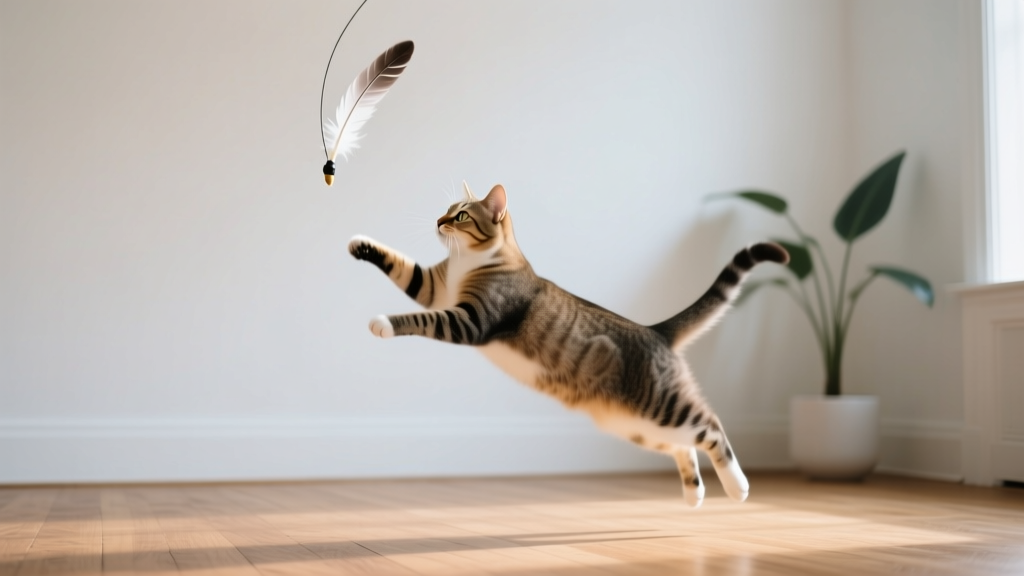
Domestication didn’t erase feline instincts—it merely relocated them. Your cat still possesses the neural wiring of a solitary predator requiring 12–16 hours of daily activity: hunting, stalking, capturing, and consuming. When those drives go unfulfilled, behavior changes manifest as redirected energy: obsessive licking (self-grooming as displacement behavior), pouncing on ankles (prey drive with no outlet), knocking objects off shelves (‘testing’ object movement), or waking you at 4 a.m. (nocturnal hunting rhythm with no daytime stimulation).
A groundbreaking 2023 University of Lincoln study tracked 89 indoor cats across 12 weeks. Those provided with just two 15-minute interactive play sessions daily using wand toys mimicking erratic prey movement showed:
- 47% reduction in destructive scratching
- 33% decrease in nighttime vocalization
- 2.1x increase in voluntary napping in owner-proximity zones (indicating improved security)
The key? Play must simulate the full predatory sequence: stalk → chase → pounce → bite → ‘kill’ (a sustained 10–20 second hold on the toy) → ‘consume’ (a treat or meal immediately after). Skipping the ‘kill’ and ‘consume’ phases leaves cats physiologically unsatisfied—triggering repeat cycles of agitation.
| Trigger Category | Top 3 Observable Behavior Changes | First Action Step (Within 24 Hours) | Vet Consult Threshold |
|---|---|---|---|
| Physical Discomfort | • Avoiding jumps/stairs • Over-grooming one body region • Urinating beside (not in) litter box |
Schedule wellness exam + request full orthopedic & dental assessment | Any change lasting >72 hours OR accompanied by appetite loss, lethargy, or vocalization on touch |
| Environmental Stress | • Increased hiding duration/frequency • Urine marking vertical surfaces • Excessive meowing at night |
Identify & pause ONE recent change; reintroduce pheromones + add 2 new vertical resting spots | If behavior persists >10 days despite environmental reset OR escalates to aggression |
| Cognitive Shift | • Staring into space >2 min • Getting trapped in familiar rooms • Forgetting litter box location |
Begin daily 5-min ‘name recall’ games (say name → reward when eye contact made); add puzzle feeder at breakfast | Diagnosis needed if ≥2 symptoms occur weekly for >3 weeks OR involve accidents in sleeping areas |
| Instinctual Deprivation | • Pouncing on moving feet/hands • Chasing light reflections obsessively • ‘Sucking’ on fabric or wool |
Implement two 15-min predatory-play sessions daily; replace one meal with food puzzle | If self-injury occurs (e.g., raw skin from over-grooming) OR behavior interferes with sleep/nutrition |
Frequently Asked Questions
Is my cat’s behavior change just ‘getting older’?
No—while some slowing occurs with age, true deterioration isn’t normal. Increased vocalization, disorientation, or house-soiling in senior cats is often linked to treatable conditions like hyperthyroidism, kidney disease, or cognitive dysfunction. A 2020 Journal of Veterinary Behavior study found 61% of cats labeled ‘grumpy old timers’ had reversible metabolic imbalances. Always rule out medical causes first.
Could anxiety medication help my cat?
Yes—but only as part of a comprehensive plan. FDA-approved medications like fluoxetine (Reconcile) or clomipramine (Clomicalm) are effective for severe cases, but they work best when paired with environmental modification and behavior training. Never medicate without veterinary supervision: dosage errors can cause fatal serotonin syndrome. Also note: gabapentin is increasingly used off-label for situational anxiety (e.g., vet visits), but it doesn’t address chronic triggers.
My cat changed after I got a new pet—will they ever adjust?
They can—but it requires structured, species-specific reintroduction. Cats don’t ‘share’ space; they tolerate proximity. Success hinges on resource separation (separate feeding, sleeping, litter, and scratching zones) and positive association (feeding treats when the new pet is visible but distant). Rushing integration causes lasting trauma. Most cats need 2–6 weeks of gradual exposure. A certified cat behavior consultant can create a custom protocol—don’t rely on ‘let them work it out.’
Is punishment ever appropriate for behavior changes?
Never. Punishment (spraying water, yelling, clapping) increases fear, erodes trust, and worsens the underlying issue. It teaches your cat that *you* are unsafe—not that the behavior is undesirable. Instead, redirect: if scratching furniture, immediately offer a sisal post smeared with catnip. If eliminating outside the box, clean thoroughly with enzymatic cleaner, then place the box where accidents occurred temporarily—then slowly relocate it.
How do I know if it’s medical vs. behavioral?
When in doubt, assume medical until proven otherwise. Rule out pain, infection, or metabolic disease first. Key clues pointing to medical origin: onset after age 10, asymmetrical changes (e.g., limping on one side), changes coinciding with diet/medication shifts, or any physical symptom (weight loss, vomiting, excessive thirst). Behavioral origins typically emerge after environmental changes, show gradual progression, and improve with environmental adjustment alone.
Common Myths About Why Cat Behavior Changes
Myth #1: “Cats act out of spite or revenge.”
False. Spite requires complex theory-of-mind cognition—something cats lack. What appears vengeful (urinating on your pillow after you leave for vacation) is actually stress-induced marking triggered by separation anxiety and unfamiliar scents accumulating in your absence. Their motivation is security—not payback.
Myth #2: “If my cat is eating and purring, they can’t be in pain.”
Deeply misleading. Up to 80% of cats with chronic osteoarthritis continue eating normally and may even purr during palpation—a physiological stress response, not contentment. Purring frequency (25–150 Hz) has been shown to promote tissue regeneration and pain relief, making it a coping mechanism, not a happiness meter.
Related Topics (Internal Link Suggestions)
- Feline Stress Signals — suggested anchor text: "subtle signs your cat is stressed"
- Best Litter Box Setup for Senior Cats — suggested anchor text: "litter box modifications for older cats"
- Interactive Cat Toys That Actually Work — suggested anchor text: "best predatory-play toys for cats"
- When to See a Feline Behaviorist — suggested anchor text: "signs you need a certified cat behavior consultant"
- Cat Nutrition for Brain Health — suggested anchor text: "foods that support feline cognitive function"
Your Next Step Starts Today—Not Tomorrow
Understanding why cat behavior changes isn’t about fixing ‘problems’—it’s about deepening your relationship with a creature whose world operates on sensory precision, evolutionary instinct, and quiet resilience. Every shift in their behavior is data. Every hesitation, stare, or altered routine is a sentence in a language you *can* learn to read—if you listen with patience and respond with evidence-based compassion. Don’t wait for the behavior to escalate. Pick *one* action from the table above—schedule that vet visit, move the litter box, or set your phone alarm for 7 a.m. and 7 p.m. to initiate play—and do it within the next 24 hours. Small, consistent interventions compound. Your cat isn’t broken. They’re communicating. And now, you’re ready to answer.