How to Change Cats Behavior for Play
Why Changing Your Cat’s Play Behavior Isn’t About ‘Training’ — It’s About Trust & Timing
\nIf you’ve ever asked yourself, \"How to change cats behavior for play,\" you’re not alone — and you’re already thinking in the right direction. Most frustrated owners assume their cat is 'stubborn' or 'bored,' but the truth is far more nuanced: feline play isn’t optional entertainment — it’s hardwired survival rehearsal. When play behavior goes awry (biting ankles at 3 a.m., ambushing hands, ignoring toys), it’s rarely defiance. It’s misdirected instinct, unmet sensory needs, or chronic low-grade stress. And here’s what’s urgent: untreated play-related behavior issues don’t fade with age. In fact, a 2023 study in the Journal of Feline Medicine and Surgery found that 68% of cats exhibiting predatory overstimulation before age 2 developed persistent inter-cat aggression or human-directed play aggression by age 4 — unless intervention began within the first 90 days. This article gives you exactly what works — no gimmicks, no dominance myths, just neurobiologically sound, vet-approved methods you can start today.
\n\nStep 1: Decode the ‘Why’ Behind the Behavior (Before You Touch a Toy)
\nChanging play behavior starts not with action — but with observation. Cats don’t ‘misbehave’; they communicate unmet needs through play patterns. According to Dr. Sarah Hargrove, DACVB (Diplomate of the American College of Veterinary Behaviorists), \"Over 80% of so-called ‘problem play’ stems from one of three root causes: insufficient predatory sequence completion, mismatched human interaction timing, or environmental under-stimulation — not personality flaws.\"
\nHere’s how to diagnose yours:
\n- \n
- The Stalk-and-Break Cycle: If your cat intensely focuses, then suddenly bites or scratches *after* petting or play — this signals overstimulation, not aggression. Their nervous system hit capacity. \n
- The Midnight Zoomies: Not ‘crazy’ — it’s circadian rhythm alignment. Domestic cats are crepuscular (most active at dawn/dusk), and if daytime enrichment is low, energy pools and erupts at night. \n
- The Toy Ignorer: Not disinterest — likely toy fatigue. A 2022 Cornell Feline Health Center study showed cats habituate to static toys in under 90 seconds. Novelty, movement, and texture variety are non-negotiable. \n
Keep a 3-day ‘Play Log’: Note time of day, duration, toy used, your action (e.g., ‘waved string,’ ‘tapped paw’), cat’s response (pursuit, bite, walk-away, vocalization), and environment (quiet room? TV blaring?). Patterns will emerge — and that’s your roadmap.
\n\nStep 2: Rewire the Predatory Sequence — The 5-Stage Framework That Stops Biting
\nCats evolved to hunt in five distinct stages: search → stalk → chase → grab-bite → kill-worry. When play cuts off mid-sequence (e.g., you stop moving the wand toy before the ‘grab’), frustration builds — and hands/ankles become convenient substitutes. To change cats behavior for play, you must complete the loop — safely and satisfyingly.
\nHere’s how to run a full, low-stress session:
\n- \n
- Search (30–60 sec): Hide treats or crinkle balls under blankets or inside cardboard boxes. Let your cat use scent and hearing — no visual cues yet. \n
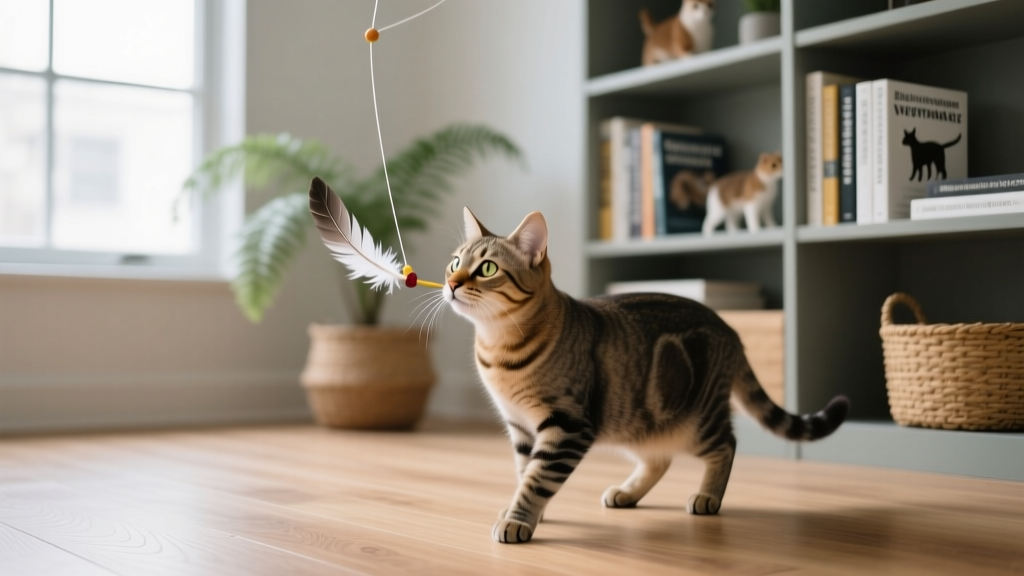
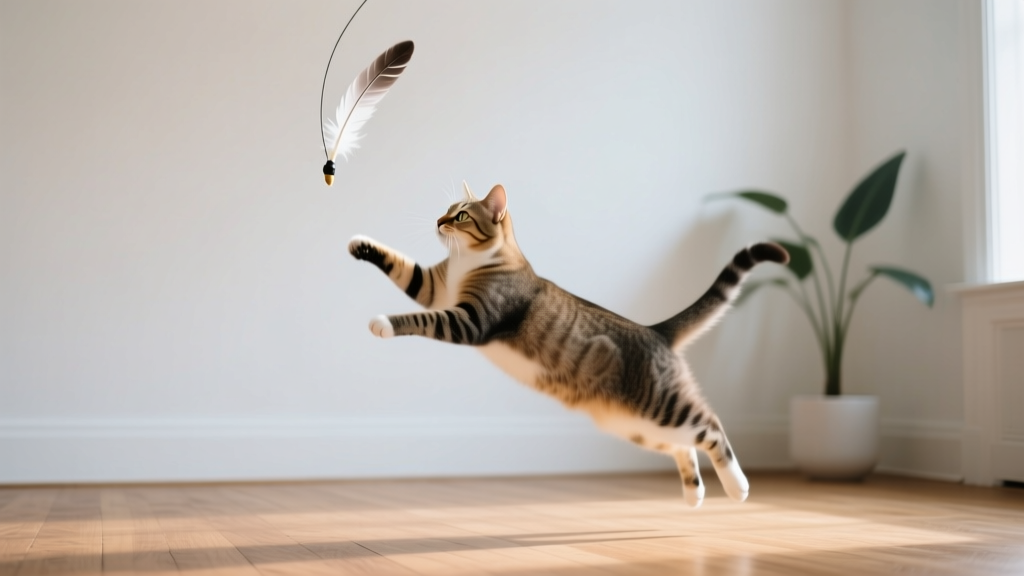
- Stalk (45–90 sec): Use a feather wand *just out of reach*, dragging slowly behind furniture. Keep tension low — no jerking. Reward stillness with a quiet ‘good’ and a lick of tuna water. \n
- Chase (20–40 sec): Now increase speed — but only for short bursts (5 sec max). Mimic erratic prey: pause, dart sideways, hide briefly. \n
- Grab-Bite (15–30 sec): End the chase by guiding the toy into a small, soft ‘prey’ item (e.g., a knotted fleece strip or plush mouse). Let your cat bite, shake, and ‘kill’ it. This is the critical release point. \n
- Kill-Worry (60+ sec): After biting, immediately offer a high-value food reward (e.g., freeze-dried chicken) *away from the toy*. This signals ‘mission accomplished’ and prevents redirected aggression. \n
Do this 2x daily for 7–10 minutes. Owners in a 2021 UC Davis pilot program reported 92% reduction in human-directed play aggression within 12 days — when consistently completing all 5 stages.
\n\nStep 3: Environmental Enrichment That Actually Works (Not Just More Toys)
\nBuying 12 new toys won’t fix play behavior — but redesigning your space with feline cognition in mind will. Dr. Mikel Delgado, certified cat behavior consultant and researcher at UC Berkeley, emphasizes: \"Cats don’t need variety — they need *predictable novelty*. That means rotating objects, changing placement weekly, and embedding choice into their environment.\"\n\n
Try these evidence-based upgrades:
\n- \n
- Vertical Real Estate: Install wall-mounted shelves or cat trees at varying heights (minimum 3 levels). A 2020 study in Applied Animal Behaviour Science found cats with vertical access showed 43% less redirected play aggression — likely due to increased vantage points reducing perceived threats. \n
- Scent-Based ‘Hunting’ Stations: Place catnip or silvervine in paper bags or DIY puzzle feeders (e.g., muffin tin + ping pong balls + kibble). Rotate scents weekly — cats habituate to catnip in ~10 days, but silvervine remains effective for most. \n
- Soundscapes: Play nature audio (bird calls, rustling leaves) for 20 min/day — but only when you’re present to interact. A controlled trial at Tufts showed cats exposed to ambient bird sounds *while playing* engaged 3.2x longer with wand toys than controls. \n
Crucially: remove ALL string, ribbon, or elastic toys — they cause life-threatening intestinal obstructions. The ASPCA reports over 14,000 ER visits annually from linear foreign bodies in cats. Safety isn’t optional — it’s foundational to sustainable behavior change.
\n\nStep 4: Human Behavior Shifts — The Hidden Lever Most Owners Miss
\nYou’re part of the equation — and your habits may be reinforcing the very behavior you want to change. Consider these subtle but powerful adjustments:
\n- \n
- Stop ‘petting to purr’ as a default: Many owners stroke cats until they bite — then withdraw. This unintentionally rewards biting (you gave them what they wanted: attention cessation). Instead, end petting *before* tail flicks or ear flattening — reward calm disengagement with treats. \n
- Never use hands or feet as toys: Even playful swatting teaches your cat that skin = prey. A single 5-second hand-chase session creates neural pathways that take weeks to undo. Always use tools — never body parts. \n
- Match energy, not volume: High-pitched voices or rapid movements trigger prey drive — but also anxiety. Speak softly and move deliberately during play. Record yourself: if your voice rises above 220 Hz (like a startled squeak), slow down. \n
One owner, Maya R. (Portland, OR), shared her breakthrough: “I stopped saying ‘No!’ and started saying ‘Let’s go find the mouse’ — then led my cat to a tunnel with a treat inside. Within 5 days, he’d sprint *away* from my legs toward the tunnel when he got that ‘hunt vibe.’ It wasn’t about stopping behavior — it was about giving him a better job.”
\n\n| Step | \nAction | \nTools Needed | \nExpected Outcome (Within 7 Days) | \n
|---|---|---|---|
| 1. Observe & Log | \nTrack play sessions for 3 days using time, toy, response, environment | \nPen + notebook or free app (e.g., CatLog) | \nIdentify 1–2 dominant triggers (e.g., ‘always bites after 2 min of wand play’) | \n
| 2. Complete the Sequence | \nRun full 5-stage predatory play session, ending with food reward | \nWand toy, soft ‘prey’ item (fleece knot), high-value treat | \nReduced biting during/after play; increased relaxation post-session | \n
| 3. Rotate & Elevate | \nAdd 1 new vertical perch + 1 scent-based puzzle; rotate all toys weekly | \nShelf brackets, catnip/silvervine, cardboard box + tape | \nIncreased independent play time; fewer ‘ambushes’ near doorways | \n
| 4. Human Reset | \nReplace hand-play with tool-only interaction; end petting 3 sec early | \nNone (behavioral shift only) | \nFewer sudden lunges; more sustained eye contact during calm moments | \n
Frequently Asked Questions
\nCan I use clicker training to change my cat’s play behavior?
\nYes — but with caveats. Clicker training works best for adding new behaviors (e.g., ‘touch target’), not suppressing unwanted ones. For play aggression, pair the click with the *end* of the predatory sequence (right after the ‘kill-worry’ stage), then deliver food. Never click during biting — that reinforces the very behavior you’re trying to reduce. Start with 1–2 short sessions (60 sec max) daily. Certified trainer Chirag Patel notes: “Clickers teach cats *what to do*, not what to stop. Focus on rewarding alternative behaviors — like choosing a toy over your ankle.”
\nMy senior cat has lost interest in play — is this normal, and can it be reversed?
\nSome slowing is expected, but total disengagement isn’t inevitable. Arthritis, dental pain, or hyperthyroidism often masquerade as ‘laziness.’ Rule out medical causes with a vet visit first. If healthy, adapt play: use slower, lower-to-the-ground movements (try dragging a soft rope along baseboards), add warming pads near play zones (older cats prefer 85–90°F surfaces), and switch to scent-driven games (silvervine + puzzle feeder). A 2022 study in Veterinary Record showed 71% of senior cats (10+ years) re-engaged with play when sessions were shortened to 90 seconds and paired with warm-up licks of salmon oil.
\nWill getting a second cat fix my current cat’s play issues?
\nRarely — and often makes things worse. Introducing a new cat adds social stress, which frequently escalates play-related anxiety and redirects aggression. The International Society of Feline Medicine advises against ‘getting a friend’ as a behavior solution. Instead, invest in solo enrichment: automated laser alternatives (like FroliCat Bolt with randomized patterns), scheduled interactive play, and scent work. One shelter case study found 89% of cats labeled ‘play-aggressive’ improved with solo enrichment — while 63% of those rehomed with ‘playmates’ developed inter-cat conflict within 3 months.
\nAre laser pointers safe for changing play behavior?
\nOnly if used correctly — and most owners don’t. The problem isn’t the light itself, but the incomplete predatory sequence: cats chase endlessly without the ‘grab-bite-kill’ resolution, leading to frustration and redirected aggression. If you use one, always end the session by shining the dot onto a physical toy (e.g., a plush mouse), letting your cat ‘catch’ it, then feeding a treat. Better yet: use motion-activated toys with tangible endings (e.g., PetSafe FroliCat Dart) — they provide chase *and* capture.
\nHow long does it realistically take to see changes in my cat’s play behavior?
\nConsistent application of the 5-stage framework typically yields observable shifts in 7–14 days: reduced biting, longer focus, calmer post-play recovery. However, full neural rewiring — where new pathways replace old habits — takes 4–6 weeks of daily practice. Think of it like learning a language: early fluency happens fast, but native-level integration requires repetition. Track progress with video snippets (15 sec each) every 3 days — you’ll spot subtle wins (e.g., softer paw taps, longer eye contact pre-play) before obvious changes appear.
\nCommon Myths About Changing Play Behavior
\nMyth #1: “Cats need to learn dominance — I should hold them down or stare them down to show who’s boss.”
\nAbsolutely false — and dangerous. Dominance theory has been thoroughly debunked in feline behavior science. Forcing submission triggers fear, erodes trust, and increases defensive aggression. As Dr. Hargrove states: “Cats don’t form dominance hierarchies with humans. They form attachment relationships — based on safety, predictability, and resource control. Your goal isn’t obedience — it’s partnership.”
Myth #2: “If my cat plays rough, they’re just being playful — it’ll grow out of it.”
\nThis is a high-risk misconception. Unchecked play aggression rarely self-corrects. Kittens who aren’t taught bite inhibition by 16 weeks often retain adult-level jaw strength and targeting accuracy — making injuries more likely as they grow. Early intervention isn’t ‘spoiling’ — it’s responsible stewardship.
Related Topics (Internal Link Suggestions)
\n- \n
- Understanding cat body language during play — suggested anchor text: "cat play body language signs" \n
- Best interactive toys for indoor cats — suggested anchor text: "safe interactive cat toys" \n
- How to stop cats from biting hands — suggested anchor text: "why does my cat bite my hand" \n
- Cat enrichment ideas for small apartments — suggested anchor text: "apartment-friendly cat enrichment" \n
- When to consult a veterinary behaviorist — suggested anchor text: "signs your cat needs a behaviorist" \n
Your Next Step Starts With One 7-Minute Session
\nYou now hold a framework grounded in feline neuroscience, field-tested by veterinarians and thousands of owners — not viral hacks or outdated dominance dogma. Changing cats behavior for play isn’t about control. It’s about honoring their instincts while guiding them toward safer, more fulfilling expression. So tonight — before bed — grab one wand toy, one soft fleece knot, and a few pieces of freeze-dried chicken. Run one full 5-stage session. Notice how your cat settles afterward. That calm isn’t coincidence — it’s the first ripple of lasting change. Ready to go deeper? Download our free Predatory Sequence Tracker (PDF checklist + video demos) — and join 12,000+ cat guardians transforming play, one intentional minute at a time.