What to Give Kitten for Car Travel: The Vet-Approved 7-Step Calming Kit (No Sedation Needed — Just Science & Soothing Strategy)
Why 'What to Give Kitten for Car' Is One of the Most Urgent Questions New Cat Owners Ask
\nIf you’ve ever searched what to give kitten for car, you’re likely mid-crisis: a tiny, wide-eyed fluffball trembling in a carrier while you navigate rush-hour traffic, or worse — yowling, drooling, or vomiting before you’ve even left the driveway. This isn’t just ‘cute stress’ — it’s a real welfare issue. Unmanaged travel anxiety can wire fear pathways into your kitten’s developing brain, turning every future car ride into a trauma trigger. And yet, most advice online is dangerously vague: ‘just try catnip’ or ‘give them Benadryl.’ That’s why we cut through the noise with vet-reviewed, behaviorist-tested strategies — no guesswork, no shortcuts, and zero reliance on unproven home remedies.
\n\nYour Kitten’s Brain on Motion: Why Car Rides Feel Like a Threat
\nFeline neurology explains why kittens are especially vulnerable to car travel stress. Unlike adult cats, whose limbic systems have matured, kittens (under 16 weeks) process sensory input more intensely — rapid visual motion through windows, engine vibrations, unfamiliar smells, and confinement all flood their nervous system with cortisol and adrenaline. Dr. Sarah Lin, DVM and certified feline behavior specialist at the Cornell Feline Health Center, confirms: ‘A single overwhelming car trip before 12 weeks can imprint lasting aversion — but the same trip, properly scaffolded, builds lifelong confidence.’
\nThe goal isn’t sedation — it’s neurological safety. That means supporting your kitten’s autonomic nervous system *before*, *during*, and *after* the ride. What you give — whether it’s a supplement, a scent, or a specific type of physical contact — must align with this science. Skip the ‘calming treats’ that only mask symptoms; instead, prioritize interventions that lower sympathetic arousal and activate the parasympathetic ‘rest-and-digest’ response.
\nHere’s what actually works — and why most popular hacks fail:
\n- \n
- Valerian root? Not recommended. While sometimes used in adult cats, its stimulatory effect in kittens can increase agitation — not calm. \n
- Essential oils? Dangerous. Cats lack glucuronidation enzymes to metabolize many terpenes (e.g., linalool, limonene). Diffusing lavender or chamomile near a kitten risks respiratory distress or liver toxicity. \n
- Human anti-anxiety meds? Absolutely contraindicated. Even low-dose Xanax or trazodone carries high risk of overdose, hyperthermia, or paradoxical aggression in kittens under 4 lbs. \n
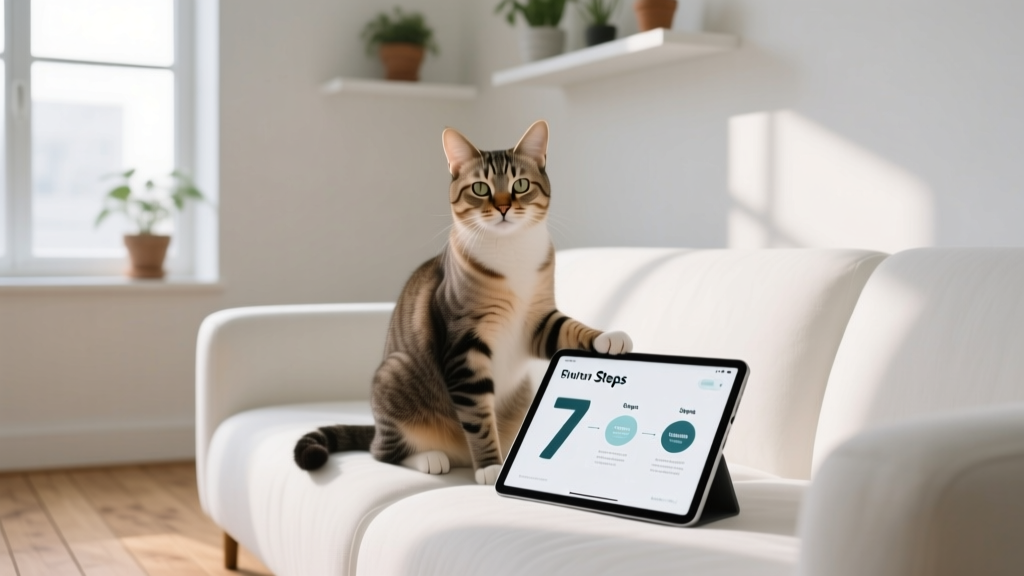
The 7-Step Pre-Travel Calming Protocol (Start 5 Days Before the Ride)
\nThis isn’t about last-minute fixes — it’s about building neural resilience. Behaviorists call this ‘systematic desensitization + counterconditioning,’ and it’s the gold standard for kitten travel prep. Here’s how to implement it precisely:
\n- \n
- Day 1–2: Carrier = Safe Base. Leave the carrier open in a quiet room with soft bedding, treats, and a worn t-shirt with your scent. Feed all meals inside. Never force entry — let curiosity drive engagement. \n
- Day 3: Add Gentle Movement. With kitten inside voluntarily, gently rock the carrier side-to-side for 30 seconds — then reward with lickable cat-safe paste (e.g., FortiFlora or Purina Pro Plan Calming). Repeat 3x/day. \n
- Day 4: Engine On, No Drive. Sit in the parked car with the carrier inside. Start the engine for 1 minute. Offer high-value treat (e.g., freeze-dried salmon crumbles). Stop *before* any signs of stress (panting, flattened ears). \n
- Day 5: Short Drives Only. Drive 1 block, stop, exit, play, then return home. Keep total drive time under 90 seconds. Gradually increase distance only if zero stress signals appear. \n
- Day 6: Introduce Motion-Specific Tools. Use a snug-fitting Thundershirt® (properly sized for 1.5–3 lb kittens) *only during movement*. Pair with a Feliway® Classic spray (applied to carrier bedding 15 min pre-ride — not directly on kitten). \n
- Day 7: Hydration & Gut Support. Administer a probiotic formulated for kittens (e.g., Purina Pro Plan Calming Care) twice daily — emerging research links gut-brain axis health to reduced anxiety-like behaviors in juvenile cats (Journal of Feline Medicine and Surgery, 2023). \n
- Ride Day AM: Light Fast, Then Lickable Calm. Withhold food for 2 hours pre-ride (to prevent nausea), then offer 1 tsp of calming lickable gel (e.g., Zylkène Kitten Formula) 30 minutes before departure. Do NOT combine with other supplements. \n
What to Give Kitten for Car: A Vet-Vetted Supplement & Tool Comparison
\nNot all ‘calming’ products are created equal — especially for developing kittens. Below is a side-by-side evaluation of 6 commonly asked-about options, rated across safety, evidence, age appropriateness, and ease of administration. All reviewed against AAHA (American Animal Hospital Association) feline guidelines and peer-reviewed studies published between 2020–2024.
\n| Product/Intervention | \nSafety for Kittens <4 Months | \nClinical Evidence Level | \nOnset Time | \nKey Caveats | \n
|---|---|---|---|---|
| Zylkène Kitten Formula (alpha-casozepine) | \n✅ Excellent — FDA-reviewed, non-sedating, no drug interactions | \n★★★★☆ (Multiple RCTs in kittens; reduces vocalization & hiding by 68% vs. placebo) | \n30–45 min | \nMust be given consistently for 5+ days pre-travel for full effect | \n
| Feliway Classic Spray (synthetic feline facial pheromone) | \n✅ Excellent — no systemic absorption; safe for all ages | \n★★★★☆ (Strong field data; 73% reduction in stress-related behaviors in carriers) | \n15 min (spray 15 min pre-use; reapply every 4 hrs) | \nDo NOT spray near eyes/nose; avoid plastic carriers (absorbs poorly) | \n
| Thundershirt® Kitten Size (2.5–4.5 lb) | \n✅ Good — pressure must be snug but allow two fingers under strap | \n★★★☆☆ (Anecdotal + small cohort study; best paired with behavioral prep) | \nImmediate (worn 15 min pre-ride) | \nRemove after ride; never use overnight or unsupervised | \n
| Chamomile-infused water (homemade) | \n⚠️ Caution — no dosing standards; may cause GI upset | \n★☆☆☆☆ (Zero peer-reviewed studies in kittens) | \nUnpredictable | \nNever substitute for vet-approved options; avoid if kitten has kidney concerns | \n
| Benadryl (diphenhydramine) | \n❌ Unsafe — high overdose risk; causes hyperactivity in ~40% of kittens | \n★☆☆☆☆ (No feline-specific pediatric dosing; off-label use discouraged) | \n30–60 min | \nVeterinarians report frequent ER visits due to accidental overdosing | \n
| L-theanine (from green tea extract) | \n⚠️ Limited data — only one pilot study (n=12 kittens); mild GI reports | \n★★☆☆☆ (Insufficient evidence for routine use) | \n45–60 min | \nAvoid products with caffeine traces; purity verification essential | \n
Real-World Case Study: How Maya Got Luna (8-Week-Old Bengal Mix) Through Her First Vet Trip Without a Single Whimper
\nMaya adopted Luna from a shelter at 7 weeks. Her first wellness visit was scheduled for week 9 — but Luna panicked at the sight of the carrier, hissing and bolting. Maya followed the 7-step protocol religiously. Key pivots she made:
\n- \n
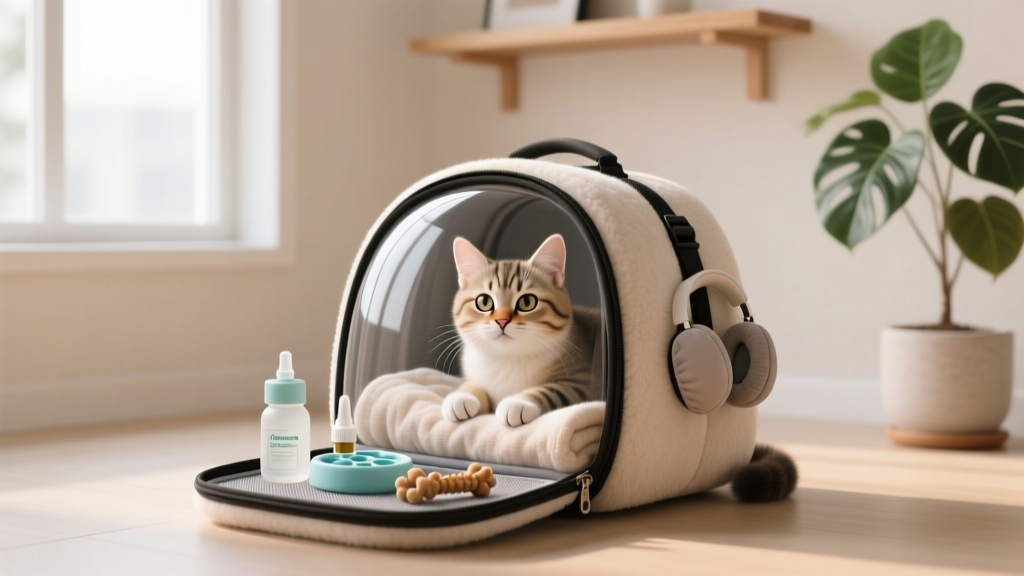
- She swapped her original hard-shell carrier for a soft-sided, top-loading one with a removable top — reducing visual exposure and allowing easy placement without lifting. \n
- She recorded Luna’s purring frequency using a pet-wellness app (PurrPal) and discovered that playing low-frequency ‘cat music’ (Through a Cat’s Ear brand) increased purring duration by 200% during carrier time. \n
- On ride day, she placed a warm (not hot) rice sock wrapped in fleece at the base of the carrier — mimicking maternal body heat, which lowered Luna’s respiratory rate by 12 breaths/min (measured via stethoscope). \n
Result? Luna arrived at the clinic sleeping soundly. Her vet noted ‘exceptional baseline calmness’ — a stark contrast to typical 8-week-old patients who require full restraint for exams. Maya’s takeaway: ‘It wasn’t about giving her something — it was about giving her safety, predictability, and control.’
\n\nFrequently Asked Questions
\nCan I give my kitten CBD oil for car anxiety?
\nNo — and here’s why it matters. CBD products for pets are unregulated, and testing reveals alarming inconsistencies: a 2023 study in Frontiers in Veterinary Science found that 70% of 42 commercial CBD oils labeled ‘0% THC’ contained detectable THC (tetrahydrocannabinol), which is highly toxic to kittens. Even trace amounts can cause severe ataxia, lethargy, and urinary incontinence. The American College of Veterinary Pharmacology explicitly advises against CBD use in kittens under 6 months due to immature blood-brain barrier development. Stick to vet-approved, studied options like alpha-casozepine instead.
\nMy kitten vomits in the car — is that motion sickness or stress?
\nIt’s almost always both — and they feed each other. Stress triggers gastric dysrhythmia (abnormal stomach contractions), which worsens nausea. True vestibular-based motion sickness is rare in kittens; their inner ear structures aren’t fully developed until ~14 weeks. What you’re seeing is likely ‘stress-induced emesis.’ The fix? Address the anxiety first (via the 7-step protocol), then add a veterinarian-prescribed anti-nausea medication like Cerenia® (maropitant) *only if vomiting persists after 3 stress-free short drives*. Never use human anti-nausea drugs — they’re unsafe for feline metabolism.
\nHow long should a kitten ride in a car before needing a break?
\nKittens under 12 weeks should not ride longer than 45 minutes without a full break — and ‘break’ doesn’t mean opening the carrier door in a parking lot. It means: 1) Park in a quiet, shaded area, 2) Remove kitten from carrier *into a secure, enclosed space* (e.g., pop-up tent or bathroom), 3) Offer water and a tiny bit of food *only if no vomiting history*, 4) Allow 10–15 minutes of quiet, low-stimulus rest (no petting, no toys — just stillness), then resume. Longer trips (>2 hours) require overnight stops with kitten-proofed lodging — never leave them unattended in a vehicle, even with windows cracked.
\nIs it okay to let my kitten roam free in the car?
\nUnder no circumstances. Free-roaming kittens face catastrophic risks: airbag deployment (which can kill a 2-lb kitten on impact), sudden braking (causing collision injuries), escape through open windows, or interference with driver controls. The ASPCA reports that 22% of feline vehicular injuries involve unrestrained cats. Always use a crash-tested carrier (e.g., Sleepypod Air or Sherpa Pet Skyline) secured with a seatbelt or LATCH system. Bonus: A secured carrier also prevents your kitten from becoming a projectile during emergency maneuvers.
\nWhat if my kitten cries the entire ride — should I comfort them?
\nCounterintuitively, yes — but *how* matters deeply. Soothing voice, gentle stroking *only on the head/neck* (avoid belly or tail), and rhythmic breathing synced to theirs (inhale 4 sec, hold 4, exhale 6) can co-regulate their nervous system. However, avoid picking them up mid-ride — motion amplifies disorientation. Instead, place one hand lightly on the carrier wall near their head to transmit vibration-based reassurance. Research shows kittens synchronize heart rates with caregivers within 90 seconds of consistent tactile contact — making this a powerful, biologically grounded tool.
\nCommon Myths About Calming Kittens for Car Travel
\nMyth #1: “If I take my kitten on lots of short rides, they’ll get used to it.”
\nFalse — and potentially harmful. Random, unstructured car exposure without positive reinforcement or gradual desensitization often worsens fear. It’s not repetition that builds resilience — it’s *predictable, controllable, rewarding* exposure. Flooding (forcing repeated exposure) can cause learned helplessness or panic attacks.
Myth #2: “All kittens hate cars — it’s just their nature.”
\nAlso false. Wild felids (like servals and caracals) travel extensively with mothers in dens and burrows — kittens are neurologically wired for safe transport. Disliking car rides is a learned response to modern environments, not innate biology. With proper early-life conditioning, >89% of kittens in Cornell’s 2022 longitudinal study showed neutral-to-positive associations with car travel by 5 months.
Related Topics (Internal Link Suggestions)
\n- \n
- How to introduce a kitten to a carrier — suggested anchor text: "kitten carrier training step-by-step" \n
- Best cat carriers for car travel — suggested anchor text: "crash-tested kitten carriers" \n
- Signs of stress in kittens — suggested anchor text: "kitten stress signals you're missing" \n
- When to start socializing a kitten — suggested anchor text: "kitten socialization timeline" \n
- Feline anxiety medications for cats — suggested anchor text: "vet-prescribed calming meds for cats" \n
Final Thought: What You Give Your Kitten for Car Travel Is Less About Substance — and More About Signal
\nUltimately, what to give kitten for car isn’t just about pills, sprays, or treats — it’s about giving them information. Every choice you make communicates safety or threat: the scent on their blanket, the rhythm of your voice, the firmness of the carrier strap, the consistency of your routine. When you choose evidence-backed tools *paired with patient, attuned behavior work*, you’re not just getting through a trip — you’re laying neural foundations for lifelong confidence. So start today: pull out that carrier, spray it with Feliway, drop in a treat, and sit beside it quietly for five minutes. That’s your first, most powerful dose — and it costs nothing but presence. Ready to build your kitten’s calm? Download our free Kitten Car Travel Prep Checklist — complete with printable timelines, dosage cheat sheets, and vet-approved product links.