What Cats Behavior Means for Anxiety
Why Your Cat’s ‘Weird’ Behavior Isn’t Weird at All — It’s a Distress Call
If you’ve ever wondered what cats behavior means for anxiety, you’re not overthinking — you’re paying attention to something vital. Cats don’t have panic attacks we can diagnose with bloodwork or X-rays. Instead, they communicate emotional distress through behavior: the sudden refusal to jump onto the couch, the obsessive licking that leaves bald patches, the midnight yowling that shatters silence like glass. In fact, a 2023 study published in Journal of Feline Medicine and Surgery found that 68% of cats referred to veterinary behavior clinics showed no physical illness — yet exhibited clear behavioral markers of chronic anxiety. This isn’t ‘just being a cat.’ It’s your companion silently asking for help — and misreading those signals can lead to worsening stress, urinary issues, redirected aggression, or even self-harm. The good news? With accurate interpretation and compassionate intervention, most anxiety-driven behaviors are reversible — often within 2–6 weeks.
Decoding the 7 Most Misunderstood Anxiety Signals
Anxiety in cats rarely looks like trembling or pacing (though it can). More often, it hides in habits we dismiss as ‘quirky’ or ‘annoying.’ Below are seven high-frequency behaviors — each backed by clinical observation and owner-reported patterns — with precise interpretations and immediate action steps.
- Overgrooming (especially paws, belly, or inner thighs): Not just boredom — it’s a displacement behavior triggered by unresolved tension. When cortisol spikes, licking releases endorphins. If you see hair loss, red skin, or raw patches (psychogenic alopecia), this is a red-flag sign — not a grooming habit.
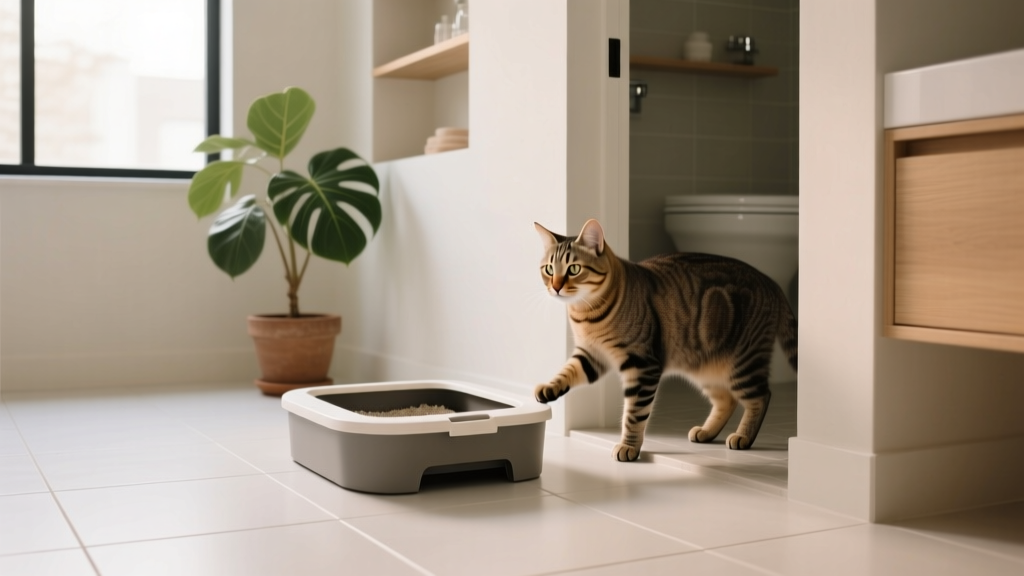
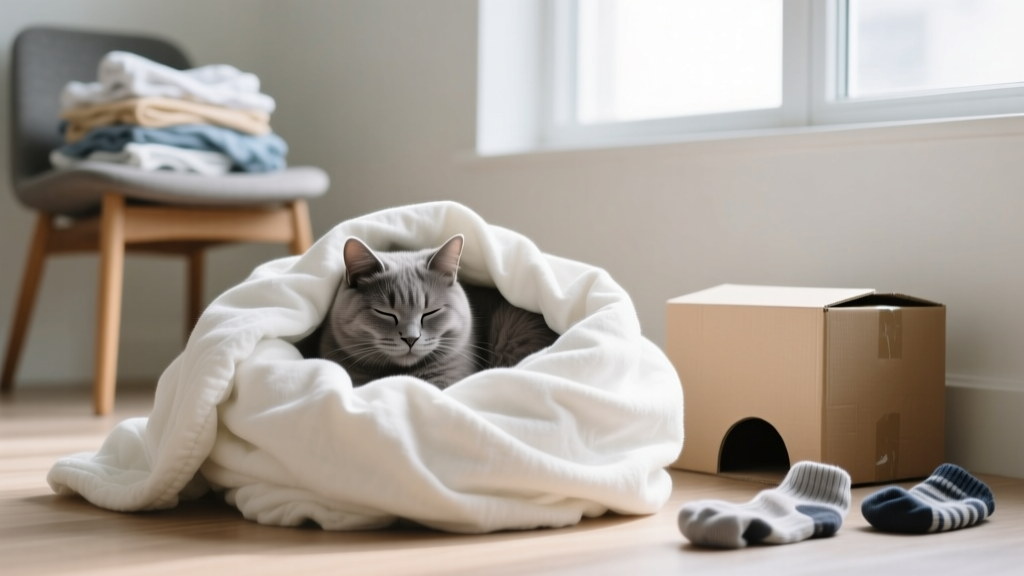
- Eliminating outside the litter box — especially on soft surfaces like beds or laundry piles: This isn’t ‘spite.’ It’s often territorial insecurity or substrate aversion linked to stress. A 2022 Cornell Feline Health Center survey found 41% of inappropriate elimination cases resolved within 10 days after environmental stressors (e.g., new pet, renovation, visitor frequency) were identified and modified.
- Excessive blinking or slow-blinking avoidance: Contrary to popular belief, slow blinking *is* a sign of trust — but its absence matters more. Cats under chronic anxiety often avoid eye contact entirely or blink rapidly (a sign of hyperarousal). Observe during quiet moments: if your cat won’t hold your gaze for >2 seconds without darting away or squinting tightly, it’s worth investigating triggers.
- ‘Ghosting’ — disappearing for hours in closets, under beds, or behind appliances: Short-term hiding is normal. But prolonged, repeated retreats (especially when household activity is low) suggest hypervigilance — your cat feels unsafe even in familiar spaces. Dr. Sarah Hensley, DACVB (Diplomate of the American College of Veterinary Behaviorists), notes: ‘Hiding isn’t passive; it’s active coping. When it becomes the default state, the nervous system is stuck in survival mode.’
- Sudden startle responses — jumping at shadows, flinching at quiet sounds, or bolting from stillness: This reflects heightened sympathetic nervous system activation. Record a video: does your cat freeze mid-step, ears pinned, pupils dilated — then bolt? That’s not ‘jumpy’ — it’s neurologically overloaded.
- Aggression toward specific people or pets — especially after life changes: Redirected aggression (e.g., hissing at your child after seeing an outdoor cat through the window) is classic anxiety expression. Importantly, punishment worsens it. The fix isn’t discipline — it’s interrupting the trigger chain and rebuilding safety associations.
- Excessive vocalization at dawn/dusk or during storms: While some breeds are naturally chatty, new or intensified yowling — particularly paired with pacing or restlessness — correlates strongly with separation-related anxiety or sensory overload. A 2021 UC Davis study tracked 127 cats and found vocalizers had significantly higher salivary cortisol levels than quiet counterparts during simulated thunderstorms.
Your Step-by-Step Anxiety Audit: From Observation to Intervention
Don’t guess — gather data. Anxiety behaviors escalate when unaddressed, but they also respond quickly to targeted support. Follow this evidence-informed 5-day audit (designed by veterinary behaviorist Dr. Tony Buffington, co-author of Feline Behavioral Health and Welfare):
- Day 1–2: Baseline Mapping — Use a notebook or app (like ‘CatLog’ or simple Notes) to log: time of day, behavior observed, duration, location, who was present, and any environmental change (doorbell, vacuum, guest arrival, weather shift). Note food/water intake and litter box use — anxiety often suppresses appetite or causes constipation.
- Day 3: Trigger Isolation — Review logs. Look for patterns: Does hiding spike after mail delivery? Does overgrooming follow your work-from-home Zoom calls? Identify 1–2 strongest correlations — these are your highest-yield intervention targets.
- Day 4: Environmental Reset — Remove or modify the top trigger *without confrontation*. Example: If outdoor cats cause fence-line aggression, install opaque privacy film on windows + add vertical space (cat shelves) facing interior walls. If visitors cause stress, create a ‘sanctuary room’ with Feliway diffuser, covered carrier, and favorite blanket — introduce it *before* guests arrive.
- Day 5: Calm Reinforcement — Introduce positive reinforcement *only when your cat is relaxed*. Offer high-value treats (chicken baby food, tuna paste) during quiet moments — not during stress. Reward proximity, not performance. Never force interaction.
This audit isn’t about fixing everything at once. It’s about shifting from reactive frustration to proactive understanding — and that shift alone reduces owner stress, which cats sense and mirror.
When to Call the Vet (and What to Ask For)
Not all anxiety is purely behavioral. Medical conditions like hyperthyroidism, arthritis, dental disease, or chronic kidney disease cause pain that manifests as irritability, withdrawal, or litter box avoidance — mimicking anxiety. Always rule out physical causes first.
Ask your veterinarian for:
- A full senior panel (CBC, chemistry, T4, urinalysis) — even for cats under 10, if behavior changes are acute.
- A thorough orthopedic exam — many anxious cats avoid jumping due to undiagnosed joint pain.
- A referral to a board-certified veterinary behaviorist (DACVB) — not just a ‘behavior consultant.’ Only DACVB vets combine medical training with advanced behavioral science.
If medical causes are ruled out, pharmacological support *can* be appropriate — but only as part of a comprehensive plan. As Dr. Hensley emphasizes: ‘Medication isn’t a shortcut — it’s neurological scaffolding. It lowers the threshold so learning and environmental change can take root.’ Common options include gabapentin (for situational anxiety like vet visits) or fluoxetine (for chronic cases), always dosed and monitored by a vet.
The Anxiety-Behavior Response Table: What to Do (and What to Avoid)
| Observed Behavior | What It Likely Means | Immediate Action | What NOT to Do |
|---|---|---|---|
| Overgrooming leading to bald patches | Chronic stress response; possible skin irritation or pain compounding it | 1. Rule out fleas/allergies/veterinary dermatitis. 2. Add daily 5-min interactive play with wand toys (mimics hunting rhythm). 3. Introduce puzzle feeders for mental engagement. |
Scold, spray with water, or apply bitter apple — increases shame and confusion. |
| Urinating on your pillow or clothing | Marking behavior driven by insecurity or social stress (not anger) | 1. Clean with enzymatic cleaner (e.g., Nature’s Miracle) — never ammonia-based. 2. Place a litter box near the spot temporarily, then gradually relocate. 3. Use Feliway Classic diffuser in bedrooms for 4+ weeks. |
Confine to bathroom, rub nose in urine, or punish — escalates fear and erodes trust. |
| Attacking ankles or hands unexpectedly | Redirected or play-related aggression fueled by under-stimulation or arousal overload | 1. End all hand-play immediately; switch to wand toys with 2-ft handles. 2. Schedule two 10-min play sessions daily ending with ‘capture the treat’ (let cat ‘catch’ prey and eat reward). 3. Provide cardboard scratch tunnels for outlet. |
Yell, hold down, or use spray bottle — teaches cat that human hands = threat. |
| Refusing to eat when you’re gone | Separation-related anxiety; often paired with vocalization or destructive behavior | 1. Leave an unwashed t-shirt with your scent near food bowl. 2. Use timed feeders with audio cues (e.g., ‘meow’ sound before drop). 3. Gradually increase departure time using ‘fake exits’ (grab keys, walk to door, return). |
Force-feed, leave food out constantly, or ignore — reinforces helplessness. |
Frequently Asked Questions
Can my cat’s anxiety make me anxious too?
Absolutely — and it’s bi-directional. Research from the Human-Animal Bond Research Institute (HABRI) shows that owners of chronically stressed cats report 32% higher perceived stress levels themselves. Why? Because cats mirror our energy, and their distress activates our caregiving nervous system. Breaking the cycle starts with your own regulation: deep breathing before approaching a stressed cat, setting boundaries on ‘fixing,’ and seeking support (human or professional) when overwhelmed. Your calm is contagious — but only if you protect your own well-being first.
Will getting a second cat help my anxious cat feel safer?
Often, it makes things worse — especially if introduced abruptly. A 2020 study in Applied Animal Behaviour Science found that 71% of cats showing anxiety pre-introduction developed escalated aggression or withdrawal post-introduction. Success requires slow, scent-based introductions over 3–4 weeks, separate resources (litter boxes, feeding stations, resting spots), and zero forced interaction. If considering a companion, consult a DACVB first — many anxious cats thrive best as only cats with enriched environments.
Is CBD oil safe and effective for cat anxiety?
Current evidence is extremely limited and caution is warranted. The FDA has not approved any CBD product for cats. A 2022 University of Kentucky pilot study found inconsistent absorption and no statistically significant reduction in cortisol vs. placebo. More concerningly, many commercial products contain THC traces toxic to cats. Until rigorous, peer-reviewed trials confirm safety and dosing, veterinarians recommend proven alternatives: Feliway diffusers, environmental enrichment, and prescription medications when indicated. Never administer human CBD products to cats.
How long does it take to see improvement after changing my cat’s environment?
Most owners notice subtle shifts (longer naps, increased curiosity, reduced vigilance) within 7–10 days of consistent intervention. Significant behavioral change typically takes 3–6 weeks — because neural pathways rewire gradually. Patience isn’t passive waiting; it’s daily consistency. Track progress with weekly photos/videos: compare your cat’s ear position, tail carriage, and resting posture. Small wins compound — a cat who now sleeps on your bed instead of under it is healing, even if she still startles at the toaster.
My cat seems fine around me but terrified of my partner — is this normal?
Yes — and highly informative. Cats form individualized associations based on voice pitch, movement speed, scent, and past interactions. A deep voice, quick gestures, or even cologne/perfume can signal ‘predator’ to a sensitive cat. The solution isn’t forcing closeness. Instead: have your partner sit quietly nearby while offering treats (no eye contact), then gradually decrease distance over days. Let the cat initiate contact. This rebuilds positive classical conditioning — and often resolves within 2–3 weeks.
Common Myths About Cat Anxiety
- Myth #1: “Cats don’t get anxiety — they’re just independent.” — False. Independence is a survival trait, not emotional invulnerability. Neurobiologically, cats possess the same limbic structures (amygdala, hippocampus) that process fear and stress in humans and dogs. Their independence often masks vulnerability — making them *more* prone to silent suffering.
- Myth #2: “If my cat eats and uses the litter box, they can’t be anxious.” — Dangerous misconception. Many anxious cats maintain baseline functions while experiencing profound internal distress. Loss of appetite or litter box failure are late-stage signs — like fever in humans. Early anxiety manifests in subtle shifts: less purring, altered sleep cycles, or reduced environmental exploration.
Related Topics (Internal Link Suggestions)
- Understanding cat body language — suggested anchor text: "how to read your cat's tail, ears, and eyes"
- Feline environmental enrichment ideas — suggested anchor text: "cat enrichment activities that reduce stress"
- Best calming aids for cats — suggested anchor text: "vet-approved calming sprays, diffusers, and supplements"
- When to worry about cat hiding behavior — suggested anchor text: "is my cat hiding because of anxiety or illness?"
- How to introduce a new pet to an anxious cat — suggested anchor text: "stress-free multi-cat household guide"
Final Thought: Your Attention Is the First Medicine
You’ve already taken the most critical step: noticing. What cats behavior means for anxiety isn’t a puzzle to solve — it’s a relationship to deepen. Every slow blink you return, every quiet moment you honor, every trigger you gently remove builds neural safety. Don’t aim for ‘perfect calm.’ Aim for ‘felt safety’ — where your cat chooses connection because it feels earned, not demanded. Start tonight: dim the lights, sit nearby without staring, offer one lick of tuna paste. Then watch — not for change, but for presence. That’s where healing begins. Ready to go deeper? Download our free 7-Day Cat Calm Starter Kit — including printable behavior tracker, vet conversation script, and enrichment checklist.