What Is Typical Cat Behavior Advice For New Owners? 7...
Why Understanding What Is Typical Cat Behavior Advice For Your Situation Changes Everything
If you've ever stared at your cat mid-pounce at 3 a.m., wondered why they knead your laptop keyboard but hiss at the vacuum, or felt guilty after scolding them for peeing outside the litter box — you're not failing. You're just missing the foundational lens: what is typical cat behavior advice for humans who didn’t grow up with cats. Unlike dogs, cats evolved as solitary, crepuscular hunters with subtle communication systems — and misreading their signals is the #1 cause of preventable stress, surrender, and even euthanasia in otherwise healthy cats. In fact, the ASPCA reports that behavioral issues — not illness — drive over 65% of shelter surrenders. This isn’t about ‘fixing’ your cat. It’s about recalibrating your expectations with science-backed insight — so you stop asking ‘Why won’t my cat act like a dog?’ and start asking ‘What is this behavior telling me — and how can I support it safely?’
Decoding the Language No One Taught You: Body Language Beyond the Purr
Cats don’t speak in words — they broadcast in micro-expressions, posture shifts, tail kinetics, and scent signals. Yet most owners rely on oversimplified myths: ‘A purr always means contentment’ or ‘A wagging tail is happy.’ Not true. Dr. Mikel Delgado, certified cat behaviorist and researcher at UC Davis, emphasizes: “Cats use the same vocalization — purring — when giving birth, recovering from surgery, or feeling terrified. Context and body language trump sound alone.”
Here’s how to read the full signal:
- Ears forward & relaxed: Curiosity or calm attention — safe to approach.
- Ears flattened sideways or back (‘airplane ears’): Early stress or fear — pause all interaction; do not force petting.
- Tail held high with slight quiver: Affectionate greeting — often reserved for trusted humans.
- Tail low, stiff, or rapidly flicking at tip: Rising agitation — disengage before escalation.
- Slow blink sequence: A deliberate, voluntary sign of trust — reciprocate to strengthen bond (try it now: softly close and open your eyes slowly).
A real-world example: Maya, a first-time owner, interpreted her 8-month-old rescue’s ‘tail flicking while being petted’ as ‘she loves it!’ — until he bit her wrist. After consulting a certified feline behavior consultant, she learned this was a clear ‘overstimulation threshold’ cue. She switched to 90-second timed petting sessions followed by play with a wand toy — reducing biting incidents by 92% in two weeks.
The 3 Most Misunderstood ‘Problem’ Behaviors — And What They Really Mean
What looks like defiance is almost always unmet need or environmental mismatch. Let’s demystify three top triggers:
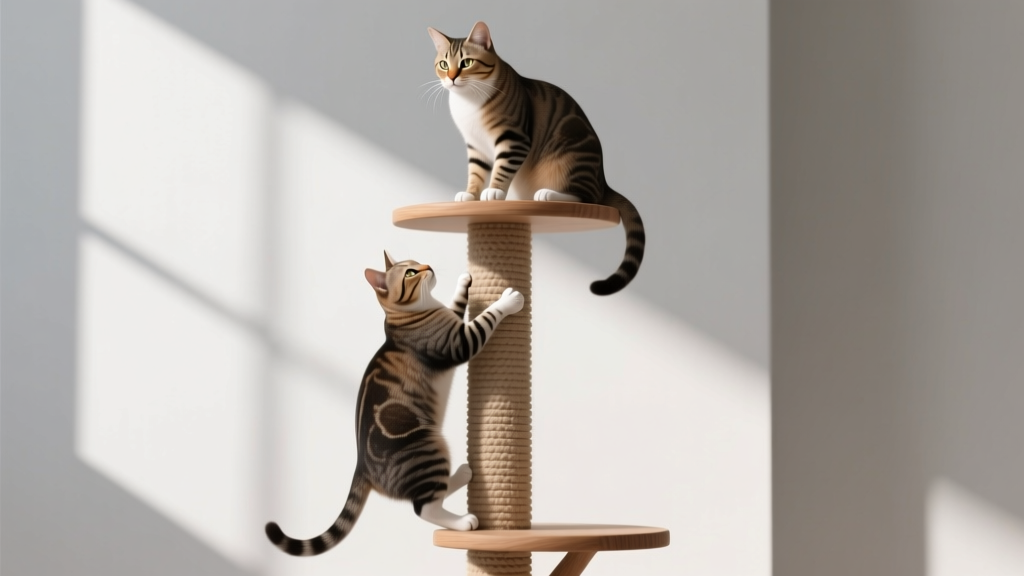
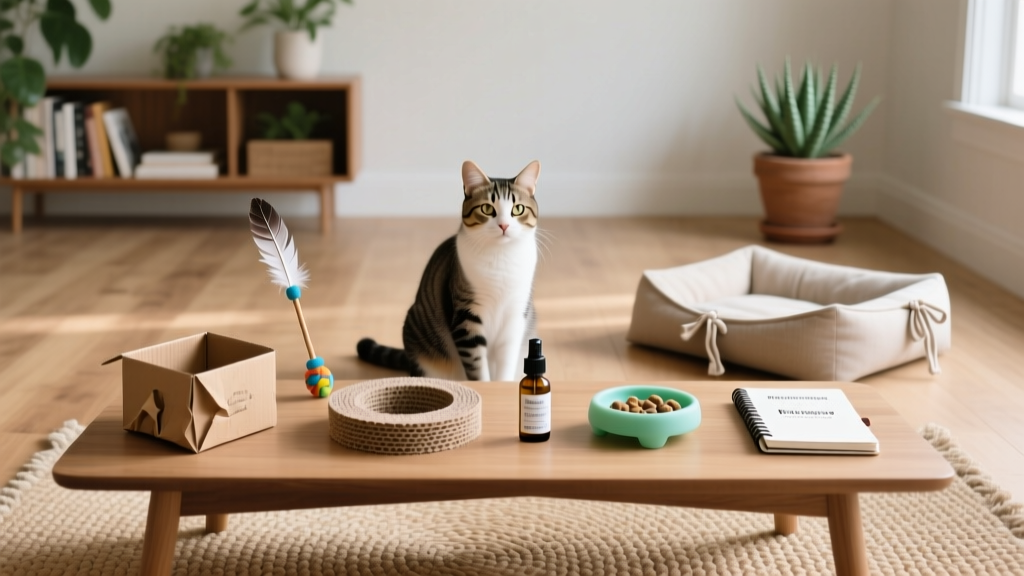
- Scratching furniture: Not vandalism — it’s multisensory communication. Cats scratch to mark territory (via scent glands in paws), stretch shoulder muscles, shed claw sheaths, and relieve stress. Punishment suppresses the behavior temporarily but increases anxiety — and redirects scratching to hidden, harder-to-clean areas (like behind sofas). Solution: Provide vertical + horizontal surfaces (sisal rope, cardboard, wood) near sleeping/resting zones, apply double-sided tape to off-limit spots, and reward use with treats or play.
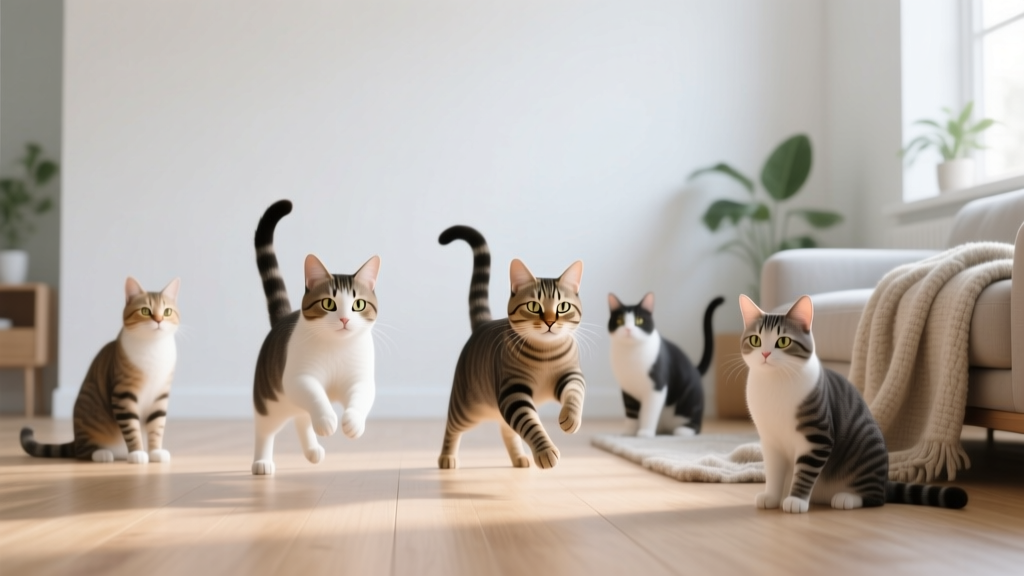
- Early-morning yowling or zoomies: This isn’t ‘attention-seeking’ — it’s biologically hardwired. Cats are crepuscular (most active at dawn/dusk), and indoor cats often compress that energy into 4–5 a.m. bursts. Solution: Shift their internal clock by feeding their largest meal right before your bedtime, adding 10 minutes of vigorous interactive play (feather wand, laser pointer *followed by a tangible toy*) at dusk, and providing puzzle feeders for overnight mental engagement.
- Urinating outside the litter box: The most common reason cited for surrender — yet >80% of cases stem from medical issues (UTIs, arthritis, kidney disease) or litter box aversion (dirty box, wrong type of litter, location near noisy appliances, multi-cat household resource competition). Solution: Rule out medical causes with a vet visit *first*, then audit the box: minimum of n+1 boxes (where n = number of cats), unscented clumping litter, 1–2 inches deep, scooped daily, placed in quiet, low-traffic, easily accessible locations — never next to washing machines or littermates’ food bowls.
Building Trust Without Force: The Gentle Guidance Framework
Traditional ‘training’ fails with cats because coercion triggers fight-or-flight — not cooperation. Instead, adopt the Gentle Guidance Framework, validated by the International Society of Feline Medicine (ISFM):
- Observe → Name → Respond: Watch quietly for 5 minutes/day. Note patterns: When does she rub her face on the doorframe? (scent marking = security). Does she retreat under the bed when guests arrive? (fear-based withdrawal, not aloofness). Naming the behavior removes judgment and reveals needs.
- Enrich, Don’t Correct: Replace punishment with environmental enrichment. A study in Applied Animal Behaviour Science (2022) found cats in enriched homes (perches, hiding boxes, rotating toys, window bird feeders) showed 47% lower cortisol levels than controls — and zero aggression toward handlers.
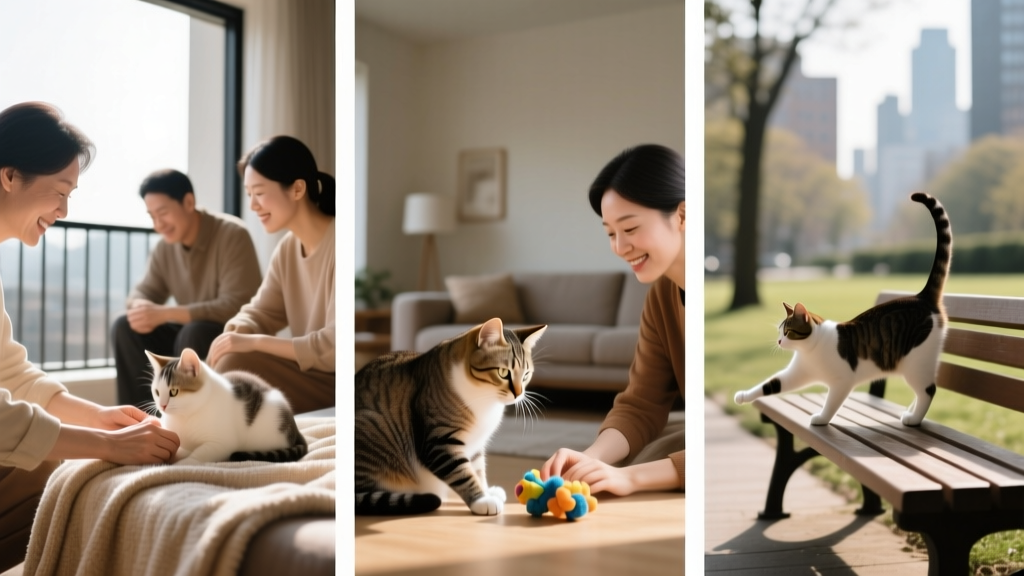
- Consent-Based Interaction: Before petting, extend your hand palm-down 6 inches away. If she leans in, blinks, or rubs — proceed. If she freezes, turns head, or flattens ears — withdraw. This teaches mutual respect and reduces bite triggers.
Case in point: Leo, a formerly feral kitten adopted at 12 weeks, would flee or swat when approached. His owner stopped initiating contact entirely for 3 days — instead placing treats near him while reading nearby. On day 4, Leo walked to her lap voluntarily. Within 10 days, he initiated chin scratches. Trust isn’t earned through persistence — it’s extended through patience.
Feline Behavior Red Flags: When ‘Typical’ Becomes a Warning Sign
Not all behavior is ‘typical’ — some signals require urgent veterinary or behaviorist intervention. Use this table to distinguish normal variation from clinical concern:
| Behavior | Typical Range | Red Flag Threshold | Action Required |
|---|---|---|---|
| Meowing | Occasional chirps, meows during greetings or mealtime | New, persistent, or distressed vocalizing — especially at night in senior cats | Vet visit: rule out hyperthyroidism, hypertension, or cognitive dysfunction |
| Grooming | 15–50% of awake time; focused on face, paws, shoulders | Excessive licking leading to bald patches, skin sores, or self-injury | Vet + certified behaviorist: may indicate pain, allergies, or compulsive disorder |
| Social Withdrawal | Short-term hiding after changes (new pet, move, visitors) | Refusal to eat, drink, or use litter box for >24 hrs; prolonged isolation (>48 hrs) without emerging | Immediate vet assessment: could indicate pain, toxicity, or severe anxiety |
| Aggression | Play-biting during kittenhood; gentle ‘love bites’ during petting | Unprovoked attacks, growling/hissing at familiar people, redirected aggression after seeing outdoor cats | Consult board-certified veterinary behaviorist — do NOT use punishment or spray bottles |
Frequently Asked Questions
Why does my cat stare at me without blinking?
This is often misread as ‘judgmental,’ but sustained eye contact without blinking is actually a sign of mild stress or uncertainty — especially if paired with flattened ears or a low tail. True bonding is signaled by the slow blink. Try returning a slow blink yourself when your cat makes eye contact; many will reciprocate within seconds. It’s their version of saying ‘I feel safe with you.’
Is it normal for my cat to bring me dead mice or birds?
Yes — and it’s a profound compliment. In feral colonies, mother cats bring prey to kittens to teach hunting skills. Your cat sees you as family and is attempting to ‘provide’ or ‘train’ you. Never punish this instinct. Instead, redirect with daily interactive play using realistic-feeling toys (e.g., stuffed mice with catnip), which satisfies the hunt-catch-kill sequence and reduces live prey capture by up to 73% (Journal of Feline Medicine and Surgery, 2021).
My cat knocks things off shelves — is this spite?
No — cats lack the cognitive capacity for spite. This behavior usually serves one of three purposes: seeking attention (even negative attention reinforces it), exploring object properties (‘What happens when I push this?’), or targeting moving light reflections. To reduce it: provide daily ‘knock-and-chase’ games with rolling balls or crinkle tunnels, remove breakables from edges, and reward calm observation with treats — never scold mid-action, which only heightens arousal.
How long does it take for a new cat to show ‘typical’ behavior in my home?
It varies widely — but a useful benchmark is the 3-3-3 Rule: 3 days to decompress, 3 weeks to settle in, 3 months to fully reveal personality. Rushing introductions or forcing interaction before your cat initiates contact prolongs adjustment. Patience isn’t passive — it’s strategic. Set up a ‘safe room’ with food, water, litter, hiding spots, and vertical space, and let your cat explore the rest of the house at their own pace.
Do indoor cats need behavioral ‘training’ like dogs?
Not training — but intentional environmental scaffolding. Dogs seek human direction; cats seek autonomy within safety. Instead of commands, focus on designing spaces that invite desired behaviors: scratching posts beside couches, food puzzles on countertops, elevated walkways along walls. As Dr. Sarah Heath, European Veterinary Specialist in Behavioural Medicine, states: “We don’t train cats to behave. We train ourselves to understand — and then engineer environments where their natural behaviors are both expressed and respected.”
Common Myths About Cat Behavior — Debunked
Myth #1: “Cats are aloof and don’t form attachments.”
False. Groundbreaking research using the ‘Strange Situation Test’ (adapted from infant attachment studies) shows cats display secure, insecure, or avoidant attachment styles to caregivers — just like human children. Over 64% of cats in the 2019 University of Oregon study exhibited secure attachment, seeking comfort from owners in stressful scenarios.
Myth #2: “If my cat sleeps on me, it’s because I’m warm — not because they love me.”
Partially true about warmth — but far more significant is scent. Cats have scent glands on their paws, cheeks, and forehead. When they sleep on you, they’re depositing their pheromones — marking you as safe, familiar, and part of their social group. It’s the highest form of feline trust.
Related Topics (Internal Link Suggestions)
- How to Introduce a New Cat to Your Home — suggested anchor text: "step-by-step cat introduction guide"
- Best Litter Boxes for Multi-Cat Households — suggested anchor text: "low-stress multi-cat litter solutions"
- Cat Enrichment Ideas for Indoor Cats — suggested anchor text: "indoor cat enrichment checklist"
- When to See a Veterinary Behaviorist — suggested anchor text: "signs your cat needs behavior help"
- Understanding Cat Body Language Signals — suggested anchor text: "cat tail and ear language decoded"
Your Next Step Starts With One Observation
You now know what is typical cat behavior advice for building genuine connection — not control. You understand that scratching isn’t rebellion, midnight zoomies aren’t sabotage, and hiding isn’t rejection. It’s all data. Your cat is constantly communicating; you just needed the decoder ring. So here’s your actionable next step: Today, set a 5-minute timer and simply observe your cat — no interaction, no agenda. Note one thing they do that surprised you, confused you, or made you smile. Then ask: ‘What need might this behavior be meeting?’ That single question, practiced daily, rewires perception faster than any training tool. And if you’d like personalized support, download our free “Cat Behavior Decoder Journal” — complete with printable observation logs, body language flashcards, and vet-approved response scripts. Because understanding your cat shouldn’t require a degree — just curiosity, compassion, and the right framework.