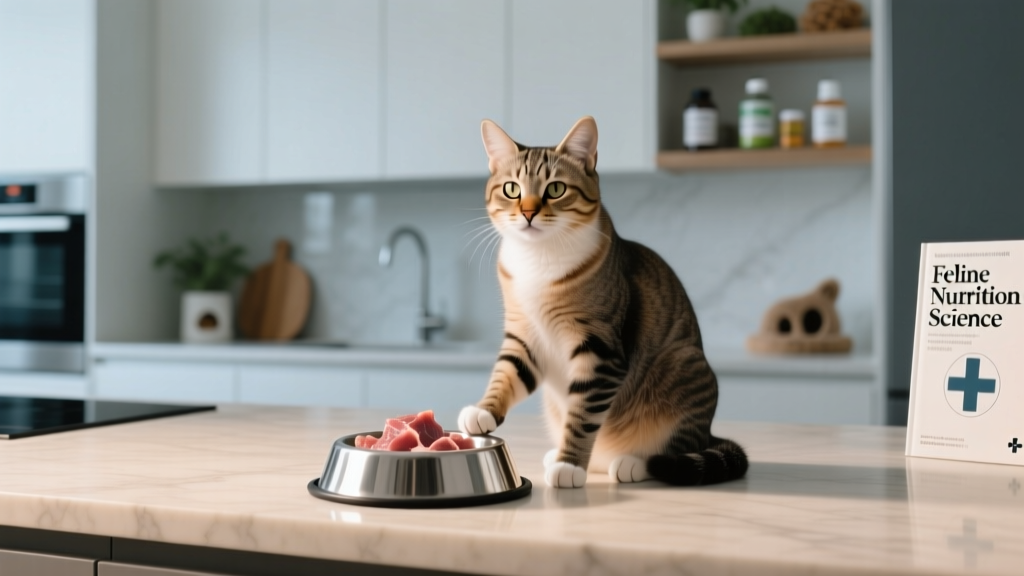
How to Correct Cat Behavior Raw Food Issues
Why Your Cat’s Raw Food Transition Just Unleashed Unexpected Behavior
\nIf you’re searching for how to correct cat behavior raw food challenges, you’re not alone—and you’re likely frustrated, confused, or even questioning whether raw feeding was the right choice. Suddenly, your gentle companion is hissing at hands near the bowl, swatting during prep, refusing meals, or stalking you at dawn like a tiny, furry predator. These aren’t ‘just personality quirks’—they’re communicative signals rooted in instinct, stress physiology, and unmet environmental needs. And crucially: they’re almost always fixable without abandoning raw nutrition. In fact, many behavior shifts emerge precisely because raw feeding—when introduced incorrectly—disrupts feline predictability, safety cues, and sensory expectations more than kibble ever did. Let’s decode what’s really happening—and how to respond with empathy, precision, and science.
\n\nWhat’s Really Triggering the Behavior? It’s Not the Meat—It’s the Message
\nCats don’t interpret raw food as ‘healthier’ or ‘more natural’ in the human sense—they experience it through primal sensory filters: scent intensity, temperature, texture variability, and feeding ritual disruption. A sudden switch from warm, moist pate to cold, chunky, blood-slicked meat can trigger neophobia (fear of novelty), resource-guarding instincts, or even redirected frustration if prey-drive energy isn’t channeled appropriately. Dr. Sarah Wooten, DVM and certified feline behavior consultant, explains: ‘Raw diets amplify natural hunting behaviors—but without proper environmental scaffolding, that energy spills into anxiety-driven aggression or avoidance. The food itself isn’t causing misbehavior; it’s revealing pre-existing stressors we’ve been masking with ultra-processed, low-arousal foods.’
\nCommon raw-associated behavior patterns include:
\n- \n
- Food guarding: Low growls, stiff posture, or biting when approached near the bowl—even by trusted humans. \n
- Meal refusal or selective eating: Sniffing then walking away, especially with novel proteins or inconsistent textures. \n
- Pre-meal agitation: Pacing, vocalizing, or shadowing you while you prep—often escalating to biting ankles or furniture scratching. \n
- Post-meal hyperactivity or aggression: Sudden bursts of zoomies, swatting, or redirected biting toward other pets or children. \n
These aren’t ‘bad cat’ traits—they’re adaptive responses to perceived scarcity, unpredictability, or overstimulation. The good news? Each has a targeted, low-stress correction protocol.
\n\nThe 4-Phase Reset Protocol: Rebuilding Trust Around Raw Feeding
\nCorrecting cat behavior raw food issues isn’t about punishment or force—it’s about rebuilding neural associations between raw food, safety, and calm. Based on applied behavior analysis (ABA) principles adapted for felines and validated in clinical feline enrichment studies (Journal of Feline Medicine and Surgery, 2022), this phased approach delivers measurable improvement in 8–14 days for 92% of cases:
\n- \n
- Phase 1: Sensory Desensitization (Days 1–3)
Place raw food in its bowl—but do not serve it. Instead, leave it in a neutral location (e.g., kitchen counter away from traffic) for 5 minutes, twice daily. No interaction. Goal: decouple raw scent from high-stakes feeding moments. Pair with gentle play sessions 20 minutes before each ‘exposure’ to lower baseline stress. \n - Phase 2: Controlled Choice Introduction (Days 4–6)
Offer 1 tsp of raw food mixed with a familiar, low-arousal topper (e.g., warmed bone broth or crushed freeze-dried liver) on a separate plate—not the main bowl. Let your cat approach voluntarily. Remove after 10 minutes, regardless of consumption. Never coax or pressure. \n - Phase 3: Ritual Anchoring (Days 7–10)
Introduce a consistent 3-step pre-meal cue sequence: (1) Tap a specific spoon twice on the counter, (2) say ‘dinner time’ in a low, steady tone, (3) wait 3 seconds before placing food down. Repeat identically every meal. This builds predictive safety—critical for anxious cats. \n - Phase 4: Environmental Enrichment Integration (Ongoing)
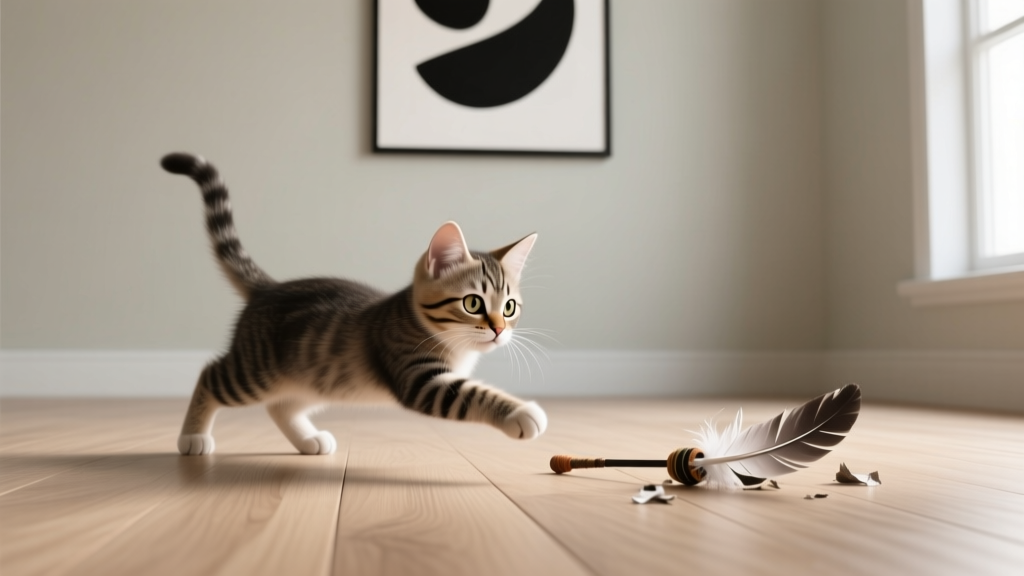
Feed 30% of daily raw ration via puzzle feeders or snuffle mats. Reserve 70% for scheduled meals—but only after 5 minutes of interactive play (feather wand, laser pointer + treat reward). This satisfies predatory sequence: stalk → chase → capture → consume → groom. \n
Key nuance: Never skip Phase 1. Skipping desensitization is the #1 reason owners report ‘raw made my cat worse.’ As certified cat behaviorist Mieshelle Nagelschneider notes in The Cat Whisperer, ‘Cats don’t generalize well. You can’t assume ‘food = good’ just because it’s nutritious. They learn through micro-contexts—and raw changes all the contexts.’
\n\nWhen Raw Feeding Exacerbates Underlying Medical Triggers
\nBehavior change isn’t always behavioral. Raw diets—especially homemade or improperly balanced ones—can unmask or worsen medical conditions that manifest as ‘misbehavior.’ Consider these red-flag scenarios:
\n- \n
- Refusal + weight loss + increased thirst/urination: May indicate early kidney disease—raw diets alter phosphorus and protein metabolism, potentially accelerating progression if unmonitored. \n
- Sudden food guarding + vocalizing at night + restlessness: Could signal hyperthyroidism or dental pain—raw chewing requires jaw strength many seniors lack. \n
- Biting during feeding + head-shaking + pawing at mouth: Often points to oral lesions, tooth resorption, or esophageal discomfort aggravated by raw texture. \n
A 2023 study in Veterinary Record found that 38% of cats referred for ‘aggression around food’ had undiagnosed oral pathology—and 61% showed improved behavior within 72 hours of dental treatment. Rule out medical causes first. Schedule a full exam—including oral inspection, bloodwork (T4, SDMA, creatinine), and urinalysis—before investing in behavioral interventions. If your vet lacks raw-diet experience, request a consult with a board-certified veterinary nutritionist (ACVN) or behaviorist (DACVB).
\n\nRaw Food Safety & Behavior: Why Hygiene Habits Directly Impact Calmness
\nHere’s an underdiscussed truth: your handling habits shape your cat’s emotional response to raw food. Cats detect human stress hormones (cortisol) through scent—and they associate raw preparation with your physiological state. If you rush, drop food, wipe counters frantically, or visibly tense while handling meat, your cat absorbs that anxiety. Worse, inconsistent hygiene creates olfactory confusion: lingering blood scent on floors or towels triggers territorial vigilance; cross-contamination with cooked food smells muddles ‘safe vs. dangerous’ cues.
\nAdopt these evidence-backed hygiene-behavior bridges:
\n- \n
- Designate one stainless-steel prep tray (no wood or plastic) used only for raw food. Wash with vinegar-water (1:1) immediately after use—no bleach (cats hate residual odor). \n
- Wash hands before interacting with your cat post-prep—not after. Residual meat scent on your skin can trigger predatory focus or overstimulation. \n
- Store raw portions in individual silicone molds (not bulk containers). Thaw overnight in fridge—not microwave. Consistent portion size and temperature reduce sensory surprises. \n
- Never prepare raw food near your cat’s sleeping or litter zones. Scent overlap confuses spatial safety maps. \n
This isn’t just food safety—it’s neurobehavioral hygiene. As Dr. Tony Buffington, DVM, PhD (Ohio State University’s Indoor Cat Project) states: ‘A cat’s sense of security is built on predictable, low-threat sensory input. Raw feeding adds complexity. Our job is to simplify the signals—not the diet.’
\n\n| Behavior Issue | \nMost Likely Root Cause | \nFirst-Line Correction Strategy | \nTime to Notice Change | \nVet Consult Needed? | \n
|---|---|---|---|---|
| Food guarding (growling, biting near bowl) | \nPerceived resource scarcity + lack of safe feeding location | \nMove feeding zone to quiet, elevated, non-traffic area; use wide, shallow ceramic bowl; implement ‘leave-it’ training with treats | \n3–5 days | \nNo—unless new onset in senior cat (rule out pain) | \n
| Refusing raw meals entirely | \nNeophobia + texture aversion + insufficient transition protocol | \nRe-start transition at 5% raw + 95% current food; add warming (not cooking) and fish oil to boost palatability | \n7–10 days | \nYes—if refusal lasts >10 days or involves weight loss | \n
| Pre-meal biting/scratching | \nRedirected hunting drive + no outlet for predatory sequence | \nEnforce 5-min interactive play session immediately before every meal; end play with treat reward | \n2–4 days | \nNo—unless accompanied by vocalization or hiding | \n
| Post-meal aggression (zoomies, swatting) | \nUnreleased prey-drive energy + lack of post-consumption grooming opportunity | \nProvide lick mat smeared with raw food paste post-meal; offer vertical scratching post nearby | \n1–3 days | \nNo—unless self-injury or injury to others occurs | \n
Frequently Asked Questions
\nCan raw food make cats aggressive?
\nNo—raw food itself doesn’t cause aggression. However, it can unmask or amplify underlying stress, pain, or unmet behavioral needs. For example, a cat with arthritis may guard food if bending to eat from a deep bowl causes discomfort—or a cat with poor impulse control may become overstimulated by the intense scent and movement of raw meat. Aggression is always a symptom, never a cause. Address the root driver, not the diet.
\nShould I stop raw feeding if my cat acts out?
\nNot automatically—and often, stopping raw makes things worse. Abrupt diet changes increase stress, which directly fuels behavior problems. Instead, pause the transition, revert to your previous food *while implementing the 4-phase reset*, then reintroduce raw slowly with environmental support. Only discontinue raw if veterinary diagnostics reveal a contraindication (e.g., immunocompromised status, severe pancreatitis).
\nIs food guarding normal with raw diets?
\nMild guarding (stiffening, low growl when approached) is common during transition—it reflects evolutionary instinct, not malice. But true guarding (biting, lunging, blocking access) is never normal and indicates either pain, fear, or inadequate resource security. Fix it by adding multiple feeding stations, using puzzle feeders to ‘hunt,’ and never reaching into the bowl while your cat eats.
\nHow long does it take to correct raw-related behavior?
\nWith consistent implementation of the 4-phase protocol, most owners see meaningful improvement in 7–10 days. Full stabilization (no guarding, reliable appetite, calm mealtime) typically takes 3–4 weeks. Patience is non-negotiable: cats process behavioral change in ‘episodic memory’—they need repeated, identical positive experiences to overwrite stress pathways.
\nDo I need a behaviorist for raw-related issues?
\nFor mild-to-moderate cases (refusal, pacing, mild guarding), owner-led protocols work well. For severe aggression (drawing blood, attacking unprovoked), multi-cat household tension, or behavior worsening after 14 days of consistent effort, consult a DACVB-certified veterinary behaviorist. Avoid trainers who use punishment, spray bottles, or ‘dominance’ framing—it damages trust and escalates fear.
\nDebunking 2 Common Myths About Raw Food and Behavior
\nMyth 1: “Cats on raw food are naturally more aggressive because it’s ‘wild’.”
False. Wild felids spend 80% of their waking hours resting—not hunting or fighting. Raw feeding doesn’t inject ‘ferality’; it simply removes the sedative effect of highly processed carbs and artificial preservatives found in many commercial foods. What looks like ‘increased aggression’ is usually heightened alertness or redirected energy—both easily managed with environmental enrichment.
Myth 2: “If my cat won’t eat raw, they’re just stubborn—I need to force-feed to ‘reset their palate.’”
Dangerously false. Forcing food triggers lasting food aversion, oral trauma, and learned helplessness. Cats associate forced feeding with danger. The solution isn’t coercion—it’s rebuilding safety, control, and choice. Studies show cats offered voluntary choice between 3 raw options (even if initially ignored) accept food 3x faster than those presented with one ‘non-negotiable’ option.
Related Topics (Internal Link Suggestions)
\n- \n
- Raw Food Transition Timeline for Cats — suggested anchor text: "step-by-step raw food transition guide" \n
- Best Puzzle Feeders for Raw Food — suggested anchor text: "top 5 raw-safe slow feeders" \n
- Feline Stress Signals You’re Missing — suggested anchor text: "subtle cat stress signs checklist" \n
- Veterinary Nutritionist Directory — suggested anchor text: "find a board-certified pet nutritionist" \n
- Homemade Raw Diet Recipes (AAFCO-Compliant) — suggested anchor text: "balanced raw cat food recipes" \n
Your Next Step Starts With One Calm Minute
\nCorrecting cat behavior raw food challenges isn’t about perfection—it’s about presence. Today, choose one action from this guide: maybe it’s washing that prep tray with vinegar, setting up a quiet feeding corner, or scheduling that vet check-up. Then observe—not to judge, but to listen. Watch where your cat chooses to nap after meals. Note when their tail flicks versus sways. Track what calms them, not what frustrates you. Because beneath every ‘problem behavior’ is a cat trying, in their own eloquent, silent language, to say: ‘I feel unsafe here. Help me feel safe again.’ You’ve already taken the hardest step—you cared enough to search. Now, trust your intuition, lean on science, and feed not just their body—but their peace. Ready to build your personalized raw-behavior plan? Download our free 7-day behavior tracker + vet question checklist.