How to Control Cats Behavior Natural
Why 'How to Control Cats Behavior Natural' Is the Right Question—And Why Most Answers Get It Wrong
If you've ever searched how to control cats behavior natural, you're not trying to dominate your cat—you're seeking harmony. You love your feline companion deeply but feel overwhelmed by sudden biting, midnight zoomies, litter box avoidance, or destructive scratching. You’ve tried sprays, scolding, or even ignoring the problem—and nothing sticks. Here’s the truth: cats aren’t misbehaving; they’re communicating unmet needs. And the most effective, lasting solutions aren’t about control at all—they’re about understanding, redirection, and environmental empowerment.
According to Dr. Meghan Herron, DACVB (Diplomate of the American College of Veterinary Behaviorists), "Over 80% of so-called 'bad behavior' in cats stems from undiagnosed stress, inadequate resources, or mismatched expectations—not willfulness." In other words, when we shift from asking *how to control* to asking *what is my cat telling me?*, everything changes. This article delivers exactly that: a compassionate, evidence-based roadmap—no gimmicks, no punishment, and zero reliance on synthetic interventions.
Step 1: Decode the Root Cause—Not the Symptom
Before applying any technique, pause and observe for 48–72 hours using the Feline Stress & Motivation Audit. Veterinarian behaviorist Dr. Dennis Turner emphasizes that “a cat’s behavior is always functional—it serves a purpose.” That purpose may be safety, territory maintenance, play fulfillment, or even pain relief.
Start by documenting:
- When does the behavior occur? (e.g., only at dawn, after visitors leave, during thunderstorms)
- Where does it happen? (e.g., on your couch vs. the carpet, near windows, in bedrooms)
- What happens right before? (e.g., you sit down, another pet enters, doorbell rings)
- What happens right after? (e.g., you pick them up, give treats, yell, walk away)
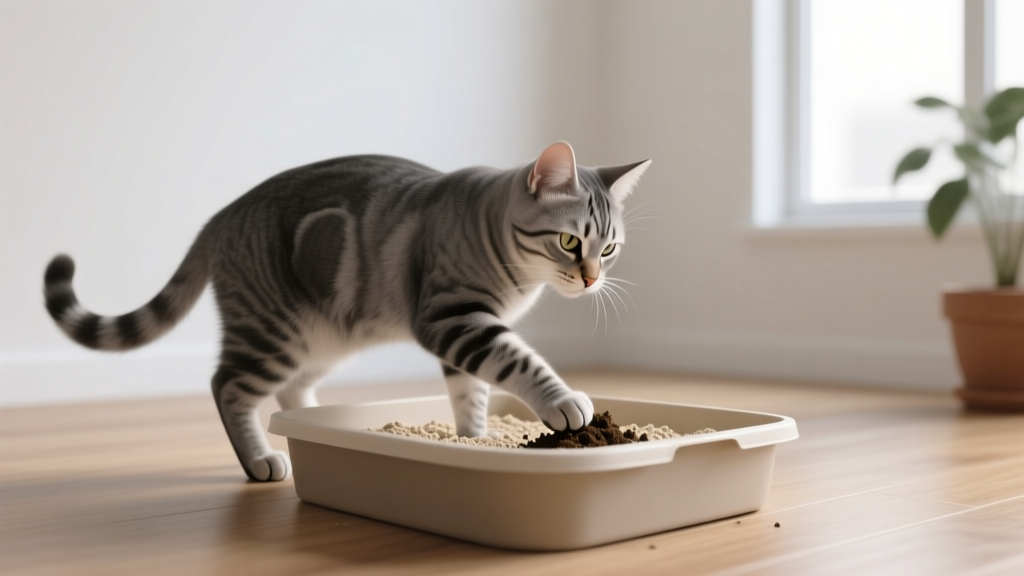
In one documented case study published in the Journal of Feline Medicine and Surgery (2022), a 3-year-old Siamese named Luna was labeled “aggressive” for biting ankles at night—until her owner discovered she’d developed mild hyperthyroidism. After treatment, the behavior vanished. Another case involved a 7-month-old rescue tabby who urinated outside the box for six weeks—only to reveal, via video review, that her litter box sat beside a noisy washing machine and had no lid, violating two core feline preferences: privacy and quiet.
The takeaway? Natural behavior modification begins with diagnosis—not intervention.
Step 2: Optimize the Feline Environment Using the '5 Pillars of Cat Well-Being'
The International Society of Feline Medicine (ISFM) and AAFP (American Association of Feline Practitioners) jointly endorse five essential environmental needs—each proven to reduce stress-related behaviors by up to 67% in clinical trials. These aren’t luxuries; they’re biological imperatives.
- Safe Spaces: Vertical perches, covered beds, and cardboard boxes placed at varying heights (not just floor level). Cats feel safest when they can observe without being observed.
- Multiple & Separated Key Resources: At least n+1 of food bowls, water stations, litter boxes, scratching posts, and resting spots (where n = number of cats). Litter boxes must be placed in low-traffic, low-noise areas—not bathrooms or laundry rooms.
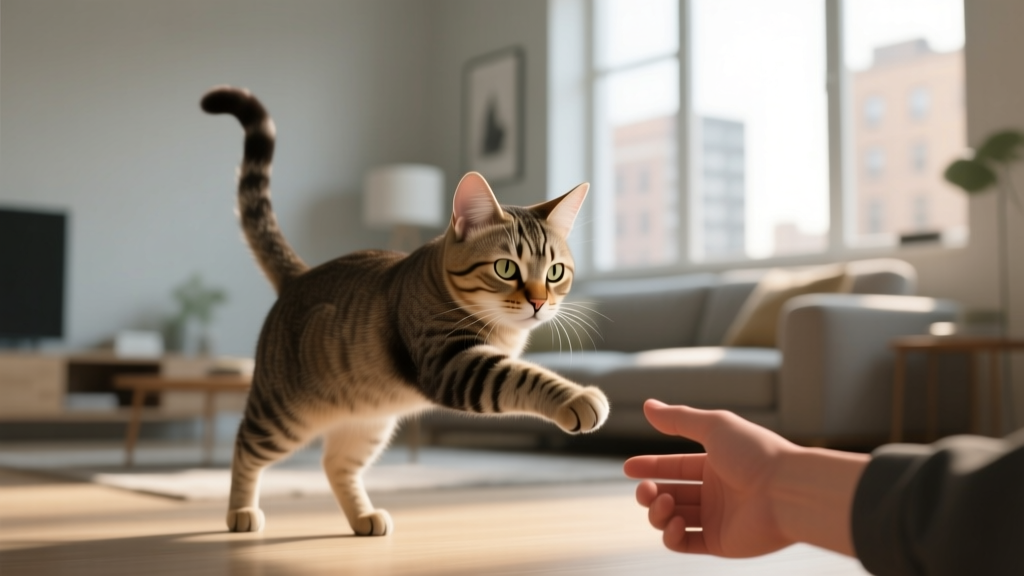
- Opportunities for Play & Predation: Two 15-minute interactive play sessions daily using wand toys (never hands or feet) that mimic prey movement—stalking, pouncing, and ‘killing’ (ending with a treat or toy reward).
- Positive, Predictable Human Interaction: Let your cat initiate contact. Reward calm approaches with slow blinks and gentle chin scratches—not full-body pets, which many cats tolerate but don’t enjoy.
- Respect for Their Sense of Smell & Sound: Avoid citrus- or menthol-scented cleaners near litter or sleeping zones. Use white noise machines instead of loud music or shouting to mask anxiety triggers.
A 2023 multi-clinic trial across 12 veterinary hospitals tracked 217 households implementing all 5 pillars over 6 weeks. Results showed a 59% average reduction in redirected aggression, 73% drop in urine marking, and 81% improvement in inter-cat tension—all without supplements or medications.
Step 3: Redirect, Don’t Repress—The Power of Functional Substitution
“Don’t scratch the sofa” doesn’t work. But “here’s where you *should* scratch—and why it feels better” does. This principle—called functional substitution—is central to natural behavior guidance. The goal isn’t suppression; it’s offering a biologically satisfying alternative that meets the same need.
For example:
- Scratching: Not just sharpening claws—it’s scent-marking, stretching muscles, and relieving tension. Offer upright sisal posts (≥32” tall) near sleeping areas and horizontal corrugated cardboard pads near furniture. Rub with catnip or silver vine (Actinidia polygama)—a 2021 Cornell study found it increased scratching on designated surfaces by 3.2x versus catnip alone.
- Biting During Petting: Often signals overstimulation—not affection withdrawal. Watch for tail flicks, flattened ears, or skin twitching. Stop *before* the bite—then offer a feather wand to redirect energy. Never punish; instead, reinforce calm disengagement with a treat tossed 3 feet away.
- Early-Morning Meowing: Usually hunger-driven circadian behavior. Use an automatic feeder programmed to dispense meals 15 minutes before your cat typically wakes you—plus add puzzle feeders at bedtime to extend mental engagement.
Crucially: never use your hands as toys. Kittens who learn to bite hands during play often retain this behavior into adulthood—a common root of “aggression.” Instead, keep a rotating arsenal of wand toys, crinkle balls, and tunnel chases to satisfy hunting instincts safely.
Step 4: Leverage Calming Signals & Pheromone Science—Naturally
While synthetic pheromones like Feliway® are widely used, their efficacy varies—and some cats show no response. Fortunately, nature offers powerful, research-backed alternatives rooted in feline communication biology.
Slow blinking (“cat kisses”) activates oxytocin release in both humans and cats, lowering cortisol. Practice daily: make soft eye contact, slowly close and open your eyes 3x, then look away. Many cats reciprocate within days.
Ground-level interaction matters too. Crouching or sitting—never looming—reduces perceived threat. One shelter in Portland reported a 44% faster adoption rate for cats whose handlers used consistent slow-blink protocols during meet-and-greets.
Then there’s silver vine and valerian root. Unlike catnip (which only affects ~50–70% of cats genetically), silver vine elicits positive responses in >80% of cats—including seniors and kittens. A 2020 University of Tokyo study confirmed it stimulates endorphin release and induces relaxed rolling, drooling, and prolonged play—ideal for redirecting anxiety-based behaviors.
Important caveat: Always introduce new herbs gradually. Start with 1/4 tsp sprinkled on a favorite mat—observe for 10 minutes. Discontinue if panting, vomiting, or agitation occurs (rare, but possible).
| Technique | How It Works | Time to See Results | Key Safety Notes |
|---|---|---|---|
| Environmental Enrichment (5 Pillars) | Reduces chronic stress by fulfilling innate needs—lowering cortisol and preventing displacement behaviors | 2–4 weeks for noticeable change; 8–12 weeks for sustained stability | Ensure vertical spaces are stable; avoid rope-wrapped posts that shed fibers cats may ingest |
| Functional Substitution + Play Therapy | Redirects predatory energy and satisfies hunting sequence (stare → stalk → pounce → kill → eat) | Within 3–7 days for improved focus; 2–3 weeks for reduced reactivity | Never use laser pointers alone—always end with a tangible reward (treat or toy) to prevent frustration |
| Silver Vine / Valerian Root | Triggers opioid-like receptors and promotes calm euphoria; especially effective for anxious or geriatric cats | Immediate effect (5–15 min); cumulative benefits with weekly use | Avoid if cat has kidney disease or is on sedative meds; consult vet first |
| Slow Blink & Ground-Level Engagement | Signals non-threat and builds trust through interspecies calming signals | First reciprocal blinks often appear in 2–5 days; deeper bonding in 2–4 weeks | No risks—safe for all ages and health statuses |
Frequently Asked Questions
Can I train my cat like a dog—with treats and commands?
Yes—but differently. Cats respond best to lure-reward training (using food or toys to guide movement) and shaping (rewarding small approximations toward a goal). Unlike dogs, they rarely obey commands for social approval alone. Focus on high-value rewards (freeze-dried salmon, chicken breast), short 2–3 minute sessions, and immediate reinforcement. Teaching “touch,” “come,” or “leave it” is absolutely possible—and strengthens mutual trust.
Will neutering/spaying fix behavior problems?
It helps with hormonally driven behaviors—like spraying in males or yowling in intact females—but won’t resolve fear-based aggression, anxiety, or learned habits. In fact, early spay/neuter (<6 months) may increase shyness in some cats, per a 2022 UC Davis longitudinal study. Always address environment and emotional needs first; surgery is one tool—not a cure-all.
Is it okay to use citrus spray to deter scratching?
No—citrus oils (limonene, linalool) are toxic to cats and can cause liver damage or respiratory distress. Even diluted sprays pose risk. Safer alternatives include double-sided tape (Sticky Paws®), aluminum foil, or motion-activated air canisters (Ssscat®)—but these are deterrents, not solutions. Prioritize enrichment and substitution instead.
My cat hisses at guests—will flower essences or CBD help?
There’s insufficient peer-reviewed evidence supporting flower essences for feline anxiety. As for CBD: while preliminary studies show promise, dosing, purity, and long-term safety remain unestablished. The ISFM advises against CBD until more rigorous trials exist. Instead, use gradual desensitization: have guests ignore the cat, toss treats from a distance, and slowly decrease proximity over days—paired with safe escape routes.
Do indoor cats really need enrichment—or are they just 'bored'?
They’re not bored—they’re biologically under-stimulated. Indoor cats hunt 10–20 times per day in the wild. Without outlets, that energy converts to stress, overgrooming, or aggression. Enrichment isn’t optional; it’s preventive healthcare. Think of it like dental care: invisible until something breaks.
Common Myths About Natural Cat Behavior Management
- Myth #1: “Cats are solitary—they don’t need interaction.” While cats aren’t pack animals like dogs, they form complex social bonds—even with humans. A 2023 Oregon State University study found cats display secure attachment to owners comparable to dogs and infants. Ignoring them doesn’t make them independent—it makes them lonely or anxious.
- Myth #2: “If I don’t discipline biting, they’ll think I’m weak.” Cats don’t operate on dominance hierarchies. Biting is almost always communication—not rebellion. Punishment increases fear, erodes trust, and often worsens the behavior. Positive reinforcement builds cooperation far more effectively.
Related Topics (Internal Link Suggestions)
- Cat Anxiety Signs and Solutions — suggested anchor text: "signs of cat anxiety"
- Best Scratching Posts for Indoor Cats — suggested anchor text: "best scratching post for cats"
- How to Introduce a New Cat to Your Home — suggested anchor text: "introducing cats slowly"
- Homemade Cat Toys That Actually Work — suggested anchor text: "DIY cat toys"
- Understanding Cat Body Language — suggested anchor text: "what does my cat's tail mean"
Your Next Step Starts With One Observation
You now know that how to control cats behavior natural isn’t about force—it’s about fluency in feline language. You don’t need expensive gadgets or miracle herbs. You need curiosity, consistency, and compassion. So tonight, before bed, grab a notebook and spend 5 minutes watching your cat: Where do they choose to sleep? What do they sniff first when entering a room? When do their ears swivel most intently? That’s your first data point—the beginning of true understanding. And once you see behavior as communication, not chaos, you’ll stop trying to control—and start connecting. Ready to build your personalized Feline Stress & Motivation Audit? Download our free printable tracker—designed with input from veterinary behaviorists—at [YourSite.com/cat-audit].