Cat Nesting Behavior: Why It Happens & When to Worry
Why Your Cat’s ‘Blanket Burrow’ Deserves Your Attention Right Now
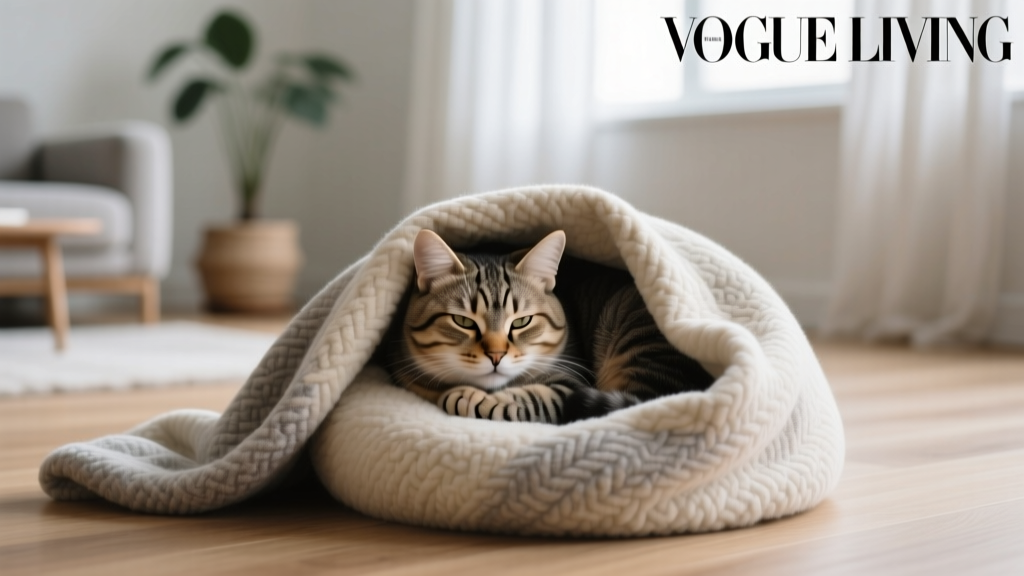
What is nesting behavior in cats — and why does your seemingly independent tabby spend 20 minutes circling, kneading, and burying herself under your sweater before finally settling in? It’s far more than quirky habit. Nesting behavior in cats is a deeply rooted, biologically wired sequence of actions tied to safety, thermoregulation, maternal instinct, and emotional regulation — and it shows up in spayed females, neutered males, kittens, seniors, and even cats with no reproductive history. In fact, a 2023 study published in Applied Animal Behaviour Science found that over 68% of indoor cats exhibit observable nesting behaviors at least once per week — yet fewer than 1 in 5 owners understand what those signals truly communicate. Ignoring them could mean missing early clues about anxiety, pain, or environmental stressors. Let’s decode what your cat is telling you — without the jargon.
The Evolutionary Roots: Why Cats Build Nests (Even When They’re Not Pregnant)
Nesting isn’t exclusive to pregnancy — though it’s most intense in late-term queens preparing for birth. At its core, nesting behavior in cats originates from wild ancestors who needed secure, concealed, temperature-stable spaces to rest, recover, and raise vulnerable offspring. Domestic cats retain this instinct, but they’ve repurposed it for modern life: your couch cushion isn’t just comfortable — it’s a thermal buffer, a sensory cocoon, and a psychological ‘safe zone.’ Dr. Sarah Lin, a certified feline behaviorist and co-author of Cat Sense: Decoding Feline Communication, explains: ‘Nesting is less about reproduction and more about control. A cat who constructs her own nest is asserting agency over her environment — a critical coping mechanism in unpredictable or overstimulating homes.’
This explains why so many cats engage in ‘pre-nesting rituals’ long before any biological trigger: circling (to flatten grass or bedding), kneading (to soften surfaces and stimulate mammary glands — even in non-lactating cats), digging or scratching at fabric edges, and carefully arranging blankets or clothing around themselves. These aren’t random habits — they’re coordinated, species-typical sequences. And crucially, they’re highly individualized. One cat may burrow under a duvet; another will meticulously arrange three folded towels into a crescent shape; a third might carry socks from the laundry basket to her favorite chair. All are valid expressions of the same underlying drive.
When Nesting Is Normal — and When It’s a Red Flag
Not all nesting is equal — and context is everything. Below is a practical, veterinarian-vetted framework to assess whether your cat’s behavior falls within healthy range or warrants closer observation:
- Frequency & Duration: Occasional nesting (e.g., daily or every few days, lasting 5–20 minutes) is typical. Sudden, obsessive nesting (>3x/day, lasting >45 minutes, or occurring during unusual hours like midday naps) may indicate discomfort.
- Location Shifts: A cat who consistently nests in familiar spots (bed, cat tree, sunbeam) is likely expressing comfort. But if she abandons preferred zones for dark closets, under furniture, or behind appliances — especially with increased hiding — this often reflects fear, pain, or cognitive decline.
- Body Language Cues: Relaxed posture, slow blinking, purring, and gentle kneading signal contentment. Tense muscles, flattened ears, rapid tail flicks, or vocalizations (yowling, hissing) during nesting suggest distress.
- Associated Behaviors: Nesting paired with excessive grooming, appetite changes, litter box avoidance, or lethargy requires prompt veterinary evaluation — particularly in senior cats, where kidney disease or arthritis can manifest as ‘seeking soft places’ due to joint pain.
A real-world example: Luna, a 9-year-old Siamese, began nesting aggressively in her owner’s laundry basket — not just lying there, but dragging towels, rearranging detergent bottles, and refusing to leave for hours. Her vet discovered early-stage osteoarthritis; the soft, confined space reduced pressure on her hips. Once treated with joint supplements and a heated orthopedic bed, her nesting frequency dropped by 70%, and she returned to her usual sun-porch perch.
How to Support Healthy Nesting — Without Reinforcing Anxiety
You don’t need to stop your cat from nesting — in fact, discouraging it can increase stress. Instead, proactively shape the behavior toward safety and enrichment. Here’s how:
- Create ‘Nest Zones’ with Purpose: Designate 2–3 low-traffic areas with elevated platforms, enclosed beds (like covered donut caves), and thermal elements (self-warming pads or fleece-lined boxes). Place them near windows (for visual stimulation) but away from HVAC vents or foot traffic.
- Introduce Textural Variety: Offer different substrates: plush fleece, crinkly paper, memory foam, and breathable cotton. Rotate weekly to maintain novelty and prevent overattachment to one material — which can intensify anxiety if it’s lost or washed.
- Pair Nesting With Positive Rituals: Gently stroke your cat’s head or offer a lickable treat (like FortiFlora paste) *after* she settles in — never while she’s actively kneading or digging. This reinforces calmness without interrupting the behavior itself.
- Rule Out Sensory Triggers: Many cats nest excessively in response to auditory stressors (dishwasher hum, neighbor’s dog barking) or olfactory overload (air fresheners, new detergents). Use a white noise machine near her nest zone or switch to unscented laundry products.
Importantly: Never force your cat out of a nest — especially if she’s sleeping. Interrupting deep rest disrupts cortisol regulation and can erode trust. Instead, gently invite her out with play (using a wand toy held *near* — not inside — the nest) or mealtime cues.
What the Research Says: Nesting Patterns Across Life Stages
Behavioral researchers at the University of Lincoln’s Feline Wellbeing Lab tracked 142 cats across four age groups over 18 months. Their findings revealed distinct nesting profiles — helping owners interpret behavior through a developmental lens:
| Life Stage | Typical Nesting Frequency | Most Common Triggers | Key Behavioral Notes |
|---|---|---|---|
| Kittens (2–6 months) | Multiple times daily | Littermate separation, new home, temperature shifts | Often involves ‘pile nesting’ — huddling with siblings or soft toys; kneading intensity peaks here. Critical for neural development and stress resilience. |
| Young Adults (1–4 years) | 1–3x/week | Seasonal changes, household routines, minor environmental shifts | Strong preference for consistency — may reject new beds unless scented with their own facial pheromones (rub cheeks on fabric first). |
| Mature Adults (5–10 years) | 2–4x/week | Subtle health changes, caregiver schedule shifts, multi-cat tension | Increased selectivity — may abandon favorite nests after washing or repositioning. Often coincides with territorial marking (chin rubbing around nest perimeter). |
| Seniors (11+ years) | Daily or multiple times/day | Pain, cognitive dysfunction, hearing/vision loss, temperature dysregulation | May combine nesting with pacing, disorientation, or vocalizing at night. 82% of cats with diagnosed cognitive decline showed altered nest-site fidelity (e.g., choosing colder floors over warm beds). |
Frequently Asked Questions
Is nesting behavior in cats always linked to pregnancy?
No — absolutely not. While nesting intensifies in the final 24–48 hours before labor in intact queens, it’s equally common in spayed females and neutered males. Evolutionary biologists refer to this as ‘non-reproductive nesting,’ serving functions like thermoregulation (cats conserve heat 2–3x faster in enclosed spaces), stress buffering, and sensory modulation. In fact, male cats often display more vigorous kneading and digging than females — possibly due to higher baseline activity levels and less hormonal suppression of instinctual behaviors.
Why does my cat bring me socks or tissues before nesting?
This is scent-based nest enhancement — not ‘gift-giving’ in the human sense. Your cat is collecting items imbued with your scent (especially from worn clothing or used tissues) to create a familiar, calming olfactory environment. Saliva transfer during carrying also deposits calming pheromones. It’s a sign of deep bonding and trust. However, if she’s stealing small objects obsessively (especially non-textile items like pens or keys), consult a behaviorist — it may indicate pica or anxiety-driven displacement behavior.
Should I stop my cat from nesting in my bed or clothes?
Not unless it causes hygiene issues, sleep disruption, or triggers allergies. Shared nesting strengthens social bonds and releases mutual oxytocin — beneficial for both species. If boundaries are needed, redirect *before* she starts: offer an identical blanket pre-scented with her cheek-rubbing pheromones beside your pillow, then gently lift her onto it once she begins circling. Never punish — this associates nesting with fear.
Can excessive nesting indicate illness?
Yes — especially when combined with other red flags: decreased appetite, weight loss, lethargy, vomiting, or litter box changes. Excessive nesting can be an early sign of hyperthyroidism (increased metabolic demand → seeking warmth), kidney disease (fatigue + temperature sensitivity), or neurological issues. Always rule out medical causes first with a full geriatric panel — including blood pressure, thyroid, and urinalysis — before assuming it’s purely behavioral.
Do certain breeds nest more than others?
Not definitively — but temperament plays a role. Breeds with higher baseline anxiety (e.g., Siamese, Oriental Shorthair) or strong attachment tendencies (Ragdoll, Maine Coon) often display more frequent or elaborate nesting. However, individual personality, early socialization, and current environment outweigh breed predispositions. A confident Bengal raised with consistent routines may nest less than a timid domestic shorthair rescued from a shelter — regardless of genetics.
Common Myths About Nesting Behavior in Cats
- Myth #1: “If my cat isn’t pregnant, nesting means she’s stressed or unhappy.”
Reality: Nesting is a natural, self-soothing behavior — like humans organizing a desk or folding laundry. It provides predictability and control. While *sudden increases* can signal stress, routine nesting is usually a sign of emotional competence, not distress. - Myth #2: “Cats only nest in soft things — if mine digs at concrete or tile, it’s abnormal.”
Reality: Surface texture matters less than spatial containment and thermal properties. Some cats prefer cool, hard surfaces for nesting in summer (tile floors act as heat sinks), while others seek warmth year-round. What’s key is the ritual — circling, digging, settling — not the substrate.
Related Topics (Internal Link Suggestions)
- Kneading in Cats — suggested anchor text: "why do cats knead blankets and people"
- Feline Anxiety Signs — suggested anchor text: "subtle signs your cat is stressed"
- Cat Sleeping Positions Explained — suggested anchor text: "what your cat's sleeping position reveals"
- Senior Cat Care Guide — suggested anchor text: "how to spot pain in older cats"
- Feline Pheromone Products — suggested anchor text: "Feliway vs. Comfort Zone: which works better"
Next Steps: Turn Observation Into Empowerment
Now that you understand what nesting behavior in cats truly signifies — not as a quirk to tolerate, but as a rich, nuanced language of safety, physiology, and emotion — you’re equipped to respond with intention. Start small: tonight, place a fleece-lined cardboard box near her favorite window, rub it with her cheek gland, and observe her reaction. Track her nesting patterns for one week using our free printable Feline Nesting Tracker. Notice timing, duration, location, and body language. Within days, you’ll begin spotting patterns — and opportunities to deepen trust, reduce hidden stressors, and support her wellbeing in ways no vet visit ever could. Because the best care doesn’t always come from a clinic — sometimes, it starts with watching how your cat makes a nest.