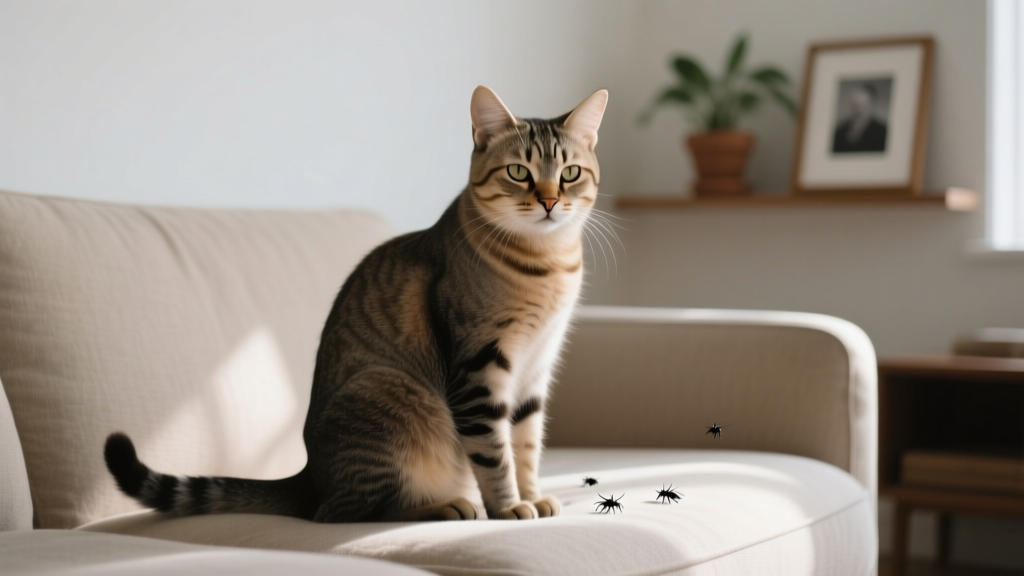
What Is Cat Behavior
Why Understanding What Is Cat Behavior Changes Everything
If you’ve ever stared at your cat mid-stare-down, wondered why they knock things off shelves at 3 a.m., or felt guilty after scolding them for scratching your sofa—you’re not alone. But here’s the truth: what is cat behavior isn’t random, spiteful, or ‘just being a cat.’ It’s a rich, nuanced language shaped by 9,000 years of evolution—from solitary desert hunters to cohabiting companions. And misreading it doesn’t just cause frustration—it can damage trust, trigger stress-related illness, and even shorten your cat’s lifespan. In fact, a 2023 study in the Journal of Feline Medicine and Surgery found that 68% of cats surrendered to shelters were labeled ‘aggressive’ or ‘untrainable’—yet 92% displayed normal, species-appropriate behaviors misinterpreted by their owners. This guide bridges that gap with actionable, veterinarian-vetted insights—so you stop guessing and start connecting.
The 4 Pillars of Cat Communication (and What They Really Mean)
Cats don’t speak English—but they communicate constantly through four integrated channels: body language, vocalizations, scent signaling, and temporal patterns. Unlike dogs, who evolved to read human cues, cats expect us to learn their language. Let’s break down each pillar with real-world examples and immediate takeaways.
1. Body Language: The Silent Grammar
Most cat owners fixate on tails—but ears, whiskers, pupils, and posture tell the fuller story. A tail held high with a slight quiver? That’s a greeting equivalent to a hug. A low, thrashing tail? Not ‘playful’—it’s a red-alert warning sign. According to Dr. Mikel Delgado, certified cat behavior consultant and researcher at UC Davis, ‘Cats use micro-expressions—like forward-twitching whiskers or half-closed eyes—that change in under 0.3 seconds. Missing those cues is like reading only every other word in a sentence.’
2. Vocalizations: Beyond the Meow
Here’s a surprise: adult cats rarely meow at each other. They meow almost exclusively for humans—and the pitch, duration, and repetition pattern encode specific requests. A short, high-pitched ‘mew’? ‘I’m here—pet me.’ A drawn-out, low-pitched yowl? ‘Something’s wrong—I’m in pain or stressed.’ A staccato chirp while watching birds? Not frustration—it’s a hardwired hunting sequence, often paired with jaw-chattering (a ‘killing bite’ mimic).
3. Scent Signaling: The Invisible Dialogue
Cats have 30x more scent receptors than humans—and they deposit pheromones via cheek rubbing, scratching, and even kneading. When your cat rubs against your leg, they’re not ‘claiming’ you—they’re marking you with calming facial pheromones (F3), essentially saying, ‘This space feels safe because you’re part of my colony.’ Conversely, urine spraying isn’t ‘potty training failure’—it’s a distress signal triggered by environmental instability (e.g., new pets, construction noise, or even rearranged furniture). As Dr. Tony Buffington, veterinary nutritionist and feline welfare expert, explains: ‘Spraying is the cat’s SOS flare—not a discipline issue.’
4. Temporal Patterns: The Rhythm Beneath the Chaos
That 4 a.m. sprint? It’s not ‘evil’—it’s circadian alignment. Cats are crepuscular (most active at dawn/dusk), and domestication hasn’t erased that. But if your cat’s activity spikes unpredictably—or they sleep 22 hours daily—those shifts can indicate pain (e.g., arthritis), hyperthyroidism, or anxiety. Tracking timing, duration, and context (e.g., ‘scratches door at 7 p.m. only when I’m on video calls’) transforms anecdotes into diagnostic data.
Decoding 7 Common ‘Puzzling’ Behaviors—With Vet-Approved Responses
Let’s move from theory to action. Below are seven behaviors owners commonly mislabel—and exactly how to respond using science-backed, low-stress strategies.
- Scratching furniture: Not defiance—it’s nail maintenance, muscle stretching, and territory marking. Solution: Place vertical and horizontal scratchers near preferred zones (not hidden in corners), cover problem areas temporarily with double-sided tape, and reward use with treats—not punishment.
- Biting during petting: Often called ‘petting aggression,’ this is actually overstimulation. Cats have sensitive nerve endings; stroking beyond their tolerance threshold triggers a reflexive bite. Solution: Watch for early signs (tail twitch, skin rippling, flattened ears) and stop before the bite—then offer a toy to redirect.
- Bringing ‘gifts’ (dead mice, socks, etc.): This is teaching behavior—your cat sees you as an inept hunter needing mentorship. Solution: Thank them calmly, then quietly dispose of the item. Never yell—it reinforces the behavior by giving attention.
- Hiding when guests arrive: Not shyness—it’s self-preservation. Cats assess threats visually and olfactorily; unfamiliar scents (perfume, dog odor on clothes) spike cortisol. Solution: Create a ‘safe room’ with food, litter, and hiding spots pre-visit—and let your cat choose whether to emerge.
- Staring silently: Contrary to myth, prolonged eye contact is threatening in cat culture. If your cat holds your gaze, they’re likely assessing safety—or inviting slow blinking (their version of a smile). Solution: Return a slow blink—hold for 2 seconds, close eyes fully, reopen. Many cats will blink back within 10 seconds.
- Kneading blankets or your lap: A neonatal behavior linked to nursing—triggered by comfort, security, or contentment. It’s a sign of deep trust. Solution: Gently trim nails beforehand, but never discourage it.
- Chewing plastic or fabric (pica): Can signal nutritional deficiency (e.g., iron), dental pain, or compulsive disorder. Solution: Rule out medical causes with bloodwork and oral exam first—then provide safe alternatives like food-grade cat grass or chew toys.
Your Cat’s Stress Scorecard: A 5-Minute Assessment
Chronic stress silently erodes feline health—contributing to urinary tract disease, diabetes, and immune suppression. Use this evidence-based checklist (adapted from the American Association of Feline Practitioners’ guidelines) to spot subtle red flags before they escalate.
| Behavior | Low Risk (0–1x/week) | Moderate Risk (2–4x/week) | High Risk (Daily or Multiple Times Daily) |
|---|---|---|---|
| Overgrooming (excessive licking causing bald patches or skin sores) | None observed | 1–2 small patches; resolves with distraction | Large bald areas; skin bleeding or infection |
| Vocalization changes (yowling, howling, or silence outside normal patterns) | Occasional night-time call (e.g., senior cat) | Daily at same time; responds to attention | Prolonged (>5 min), unresponsive to interaction; occurs at odd hours |
| Litter box avoidance (urinating/defecating outside box) | Once, after cleaning product change | 2–3 incidents in one week; same location | Daily; multiple locations; accompanied by straining or crying |
| Withdrawal (hiding >12 hrs/day, avoiding interaction) | During storms or loud events only | For full days after household change (e.g., new baby) | Persistent for >3 days; no interest in food/toys even when alone |
| Aggression (hissing, swatting, biting without provocation) | Only during handling (e.g., nail trims) | Toward specific people/situations; predictable triggers | Unpredictable; directed at owner during calm moments; escalating intensity |
Scoring: 0–1 high-risk items = monitor closely. 2+ high-risk items = consult a board-certified veterinary behaviorist within 7 days. Note: Never assume ‘they’ll grow out of it’—feline stress disorders rarely self-resolve and worsen without intervention.
Frequently Asked Questions
Do cats really ignore us—or are they just selective listeners?
They hear you perfectly—and research proves it. A landmark 2019 study in Scientific Reports played recordings of owners calling their cats’ names amid background noise. 73% of cats turned their heads or ears toward the sound—even when ignoring the call physically. Their ‘indifference’ is strategic: unlike dogs bred for obedience, cats retain wild autonomy. They respond when motivated—not when commanded. The key? Pair requests with rewards (treats, play) and avoid repeating commands—they tune out after the third ‘no.’
Is it true that cats can’t be trained like dogs?
False—and dangerously limiting. Cats excel at operant conditioning (learning consequences). Clicker training works exceptionally well for targeting behaviors like ‘touch this target stick’ or ‘enter carrier voluntarily.’ Dr. Sarah Heath, European Veterinary Specialist in Behavioural Medicine, notes: ‘Cats learn faster than dogs when rewards are high-value (e.g., tuna paste) and sessions last under 90 seconds. Their ‘stubbornness’ is usually poor timing or unclear criteria—not inability.’ Start with one 45-second session daily—consistency beats duration.
Why does my cat stare at walls or ‘nothing’ for minutes?
They’re likely detecting ultrasonic sounds (e.g., rodents in walls, HVAC vibrations) or subtle air currents carrying scent trails invisible to us. Their hearing range extends to 64 kHz (humans max at 20 kHz), and their whiskers sense nanometer-scale air movements. Occasionally, it signals neurological issues—especially if paired with disorientation, circling, or seizures—but most ‘wall-staring’ is normal sensory processing. Record a video if you notice asymmetry (e.g., head tilt) or loss of balance.
Can cats feel jealousy or hold grudges?
Not as humans define them. Cats lack the neural architecture for complex social emotions like resentment. What appears as ‘grudges’ (e.g., avoiding you after a vet visit) is associative learning: ‘That person + carrier + car ride = stress.’ They’re not angry—they’re anticipating threat. Rebuilding trust requires positive associations: feed near the carrier, let them explore it empty, and never force entry. Within 3–5 days, most cats re-associate the carrier with safety.
Is my cat’s ‘love’ the same as a dog’s—or is it different?
It’s profoundly different—and equally valid. Dogs evolved pack loyalty; cats evolved mutualistic alliances. A cat’s love manifests as vulnerability: sleeping belly-up near you, bringing gifts, slow blinking, or grooming you. Neuroimaging studies show cats release oxytocin (the ‘bonding hormone’) during gentle interaction—but peak levels occur during quiet proximity, not physical contact. So if your cat sits three feet away, purring softly, that’s their version of holding your hand.
Common Myths About Cat Behavior—Debunked
Myth #1: “Cats are aloof and don’t form attachments.”
False. A 2019 study published in Current Biology used the ‘secure base test’ (used for human infants and dogs) and found 64% of cats display secure attachment to their owners—seeking comfort when stressed and using them as a ‘safe base’ to explore. The remaining 36% showed insecure attachment patterns—not indifference—often linked to early life trauma or inconsistent care.
Myth #2: “If a cat hisses or swats, it’s being aggressive.”
Incorrect. Hissing, flattened ears, and tail lashing are fear-based distance-increasing signals, not offensive aggression. Punishing these warnings suppresses vital communication—leading cats to skip warnings and bite or scratch without notice. As the International Society of Feline Medicine states: ‘A hiss is a plea for space—not a challenge to dominate.’
Related Topics (Internal Link Suggestions)
- Understanding cat body language — suggested anchor text: "how to read your cat's tail, ears, and eyes"
- Cat stress signs and solutions — suggested anchor text: "silent signs your cat is stressed (and how to fix it)"
- How to stop cat scratching furniture — suggested anchor text: "why cats scratch—and the 3-step solution that works"
- Introducing cats to new pets or babies — suggested anchor text: "stress-free cat introduction guide for dogs, babies, and other cats"
- Best cat toys for mental stimulation — suggested anchor text: "veterinarian-recommended puzzle toys to prevent boredom"
Conclusion & Your Next Step
So—what is cat behavior? It’s not a set of quirks to tolerate. It’s a sophisticated, ancient dialect of survival, bonding, and expression—one that reveals your cat’s emotional world when you know how to listen. Every tail flick, every slow blink, every midnight leap tells a story about safety, need, or trust. The most transformative shift isn’t changing your cat—it’s changing how you interpret them. Your next step? Pick one behavior from this guide that’s been puzzling you (e.g., ‘Why does my cat bite my hand when I pet her?’). Observe it for 48 hours—not to fix it, but to map its triggers, timing, and your own response. Then, revisit the corresponding section and apply the vet-validated strategy. Small, consistent attention builds profound connection—and that’s where lifelong companionship begins.