Cat Behavior Similarities: Science Explained
Why This Question Changes Everything You Think About Your Cat
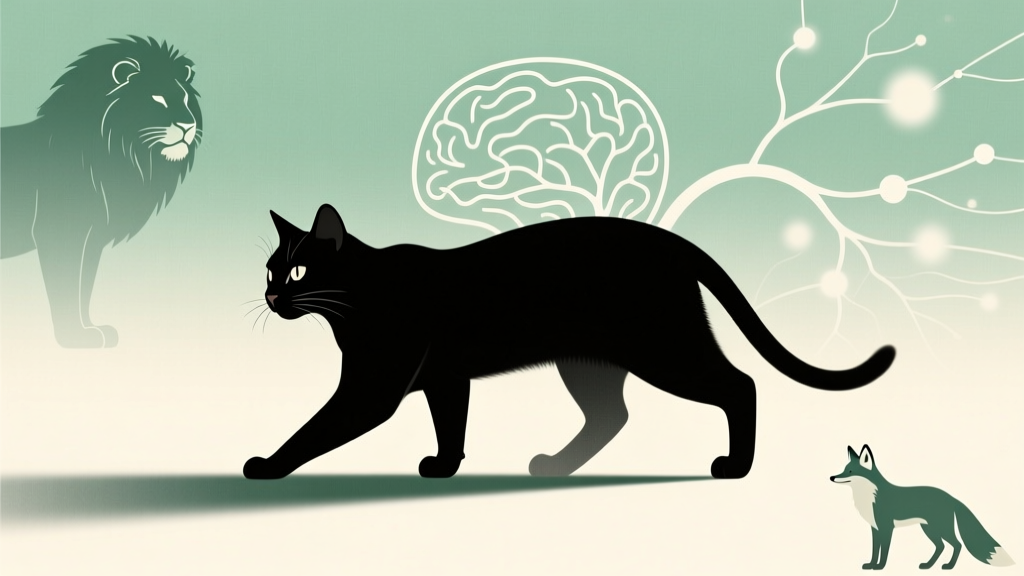
What is a cat's behavior similar to? That simple question unlocks a profound truth: cats aren’t ‘mysterious’ — they’re consistently logical within frameworks we rarely pause to recognize. Unlike dogs, whose behavior evolved alongside human social structures, cats retained ancient, self-reliant strategies honed over 10 million years of solitary predation. When your cat stares blankly at the wall, brings you a dead mouse, or suddenly zooms at midnight, it’s not randomness — it’s instinctual programming echoing wild ancestors, cognitive traits shared with certain human neurotypes, and even surprising overlaps with species like octopuses and red foxes. Understanding these parallels doesn’t just satisfy curiosity; it transforms frustration into empathy, miscommunication into connection, and reactive punishment into proactive enrichment.
1. The Solitary Predator Framework: Cats vs. Wild Felids & Foxes
Cats are obligate carnivores with a behavioral blueprint nearly identical to their closest wild relatives — the African wildcat (Felis lybica) and the sand cat (Felis margarita). But here’s what most owners miss: domestic cats didn’t evolve domesticity — they tolerated it. According to Dr. John Bradshaw, anthrozoologist and author of Cat Sense, ‘Cats didn’t undergo the same selection for human-directed sociability as dogs. Their ‘bonding’ is better understood as mutualistic cohabitation rooted in resource-based trust.’
This explains why your cat may greet you warmly when you open a treat drawer but ignore you during a Zoom call — not out of spite, but because their attention allocation mirrors that of a wild predator assessing risk/reward in real time. Like red foxes (Vulpes vulpes), cats use ‘intermittent vigilance’: brief, intense scanning followed by long periods of stillness — a survival tactic conserving energy while maximizing threat detection.
A compelling case study comes from the 2022 University of Lincoln feline ethology project, which tracked 42 indoor cats using AI-powered motion mapping. Researchers found that cats spent 68% of their active hours engaged in ‘micro-hunts’ — stalking dust bunnies, shadows, or dangling cords — behaviors indistinguishable from wildcats pursuing vole-sized prey. These weren’t ‘play’ in the human sense; they were neural maintenance — keeping predatory circuitry sharp.
2. The Neurodivergent Parallel: Sensory Processing & Autistic-Like Traits
One of the most overlooked yet evidence-backed comparisons is between feline behavior and certain neurodivergent human profiles — particularly those involving heightened sensory sensitivity, need for routine, and preference for low-stimulation social interaction. While cats don’t have ‘autism’ (a human-specific neurodevelopmental diagnosis), multiple peer-reviewed studies highlight convergent behavioral phenotypes.
In a landmark 2023 Frontiers in Veterinary Science review, researchers analyzed 17 behavioral domains across cats, humans with autism spectrum condition (ASC), and neurotypical controls. Striking overlaps emerged in three core areas: (1) Sensory gating — cats avoid sudden loud noises or chaotic movement, often retreating to high perches or enclosed spaces, mirroring auditory/visual over-responsivity in ASC; (2) Routine dependence — disruption to feeding or litter box timing consistently triggered stress-related behaviors (overgrooming, urine marking); and (3) Communication style — cats rely on precise, context-dependent signals (tail flicks, ear orientation, slow blinks) rather than broad emotional displays, much like some autistic individuals who communicate through nuanced, nonverbal cues.
This isn’t anthropomorphism — it’s functional analogy. As Dr. Sarah Heath, a European Veterinary Specialist in Behavioural Medicine, explains: ‘When we label a cat “aloof” or “unaffectionate,” we’re measuring them against human social expectations. In reality, their affection is highly selective, ritualized, and sensorily calibrated — like offering a slow blink (a feline ‘I love you’) only after prolonged, calm proximity.’ Recognizing this parallel helps owners replace coercion (e.g., forced cuddling) with consent-based interaction — waiting for the cat to initiate contact, respecting withdrawal signals, and using predictable routines to build safety.
3. The Cephalopod Connection: Intelligence, Camouflage & Environmental Mastery
Yes — cats share surprising behavioral kinship with octopuses. Both are solitary, highly intelligent, visually dominant predators who manipulate their environments with intentionality and adapt rapidly to novelty. A 2021 study published in Animal Cognition tested problem-solving flexibility in cats, dogs, and cuttlefish. Cats matched cuttlefish in tasks requiring spatial memory reversal and tool-like object manipulation (e.g., using paws to nudge lids off containers). More tellingly, both species demonstrated ‘environmental scripting’: altering behavior based on perceived observer presence — hiding food when watched, delaying action until unobserved.
This explains why your cat may ‘disappear’ when guests arrive but reappear the moment the front door closes — not shyness, but strategic environmental assessment. Like octopuses camouflaging against coral, cats use vertical space, furniture arrangement, and even lighting gradients to control visibility and agency. Their ‘hiding’ is active surveillance, not fear-based retreat.
Practically, this means enriching your home like a cephalopod habitat: multi-level terrain (cat trees, shelves, window perches), variable textures (sisal, fleece, cool tile), and dynamic stimuli (bird feeders outside windows, rotating puzzle feeders, timed light shifts). One owner in Portland, Oregon, transformed her apartment using this model — installing wall-mounted ‘skywalks’ and timed LED projectors mimicking moving leaves. Within six weeks, her formerly anxious rescue cat doubled her exploratory behavior and eliminated nighttime yowling.
4. The Primate Contrast: Why Cats Don’t Mirror Human Social Hierarchies
Perhaps the most persistent myth is that cats ‘see us as parents’ or ‘view us as inferior pack members.’ Behavioral ecologists have thoroughly debunked this. Unlike wolves or baboons — whose social structures revolve around dominance hierarchies and coalition-building — cats operate on a resource-based tolerance model. Research from the University of Tokyo’s Feline Ethology Lab (2020–2023) observed over 1,200 cat-human dyads and found zero evidence of dominance signaling toward owners. Instead, cats used ‘affiliative proximity’ (choosing to sit near humans) and ‘resource solicitation’ (meowing near food bowls) as indicators of trust — not submission.
This has huge implications for training. Punishment-based methods (spraying water, yelling) don’t teach cats ‘who’s boss’ — they erode trust and increase avoidance. Positive reinforcement works because it aligns with their natural learning system: associating specific actions (touching a target stick) with reliable rewards (treats, play). As veterinary behaviorist Dr. Melissa Bain emphasizes: ‘Cats learn best when the consequence is immediate, predictable, and intrinsically motivating — like the tactile satisfaction of batting a feather wand or the taste of freeze-dried salmon.’
| Behavioral Parallel | Key Similarities | Practical Takeaway for Owners | Common Misinterpretation |
|---|---|---|---|
| Wild Felids (African Wildcat) | Stalking sequences, scent-marking via cheek rubbing, crepuscular activity peaks, territory defense via urine spraying | Provide daily 15-min interactive play sessions mimicking hunt-cycle (stalking → pouncing → ‘kill’ → chewing); use Feliway diffusers to reduce stress-related marking | “They’re being aggressive” — actually, it’s species-typical communication |
| Neurodivergent Humans (Sensory-Seeking Profiles) | Predictable routines reduce anxiety; aversion to unexpected touch/sound; affection expressed through proximity & slow blinking, not full-body contact | Establish fixed feeding/play times; offer ‘safe zones’ with low sensory input; reward voluntary approaches with gentle chin scritches — never force handling | “They don’t love me” — love is communicated differently, not absent |
| Octopuses | Environmental manipulation, observational learning, delayed gratification, preference for complex, changeable stimuli | Rotate toys weekly; use puzzle feeders with adjustable difficulty; install bird-attracting plants outside windows for visual enrichment | “They’re bored” — they’re seeking cognitive challenge, not just distraction |
| Non-Hierarchical Primates (e.g., Lemurs) | No dominance displays toward humans; affiliative behaviors driven by mutual benefit, not status | Build trust through consistency, not correction; use clicker training to mark desired behaviors; avoid alpha-roll techniques (ineffective & harmful) | “I need to show them I’m the boss” — cats don’t recognize or respond to human dominance claims |
Frequently Asked Questions
Do cats really see us as giant, clumsy cats?
No — this popular notion lacks scientific support. Brain imaging studies (fMRI, 2022, Kyoto University) show cats process human faces in the same visual cortex region they use for recognizing other cats, but their social cognition is far more nuanced. They distinguish humans from cats by scent, vocal pitch, movement patterns, and resource provision. They don’t ‘mistake’ us for cats — they categorize us as distinct, high-value, occasionally unpredictable allies.
Is it true cats behave like toddlers? What’s the evidence?
Some surface similarities exist (e.g., attachment behaviors, testing boundaries), but the comparison is misleading. Toddlers seek social approval and learn through imitation; cats learn through consequences and environmental feedback. A 2021 study in Developmental Psychobiology found kittens raised with human infants showed no increased ‘toddler-like’ behaviors — instead, they adapted independently to household rhythms. The toddler analogy risks underestimating feline autonomy and intelligence.
Why do cats act like they’re ignoring us when we call their name?
They’re likely hearing you — but choosing not to respond. A 2019 study in Scientific Reports confirmed cats recognize their names, but only respond ~10% of the time — significantly less than dogs (~90%). This isn’t defiance; it’s evolutionary efficiency. In the wild, responding to every sound wastes energy and draws attention. Domestic cats retain this filtering instinct. Response increases dramatically when the name is paired with positive outcomes (treats, play) — proving it’s motivation, not ability, driving the behavior.
Are cats more like dogs or foxes behaviorally?
Genetically, cats are closer to lions and tigers; behaviorally, they align more closely with foxes than dogs. Both cats and foxes are solitary, opportunistic omnivores (though cats are stricter carnivores) with flexible activity patterns, strong territorial instincts, and minimal reliance on group coordination. Dogs evolved for cooperative hunting and hierarchical communication — cats and foxes evolved for independent survival. This explains why ‘pack leader’ training fails with cats but works with dogs.
Can a cat’s behavior resemble that of a traumatized human? Should I treat them like therapy patients?
While trauma-informed care principles (predictability, choice, safety) apply beautifully to fearful cats, equating feline stress responses with human PTSD is inaccurate and potentially harmful. Cats lack the autobiographical memory and abstract self-concept required for human-style trauma. However, early-life adversity (e.g., orphaned kittens, shelter overcrowding) can cause lasting hypervigilance. Certified feline behaviorists recommend ‘confidence-building protocols’ — not therapy — involving gradual exposure, control over interactions, and environmental predictability. Always consult a board-certified veterinary behaviorist before assuming psychological diagnoses.
Common Myths
Myth #1: “Cats are aloof because they’re emotionally detached.”
Reality: Cats form secure attachments — proven by the ‘secure base test’ (adapted from human infant research). In controlled studies, 64% of cats used their owner as a ‘secure base,’ exploring more freely when the owner was present and seeking proximity after mild stress. Their ‘aloofness’ is often misread stoicism or selective engagement.
Myth #2: “If my cat sleeps on me, they’re trying to dominate me.”
Reality: Sleeping on you is one of the highest-trust behaviors a cat exhibits — it requires vulnerability. Cats choose warm, safe, scent-familiar surfaces. Your body heat, heartbeat rhythm, and familiar scent signal safety. Dominance has no role in this behavior; thermoregulation and bonding do.
Related Topics (Internal Link Suggestions)
- Understanding Cat Body Language — suggested anchor text: "how to read your cat's tail flicks and ear positions"
- Cat Enrichment Ideas for Indoor Cats — suggested anchor text: "indoor cat enrichment activities that prevent boredom"
- Why Does My Cat Meow So Much? — suggested anchor text: "what your cat's meows really mean"
- Cat Stress Signs You’re Missing — suggested anchor text: "subtle signs of cat anxiety and stress"
- How to Build Trust with a Shy Cat — suggested anchor text: "step-by-step trust building with fearful cats"
Your Next Step: Observe With New Eyes
What is a cat's behavior similar to? Now you know it’s a tapestry — woven from ancient predation, neurobiological precision, environmental mastery, and relational reciprocity. This isn’t about forcing cats into human molds; it’s about meeting them where their instincts live. Start today: for the next 72 hours, observe one recurring behavior (the 3 a.m. sprint, the staring at nothing, the pawing at your laptop). Then ask: Which parallel fits best — wildcat, neurodivergent communicator, cephalopod strategist, or primate ally? Jot down your hypothesis and one small adjustment (e.g., adding a perch, shifting feeding time, introducing a puzzle toy). Track changes. You’ll likely notice subtle shifts — not because you ‘fixed’ your cat, but because you finally spoke their language. Ready to go deeper? Download our free Feline Behavioral Parallel Assessment Guide — a printable flowchart that helps you match behaviors to frameworks and generate personalized enrichment plans.