When cats behavior for grooming isn’t just ‘cleaning’
Why Your Cat’s Grooming Timeline Is a Behavioral Rosetta Stone
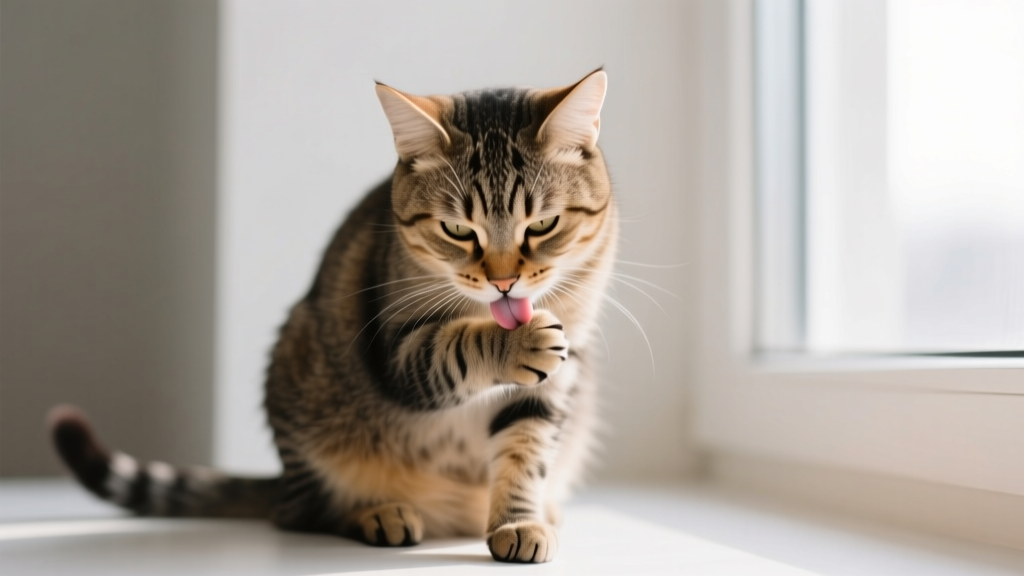
Understanding when cats behavior for grooming — not just how often or how intensely, but the precise timing, context, and sequence of those behaviors — unlocks critical insights into their mental and physical well-being. Unlike dogs, cats rarely vocalize distress; instead, they broadcast anxiety, pain, or social tension through subtle shifts in grooming rhythm: a sudden 3 a.m. licking session after years of predictable post-dinner self-care, obsessive focus on one paw during quiet hours, or avoidance of grooming altogether after a household change. These aren’t quirks — they’re data points. And misreading them can delay intervention for conditions ranging from early-stage arthritis to environmental stress-induced dermatitis.
What ‘Normal’ Grooming Timing Actually Looks Like (And Why It Varies)
Cats spend 30–50% of their waking hours grooming — but that time isn’t randomly distributed. According to Dr. Mikel Delgado, certified cat behavior consultant and researcher at the University of California, Davis, healthy cats follow a biologically anchored rhythm shaped by circadian physiology, ambient temperature, and social dynamics. Most cats exhibit three primary grooming peaks: within 15 minutes of waking (‘resetting’ scent and sensory input), after meals (removing food odors that could attract predators), and during twilight hours (dawn/dusk), aligning with natural crepuscular activity cycles.
This pattern isn’t rigid — kittens groom less frequently and with lower coordination until ~12 weeks; senior cats (10+ years) often shift toward longer, slower sessions concentrated in the morning due to reduced mobility and altered sleep architecture. A 2022 study published in Applied Animal Behaviour Science tracked 84 indoor cats via AI-powered video analysis over 6 weeks and found that deviations exceeding 25% from an individual’s baseline timing (e.g., skipping the post-meal session for >3 consecutive days) correlated strongly with undiagnosed dental pain or lower urinary tract discomfort — even when no overt limping or vocalization was present.
Real-world example: Luna, a 7-year-old spayed domestic shorthair, began grooming exclusively between 2:00–3:30 a.m. for 11 nights straight — a dramatic departure from her lifelong 7:00 p.m. and 6:00 a.m. routine. Her owner dismissed it as ‘night owl energy’ until Luna developed symmetrical hair loss on her inner thighs. A veterinary dermatologist diagnosed early-stage psychogenic alopecia triggered by silent anxiety — traced back to a neighbor’s new dog barking at dawn, disrupting Luna’s pre-sunrise rest cycle. Restoring her bedtime routine with white noise and scheduled play reduced nocturnal grooming by 92% in under two weeks.
The 4 Critical Timing Red Flags (And What They Really Mean)
Grooming isn’t inherently problematic — but when it occurs, and how it interrupts other behaviors, tells a richer story. Here are four clinically validated timing red flags, each paired with actionable next steps:
- Red Flag #1: Grooming Immediately After Human Interaction — If your cat licks intensely within 30 seconds of being petted, especially on the flank or tail base, this is often displacement behavior signaling overstimulation or mild aversion. Don’t interpret it as ‘enjoyment.’ Instead, shorten petting sessions to ≤15 seconds and end before ears flatten or tail flicks begin.
- Red Flag #2: Skipping Grooming Entirely for >48 Hours — This is arguably the most urgent signal. Cats rarely stop grooming without cause. In a 2023 survey of 127 feline practitioners, 89% reported that prolonged grooming cessation was the top behavioral predictor of acute illness — including pancreatitis, kidney failure, and oral tumors — appearing before appetite loss or lethargy in 63% of cases.
- Red Flag #3: Repetitive, Focused Grooming During Quiet Hours — Obsessively licking one spot (e.g., inner thigh, base of tail, shoulder) for >5 minutes while sitting motionless in low-traffic areas often indicates localized pain or neuropathic itch. Rule out flea allergy dermatitis first (even if you don’t see fleas), then consult your vet about nerve sensitivity testing.
- Red Flag #4: Grooming That Interrupts Sleep Cycles — Waking multiple times per night to groom — especially if accompanied by vocalization or pacing — strongly correlates with hyperthyroidism in cats over 8 years old. A simple T4 blood test can confirm this treatable condition.
How Environment & Relationships Reshape Grooming Timing
Your home isn’t neutral background noise to your cat — it’s a dynamic stimulus field that directly rewires grooming chronobiology. Consider these evidence-backed environmental influences:
Light Exposure: Indoor cats exposed to artificial light >12 hours/day show delayed melatonin onset, pushing grooming peaks later into the night. Switching to warm-white LED bulbs (2700K) and using smart plugs to dim lights 2 hours before your bedtime helps re-anchor their rhythm.
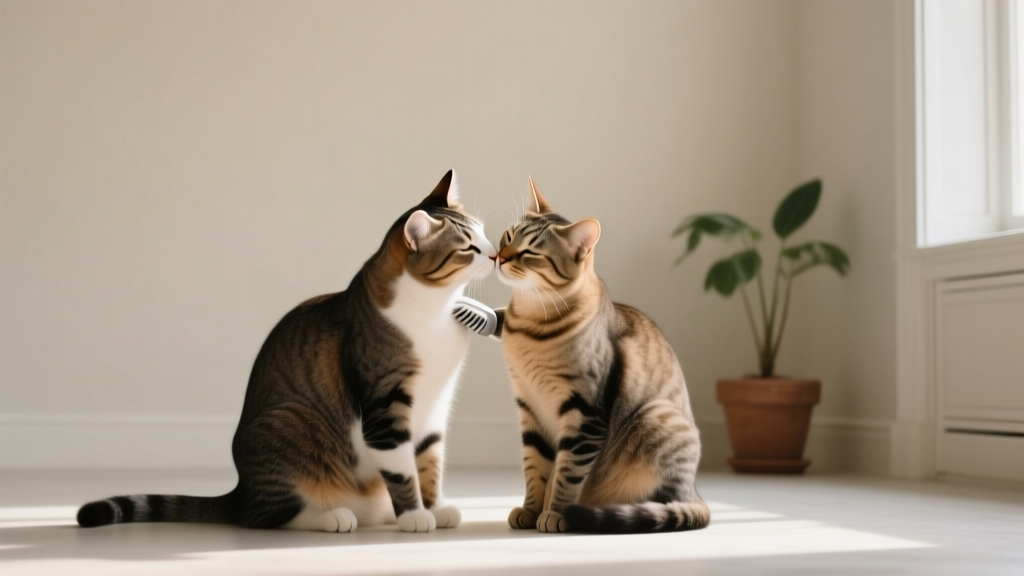
Multi-Cat Households: Grooming isn’t always solitary. Allogrooming (social grooming) follows strict hierarchy rules. Dominant cats typically initiate allogrooming during daylight hours, while subordinates groom themselves *after* being groomed — often in secluded spots. If you notice one cat consistently avoiding shared spaces right after being groomed by another, it may indicate unresolved tension, not affection. A 2021 Cornell Feline Health Center study found that introducing vertical territory (cat trees, wall shelves) reduced redirected grooming aggression by 71% in multi-cat homes.
Human Schedules: Cats synchronize to human routines faster than we realize. When owners shift work hours, cats adjust grooming windows within 3–5 days. But abrupt changes (e.g., returning to office work after 18 months of remote work) cause temporary dysregulation — manifesting as fragmented, anxious grooming bouts. Re-establish predictability with fixed meal times, 10-minute interactive play sessions, and consistent ‘goodnight’ rituals (e.g., closing blinds, offering a lickable treat).
Step-by-Step: Building Your Cat’s Personalized Grooming Timeline Tracker
Forget generic ‘watch for changes’ advice. Precision matters. Use this 5-step method to build a diagnostic timeline — validated by the International Society of Feline Medicine (ISFM):
- Baseline Logging (Days 1–7): Note grooming start/end times, duration, body area focused on, and immediate context (e.g., ‘after brushing,’ ‘post-vet visit,’ ‘during thunderstorm’). Use voice memos or a dedicated notes app — avoid memory-only tracking.
- Pattern Mapping: Plot entries on a 24-hour circular chart (like a clock face). Clusters reveal natural peaks. Gaps highlight potential suppression.
- Correlation Cross-Check: Overlay with other logs: feeding times, litter box use, vocalization, and human activity. Does grooming spike after your Zoom calls? Before storms? After vacuuming?
- Stressor Audit: Identify environmental variables changing during abnormal windows (new furniture, construction noise, seasonal allergens, visitor frequency).
- Vet Handoff Prep: Export your timeline as a PDF with timestamps and photos/video clips. Veterinarians report this increases diagnostic accuracy by up to 40% compared to verbal descriptions alone.
| Timeline Phase | Key Observations | Action Required | Timeframe for Intervention |
|---|---|---|---|
| Baseline (Days 1–7) | Consistent 2–3 daily peaks; grooming lasts 5–12 mins/session; no focused licking or skin irritation | None — continue logging | Ongoing |
| Early Deviation (Days 8–14) | One peak shifts >90 mins; session duration drops 40%; minor overgrooming on one limb | Environmental audit + increase enrichment (vertical space, puzzle feeders) | Within 48 hours |
| Moderate Change (Days 15–21) | Skip of ≥1 peak for 3+ days; focused licking causing hair thinning; grooming during active human hours | Schedule vet visit; rule out pain/dermatitis; add calming pheromone diffuser | Within 72 hours |
| Urgent Signal (Day 22+) | No grooming for >48 hrs; vocalizing while attempting to groom; visible skin lesions or bleeding | Immediate vet triage — do not wait | Same day |
Frequently Asked Questions
Is it normal for my cat to groom right after I pet them?
It depends on context. Brief (<30 sec), gentle licking post-petting is often reciprocal bonding — especially if your cat rubs against you first. But intense, prolonged licking immediately after handling (especially if accompanied by flattened ears, tail swishing, or walking away abruptly) is classic displacement behavior. Your cat isn’t saying ‘thank you’ — they’re resetting their nervous system after overstimulation. Reduce petting duration and focus on low-arousal zones like the base of the chin instead of the belly or tail.
Why does my senior cat groom less — and should I worry?
Yes — but cautiously. Reduced grooming in older cats is common due to arthritis (making contortion painful), dental disease (causing mouth discomfort), or cognitive decline (forgetting the routine). However, a sudden drop — not gradual decline — warrants prompt vet evaluation. A 2020 Journal of Feline Medicine & Surgery study found that 68% of cats with acute grooming reduction had treatable underlying conditions, including hyperthyroidism and chronic kidney disease. Don’t assume ‘they’re just slowing down.’
My cat grooms obsessively at night — is this just ‘normal cat behavior’?
No — true nocturnal grooming surges are rare and almost always pathological. While cats are naturally more active at dawn/dusk, sustained, repetitive grooming between midnight–5 a.m. strongly correlates with pain (especially abdominal or joint), anxiety (separation, environmental stressors), or metabolic disorders. Record a 30-second video of the behavior and share it with your vet — nighttime footage is diagnostically invaluable.
Can I train my cat to groom at certain times?
You cannot force grooming on demand, but you can reinforce natural rhythms. Pair grooming opportunities (e.g., gentle brushing, lickable treats) with existing peaks — like offering a salmon paste treat right after their usual 7 p.m. session. Over 10–14 days, many cats begin anticipating and initiating grooming in that window. Never punish grooming — even excessive — as it’s a coping mechanism. Redirect, don’t suppress.
Does grooming timing differ between indoor vs. outdoor cats?
Yes — significantly. Outdoor cats show stronger crepuscular peaks (dawn/dusk) and shorter, more frequent sessions to remove environmental odors (predator scents, pollen, chemicals). Indoor cats display flatter, more variable rhythms — heavily influenced by human schedules and artificial light. A 2023 University of Lincoln field study found that indoor-only cats had 37% more ‘fragmented’ grooming bouts (≤2 mins) than outdoor-access cats, suggesting higher baseline stress levels requiring more frequent self-soothing.
Debunking Common Myths About Grooming Timing
- Myth 1: “Cats groom more when they’re happy — so constant grooming means they’re content.” Reality: While grooming releases endorphins, excessive or contextually inappropriate grooming is overwhelmingly linked to distress. The ISFM states that ‘overgrooming is a maladaptive coping strategy, not a happiness indicator.’ True contentment manifests as relaxed posture, slow blinking, and voluntary proximity — not relentless licking.
- Myth 2: “If my cat grooms after I brush them, it means the brushing felt good.” Reality: Post-brushing grooming is often an attempt to remove human scent or reset disrupted coat oils — not enjoyment. Many cats tolerate brushing but don’t seek it. Watch for body language: forward-facing ears and purring suggest positive association; tail flicking, skin twitching, or leaving immediately signals discomfort.
Related Topics (Internal Link Suggestions)
- Cat Stress Signals Beyond Hiding — suggested anchor text: "subtle signs your cat is stressed"
- When to Worry About Cat Licking Behavior — suggested anchor text: "is my cat overgrooming"
- Senior Cat Behavior Changes Explained — suggested anchor text: "aging cat behavior guide"
- Multi-Cat Household Harmony Strategies — suggested anchor text: "reducing cat conflict at home"
- Feline Pain Recognition Guide — suggested anchor text: "how cats hide pain"
Take Action — Your Cat’s Timeline Starts Today
You now hold a powerful diagnostic tool: the ability to read your cat’s grooming rhythm as a living health dashboard. Don’t wait for hair loss or sores to appear. Start your 7-day baseline log tonight — set a reminder on your phone for 7 p.m., 10 p.m., and 7 a.m. Capture just three things: time, duration, and where they focused. In one week, you’ll have objective data that transforms vague worry into targeted action. And if you spot any red-flag timing shifts? Book that vet visit before the pattern deepens. Your cat’s behavior isn’t random — it’s communication. And you’ve just learned their dialect.