Cat Grooming Behavior: What It Reveals About Health
Why Your Cat’s Grooming Behavior Is a Window Into Their Whole World
What is a cat's behavior for grooming? It’s far more than just 'cleaning up' — it’s a complex, instinct-driven ritual that reveals stress levels, physical health, social bonds, and even neurological function. In fact, cats spend 30–50% of their waking hours grooming — roughly 2–5 hours per day — making it one of their most frequent and biologically significant behaviors. Yet most owners misinterpret these actions: dismissing excessive licking as 'just being fastidious,' overlooking bald patches as 'normal shedding,' or assuming a matted coat means 'they’re lazy.' The truth? Grooming is your cat’s primary form of self-regulation, communication, and early-warning system. When that behavior shifts — in frequency, intensity, location, or duration — it’s often the first sign something’s off. And catching it early can prevent everything from painful skin infections to chronic anxiety disorders.
The Three Layers of Feline Grooming Behavior
Grooming isn’t monolithic. Ethologists recognize three distinct functional layers — each with unique triggers, body language cues, and implications for well-being:
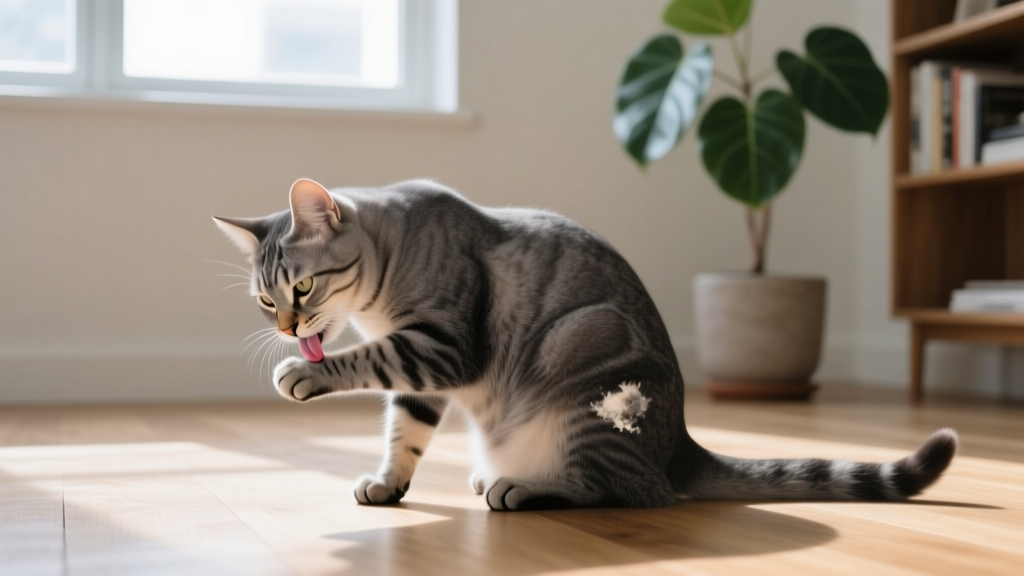
- Hygienic grooming: The baseline self-cleaning routine — tongue strokes over fur, paw-licking, ear-rubbing — focused on removing debris, distributing sebum, and regulating temperature. This occurs predictably throughout the day, especially after naps or meals.
- Social grooming (allogrooming): Mutual licking between bonded cats (or sometimes directed toward trusted humans). It reinforces hierarchy, reduces tension, and releases oxytocin — but only when initiated voluntarily and reciprocated calmly.
- Emotional grooming: The most telling layer. Includes displacement grooming (sudden, intense licking during stress), over-grooming (focused, repetitive licking causing hair loss), or under-grooming (neglecting areas like the tail base or hindquarters). These are neurobehavioral responses — not habits — rooted in anxiety, pain, or cognitive decline.
Dr. Sarah Lin, a certified feline behaviorist and co-author of Feline Ethogram: A Field Guide to Normal & Abnormal Behavior, emphasizes: 'Grooming is the barometer of feline welfare. You wouldn’t ignore a human repeatedly clenching their jaw when anxious — yet we dismiss identical physiological coping mechanisms in cats because they’re silent and species-specific.'
Decoding the Red Flags: When Grooming Shifts From Normal to Concerning
Here’s how to distinguish healthy grooming from clinically meaningful change — using real-world case examples and veterinary benchmarks:
Case Study: Luna, 6-year-old domestic shorthair
Luna began licking her left flank obsessively after her owner moved apartments. Within 10 days, she developed a 3cm bald patch with mild erythema. Her vet ruled out fleas and dermatophytes, then referred her to a behaviorist. Video analysis revealed she only groomed during thunderstorms and when the new neighbor’s dog barked — confirming displacement behavior. After environmental enrichment (Feliway diffusers, vertical space, predictable routines) and targeted play therapy, her licking decreased by 87% in 3 weeks.
Key Diagnostic Questions to Ask Yourself:
- Has the location changed? (e.g., sudden focus on abdomen, inner thighs, or base of tail — common sites for pain-related licking)
- Has the rhythm shifted? (e.g., prolonged sessions >15 minutes without breaks, or frantic, jerky motions vs. rhythmic strokes)
- Is there physical evidence? (bald patches with intact skin = behavioral; scabs, crusts, or broken hairs = likely medical)
- Does it happen only around triggers? (doorbells, visitors, other pets, vet visits)
A 2022 study published in Journal of Feline Medicine and Surgery tracked 217 cats with alopecia and found that 68% had primary behavioral causes — but only 29% were correctly identified by owners before veterinary consultation. Why? Because we look for 'obvious' signs of distress (hissing, hiding), not the quiet, repetitive rituals that scream 'I’m overwhelmed.'
The Science Behind the Lick: Anatomy, Neurology, and Evolutionary Roots
Your cat’s tongue isn’t just a wet sponge — it’s a precision-engineered biological tool. Each papilla (the backward-facing hook-like structure) is made of keratin — harder than human fingernails — and functions like a built-in comb. High-speed video analysis shows cats make ~100 licks per minute during focused sessions, generating friction heat that helps evaporate moisture and distribute antimicrobial sebum from sebaceous glands along the spine and face.
Neurologically, grooming activates the brain’s reward pathway — specifically the nucleus accumbens — releasing endogenous opioids that reduce pain perception and calm the amygdala. This explains why cats recovering from surgery often increase grooming: it’s self-administered analgesia. But it also means chronic over-grooming can become neurologically reinforcing — like nail-biting in humans — creating a feedback loop that’s hard to break without intervention.
Evolutionarily, this behavior served dual survival purposes: keeping fur free of parasites (critical for thermoregulation in desert-adapted ancestors) and masking scent from predators. That’s why grooming peaks at dawn/dusk — aligning with ancestral crepuscular activity — and why cats avoid grooming immediately after eating large meals (to preserve scent camouflage).
| Behavior Pattern | Typical Duration/Frequency | Most Likely Cause | Action Steps |
|---|---|---|---|
| Regular, rhythmic licking of full body | Multiple 5–10 min sessions daily; pauses to stretch/yawn | Normal hygienic behavior | No intervention needed. Monitor for consistency. |
| Sudden, intense licking of one small area (e.g., inner thigh) | 15–45 min bouts, repeated 3–5x/day; may interrupt sleep | Pain (arthritis, cystitis, dental disease) or anxiety | Vet exam + pain assessment. Rule out UTI, bladder stones, oral lesions. |
| Excessive licking followed by biting/chewing skin | Often occurs post-stress event (e.g., vet visit); may cause raw, oozing lesions | Displacement behavior or OCD-like compulsion | Environmental modification + vet-approved anxiolytics (e.g., gabapentin). Avoid punishment. |
| Neglect of grooming in specific zones (e.g., tail base, behind ears) | Noticeable matting, dandruff, or odor in localized areas for >7 days | Pain (osteoarthritis), obesity, dental pain, or cognitive dysfunction | Orthopedic exam, weight assessment, oral check. Consider senior bloodwork. |
| Licking human’s hair, arm, or face (with gentle kneading) | Occurs during calm bonding moments; stops if interrupted | Secure attachment behavior — equivalent to kitten nursing | Reinforce with soft praise. Do not pull away abruptly. |
Frequently Asked Questions
Why does my cat lick me and then bite me?
This is called ‘affectionate aggression’ — a common feline communication quirk. Your cat is likely overstimulated by tactile input (your skin texture, warmth, movement) or mimicking maternal behavior where kittens nuzzle then gently bite to stimulate milk flow. Watch for early warning signs: flattened ears, tail flicking, dilated pupils, or skin twitching. Stop petting *before* the bite occurs — ideally when they start purring intensely or leaning in. Redirect to a toy immediately after.
My older cat stopped grooming — should I be worried?
Yes — under-grooming in senior cats is rarely ‘laziness.’ A 2023 Cornell Feline Health Center study found 73% of cats aged 12+ with reduced grooming had undiagnosed osteoarthritis affecting shoulder or hip mobility, making stretching painful. Other causes include chronic kidney disease (causing nausea), dental pain, or cognitive dysfunction syndrome (feline dementia). Schedule a geriatric wellness exam including orthopedic palpation and bloodwork.
Can stress really cause hair loss in cats?
Absolutely — and it’s more common than most realize. Stress-induced alopecia (often called psychogenic alopecia) accounts for ~15% of all feline hair loss cases. Unlike allergic or parasitic alopecia, it typically appears symmetrically on the belly, inner thighs, or flanks — with smooth, unbroken skin beneath. Triggers include moving, new pets, construction noise, or even rearranging furniture. Diagnosis requires ruling out medical causes first, then implementing validated stress-reduction protocols (e.g., the HHHHHMM Scale: Hurt, Hunger, Hydration, Hygiene, Happiness, Mobility, More Good Days).
Is it okay to brush my cat if they hate it?
Forcing brushing can worsen anxiety and damage trust — but skipping it entirely risks mats, skin infection, and hairballs. Instead, use desensitization: start with 5 seconds of gentle stroking with a soft glove near the head (where cats prefer touch), reward with treats, and gradually increase duration and area over 2–3 weeks. Never use metal combs on sensitive cats — try rubber grooming mitts or silicone brushes. If mats persist despite training, consult a professional groomer experienced with fearful cats (not a general pet store groomer).
Do male and female cats groom differently?
Not inherently — but intact males often develop thicker, oilier coats due to testosterone, requiring more frequent grooming to prevent matting. Spayed females may gain weight post-surgery, reducing flexibility for self-grooming. Neutering itself doesn’t alter grooming motivation, but lifestyle changes post-procedure (less roaming, more indoor time) can shift patterns. Hormonal influences are secondary to individual temperament and health status.
Common Myths About Cat Grooming Behavior
- Myth #1: “If my cat is grooming a lot, they must be healthy.”
Reality: Excessive grooming is frequently the *first* sign of underlying illness — especially urinary tract disease, allergies, or hyperthyroidism. One study found 41% of cats diagnosed with early-stage kidney disease showed increased grooming before bloodwork abnormalities appeared. - Myth #2: “Cats don’t need baths — they clean themselves perfectly.”
Reality: While most cats maintain hygiene independently, certain conditions (obesity, arthritis, flat-faced breeds like Persians, or post-surgical recovery) impair their ability to reach critical areas. Veterinary dermatologists recommend *targeted* bathing with pH-balanced, soap-free cleansers for cats with seborrhea, fungal infections, or topical medication needs — never routine full-body baths.
Related Topics (Internal Link Suggestions)
- Cat Stress Signals You’re Missing — suggested anchor text: "subtle signs your cat is stressed"
- How to Brush a Cat That Hates Grooming — suggested anchor text: "cat desensitization grooming guide"
- Feline Hyperesthesia Syndrome Explained — suggested anchor text: "why does my cat bite its back"
- Senior Cat Care Checklist — suggested anchor text: "aging cat grooming support"
- When to See a Feline Behaviorist — suggested anchor text: "cat behavior specialist near me"
Your Next Step Starts With Observation — Not Intervention
You now know what is a cat's behavior for grooming — not as a static checklist, but as a dynamic, evolving language. Don’t rush to medicate, bathe, or restrict. Start tonight: sit quietly for 10 minutes and simply observe. Note when they groom, how long, where, and what happens before/after. Use a notes app or journal — track for 3 days. Patterns will emerge: maybe they groom most after you leave the room (separation anxiety), or only after hearing the dishwasher (sound sensitivity), or exclusively while sunbathing (thermoregulation). That data is worth more than any supplement or gadget. Once you’ve gathered observations, bring them to your veterinarian — not with a demand for treatment, but with a question: 'Based on this pattern, what should we investigate first?' That’s how proactive, compassionate, and truly effective cat care begins.