What Different Cat Behaviors Mean for Kittens: A Vet-Reviewed Decoder Guide That Stops You From Misreading Playful Biting as Aggression (or Worse)
Why Understanding What Different Cat Behaviors Mean for Kittens Is the #1 Skill Every New Owner Needs Right Now
If you’ve ever stared at your tiny, wide-eyed kitten mid-pounce, tail flicking like a metronome, and wondered, ‘Is that excitement… or is she about to lose it?’ — you’re not alone. What different cat behaviors mean for kittens isn’t just cute trivia; it’s foundational emotional literacy that shapes their confidence, prevents behavioral problems later in life, and even protects your home from unintended damage. Kittens learn 90% of their lifelong social rules between 2–7 weeks old — and every chirp, knead, hiss, or slow blink is data they’re both sending *and* testing. Misread a fearful freeze as ‘stubbornness’? You might accidentally reinforce anxiety. Mistake overstimulation for affection? You risk bite-and-scratch escalation. This guide cuts through guesswork with vet-reviewed insights, real-world examples, and actionable decoding tools — so you don’t just raise a kitten, but raise a well-adjusted, trusting cat.
Decoding Body Language: The Silent Grammar of Kitten Communication
Kittens communicate primarily through posture, ear position, tail movement, and eye expression — not words. Unlike adult cats who’ve learned to modulate signals around humans, kittens broadcast raw, unfiltered intent. Dr. Lena Torres, DVM and feline behavior specialist at the Cornell Feline Health Center, emphasizes: ‘A kitten’s body language isn’t “cute” — it’s functional survival code. What looks like play may be practice hunting. What seems like curiosity could be fear disguised as investigation.’
Let’s break down the most frequently misinterpreted signals:
- Ears forward and slightly tilted: Alert interest — safe to approach, ideal time for gentle handling or introducing new toys.
- Ears flattened sideways (‘airplane ears’): Early stress signal — often precedes hiding or swatting. Step back, lower your voice, and remove sudden stimuli (e.g., loud noises, fast movements).
- Low, twitching tail tip only: Not annoyance — it’s focus! Your kitten is tracking a moving object (a dust bunny, your shoelace, a sunbeam). Don’t interrupt; let them ‘hunt.’
- Vertical tail with quiver: A sign of intense, positive excitement — often seen when greeting trusted people. It’s their version of a joyful ‘hello hug.’
- Paw kneading (‘making biscuits’): Rooted in nursing behavior, this signals deep comfort and security — not dominance or territorial marking. If your kitten kneads your lap while purring, you’ve earned their highest trust.
Pro tip: Always cross-reference signals. A vertical tail + relaxed eyes = happy. Same tail + dilated pupils + flattened ears = overstimulated and escalating. Context is everything.
Vocalizations & Touch Cues: Beyond ‘Meow’ and ‘Purr’
Contrary to popular belief, kittens don’t meow to other cats — they evolved meowing specifically for human communication. That means every ‘meow’ is a tailored request. But tone, pitch, duration, and repetition tell the real story.
Consider Maya, a first-time owner whose 10-week-old tabby, Mochi, started yowling loudly at 3 a.m. She assumed he was hungry — until her veterinarian asked: ‘Did the sound start low and rumbling, then rise sharply? Was his tail puffed and body hunched?’ Yes — and that pointed to nighttime fear (not hunger), triggered by shadows from passing cars outside. Once Maya added a nightlight and covered the window, the yowling stopped in two nights.
Here’s what common sounds *actually* mean:
- Short, high-pitched ‘mew’: ‘I’m here!’ or ‘Look at me!’ — usually attention-seeking or greeting.
- Long, drawn-out ‘meee-owww’: Distress or discomfort — check for litter box issues, injury, or isolation. In kittens under 12 weeks, this warrants immediate vet contact.
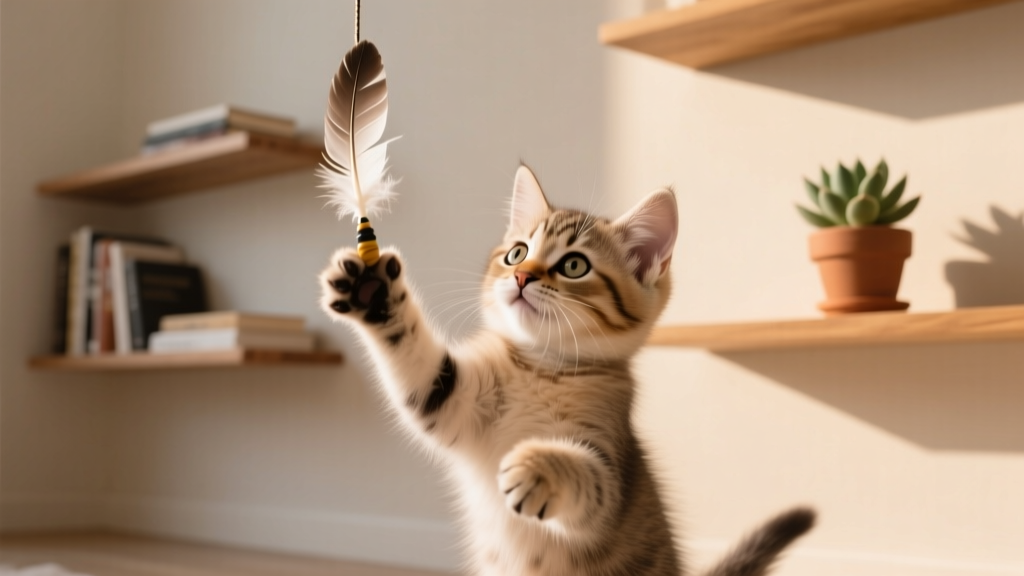
- Chirps and chatters (often at windows): Excitement mixed with frustration — they’re practicing hunting sequences. Not aggression; redirect with interactive wand toys.
- Purring: Not always contentment. Kittens also purr when injured, stressed, or in labor. Listen for rhythm: steady, low-frequency purrs = calm; shaky, irregular purrs = self-soothing during pain or fear.
- Slow blinks: The feline ‘kiss.’ When your kitten locks eyes and slowly closes and reopens their eyes, they’re signaling safety and affection. Return it — it builds mutual trust faster than treats.
Touch-based cues matter just as much. Kittens use gentle head-butts (bunting) to deposit scent and claim you as family. Nudging your hand with their nose? They’re asking for petting — but watch where they want it. Most prefer strokes along the cheeks, under the chin, and behind the ears. Avoid full-body strokes or belly rubs unless *they* roll and expose it voluntarily — 95% of kittens interpret belly exposure as vulnerability, not invitation.
Social Play vs. Fear-Based Behavior: Spotting the Line Before It Crosses
Play is how kittens develop motor skills, impulse control, and social boundaries — but it’s easily mistaken for aggression. The key lies in three observable markers: body tension, facial expression, and recovery speed.
Healthy play looks like this: relaxed shoulders, open mouth (not snarling), ears forward or neutral, quick recoveries after ‘attacks,’ and frequent role reversal (one kitten chases, then the other does). Unhealthy or fear-based interaction shows rigid posture, flattened ears, dilated pupils, growling (not playful yips), and no recovery — just escalation.
A 2023 study published in Applied Animal Behaviour Science tracked 87 kittens aged 6–14 weeks and found that kittens who engaged in supervised, interspecies play (with humans using wand toys) developed 42% stronger impulse control by 6 months versus those left to ‘figure it out’ alone. Why? Because humans can pause, reset, and reward calm transitions — something littermates rarely do.
Practical steps to nurture healthy play:
- Use appropriate tools: Never use hands or feet as toys — this teaches biting/hand-targeting, which becomes dangerous later. Opt for feather wands, crinkle balls, or motorized mice.
- End before exhaustion: Stop play sessions when your kitten starts panting, tripping, or staring blankly — signs of overstimulation. Always follow with a ‘cool-down’ treat or quiet cuddle.
- Introduce novelty gradually: Rotate toys weekly — not daily — to maintain interest without overwhelming their developing nervous system.
- Observe littermate dynamics: If adopting siblings, watch for one kitten consistently pinning, hissing at, or avoiding the other during play. This may indicate early social deficits requiring gentle intervention (e.g., separate short playtimes + parallel positive experiences).
Remember: Play isn’t optional. It’s neurobiological wiring. Deprived of proper play, kittens are statistically 3x more likely to develop redirected aggression or compulsive behaviors like wool-sucking by adulthood (per ASPCA Behavioral Guidelines).
When ‘Normal’ Behavior Signals Something Deeper: Red Flags to Watch For
Some kitten behaviors are developmentally expected — but others are subtle red flags masked as ‘just being a kitten.’ Early detection prevents long-term issues.
Dr. Arjun Patel, certified feline behavior consultant and co-author of Kitten Critical Periods, stresses: ‘There’s no such thing as “too young” to notice behavioral shifts. A 4-week-old kitten who avoids all touch, or an 8-week-old who freezes instead of fleeing when startled, needs compassionate assessment — not waiting until “they grow out of it.”’
Trust your gut — and these evidence-based warning signs:
- Consistent avoidance of human contact after 6 weeks — especially if previously sociable. Could indicate early trauma, inadequate socialization, or underlying pain.
- Excessive grooming leading to bald patches — particularly on inner thighs or belly. Often linked to stress or allergies, not ‘just cleaning.’
- Urinating outside the litter box *without* physical cause (e.g., clean box, no UTI). Frequently tied to anxiety, substrate aversion, or territorial insecurity.
- No response to high-pitched sounds (like crinkling paper) by 5 weeks — possible hearing impairment requiring veterinary evaluation.
- Staring blankly into space for >10 seconds, followed by sudden jerking or disorientation — potential neurological concern; requires urgent vet consult.
Keep a simple 7-day behavior log: note time, behavior, trigger (if any), your response, and kitten’s reaction. Patterns emerge fast — and that log becomes invaluable for vets or behaviorists.
| Behavior | Most Likely Meaning | Safe Response | When to Consult a Pro |
|---|---|---|---|
| Kneading + Purring + Drooling | Deep comfort and security — often linked to nursing memories | Gentle stroking; offer soft blanket or familiar-smelling item | Rarely urgent — unless drooling is excessive, foul-smelling, or accompanied by lethargy |
| Zoomies (midnight dashes) | Natural energy release; circadian rhythm alignment (kittens are crepuscular) | Pre-empt with 10-min interactive play before bedtime; provide climbing structures | If accompanied by vocalizing, crashing into walls, or loss of coordination |
| Nibbling fingers gently | Exploratory mouthing or teething relief — not aggression | Offer chilled teething toy; redirect firmly with ‘no bite’ + toy swap | If bites break skin regularly after 12 weeks, or escalate despite redirection |
| Backing away while maintaining eye contact | Conflict avoidance — ‘I’m not fighting, but I need space’ | Stop all interaction; give 3+ feet of distance; re-approach slowly later | If persists beyond 8 weeks despite consistent, gentle socialization |
| Bringing toys to your lap or bed | Gifting behavior — sign of bonding and inclusion in their ‘family unit’ | Thank verbally; place toy nearby — don’t take it away (they’ll bring another) | Never urgent — but delightful! |
Frequently Asked Questions
Why does my kitten bite me gently during petting?
This is almost always a sign of overstimulation — not affection or play. Kittens have sensitive nerve endings, and prolonged petting triggers a ‘tickle-to-pain’ threshold. Watch for early cues: tail flicking, skin rippling, flattened ears, or sudden stillness. Stop petting *before* the bite occurs, and reward calm disengagement with a treat. Gradually increase tolerance by adding 2–3 seconds per session, always ending on a positive note.
Is it normal for my kitten to hide for hours after coming home?
Yes — especially in the first 48–72 hours. Kittens process new environments in ‘bursts’ of exploration followed by retreat. Provide a small, quiet ‘safe room’ (bedroom or bathroom) with food, water, litter, and a covered carrier. Let them emerge on their own timeline. Forced interaction increases fear. Most settle within 3–5 days; if hiding persists beyond 7 days with no eating/drinking, contact your vet.
My kitten stares at me silently — is that threatening?
No — silent staring is usually curiosity or mild attention-seeking. True threat displays involve fixed, unblinking eyes *plus* flattened ears, stiff posture, and tail lashing. If your kitten holds your gaze and then blinks slowly, that’s a sign of trust. Try returning the slow blink — many owners report their kittens mirror it within days.
Should I punish my kitten for scratching furniture?
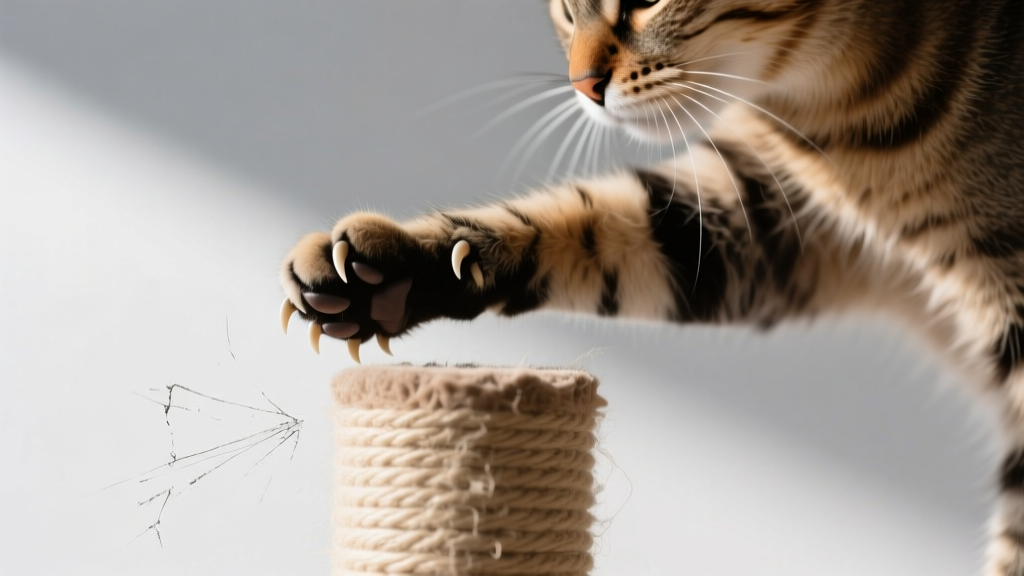
No — punishment creates fear and damages trust. Scratching is essential for claw maintenance, stretching muscles, and scent-marking. Instead: provide 3+ sturdy, vertical scratching posts (sisal rope preferred), place them near furniture they target, sprinkle with catnip, and reward use with treats. Cover off-limit areas temporarily with double-sided tape or aluminum foil — textures most kittens dislike.
How do I know if my kitten’s ‘play aggression’ is actually fear?
Observe the exit strategy. Confident, playful kittens will dart away, then immediately turn and pounce again — it’s a loop. Fear-driven ‘aggression’ looks like cornering, hissing, flattened ears, and no re-engagement. If your kitten hides after play, refuses treats post-session, or tucks tail tightly, scale back intensity and reintroduce play with lower-energy toys (e.g., rolling balls vs. fast wands).
Common Myths About Kitten Behavior
Myth #1: “Kittens will ‘grow out of’ biting and scratching.”
False. Without consistent, positive redirection during the critical 2–14 week window, biting and scratching become hardwired habits. Adult cats don’t ‘decide’ to stop — they either never learned alternatives, or learned that biting works to make humans retreat.
Myth #2: “If a kitten purrs, they must be happy.”
Incorrect. Purring is a self-soothing mechanism used during stress, pain, and healing. Research from the University of Sussex shows purring frequencies (25–150 Hz) stimulate bone and tissue regeneration — meaning kittens may purr while recovering from injury or coping with fear. Always assess body language *alongside* purring.
Related Topics (Internal Link Suggestions)
- Kitten Socialization Timeline — suggested anchor text: "critical kitten socialization window"
- Best Toys for Kittens Under 12 Weeks — suggested anchor text: "safe kitten toys by age"
- How to Litter Train a Kitten in 7 Days — suggested anchor text: "stress-free kitten litter training"
- Signs of Illness in Kittens — suggested anchor text: "kitten health warning signs"
- When to Spay/Neuter a Kitten — suggested anchor text: "optimal kitten spay age"
Conclusion & Next Step
Understanding what different cat behaviors mean for kittens transforms you from a passive caregiver into an empathetic co-developer of their emotional world. Every tail flick, meow, and slow blink is a conversation — and now, you hold the dictionary. But knowledge alone isn’t enough. Your next step? Grab your phone and film 60 seconds of your kitten’s ‘normal’ behavior today — eating, playing, resting. Watch it back tonight, pausing to name *one* signal you recognize (e.g., ‘That ear tilt means she’s curious about the curtain’). Then, tomorrow, try one micro-intervention: return a slow blink, swap a hand for a wand toy, or add a cardboard box to their safe space. Tiny, consistent acts build profound trust — and that’s where truly resilient, joyful feline-human bonds begin. Ready to go deeper? Download our free Kitten Behavior Tracker PDF — complete with printable logs, visual cue cards, and vet-approved scripts for common scenarios.